The United Kingdom and France blocked a proposal for NATO member states to allocate 0.25% of their GDP to military aid for Ukraine, according to The Telegraph.
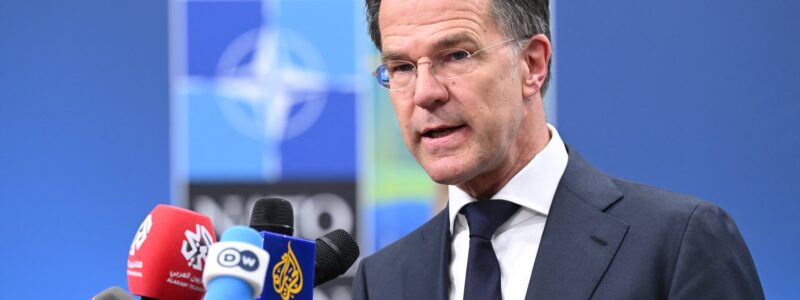
Earlier this week, NATO Secretary General Mark Rutte acknowledged that his plan would not be implemented because it had not received sufficient support.
“I don’t think this proposal will be put to a vote,” he told reporters, without naming the opponents.
According to The Telegraph, the idea was blocked by the United Kingdom, France, Spain, Italy, and Canada.
Rutte had hoped to secure approval for this proposal at the upcoming annual NATO summit in Ankara, Turkey.
This week, ministers began discussing what, in the opinion of the alliance’s civilian chief, should become a concrete manifestation of support for the war-torn country.
“An alliance insider reported that at least seven member states, which spend more than 0.25% of their GDP on military aid to Ukraine, have expressed their support. However, any proposals adopted by NATO require unanimous support from all member capitals,” the report states.
According to publicly available data compiled by the Kiel Institute, the Netherlands, Poland, as well as the Nordic and Baltic countries, provide aid at a level of 0.25% of GDP or higher. The size of the UK’s military contribution—the third largest after the US and Germany—is also uncontroversial, despite the fact that it does not reach the 0.25% of GDP mark.
Prime Minister Keir Starmer has pledged to allocate at least £3 billion per year—approximately 0.1% of GDP—in the near future.
Most of the criticism is directed at countries such as France, Spain, Italy, and Canada, which have repeatedly been accused of not doing their part. These countries—three of which are Europe’s third, fourth, and fifth-largest economies—lag behind many of their smaller allies in terms of aid levels.
Rutte argues that aid to Ukraine “is not distributed evenly within NATO,” and that many countries “are not spending enough to support Ukraine.”
The NATO chief, who served as the Dutch prime minister for 14 years, has long argued that Europe must take on greater responsibility for supporting Ukraine, in response to Donald Trump’s complaints about the continent “freeloading.”
A spokesperson for the Foreign, Commonwealth, and Development Office stated: “The UK continues to work with NATO allies on all proposals to ensure the best possible support for Ukraine from the alliance.”
Representatives from France, Italy, Spain, and Canada did not respond to The Telegraph’s requests for comment.

Related: