
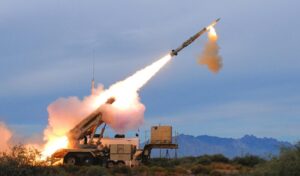
Stocks of Patriot interceptor missiles held by U.S. forces in Europe have plummeted following large-scale deliveries to Ukraine and particularly heavy ammunition consumption during the war with Iran, raising concerns about NATO’s ability to repel sustained ballistic missile attacks.
The Associated Press reported this on August 27, citing a U.S. military official in Europe and a NATO spokesperson, both of whom spoke on condition of anonymity.
According to the U.S. official, the most serious problem concerns the Patriot missiles specifically designed to intercept high-speed ballistic missiles.
He described inventory levels as “below critical” and stated that U.S. forces in Europe currently “definitely” do not have enough interceptors to repel a sustained series of ballistic missile strikes.
The official described the ability to defend against even a single ballistic strike or an errant Russian missile that has veered off course and is heading toward NATO territory as “very limited.”
A NATO spokesperson who spoke with the AP also confirmed the low level of Patriot stockpiles among U.S. and NATO forces in Europe.
However, both the Pentagon and NATO officially reject assessments of a critical shortage.
NATO’s senior military representative, U.S. Army Colonel Martin O’Donnell, told the AP that the claim that the number of Patriot missiles in Europe is “below critical levels” is not true. According to him, NATO has sufficient air defense capabilities both for its own protection and to continue assisting Ukraine.
Pentagon spokesperson Sean Parnell also dismissed reports of a shortage of U.S. ammunition as false and stated that the U.S. military has the necessary stockpiles to conduct operations.
Nevertheless, independent assessments show a significant reduction in U.S. reserves.
According to Mark Kansian, a senior advisor at the Center for Strategic and International Studies (CSIS), Ukraine has received more than 600 Patriot missiles from U.S. and allied stocks since the start of the full-scale war.
However, the main factor behind the sharp decline in reserves was the U.S. war with Iran.
According to CSIS estimates, approximately 65% of U.S. Patriot stockpiles—roughly 1,500 out of 2,330 interceptors—were expended during the campaign against Iran. By the end of July, CSIS analysts estimated that the remaining U.S. Patriot stockpiles stood at fewer than 1,000 missiles.
Ed Arnold, an expert at the British Royal United Services Institute, noted that deliveries to Ukraine had been planned in advance and were relatively manageable, whereas the need for massive deployment of interceptors in the Middle East arose much sooner than expected, exposing the limitations of the production chain.
The shortage is particularly acute for Europe, as there are currently few alternatives to the Patriot system for intercepting modern ballistic missiles.
France and Italy are developing a new version of the SAMP/T NG system, which is expected to have broader capabilities against ballistic targets; however, this new variant has not yet been tested in actual combat conditions. The current version of the SAMP/T has a shorter range than the Patriot.
A sharp increase in production capacity should partially resolve the problem.
In 2026, approximately 600–650 modern PAC-3 MSE missiles are expected to be produced, and the U.S. defense industry plans to increase production capacity to 2,000 interceptors per year by 2030. Lockheed Martin and the Pentagon have already signed agreements designed to significantly expand production.
Additional production capacity is being established directly in Europe.
In September 2026, the first European production center for Patriot missiles is scheduled to launch in Schrobenhausen, Germany. The facility is being established by COMLOG, a joint venture between MBDA Deutschland and the American company Raytheon.
The new facility will carry out final assembly and testing of PAC-2 GEM-T missiles. The first deliveries are expected in 2027. Among the countries that have already placed orders, AP lists Germany, the Netherlands, Romania, and Spain.
Raytheon received a separate $3.7 billion contract in April 2026 to produce GEM-T missiles for Ukraine. The company explicitly stated that the new plant in Germany is also expected to play a key role in replenishing Ukraine’s stockpile of interceptors.
For Ukraine, this situation means increased competition for the limited supply of missiles being produced. Kyiv needs the Patriot system primarily to intercept Russian ballistic missiles, which remain one of the most challenging targets for Ukraine’s air defense.
At the same time, U.S. manufacturers must replenish their own stockpiles, meet the needs of European NATO members, fulfill orders from Middle Eastern countries, and continue to support Ukraine.
CSIS warns that even with a significant ramp-up in production, it will take several years to fully replenish U.S. stockpiles. Until new production lines reach full capacity, the U.S. and its allies will have to prioritize the allocation of a limited number of interceptors among Europe, Ukraine, the Middle East, and the Indo-Pacific region.
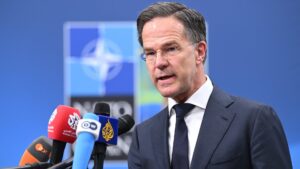
The United Kingdom and France blocked a proposal for NATO member states to allocate 0.25% of their GDP to military aid for Ukraine, according to The Telegraph.
Earlier this week, NATO Secretary General Mark Rutte acknowledged that his plan would not be implemented because it had not received sufficient support.
“I don’t think this proposal will be put to a vote,” he told reporters, without naming the opponents.
According to The Telegraph, the idea was blocked by the United Kingdom, France, Spain, Italy, and Canada.
Rutte had hoped to secure approval for this proposal at the upcoming annual NATO summit in Ankara, Turkey.
This week, ministers began discussing what, in the opinion of the alliance’s civilian chief, should become a concrete manifestation of support for the war-torn country.
“An alliance insider reported that at least seven member states, which spend more than 0.25% of their GDP on military aid to Ukraine, have expressed their support. However, any proposals adopted by NATO require unanimous support from all member capitals,” the report states.
According to publicly available data compiled by the Kiel Institute, the Netherlands, Poland, as well as the Nordic and Baltic countries, provide aid at a level of 0.25% of GDP or higher. The size of the UK’s military contribution—the third largest after the US and Germany—is also uncontroversial, despite the fact that it does not reach the 0.25% of GDP mark.
Prime Minister Keir Starmer has pledged to allocate at least £3 billion per year—approximately 0.1% of GDP—in the near future.
Most of the criticism is directed at countries such as France, Spain, Italy, and Canada, which have repeatedly been accused of not doing their part. These countries—three of which are Europe’s third, fourth, and fifth-largest economies—lag behind many of their smaller allies in terms of aid levels.
Rutte argues that aid to Ukraine “is not distributed evenly within NATO,” and that many countries “are not spending enough to support Ukraine.”
The NATO chief, who served as the Dutch prime minister for 14 years, has long argued that Europe must take on greater responsibility for supporting Ukraine, in response to Donald Trump’s complaints about the continent “freeloading.”
A spokesperson for the Foreign, Commonwealth, and Development Office stated: “The UK continues to work with NATO allies on all proposals to ensure the best possible support for Ukraine from the alliance.”
Representatives from France, Italy, Spain, and Canada did not respond to The Telegraph’s requests for comment.
upport among Ukrainians for joining the North Atlantic Alliance as the best guarantee of security for Ukraine is declining, while support for more pragmatic options is growing, according to the results of a survey conducted by the Ilko Kucheriv Democratic Initiatives Foundation in conjunction with the Razumkov Center’s sociological service.
“…Despite the fact that a relative majority of the population still considers NATO to be the best alternative, compared to December last year, the share of the population that named NATO membership as the best option for ensuring security has fallen from 55% to 38%. The decline in support for NATO has not been accompanied by an increase in sympathy for non-aligned status as such. Instead, there has been a shift in expectations toward alternative, less ambitious, or more flexible security models. In particular, over the past year, there has been a noticeable increase in the proportion of those who place their hopes on strategic defense cooperation agreements with individual NATO member countries (from 9% to 15%). Support for Ukraine’s neutral status has also increased, but on condition of international security guarantees (from 12% to 16%), as well as for the option of relying exclusively on its own defense capabilities, even without external guarantees (from 3% to 7%),” the survey results say.
At the same time, it is noted that these shifts indicate not so much a change in value orientations as growing doubts about the realism of Ukraine’s rapid accession to NATO in the context of a protracted war and ambiguous signals from international partners.
There also remain significant regional differences in the choice of security model, which play an important role in shaping the respondents’ positions.
“Respondents from western regions are significantly more likely (53%) than residents of other regions to name NATO membership as the best guarantee of security. In the central regions, this option also dominates, although less clearly (39%). In the southern and especially eastern regions, the share of NATO supporters is significantly lower: 32.5% and 22%, respectively. In the southern regions, respondents are more likely to choose neutral status with international guarantees (23%). At the same time, in the eastern regions, there are the most respondents who could not decide on the best option for ensuring Ukraine’s security compared to other macro-regions – their share is 26%. This reflects both different experiences of war and different expectations regarding international support,” sociologists write.
However, a much more significant factor than the macro-region of residence is belief in Ukraine’s victory.
“Among respondents who believe in victory, NATO membership remains the most desirable option (49.5%). At the same time, among those who do not believe in victory, only a relative minority (14%) support this option. Meanwhile, in this group, support for neutral status with international security guarantees (from 12% to 27%) and the option of relying on one’s own forces without international guarantees (5% to 13%) is growing significantly. The strength of the link between belief in victory and the vision of a security model is clear, which allows us to speak of the systemic nature of this factor,” according to the survey results.
The nationwide survey was conducted by the Ilko Kucheriv Democratic Initiatives Foundation in cooperation with the Razumkov Center’s sociological service between December 5 and 16, 2025.
A total of 2,000 respondents aged 18 and older were interviewed face-to-face in Vinnytsia, Volyn, Dnipropetrovsk, Donetsk, Zhytomyr, Zakarpattia, Zaporizhia, Ivano-Frankivsk, Kyiv, Kirovohrad, Lviv, Mykolaiv, Odesa, Poltava, Rivne, Sumy, Ternopil, Kharkiv, Kherson, Khmelnytskyi, Cherkasy, Chernihiv, and Chernivtsi regions, and the city of Kyiv. In Zaporizhzhia, Donetsk, Mykolaiv, Kharkiv, and Kherson regions, the survey was conducted only in those territories controlled by the Ukrainian government and where there is no fighting.
The survey was conducted using a stratified multistage sample with random selection in the early stages of sample formation and a quota method of selecting respondents in the final stage, when respondents were selected according to gender and age quotas. The structure of the sample population reflects the demographic structure of the adult population in the territories where the survey was conducted as of early 2022, by age, gender, and type of settlement. The theoretical sampling error does not exceed 2.3%.
At the same time, additional systematic deviations in the sample may be due to the consequences of Russian aggression, in particular, the forced evacuation of millions of citizens.

According to the Serbian Economist, Croatia is officially reintroducing compulsory military service on January 1, 2026 after a 17-year hiatus.
According to changes to the Defense Law approved by the Croatian Parliament in October 2025, the country is introducing two months of basic military training for conscripts amid rising tensions in Europe and the Balkans.
According to Ministry of Defense clarifications and government communications, the mandatory service will apply to men, primarily young men born in 2007 and onward, while women will be able to participate on a voluntary basis. The first calls for medical examinations are scheduled to be sent out at the end of December, while the first conscripts will enter military units in March 2026.
Basic service (temeljno vojno osposobljavanje) will last two months and include handling personal weapons, use of modern equipment, first aid and basic self-defense skills.
Recruits will receive about 1,100 euros per month (2,200 euros for the entire term of service), with payment for food, accommodation and travel; the time of service will be counted in the employment record. For conscientious objectors, civilian service in the civil protection system for up to three or four months with a lower payment (about 250 euros per month) is envisaged.
Previously, compulsory conscription in Croatia was abolished in 2008 amid the transition to a professional army and NATO membership. The authorities explain the decision to return military service by the need to strengthen defense capabilities and prepare the population to act in crisis situations against the backdrop of Russia’s war against Ukraine and the general growth of instability in the region.
https://t.me/relocationrs/2005

Strengthening cloud infrastructure and cybersecurity is one of the key areas for strengthening Ukraine’s “digital shield” in the context of the ongoing war, according to participants in the panel discussion “Rebuilding Smarter: Cloud Infrastructure and Cyber Security for a Strong Ukraine’s Digital Shield” at the “Rebuilding Ukraine: Security, Opportunities, Investments” forum in Bucharest.
The panel was moderated by Daniel Ionita, senior associate expert at the New Strategy Center (Romania). The discussion was joined by Oleg Haiduk, advisor on AI and innovation at the PARKOVY data center and former Deputy Minister of Defense of Ukraine for Digital Development; Volodymyr Luchenko, technical director at Kyivstar; Dragos Dima, senior cybersecurity advisor at the EU Mission for Civilian Security Sector Reform in Ukraine (EUAM Ukraine) and Olga Belyakova, co-head of technology, media, and communications practice at CMS Cameron McKenna LLC in Central and Eastern Europe.
According to the speakers, immediately after the start of the full-scale Russian invasion in February 2022, Ukraine transferred critical data arrays to data centers in the EU. By 2023, the strategy had been transformed towards the creation of sovereign national data centers with support for cross-border backup solutions. This transition was made possible by accelerated legislative changes, which by the end of the year provided a functional regulatory framework for the provision of cloud services.
In the field of cybersecurity, the key measures, according to the panel participants, are the widespread use of VPN solutions, the introduction of centralized access management (PAM), the use of multi-factor authentication, and the integration of WAF-class solutions to protect web resources. “This is not just about technical means, but about building a comprehensive architecture of trust – from the user to state registries and critical infrastructure,” said Haiduk.
The experts emphasized that Ukraine’s cyber resilience must be built in a cross-border format—through the integration of critical digital infrastructure into NATO and EU security systems, joint incident response protocols, and the exchange of threat data. “The more closely Ukraine’s digital infrastructure is integrated into the Euro-Atlantic security ecosystem, the more difficult it will be to isolate or paralyze it as a result of cyberattacks,” Belyakova emphasized.
Following the discussion, participants concluded that the development of national data centers, the expansion of cloud services, and the synchronization of cyber defense standards with NATO and the EU are necessary conditions not only for the security of the public sector, but also for the stable functioning of business and the implementation of reconstruction projects.
The forum “Rebuilding Ukraine: Security, Opportunities, Investments” is being held on December 11-12 in Bucharest under the auspices of the Romanian Ministry of Foreign Affairs and the Ukrainian Ministry of Foreign Affairs and is organized by the New Strategy Center. According to the organizers, more than 30 panel discussions and parallel sessions are planned over two days with the participation of representatives of governments, international organizations, the private sector, financial institutions, and experts from Europe, North America, and Asia. The topics of the panels cover security and defense, infrastructure, financing and investment, green energy, digitalization, human capital, and cross-border cooperation.
Bucharest, cloud infrastructure, digital shield, EU, INTEGRATION, NATO
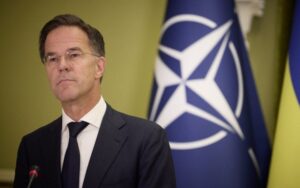
NATO Secretary General Mark Rutte announced Tuesday that the North Atlantic Alliance summit in 2026 will be held July 7-8 in the Turkish capital Ankara.
“I want to thank Turkey for organizing this important meeting. Turkey has been a loyal NATO ally for more than 70 years, making an invaluable contribution to our common security,” Rutte was quoted as saying by the organization’s headquarters.
“At our next summit, leaders will continue to work to make NATO a stronger, fairer and more effective alliance, ready to meet the critical challenges to our security,” the alliance secretary general said.
Turkey is hosting the NATO summit for the second time after Istanbul in 2004, Brussels recalled.



