
Ukrainian pharmaceutical manufacturers expect the government to facilitate the launch of tools for 2D verification of medicines in Ukraine.
As Petro Bagriy, president of the Association of Ukrainian Drug Manufacturers (AULU), told the “Interfax-Ukraine” news agency, this specifically involves facilitating pharmaceutical manufacturers’ access to software that will allow them to verify pharmaceutical products using a 2D code compatible with European systems, as well as the introduction of certain tax incentives for the purchase of the necessary equipment.
Bagriy noted that these issues were discussed during the most recent working meeting of members of the newly established “National Organization for the Verification of Medicines” (NOVLM).
“There is a provision in the new law on medicines stipulating that 2D coding of medicines must be operational in Ukraine by 2028. Such verification is one of the tools for combating counterfeit medicines. Ukraine is integrating into the EU, where this is a mandatory requirement, as only medicines verified by a 2D code are permitted for sale within the EU. Moreover, when exporting their medicines, Ukrainian pharmaceutical manufacturers label their products with 2D codes. But this is expensive; it requires significant investment in equipment and the renovation of packaging facilities,” he said.
The president of the Association of Pharmaceutical Manufacturers of Ukraine (AVLU) believes that not only pharmaceutical manufacturers but also distributors, pharmacies, and healthcare facilities that purchase medicines should participate in the launch of the system.
“We want to build a completely transparent system that will fully satisfy all participants, discriminate against no one, and provide equal rights and opportunities. In addition, it is important for the system to be fully integrated into the EU. We are discussing the possibility of engaging a software developer who will support the 2D verification—specifically, the one who developed it for EU countries—so that our product is fully integrated into all EU markets,” he emphasized.
Bagriy noted that, as a result, the QR codes used in Ukraine will be accepted in Europe, which will help promote Ukrainian medicines in European markets and also simplify the circulation of imported medicines in Ukraine.
“For example, ‘Farmaka,’ which will apply its code to its products, will find it easier to sell them in European pharmacies, and ‘Sanofi’ products will be easier to verify in Ukraine,” explained the president of the AULU.
He noted that “there is an initiative to exempt equipment imported for the implementation of the 2D-coding program for medicines from import duties and VAT.”
In addition, Bagriy reported that the Ministry of Health “is helping to negotiate a preferential price for the software in order to facilitate the financing of this project.”
“We have made a request, and the Minister of Health has promised us support so that we can gain access to software that has already been developed in the EU and be able to use it at a discounted price,” he said.
The president of the Association of Pharmaceutical Companies of Ukraine noted that the pilot system is scheduled to launch on January 1, 2027, and the system is expected to be fully operational as of January 1, 2028.
As previously reported, five pharmaceutical industry associations have registered the “National Organization for the Verification of Medicines” (NOVLM) to prevent and combat the circulation of counterfeit medicines in Ukraine in cooperation with European counterparts and the European Organization for the Verification of Medicines.
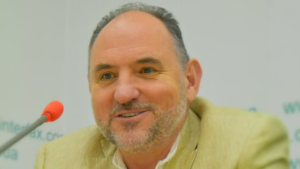
Prices for more than 200 more items of medicines may be reduced by an average of 30%, predicts Petro Bahriy, chairman of the Association of Manufacturers of Medicines of Ukraine (AMPU).
“This work (to reduce drug prices) has not been completed yet, it is ongoing, and we are now working on the next 200-250 items of drugs that will also be reduced. It will not be reduced by all 30%: some will be reduced by 30%, some by 40%, some by 20%. This will be determined by the market situation,” he said at a press conference at the Ukraine Media Center on Friday.
He noted that if one manufacturer reduces the price of one molecule, a competitor will also be forced to reduce its price.
At the same time, Bagriy noted that price cuts will have a positive effect on patients, but will lead to “huge losses” for pharmaceutical plants.
“For example, if we are talking about Darnitsa, it is about one billion hryvnias that it will lose from the price reduction. Of course, this cannot but affect the company’s investment policy, salary payments, and even some layoffs are possible,” he said.



