

According to Interfax-Ukraine, the founders of the 2KOLYORY embroidered clothing brand—whose production facilities have repeatedly suffered damage as a result of enemy strikes—have decided to close their business, as reported on the brand’s Facebook page.
“We are closing 2KOLYORY. For over 10 years, we have been building 2KOLYORY—here in Ukraine. We sewed embroidered shirts, shared a part of our culture with the world, and worked with people we love and cherish. The war has changed more than just our lives. It has changed our business. Our production facility has survived three shelling attacks. They left behind damaged walls, windows, doors, utilities, and traces of destruction,” the post reads.
The post notes that 2KOLYORY was a brand of embroidery known in Ukraine, Europe, and America.
“We recovered. We kept working. We looked for opportunities. We fulfilled orders even when it seemed we had no strength left. But the time has come to be honest: we can no longer continue on this path in the format we’ve operated in all these years,” the founders wrote.
They assured that all orders currently in production will be fulfilled in full by the end of September.
“Perhaps this isn’t quite the end. Perhaps this is the end of 2KOLYORY as you knew it, and the beginning of something new,” the post reads.
The brand’s story began in 2015, when husband and wife Igor and Oksana Kovalenko founded their own production facility.
The brand has a store in Kyiv, and its online store offers a wide selection of linen and cotton embroidered clothing for women, men, and children, as well as home textiles.
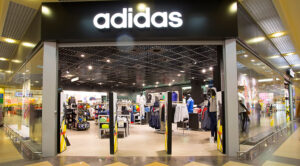
The Adidas sports brand has returned to Kharkiv after a four-year hiatus; a discount store has opened at 199 Heroiv Kharkiva Street, according to a post on LinkedIn by Igor Marinich, CEO of Adidas Ukraine.
“After four years in a ‘frozen’ state since the start of the full-scale war, we are once again opening our doors to all our customers and athletes in our wonderful, athletic, incredibly brave, and Ukrainian city of heroes—Kharkiv!” he wrote.
Marinich also emphasized that the safety of employees and customers remains a key priority for the company.
As reported, in February 2024, Adidas closed all its retail locations in Ukraine due to the security situation, but began restoring the network’s operations as early as July 2022. In Kharkiv, the brand’s stores had previously also operated in the “Karavan” and “Dafi” shopping centers.
In Ukraine, the chain is managed by the state-owned enterprise “Adidas-Ukraine,” which is owned by Adidas AG. According to OpenDataBot, by the end of 2025, the company increased its revenue by 28% to 2,996,893,000 UAH, while net profit halved to 43.310 million UAH in 2025 compared to 94.205 million UAH in 2024.

The U.S., China, and Germany remain the world’s most valuable country brands, according to data from Brand Finance’s annual study.
The company valued the U.S. brand at nearly $34.72 trillion, down 7% from last year’s level. The assessment covers a wide range of indicators, including GDP, investment and tourism appeal, policy and trade regulations, social aspects, and more.
At the same time, the value of the PRC’s brand increased by 7% (to $22.02 trillion), narrowing the gap with the top spot.
Germany ranks third, far behind (-8%, to $4.61 trillion), and the United Kingdom ranks fourth (-5%, to $4.23 trillion).
France moved up to fifth place (-7%, to $3.63 trillion), pushing Japan (-14%, to $3.62 trillion) down to sixth place. Canada (-12%, to $2.41 trillion) moved up to seventh place from eighth last year, Italy (-4%, to $2.3 trillion) to eighth from ninth, and Spain (-4%, to $2.12 trillion) to ninth from tenth.
India fell to tenth place from seventh (-30%, to $1.94 trillion).
The total value of G7 countries’ brands fell by $4.5 trillion over the year due to geopolitical tensions, tariffs, and economic uncertainty.
“The weakening of the Western alliance’s cohesion, combined with persistent inflationary pressures and high energy prices, contributed to a deterioration in sentiment toward a number of major economic powers,” the report notes.
According to a Brand Finance study, Russia, whose brand value fell by 11%, dropped to 25th place from 23rd last year; Kazakhstan (-26%) fell to 45th from 43rd; Uzbekistan dropped to 53rd from 55th; Azerbaijan fell to 74th from 82nd; Belarus – to 86th from 88th place, Turkmenistan – to 87th from 80th place, Georgia – to 91st from 97th place, Armenia – to 105th from 103rd place, and Kyrgyzstan – to 120th from 127th place. Tajikistan remained in 136th place.
Among the top 100 countries, Egypt fell significantly in the ranking—to 51st place from 35th a year earlier; Iran—to 63rd from 50th; Kenya—to 90th from 70th; and Angola—to 94th from 76th. Meanwhile, Costa Rica jumped to 70th place from 81st, the Democratic Republic of the Congo to 72nd from 87th, and Iceland to 80th from 90th.
In total, the ranking includes 192 countries. The total brand value of these countries decreased by 6% over the past year.
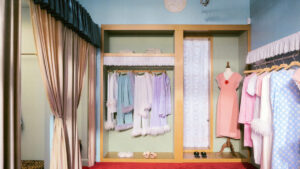
Ukrainian brand Sleeper is opening its first store in Kyiv, the company announced.
According to the brand’s social media pages, the boutique at 3 Rylskyi Lane is scheduled to open on Kyiv Day, May 31.
“This boutique expands the Sleeper ethos: each piece is made from start to finish in 6–12 hours by a single tailor, honoring the legacy of Kyiv’s light industry schools,” the brand announced on Facebook.
Sleeper, a premium-quality women’s clothing brand, was founded in Kyiv in 2014 by Katya Zubareva and Asya Varetsa, starting with a collection of everyday pajamas.

The Gulliver shopping center has officially announced the reopening of stores belonging to one of the world’s leading fashion retailers. Starting today, key brands of the Inditex group—Massimo Dutti, Stradivarius, Bershka, Pull&Bear, Oysho, and Zara Home—are once again available to visitors.
The return of these brands is an important step toward restoring the shopping and entertainment center’s full-fledged fashion offering. For visitors, this means the return of familiar and beloved stores to a well-known location in the heart of the capital.
The resumption of cooperation with international retailers became possible after the property’s legal status was stabilized. Since July 2025, the shopping and entertainment center has been owned by Oschadbank and Ukreximbank due to the previous owner’s failure to meet its credit obligations. In October 2025, the court lifted the seizure of the property, after which the complex came under the management of state-owned banks.
“The reopening of Inditex stores at Gulliver is a clear indicator of confidence in the new landlord. Transparency of ownership and predictability of terms are key factors for global business. Today, we provide exactly these conditions, and it is paying off. We are pleased to see that world-class brands are betting on Gulliver and Kyiv shoppers,” said Arsen Milyutin, Deputy Chairman of the Board of Oschadbank, responsible for NPL operations.
The Inditex Group is a leading global Spanish fashion retailer and one of the world’s largest fashion manufacturers and distributors, managing brands such as Massimo Dutti, Bershka, Pull&Bear, Stradivarius, Oysho, Zara, and Zara Home.

The Bila Romashka pharmacy chain (part of Fozzy Group) opened its first wellness space in the village of Lisnyky near Kyiv on Thursday, the company’s press service reported.
“We have created an offline space that differs from a regular pharmacy or cosmetics store with a special assortment that previously could only be ordered online,” explained Natalia Smaglyuk, CEO of the Bila Romashka chain, whose words are quoted in the release.
The new Bila Romashka space is an offline store for health and beauty products with a wide selection of certified dietary supplements, vitamins, CBD, natural skincare cosmetics, hygiene products, and balanced nutrition products. Currently, the assortment includes almost 2,000 items from 43 brands from the US, France, Korea, Spain, Greece, and Ukraine. Among them are Thorne, Solaray, Nature’s Way, Apivita, Weleda, Now, VVBETTER, Dr. Althea, Panfruit, The Elements, and others. The store will also exclusively feature products from the Ukrainian brand Vitalis Balance. The entire range has been carefully selected by specialists with pharmaceutical expertise.
A consultant will work alongside the pharmacist in the store.
The Bila Romashka pharmacy chain (Fozzy Farm LLC) was established in 2001 and is part of the Fozzy Group. Currently, the chain has 95 pharmacies and one wellness space in 47 locations across Ukraine.
According to YouControl, at the end of the third quarter of 2025, the company received a net income of UAH 1.1 billion, which is 25% higher than in the same period last year, and its net loss amounted to UAH 110 million 567 thousand against UAH 61 million 708 thousand in the third quarter of 2024.



