
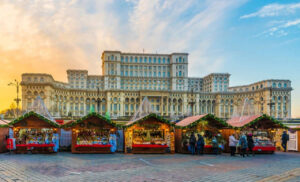
The Bucharest authorities plan to introduce a tourist tax of €2 per night for each visitor to the city from 2026.
The tax will be levied on tourists staying in hotels and hostels, as well as in apartments rented through booking platforms, including Booking and Airbnb.
According to city hall estimates, revenue from the new tax could reach 15 million lei per year. The funds raised are planned to be used to develop tourist infrastructure, promote Bucharest as a tourist destination, and improve services for visitors to the city.
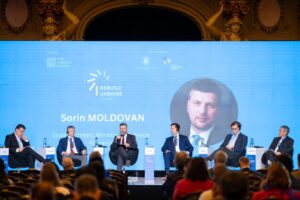
Participants in the panel discussion “Security Perspectives for 2026: Possible Developments” at the Ukraine Recovery Forum in Bucharest concluded that 2026 is shaping up to be a potential strategic turning point for Euro-Atlantic security against the backdrop of the ongoing war in Ukraine, the vulnerability of transatlantic ties, and growing pressure on the EU to strengthen its defense capabilities and strategic autonomy.
The discussion was moderated by Antena 3 CNN journalist Radu Tudor. The panel included Sorin Moldovan, State Secretary of the Romanian Ministry of National Defense; Vadym Halaychuk, First Deputy Chairman of the Verkhovna Rada Committee on EU Integration; Paul Coyer, Professor at the Institute of World Politics (USA), Nico Lange, Senior Research Fellow at the Munich Security Conference, and Shigeo Mutsushika, Executive Director of the Kazankai Foundation and Honorary Professor at Shizuoka University (Japan).
According to the speakers, Europe’s security environment in 2026 will be determined by a combination of several factors: the Russian Federation’s ongoing full-scale invasion of Ukraine, the fragmentation of transatlantic unity, and growing competition between major powers, including the use of hybrid instruments. Against this backdrop, Europe, in their opinion, should play a “more mature strategic role” – not only in the defense sphere, but also in industrial and energy policy.
“European states can no longer take security for granted – they need their own capabilities that will complement, not replace, the transatlantic partnership,” Lange said.
The participants paid particular attention to the stability of the Black Sea region and the resilience of NATO’s eastern flank, which were identified as key pillars of the European security architecture. It was emphasized that maintaining and strengthening support for Ukraine—military, economic, and political—will remain a decisive factor in deterring Russia and preventing further destabilization of neighboring regions. In this context, particular attention was paid to the risks associated with hybrid threats – cyberattacks, sabotage against critical infrastructure, and information operations.
Following the discussion, the panel concluded that structural changes in the security environment require deeper coordination between European states, accelerated investment in critical capabilities, and the adaptation of defense doctrines to new operational realities. Continued support for Ukraine, active use of Western economic and legal instruments—including the possible use of frozen Russian assets—and strengthening of the transatlantic partnership were identified as necessary prerequisites for maintaining regional stability and establishing a sustainable European security order.

Bucharest. At the forum “Rebuilding Ukraine: Security, Opportunities, Investments,” during a panel discussion, experts from the business and financial sectors stated that only a limited number of Romanian companies are currently ready to participate in large-scale projects to rebuild Ukraine, while access to financial instruments and risk-sharing mechanisms remains a key prerequisite for their more active involvement.
The panel was moderated by Cristina Chiriac, president of the National Confederation of Women Entrepreneurs of Romania (CONAF). The discussion was attended by Teodora Preotias, Director of European Funds Administration at the Romanian Bank for Investment and Development, Mihai Daraban, President of the Romanian Chamber of Commerce and Industry, and Viorel Manole, Executive Director of the Romanian Defense Industry Association PATROMIL.
The participants noted that the market for projects to rebuild Ukraine is currently largely structured by international financial institutions, which have high requirements for corporate governance, compliance, and risk management. According to them, a significant number of Romanian companies do not have sufficient operational capacity to act as main contractors and are forced to limit themselves to the role of subcontractors in supply chains.
“Participation in large projects requires access to credit lines, guarantees, and risk-sharing mechanisms, which are mostly administered by international financial institutions. Without this, many of our companies simply cannot enter into such contracts directly,” Preotasa noted during the discussion.
Experts emphasized the need to create an official Romanian-Ukrainian information platform that would consolidate data on available tenders, donor requirements, and opportunities for business participation. They also called for the development of a national strategy to support companies operating or planning to operate in the Ukrainian market in conditions of heightened political and security risks, including state guarantees and investment insurance instruments.
A separate discussion focused on the possibility of locating part of strategic production capacities in Romania or other safe neighboring countries to ensure continuity of production and logistics. According to Manole, such an approach could strengthen the contribution of national industry to the reconstruction of Ukraine while minimizing security risks for investors. He had previously publicly noted the potential of locating Ukrainian defense production in Romania as an element of bilateral cooperation.
Following the discussion, the participants concluded that Romanian companies have significant potential in Ukraine’s reconstruction projects, but its implementation depends on the coordination of state institutions, the availability of financial instruments, and close cooperation with international partners and financial organizations.
The forum “Rebuilding Ukraine: Security, Opportunities, Investments” is being held on December 11-12 in Bucharest under the auspices of the Romanian Ministry of Foreign Affairs and the Ukrainian Ministry of Foreign Affairs and is organized by the New Strategy Center. According to the organizers, more than 30 panel discussions and parallel sessions are planned over two days with the participation of representatives of governments, international organizations, the private sector, financial institutions, and experts from Europe, North America, and Asia. The topics of the panels cover security and defense, infrastructure, financing and investment, green energy, digitalization, human capital, and cross-border cooperation.
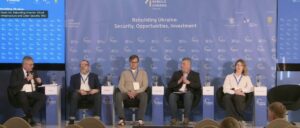
At the Rebuilding Ukraine: Security, Opportunities, Investments forum in Bucharest, participants in a panel discussion on the role of the private sector in Ukraine’s reconstruction emphasized that attracting private capital is critical for the implementation of large-scale projects, but its participation is impossible without effective mechanisms for financing, insurance, and reducing investment risks.
The panel “Private Sector – A Key Actor in the Reconstruction of Ukraine. Financing and Insurance Instruments” was moderated by Victor Srayer, managing partner of Otto Broker (Romania). The discussion was joined by Volodymyr Tsabal, secretary of the Verkhovna Rada Committee on Budget, and Susan E. Walton, senior advisor on new markets – global risks and sustainability (USA) Susan E. Walton, CEO of BCR – Romanian Commercial Bank Sergiu Manea, Director of Legal and External Relations at Vodafone Romania Alexandra Olaru, and JBIC Regional Head for EMEA, Resident Executive Officer of the Japan Bank for International Cooperation Takayuki Sato.
Participants noted that the private sector, both Ukrainian and foreign, faces a double challenge. Ukrainian companies have limited access to debt financing due to high interest rates, war risks, and domestic capital market constraints. Foreign investors, in turn, are forced to take into account political and military risks, as well as regulatory peculiarities of working in Ukraine.
The main solutions identified were the use of blended financing instruments, the involvement of international financial organizations to cover part of the risks, and the creation of a guaranteed framework by the state and partners that makes projects “bankable” for commercial structures. “For private capital to enter the reconstruction process, investors need to clearly see which risks are assumed by the state and international financial institutions, and which are assumed by themselves. Without this, projects either do not start or remain at the conceptual level,” Manea noted.
Special attention was paid to the role of political and military risk insurance, as well as the importance of transparent information and local partner networks. According to the speakers, successful project implementation requires strategic coordination between government agencies, donors, and private businesses, particularly in terms of selecting priority projects, structuring agreements, and monitoring their implementation.
The panel participants also emphasized that reconstruction is impossible without reliable digital and energy infrastructure. The experience of neighboring countries that have undergone large-scale infrastructure programs can be used to implement practical solutions in Ukraine. “Private capital, combined with government support and good governance, can significantly accelerate post-war recovery. The state’s task is to create predictable rules of the game and an institutional environment that will make this possible,” Walton concluded.
Following the discussion, participants concluded that the private sector has significant potential in rebuilding Ukraine, but that realizing this potential depends on the availability of financial instruments, effective insurance protection mechanisms, and coordinated action between public and private actors.
The forum “Rebuilding Ukraine: Security, Opportunities, Investments” is being held on December 11-12 in Bucharest under the auspices of the Romanian Ministry of Foreign Affairs and the Ukrainian Ministry of Foreign Affairs and is organized by the New Strategy Center. According to the organizers, more than 30 panel discussions and parallel sessions are planned over two days with the participation of representatives of governments, international organizations, the private sector, financial institutions, and experts from Europe, North America, and Asia. The topics of the panels cover security and defense, infrastructure, financing and investment, green energy, digitalization, human capital, and cross-border cooperation.

Strengthening cloud infrastructure and cybersecurity is one of the key areas for strengthening Ukraine’s “digital shield” in the context of the ongoing war, according to participants in the panel discussion “Rebuilding Smarter: Cloud Infrastructure and Cyber Security for a Strong Ukraine’s Digital Shield” at the “Rebuilding Ukraine: Security, Opportunities, Investments” forum in Bucharest.
The panel was moderated by Daniel Ionita, senior associate expert at the New Strategy Center (Romania). The discussion was joined by Oleg Haiduk, advisor on AI and innovation at the PARKOVY data center and former Deputy Minister of Defense of Ukraine for Digital Development; Volodymyr Luchenko, technical director at Kyivstar; Dragos Dima, senior cybersecurity advisor at the EU Mission for Civilian Security Sector Reform in Ukraine (EUAM Ukraine) and Olga Belyakova, co-head of technology, media, and communications practice at CMS Cameron McKenna LLC in Central and Eastern Europe.
According to the speakers, immediately after the start of the full-scale Russian invasion in February 2022, Ukraine transferred critical data arrays to data centers in the EU. By 2023, the strategy had been transformed towards the creation of sovereign national data centers with support for cross-border backup solutions. This transition was made possible by accelerated legislative changes, which by the end of the year provided a functional regulatory framework for the provision of cloud services.
In the field of cybersecurity, the key measures, according to the panel participants, are the widespread use of VPN solutions, the introduction of centralized access management (PAM), the use of multi-factor authentication, and the integration of WAF-class solutions to protect web resources. “This is not just about technical means, but about building a comprehensive architecture of trust – from the user to state registries and critical infrastructure,” said Haiduk.
The experts emphasized that Ukraine’s cyber resilience must be built in a cross-border format—through the integration of critical digital infrastructure into NATO and EU security systems, joint incident response protocols, and the exchange of threat data. “The more closely Ukraine’s digital infrastructure is integrated into the Euro-Atlantic security ecosystem, the more difficult it will be to isolate or paralyze it as a result of cyberattacks,” Belyakova emphasized.
Following the discussion, participants concluded that the development of national data centers, the expansion of cloud services, and the synchronization of cyber defense standards with NATO and the EU are necessary conditions not only for the security of the public sector, but also for the stable functioning of business and the implementation of reconstruction projects.
The forum “Rebuilding Ukraine: Security, Opportunities, Investments” is being held on December 11-12 in Bucharest under the auspices of the Romanian Ministry of Foreign Affairs and the Ukrainian Ministry of Foreign Affairs and is organized by the New Strategy Center. According to the organizers, more than 30 panel discussions and parallel sessions are planned over two days with the participation of representatives of governments, international organizations, the private sector, financial institutions, and experts from Europe, North America, and Asia. The topics of the panels cover security and defense, infrastructure, financing and investment, green energy, digitalization, human capital, and cross-border cooperation.
Bucharest, cloud infrastructure, digital shield, EU, INTEGRATION, NATO

The widespread use of unmanned systems in Russia’s war against Ukraine represents not just a technological evolution, but a profound change in the logic of warfare, for which most European countries are not yet prepared, according to participants in the panel discussion “The Russia–Ukraine Drone War: Innovation on the Front Line and Beyond. What Can We Learn for Our Own Defense?” at the Ukraine Recovery Forum in Bucharest.
Panel VIa was moderated by Greg Melcher, Chief Operating Officer of the New Generation Warfare Centre (USA). The discussion was attended by Andriy Sirko-Galushchenko, an expert in the development of UAVs for military applications; Terry Jamison, International Director of Boeing’s Vertical Takeoff and Landing Aircraft Division; Mustafa Nayem, Director of Public Communications at GTX; former Prime Minister of Romania, retired General Nicolae Ciucă, and Deputy Chief of Staff for Operations and Training, Lieutenant General Julian Berdila.
According to the speakers, what until recently was perceived as a “distant technological horizon” has already become an everyday operational reality. The development of unmanned systems, open architectures, and the rapid integration of new capabilities indicate that the “future of warfare” has arrived much sooner than many Western players expected. Ukraine’s combat experience has shown that accelerated innovation cycles are leading to a structural transformation in the planning of air, ground, and joint operations.
Participants emphasized that the combined use of manned and unmanned platforms, as well as immediate technical interoperability between them, are becoming a basic requirement for the adaptation of modern armed forces. Drones are already being used systematically for reconnaissance, high-precision strikes, logistics, mining and demining, artillery fire correction, and special operations support. Massive coordinated attacks on critical infrastructure have demonstrated the limitations of purely reactive defense and highlighted the need to neutralize threats “at the source.”
At the same time, counter-drone systems are rapidly developing, combining existing surveillance and electronic warfare capabilities with new solutions to counter large numbers of small, low-altitude targets. “This is no longer an episodic tool, but a full-fledged layer of the modern battlefield that requires a separate doctrine, forces, and means,” Berdila noted.
A separate emphasis in the discussion was placed on Europe’s vulnerability to hybrid forms of aggression. According to experts, traditional threat assessments do not correspond to the realities in which the enemy acts mainly with asymmetric, scattered, and difficult-to-attribute methods. Incidents involving the appearance of unknown drones near critical infrastructure in various European countries, they said, expose the gap between public perception, the level of institutional preparedness, and the actual nature of the risks.
Following the discussion, the participants concluded that “drone” warfare is not only a technical issue but also a challenge for institutional capacity and defense planning. Adapting to the new operational environment requires flexible institutions, short innovation cycles, coordinated investments, and a doctrine capable of quickly integrating the lessons learned from Ukraine’s experience. Modern warfare, they emphasized, has become a space where speed of adaptation, integration of systems, and simultaneous readiness for offensive and defensive actions are key elements of strategic resilience.
The forum “Rebuilding Ukraine: Security, Opportunities, Investments” is being held on December 11-12 in Bucharest under the auspices of the Romanian Ministry of Foreign Affairs and the Ukrainian Ministry of Foreign Affairs and organized by the New Strategy Center. According to the organizers, more than 30 panel discussions and parallel sessions are planned over two days with the participation of representatives of governments, international organizations, the private sector, financial institutions, and experts from Europe, North America, and Asia. The topics of the panels cover security and defense, infrastructure, financing and investment, green energy, digitalization, human capital, and cross-border cooperation.



