
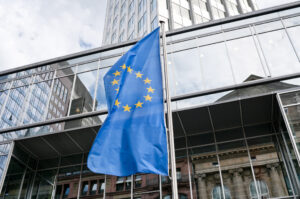
The European Commission has launched the Connectivity Agenda Platform—a new platform to coordinate investments in transport, energy, digital infrastructure, and trade between Europe and Central Asia via the Black Sea region and the South Caucasus.
At the same time, the European Commission has signed agreements with international financial institutions to mobilize up to 2 billion euros for strategic infrastructure projects in the Black Sea region and the South Caucasus.
The platform was presented at a high-level ministerial meeting attended by representatives from EU countries, Armenia, Kazakhstan, Kyrgyzstan, Moldova, Tajikistan, Turkmenistan, Turkey, Ukraine, and Uzbekistan, as well as the G7 and international financial institutions.
The main goal of the initiative is to integrate projects for the development of the Trans-Caspian Transport Corridor into a single system; the EU views this corridor as one of the key routes between Europe and Central Asia, bypassing unstable or politically risky routes.
Investments are planned to be directed toward transportation infrastructure, border crossing points, and trade facilitation. The participants also agreed to enhance the operational efficiency of the Trans-Caspian Corridor and asked the European Commission to assess its performance and propose priority measures to improve the route’s competitiveness.
For Ukraine, this initiative is important in several respects. First, Kyiv has been included in the framework for discussions on regional connectivity between the EU, the Black Sea, the South Caucasus, and Central Asia. Second, the development of alternative trade routes reinforces the importance of the Black Sea corridor for exports, logistics, and the restoration of the region’s transit role. Third, such projects could become part of Ukraine’s broader integration into European transport, energy, and digital networks.
The Connectivity Agenda is part of the Global Gateway strategy. This strategy aims to strengthen the EU’s external connections through investments in infrastructure, energy, digital solutions, and sustainable trade.
The European Commission notes that the Trans-Caspian Transport Corridor is already gaining strategic importance as a more resilient route between Europe and Central Asia. According to Marta Kos, European Commissioner for Enlargement, trade along this route could increase fivefold over the next 15 years.
In fact, the EU is seeking to create a new infrastructure architecture along the Europe–Black Sea–South Caucasus–Central Asia axis. For businesses, this means potentially more routes, less dependence on specific transit routes, and new opportunities in logistics, energy, digital projects, and trade.
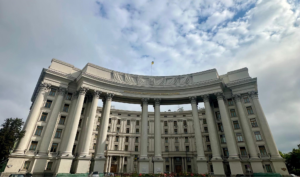
Foreign Minister Andriy Sibiga called Kazakhstan a key regional partner of Ukraine and spoke in favor of deepening cooperation in the fields of logistics, energy, and post-war reconstruction, also announcing his intention to launch the “Ukraine + Central Asia” platform.
“It is important for Kazakhstan to remain one of the key suppliers of energy resources in Eurasia, while simultaneously diversifying and modernizing its energy sector. Kazakhstan is also one of the world’s leading producers of uranium, which is a critically important resource for nuclear energy production. This plays an important role in global energy security,” the minister said in an interview with The Times of Central Asia.
Sibiga noted that Ukraine is interested in the participation of Kazakhstani businesses and investors in the country’s reconstruction, as well as in the development of the Middle Corridor as an alternative transport route between Asia and Europe involving Ukrainian Black Sea ports.
Separately, the foreign minister touched on the topic of historical memory and the shared experience of Ukraine and Kazakhstan related to policies of repression and the suppression of national identity.
According to Sibiga, Russia’s strategic goal is to continue a policy that, in his assessment, dates back to the times of the Russian Empire and the Soviet period.
“Russia’s strategic goal is to complete what the Russian Empire began and the Soviet regime failed to finish: the eradication of national identity and the destruction of the very foundation of our existence as a separate nation,” he emphasized.
The minister also noted that Ukraine and Kazakhstan share a common historical memory of language and cultural bans, repression, deportations, and famines.
“Ukraine and Kazakhstan alike remember the tragic chapters of their history: the banning of language and culture, the destruction of the intelligentsia, deportations, repression, and famines. We cannot allow this to happen again,” the foreign minister concluded.
Central Asia, KAZAKHSTAN, MINISTRY OF FOREIGN AFFAIRS, PARTNER
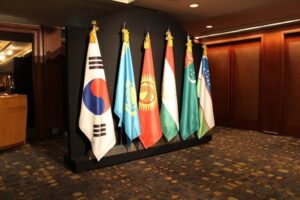
The first Central Asia-Republic of Korea Summit will be held in Seoul on September 16-17, 2026.
The summit is expected to be attended by the heads of Uzbekistan, Kazakhstan, Kyrgyzstan, Tajikistan, and Turkmenistan.
The main goal of the summit is to expand diplomatic horizons and qualitatively strengthen ties between Seoul and the region. The parties will pay special attention to diversification of supply chains and economic security, which is critical in the current geopolitical environment.
The new format of the dialogue is intended to move cooperation from the plane of individual projects to the plane of systemic multilateral interaction, covering energy, technology, and logistics.
The World Korea writes that the government of the Republic of Korea intends to use the upcoming summit as an opportunity to develop cooperation in the following areas:
– Partnership in critical minerals and energy;
– Industrial and digital transformation;
– Transportation and logistics ties;
– Cooperation in defense and security;
– Cooperation in Agriculture, Climate and Health.
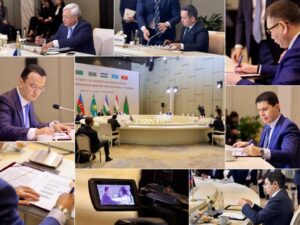
On November 13, 2025, the first meeting of the Council of Ministers of Trade and Investment of Central Asian countries and Azerbaijan was held in Tashkent.
The event was aimed at strengthening practical cooperation between the countries of the region in the areas of trade, investment, and industrial cooperation, as well as implementing joint initiatives to increase mutual trade and create cooperative production facilities.
Particular attention was paid to the creation of working tools to increase trade turnover between the countries of the region to $20 billion, the formation of joint production sites under the “Made in Central Asia” brand, as well as the involvement of international financial institutions and large investors in the implementation of joint infrastructure and industrial projects.
It was noted that mutual trade between Uzbekistan and the countries of Central Asia is showing steady positive dynamics. While trade turnover amounted to $3.2 billion in 2017, by 2024 it had more than doubled, reaching $6.9 billion. In particular, trade turnover with Kazakhstan is approaching $4 billion, with Kyrgyzstan — $700 million, with Tajikistan — exceeding $570 million, and with Turkmenistan — more than doubling over the past five years to $1.15 billion. Trade with Azerbaijan has also shown significant growth, up 13% since the beginning of the year.
During the meeting, the need for further optimization of customs and border procedures, synchronization of transport and logistics infrastructure, and the creation of industrial hubs capable of uniting the production chains of the countries in the region was also emphasized. Particular attention was paid to issues of industrial cooperation, joint development of raw material and technological potential, and the development of exports of finished products with high added value.
Following the meeting, a joint communiqué was signed, setting out key agreements on deepening economic cooperation, developing cooperation and joint production, and creating new mechanisms for investment interaction.

A private equity fund from Central Asia – Brickstone Private Equity Fund CEIC Ltd (Kazakhstan) – has acquired Ukrainian construction company Watzenrode.
“As of July 15, 2025, I am no longer a shareholder of Watzenrode. This large company, which I founded in 2013, has grown to become a key player in the Ukrainian construction and now renovation market, showing stable growth even in wartime. The new owner, a private equity fund linked to the largest construction group in Central Asia, has multi-billion dollar revenues,” founder Ilyas Ertle said on LinkedIn.
According to YouControl, Brickstone Private Equity Fund CEIC Ltd (Kazakhstan) became the new owner with a 100% stake.
“With the change of management, Watzenrode has effectively become the construction company with the strongest financial backing in Ukraine. This creates an environment that sets Watzenrode up for success and for becoming a central player in the reconstruction of Ukraine,” Ertle wrote.
The team will continue to be led by Oleksandr Gura, Ilyas Ertle remains on the board of directors at the suggestion of the new shareholder.
Watzenrode provides design, construction and engineering services in the roles of contractor, general contractor and technical customer. In particular, the company was a subcontractor for the construction of the confinement of the Chernobyl nuclear power plant, realized together with NEFCO the project of renovation of the water supply system in Borodyanka, was selected as a general contractor for the expansion of the UNBROKEN Ukraine clinic in Bryukhovichi near Lviv at the end of 2024, etc. According to YouControl, Watzenrode LLC’s revenue for 2024 amounted to almost UAH 369.275 million, which is 2.3 times more than in 2023. The company’s net profit grew last year by 29% to UAH 13.8 million.
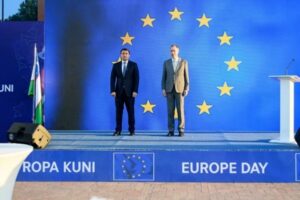
The Central Asia-European Union Economic Forum and Investor Forum will be held in Uzbekistan in November. This was announced by the European Union Ambassador to Tashkent, Toivo Klaar, during the celebration of Europe Day on May 12.
“These forums will open up new business opportunities,” said the head of the diplomatic mission.
As a reminder, during the first Central Asia-European Union summit, which took place in April, the EU announced an investment package for Central Asia worth €12 billion for the development of four areas: transport corridors, critical raw materials, green energy, and satellite internet.
Toivo Klaar also noted that the EU is looking forward to the next Human Rights Dialogue.
In addition, the European Union is expecting a visit by Uzbekistan’s President Shavkat Mirziyoyev to Brussels this year to sign an Agreement on Enhanced Partnership and Cooperation.
“This historic visit will open a new chapter in relations between the EU and Uzbekistan, which will be deepened, diversified, and modernized in many areas,” the EU ambassador said in his speech.



