

According to Relocation, Argentina has officially announced the launch of a citizenship-by-investment program that will allow foreigners to obtain an Argentine passport without going through the standard, multi-year naturalization process. The government plans to begin accepting applications as early as the fourth quarter of 2026.
The program was announced on October 2 during Argentina Week in Paris by Argentine Economy Minister Luis Caputo and Prime Minister Diego Santilli.
The government is offering foreigners two main options for participation.
The first is a non-refundable contribution of $350,000 to the Argentine treasury.
The second is the purchase of a special government bond worth $800,000, which will be issued specifically for program participants. The government has not yet published the detailed terms of this security.
The program allows for the inclusion of family members.
The spouse of the primary applicant, as well as unmarried and childless children between the ages of 18 and 25, will be eligible for citizenship subject to an additional contribution of $100,000 per person.
For a child under the age of 18, the additional contribution will be $25,000.
Thus, a family consisting of two adults and two minor children will be eligible for Argentine citizenship upon making a total non-refundable contribution of $500,000
. One of the program’s key features is that it grants citizenship itself, rather than a residence permit or permanent residency in exchange for investment.
The legal framework for the new program was established back in May 2025, when the government amended Argentina’s citizenship law and created a special Agency for Citizenship-by-Investment Programs. Its mission is to manage such programs and attract foreign capital.
However, it will not be possible to obtain a passport simply by transferring money. The government promises to conduct extensive background checks on applicants.
The origin of funds, the applicant’s financial transparency, and potential risks related to money laundering and terrorist financing will be scrutinized. The authorities state that due diligence procedures will comply with OECD and FATF recommendations. All investments must go through the official financial system.
Another important point for potential participants: the acceptance of applications had not yet begun at the time the program was announced.
The government has announced that the program is scheduled to launch during the fourth quarter of 2026. Therefore, until the final procedures, application forms, review deadlines, and investment bond parameters are published, it is premature to transfer funds or pay for the services of intermediaries who are already promising a guaranteed Argentine passport.
Argentine citizenship is of interest primarily as a tool for international mobility. The country’s passport provides extensive visa-free access, particularly to Schengen Zone countries, and Argentine citizenship opens up additional opportunities for residence and economic activity within South America thanks to the country’s integration into Mercosur.
Before the investment program was introduced, foreigners could obtain Argentine citizenship through the standard naturalization process. The new model creates a separate pathway for wealthy applicants willing to invest significant capital.
Argentina spent over a year preparing the program. In May 2025, a decree by President Javier Milei established the legal framework for obtaining citizenship through investment, and in April 2026, the leadership of a special government agency was appointed. The authorities first announced the official financial terms on October 2.

According to Relocation, Sierra Leone has expanded its citizenship program for foreign investors by adding two new options: expedited citizenship for $1 million and naturalization through residency in the country with investments starting at $90,000.
According to information from the Go-FOR-GOLD Sierra Leone program, the first new option provides for expedited citizenship upon payment of $1 million.
This option is aimed at high-net-worth applicants who need the fastest possible citizenship process. The program requires verification of the source of funds and the applicant’s good character.
The second route is significantly cheaper but requires the investor to have a genuine connection to the country. To participate, applicants must invest at least $90,000 in an approved business or enterprise in Sierra Leone.
Afterward, the applicant must reside in the country for at least 90 days per year for five years. Once these conditions are met, the applicant becomes eligible to apply for citizenship through naturalization.
Thus, the minimum physical presence requirement over five years is 450 days.
These new options complement Sierra Leone’s existing investment citizenship program, launched under the Go-FOR-GOLD brand.
The basic investment track requires a non-refundable contribution of $140,000 for the principal applicant. An additional fee is required to include a spouse in the application, and separate fees apply for other dependents.
One of the program’s unique features is the ability for participants in the main investment track to obtain citizenship without having to reside permanently in Sierra Leone.
The country’s government positions Go-FOR-GOLD not only as a mechanism for attracting foreign investors but also as a tool for financing environmental and economic projects.
Sierra Leone has become one of the new entrants to the rapidly growing market for citizenship-by-investment programs. Such programs are most common in the Caribbean, where they are in place in Antigua and Barbuda, Dominica, Grenada, St. Kitts and Nevis, and St. Lucia.
Official source: Go-FOR-GOLD Sierra Leone — the official citizenship program.

The U.S. has imposed new visa restrictions on foreign nationals who knowingly participate in organizing so-called “birth tourism” or facilitate such trips, U.S. Secretary of State Marco Rubio announced.
The State Department’s new policy took effect on September 23, 2026, and is enforced under Section 212(a)(3)(C) of the U.S. Immigration and Nationality Act. The restrictions may apply to individuals who participate, have previously participated, or assist in organizing trips to the U.S. with the primary purpose of giving birth to a child and securing U.S. citizenship for that child.
Specifically, the measures may affect owners, executives, and managers of companies specializing in “birth tourism,” visa brokers who instruct clients to provide false information when applying for visas, as well as foreign healthcare professionals who knowingly facilitate such trips or the fraudulent use of the Medicaid program. The restrictions may also extend to other individuals who support commercial schemes and, in certain cases, to their family members.
According to Rubio, commercial “birth tourism” networks advertise their services abroad, help applicants conceal the true purpose of their trip, and may charge tens of thousands of dollars to arrange childbirth on U.S. soil.
However, this is not the first time a ban has been in place on using a B-category visitor visa for a trip whose primary purpose is to give birth to a child in order to obtain U.S. citizenship for that child. Since January 24, 2020, U.S. consular officers have been required to deny a B visa if they have reason to believe that this is the primary purpose of the trip.
The new 2026 policy shifts the focus from the applicants themselves to the organizers, intermediaries, and infrastructure behind such schemes. Immigration lawyers note that the State Department has not yet disclosed in detail what evidence will be used, how exactly individuals subject to the restrictions will be identified, or whether the new measures will affect visas that have already been issued.
Pregnancy alone is not an automatic basis for visa denial. The State Department continues to allow travel to the U.S. for medical treatment, including medical care during pregnancy, provided the applicant meets the requirements for the relevant visa and can confirm the purpose of the trip and the ability to pay for medical expenses. However, “birth tourism”—where the primary purpose is to obtain U.S. citizenship for a child—is not officially considered a valid basis for issuing a visitor visa.

Ukrainian businessman, former member of parliament, and one of the most prominent major investors in Ukraine’s metallurgical industry, Vadim Novinsky, has been granted Serbian citizenship, according to the Serbian business portal Parametar.
According to Parametar, the decision to grant Novinsky citizenship of the Republic of Serbia was made by the country’s government on September 24, 2026, and published in the official “Službeni Glasnik.” The document was signed by Serbian Prime Minister Džuro Matsut.
Novinsky was born on June 3, 1963, in Staraya Russa, in what is now Russia, but he has built a significant portion of his business career in Ukraine. He obtained Ukrainian citizenship in 2012.
In Ukraine, Novinsky is best known as the founder of Smart Holding and a long-time partner of Rinat Akhmetov’s SCM Group in the mining and metallurgical group Metinvest. Smart Holding held a 23.76% stake in Metinvest. The group’s business interests also spanned shipbuilding, the agricultural sector, real estate, and other areas.
In late 2022, Novinsky announced that he had transferred his assets to a trust. Metinvest subsequently stated that Novinsky is not a beneficiary of the company and does not exercise actual control over it.
Novinsky was also involved in politics. From 2013 to 2022, he served as a member of the Ukrainian Parliament for several terms, first as part of the Party of Regions faction and later as part of the “Opposition Bloc.”
In December 2022, Ukraine imposed personal sanctions against Novinsky. In January 2025, the State Bureau of Investigations and the Security Service of Ukraine reported that the former People’s Deputy was suspected of high treason and inciting religious hatred. Ukrainian media identified the suspect as Vadym Novinsky. The businessman himself denied the charges against him and called them politically motivated.
In June 2025, Ukrainian law enforcement agencies also reported an investigation into possible tax evasion totaling more than 4 billion UAH involving the former lawmaker, whom the media identified as Novinsky. At this point, these are allegations and investigations, not final, legally binding convictions.
After the start of Russia’s full-scale invasion of Ukraine, Novinsky publicly spoke out against the war.
Serbian authorities have not yet publicly disclosed the specific reasons for granting Novinsky citizenship, nor have they reported on any potential investment projects by the businessman in Serbia.
Source: Serbian business portal Parametar.
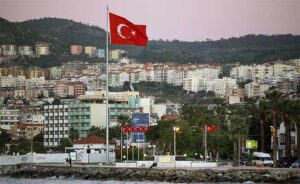
Turkey has identified another 1,070 people who, according to the investigation, obtained Turkish citizenship through fake real estate transactions. This marks the second major wave of investigations into schemes involving the granting of citizenship through residential property investments.
Turkish Justice Minister Akın Gürlek announced the new operation on September 21. The investigation is being conducted by the Istanbul Chief Prosecutor’s Office in collaboration with police units responsible for combating illegal migration.
Investigators examined real estate transactions conducted through the companies Gül İnşaat, Beyaz İnşaat, and LİV İnşaat. The audit covered sales to 734 foreign nationals, with 274 transactions deemed fictitious or suspicious. The total value of the transactions exceeded 3.5 billion Turkish lira, or approximately $72 million.
According to the Turkish Ministry of the Interior, among the 1,070 people who obtained citizenship under these agreements, 263 were direct investors, while another 807 were their family members. Of these, 1,015 received citizenship at the same time as the initial decision, and another 55 children received it later. In addition, 11 individuals were identified whose citizenship application processes were still ongoing.
As part of the operation, judicial measures were applied to 2,011 real estate properties, one hotel, 86 vehicles, two yachts, and 42 bank accounts. State administrators were appointed to 30 companies. Legal proceedings have been initiated against 88 suspects, and dozens of people have been detained.
This is already the second wave of the investigation. The first major operation took place on August 4, 2026. At that time, the investigation established that another 687 people had obtained Turkish citizenship through artificially inflated appraisal reports and fictitious real estate sales. The prosecutor’s office has initiated proceedings to revoke their citizenship. In that case, authorities estimated the amount of investments that did not actually reach Turkey at approximately 2.5 billion lira.
Thus, the two most recent investigations in Istanbul alone involve at least 1,757 cases of citizenship acquisition linked to suspicious real estate transactions, when combining the 687 individuals from the first wave and the 1,070 from the second. However, these two figures pertain to specific criminal investigations and do not cover all reviews of investment-based citizenship in the country.
At the same time, the Turkish Ministry of the Interior has, for the first time, released broader statistics on the review of citizenship obtained through investment programs. According to the ministry, as of September 21, citizenship decisions had been revoked for 5,391 individuals, including investors and their family members. Additionally, citizenship was revoked after it had been granted for 743 individuals, specifically for reasons related to public order and national security. In total, this amounts to 6,134 individuals.
As of February 11, 2026, citizenship grants were separately revoked for 1,393 individuals associated with 458 investors whose documents certifying that their investments met the established requirements were annulled. Citizenship was also revoked from seven other individuals on grounds of national security and public order.
Turkish authorities have not published a breakdown of the 1,070 individuals implicated in the current investigation by their country of origin. No similar official breakdown was published regarding the 687 individuals identified in August either. Therefore, reports claiming a predominance of Russians, Iranians, citizens of Middle Eastern countries, or other nationalities in these specific cases are not currently supported by official documents.
The scheme being investigated by law enforcement agencies was based on fictitious or inflated real estate values and the simulation of required financial transactions. In some cases, real estate with a significantly lower actual value was valued much higher in the documents in order to formally meet the requirements of the citizenship-by-investment program.
Turkey allows foreign investors to apply for citizenship, specifically through the purchase of real estate valued at no less than $400,000. The property must meet established requirements, and the investment and flow of funds are subject to verification by government agencies.

Indonesia plans to allow limited dual citizenship for the first time for certain members of the national diaspora and highly skilled professionals. President Prabowo Subianto put forward the initiative, proposing that Parliament amend the citizenship law. The president presented the initiative during a speech in parliament on Indonesia’s 2027 state budget proposal.
According to him, the new policy will not apply to everyone who wishes to obtain a second passport. It involves limited dual citizenship for professionals and members of the diaspora in whom the state has an interest.
Among the potential categories, Prabowo named scientists, doctors, engineers, artificial intelligence specialists, researchers, entrepreneurs, artists, and athletes.
“We propose allowing dual citizenship for certain talents that the country needs,” the president stated.
According to him, the authorities should not force Indonesia’s most successful expatriates to choose between an international career and maintaining ties with their historical homeland.
It is expected that potential recipients of dual citizenship will undergo a separate selection process, including a background check. The rights and obligations of such citizens are to be defined separately by law, taking into account national security considerations.
Current Indonesian law generally does not recognize dual citizenship for adults.
Children who have acquired citizenship in two countries may temporarily retain both statuses; however, upon reaching the age specified by law, they must choose one citizenship.
Therefore, implementing Prabowo’s initiative will require amending the current law and obtaining parliamentary approval. A timeline for adopting the relevant amendments has not yet been announced.
The initiative is a continuation of a long-standing discussion on engaging the Indonesian diaspora. As far back as 2024, authorities publicly discussed the possibility of dual citizenship for former citizens and professionals of Indonesian descent.
The authorities cite the brain drain as one of the reasons for the reform. According to Indonesia’s Directorate General of Immigration, nearly 4,000 Indonesians obtained Singaporean citizenship between 2019 and 2022, renouncing their Indonesian passports. The authorities hope that the option to retain Indonesian citizenship will allow professionals to pursue international careers without severing their legal ties to the country.
The involvement of the diaspora is already particularly noticeable in sports. In recent years, the Indonesian national soccer team has included a number of players born primarily in the Netherlands who have Indonesian roots. The authorities implemented special procedures for them to obtain citizenship.
Ahead of a possible reform, Indonesia launched the Global Citizenship of Indonesia (GCI) program.
It allows former Indonesian citizens and certain foreigners of Indonesian descent to obtain a permanent residence permit with the right to enter the country multiple times without renouncing their existing foreign citizenship. However, GCI does not constitute Indonesian citizenship and does not entitle holders to an Indonesian passport.
The program applies, in particular, to former Indonesian citizens, their descendants, and certain categories of family members with ties to Indonesia.
The limited dual citizenship currently being proposed should go much further and allow certain members of the diaspora to simultaneously retain their foreign citizenship and restore or obtain Indonesian citizenship.
CITIZENSHIP, DUAL CITIZENSHIP, IMMIGRATION, INDONESIA, ДІАСПОРА



