

The Egyptian government has approved the creation of “The Spine,” a special private investment zone in the Madinaty district of New Cairo. The project, valued at approximately $27.4 billion, involves the construction of 165 residential, office, and hotel towers and is positioned by the developer as the first large-scale “cognitive city” in Egypt and the Middle East, where artificial intelligence will be widely used to manage its infrastructure.
Approximately 2.1 million square meters of land within the existing Madinaty project will be allocated for development. In addition to residential, office, and hotel buildings, the project will include retail, entertainment, tourism, medical, and other infrastructure.
Orion Urban Development, a subsidiary of one of Egypt’s largest developers, Talaat Moustafa Group Holding (TMG), has been granted the right to establish and develop the investment zone. Back in April, Egypt’s General Authority for Investment and Free Zones (GAFI) approved the creation of the country’s first private investment zone of this type for the project.
Investments in The Spine are estimated at over $27.4 billion, and the project’s paid-in capital amounts to approximately $1.35 billion. TMG’s partner is the National Bank of Egypt. The developer expects that the project will create 55,000 direct jobs and about 100,000 indirect jobs.
TMG Chairman Hisham Talaat Mustafa estimates The Spine’s potential contribution at approximately 1% of Egypt’s GDP, with total tax revenues from the project over its entire operational period amounting to approximately $16 billion. The company also expects to attract international corporations, tourists, and business visitors to the area. These figures are projections provided by the developer itself.
One of the distinctive features of The Spine is expected to be the extensive digitization of urban infrastructure. TMG states that it will use artificial intelligence systems and self-learning technologies to manage urban services. The project also includes an underground logistics and road network, which should free up a significant portion of the surface area from vehicular traffic.
Approximately 70% of the surface area—or more than 1.5 million square meters—is planned to be allocated to green spaces and open areas. Medical infrastructure will also be integrated into the project, including a partnership with the American hospital Houston Methodist Hospital.
The special status of the investment zone is intended to simplify registration, licensing, import, and export procedures for companies operating there. The project will feature its own customs infrastructure and a special support program for investors, which is a key part of the effort to transform The Spine not only into a residential area but also into an international business cluster.
TMG officially unveiled The Spine on April 18–19, 2026, in the presence of Egyptian Prime Minister Mustafa Madbouly, following approximately five years of preparation and research involving international consultants.
The project is in the early stages of implementation, though some elements of Madinaty’s infrastructure are already under construction: a medical complex in partnership with Houston Methodist is scheduled to open in April 2027. The overall timeline for completing construction of all 165 towers of The Spine has not yet been publicly announced.
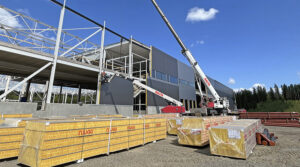
The Ukrainian engineering and construction company Rauta has received the “Ukrainian Construction Olympus” professional award in the category for leadership in Ukraine’s reconstruction. Information about the award has been published on the award’s website.
The organizers recognized Rauta for its projects involving the rapid reconstruction of buildings damaged as a result of military operations. According to the company, since 2022, it has participated in the restoration of more than 10 commercial and social facilities.
The “Ukrainian Construction Olympus” award is presented to companies, projects, and specialists in the construction, architecture, and real estate development sectors. Among the evaluation criteria, the organizers cite professionalism, reliability, the quality of completed projects, innovation, and contributions to the development of the construction industry.
Rauta provides building design and renovation services, supplies building frames, sandwich panels, and facade systems, and handles installation, general contracting, fire protection, and the commissioning of facilities. The company has also developed a range of solutions for accelerated construction and reconstruction, including a technology for a rapidly deployable mobile hospital for 72 patients, which, according to the company, can be erected in 14 days.
Rauta owner Andriy Ozeychuk stated: “The reconstruction of Ukraine today requires not temporary solutions, but buildings that will last for decades. It is particularly important for us to combine the speed of reconstruction with energy efficiency, safety, and modern European standards. The experience of the past four years has shown that Ukrainian construction companies are capable of implementing complex projects even in wartime. Once the war ends, the scale of reconstruction will be significantly greater, so it is essential to develop the technologies, expertise, and supply chains now that will enable us to build faster and with higher quality.”
Rauta is a Ukrainian engineering and construction company that works on commercial, industrial, residential, and infrastructure projects. The company provides a full range of services—from design and supply of structural components to general contracting and commissioning of buildings. Rauta is the exclusive supplier in Ukraine of commercial products from the Finnish Ruukki Group.
The company is a member of the “Ukrainian Center for Steel Construction” association, and Andriy Ozeychuk has chaired its board of directors since 2017. Rauta is also a member of the Finnish Business Group and the Finnish-Ukrainian association UkraineOffice.
“RAUTA GROUP” was registered in Kyiv in 2014; Andriy Ozeychuk is the founder, ultimate beneficiary, and head of the company.
https://rautagroup.com/uk/rauta-viznana-liderom-vidbudovi-ukrayini/

Prices for construction and installation work in Ukraine’s non-residential and civil engineering sectors rose sharply in the second quarter of 2026: compared to the first quarter, the cost of work increased by 12% and 12.4%, respectively. At the same time, quarterly growth in residential construction was significantly more moderate—at 0.4%, according to data from the State Statistics Service of Ukraine.
On an annual basis, the trend is even more pronounced. In the second quarter, prices for construction and installation work were generally 21.6% higher than in April–June 2025. Nonresidential and civil engineering construction rose by 22.4%, while residential construction rose by 18.2%.
The increase continued through June. Compared to June of last year, the cost of civil engineering construction had already risen by 24.3%, nonresidential construction by 23.8%, and residential construction by 19.2%. The average rate of increase in the construction sector reached 23.1%.
Thus, the sharpest price increases are currently being observed not in residential development, but in non-residential buildings and engineering infrastructure.
This may be particularly noticeable in the construction of industrial facilities, warehouses, retail and office properties, as well as infrastructure projects, where rising construction costs directly impact investment budgets and the need for additional financing.
In the first half of the year, prices for construction and installation work in Ukraine rose by 15.8% year-over-year. By comparison, the increase for all of 2025 was 5.8%, for 2024—7.9%, and for 2023—15.8%.
The statistics indicate a noticeable acceleration in price pressures in the construction industry specifically in the second quarter of 2026, primarily in segments that are directly relevant to business investment and infrastructure restoration.
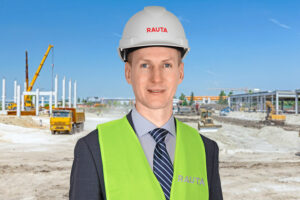
The cost of construction and installation work on civil engineering projects in Ukraine in June 2026 rose by 24.3% compared to June of last year—the highest rate among the major construction segments. According to data from the State Statistics Service, nonresidential construction rose in price by 23.8% over the same period, while residential construction rose by 19.2%. On average across the construction industry, the increase was 23.1%.
Civil engineering also led the way in terms of monthly trends. In June, compared to May, prices in this sector rose by another 1.8%, compared to 1.3% in non-residential construction and 0.8% in residential construction.
In the second quarter of 2026, civil engineering and installation work cost 22.4% more than in April–June of the previous year. A similar increase—22.4%—was recorded in non-residential construction, while residential construction prices rose by 18.2%.
The quarterly trends are particularly telling. Compared to the first quarter, prices for engineering work rose by 12.4% in the second quarter, and for non-residential construction by 12%, while the residential sector saw an increase of only 0.4%.
According to Andriy Ozeychuk, owner and director of the engineering and construction company Rauta, the shortage of skilled workers remains one of the key factors driving up construction costs.
“The market is currently short about 30% of construction specialists,” Ozeychuk noted, commenting on the situation in the industry in February 2026.
According to his data, the labor shortage has already led to a noticeable acceleration in wage growth. While wages in the construction sector grew by an average of approximately 15–20% annually between 2022 and 2024, the growth rate reached 25–30% in 2025. Wages rose particularly sharply for concrete workers—by 50%, surveyors—by 44%, and concrete pourers—by 38%.
Thus, the current rise in the cost of construction work is not driven solely by prices for building materials and equipment. The cost of construction work itself and labor is playing an increasingly important role.
Ozeychuk also drew attention to the long-term nature of the labor shortage. According to him, vocational schools are facing both a shortage of students enrolling in construction programs and a high dropout rate as early as the first years of study.
“In the long run, this could lead to an even greater labor shortage and slow down Ukraine’s recovery,” says the owner of Rauta.
According to the company’s estimates, the labor shortage is already forcing the construction industry to seek workers outside Ukraine, particularly in India, Nepal, Bangladesh, and Pakistan.
The rising cost of civil engineering is of particular importance to Ukraine due to the massive need to rebuild energy, transportation, utilities, and other critical infrastructure. According to Rauta’s estimates for 2025, the segment of critical infrastructure restoration and protection already accounted for about 20% of the Ukrainian construction market.
Therefore, further increases in the cost of civil engineering work could directly impact the cost estimates for restoration projects. If the cost of construction and installation work rises by 20–25%, projects whose budgets were established much earlier may require additional funding or a revision of technical solutions and implementation timelines.
At the same time, non-residential and infrastructure construction remain among the most active segments of the market. In 2025, the main targets for investment in commercial real estate were warehouse, industrial, and retail buildings, while the most attractive regions for new construction were the Kyiv, Lviv, and Ivano-Frankivsk regions, Ozeychuk noted.
In the first half of 2026, civil engineering construction costs rose by 16.1% year-over-year, non-residential construction by 16.5%, and residential construction by 13.7%.
“Rauta” operates in the fields of design, construction, and installation of buildings and is a member of the European Construction Industry Association. According to data from the Unified State Register, Andriy Ozeychuk owns 100% of the company’s authorized capital.
CONSTRUCTION, INFRASTRUCTURE, OZEYCHUK, PRICE, RAUTA, RESTORATION, STAFF
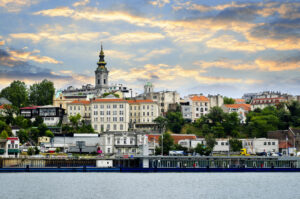
According to Serbian Economist, Belgrade continues to account for a significant portion of Serbia’s construction and investment activity, while the development of the real estate market in other regions of the country remains noticeably less uniform.
In the second quarter of 2026, the Belgrade region was the only region in Serbia where construction activity grew in real terms, with growth reaching 51% compared to the same period last year.
This is evidenced by data from the Republic Statistical Office of Serbia (RZS), published on August 10.
In all other regions of the country, construction activity declined in the second quarter. In Vojvodina, the value of completed construction work at constant prices fell by 2%; in Šumadija and Western Serbia, by 27.5%; and in Southern and Eastern Serbia, by 32.3%.
Thus, the latest quarterly statistics indicate a sharp widening of the gap between the capital and the rest of Serbia in terms of the volume of construction work.
Across Serbia as a whole, the value of construction work in the second quarter rose by 20.6% in current prices compared to April–June 2025.
Building construction grew particularly rapidly. In constant prices, the volume of work in this segment increased by 32.4% year-over-year, while for other construction projects, including infrastructure, the figure decreased by 7.1%.
Vera Yegorova-Tolsta, founder of the Belgrade real estate agency VIDOVSTAN, believes that the concentration of capital in the capital is a sustained trend and is linked not only to local demand but also to Belgrade’s investment appeal.
“Belgrade remains a distinct market within Serbia. It is home to jobs, foreign businesses, major infrastructure projects, and a significant portion of investment demand. Therefore, new projects in the capital’s prestigious neighborhoods typically find buyers faster than similar properties in smaller cities. At the same time, within Belgrade itself, the differences between neighborhoods and the quality of projects are becoming increasingly noticeable,” says Yegorova-Tolstaya.
In practice, this means that nationwide Serbian statistics do not always fully reflect the situation for an apartment buyer in the capital. The growth in supply across the country may be accompanied by persistently high prices in Belgrade’s most popular neighborhoods.
Yegorova-Tolstaya has also previously noted that the Serbian market remains stable, but demand is becoming more selective, and the quality and location of properties are becoming increasingly important.
It will be possible to definitively assess the extent to which construction activity in the second quarter affected apartment prices in Belgrade after the publication of the latest quarterly report from the RGZ Real Estate Price Register.
https://t.me/relocationrs/3427

Euro Land UA LLC (Euro Land UA) plans to raise $8 million for the construction of a liquid microfertilizer plant in the Ternopil region, according to the Ukraine Investment Guide 2026, presented at the Ukraine Recovery Conference (URC2026) in Gdańsk, Poland, which took place in late June.
The total project budget is $13 million, of which the company is prepared to finance $5 million using its own funds. A mixed financing structure (equity and debt) is envisaged.
The project involves the construction of a modern plant for the production of liquid micronutrient fertilizers based on EDTA technology. Its annual production capacity will be 10,000 metric tons of liquid micronutrient fertilizers, 5,000 metric tons of specialty fertilizers, and 3,000 metric tons of chelated micronutrients. The products will be supplied to Ukrainian agricultural producers as well as to export markets, primarily to EU countries.
According to the catalog, production is scheduled to begin 1.5 years after the project’s launch. The payback period is four years.
The project is currently in the advanced preparation stage: the product concept, formulation, and market positioning have been developed; negotiations are underway with technology partners; and the site selection and design of the future plant are in progress. Potential partners include the British company OMEX, as well as European suppliers of equipment and raw materials.
Euro Land Yue LLC was registered in 2017 in the Ternopil region. It specializes in supplying plant protection products, micronutrients, and other agrochemical products. Bogdan Kaminsky is the owner, ultimate beneficiary, and director of the company.
In 2025, Euro Land Uei LLC saw its revenue decline by 4.0% to 89.83 million UAH and its net profit fall by 33.1% to 10.88 million UAH.



