
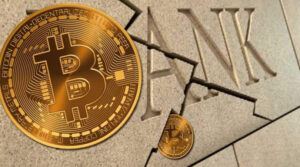
According to Fixygen, the line between traditional banks and the crypto industry is rapidly blurring. In March 2026, Kraken Financial received a Federal Reserve master account, becoming the first digital bank with direct access to the U.S. payment infrastructure.
Kraken already operates as a special-purpose bank in Wyoming and, at the same time, holds over 100 active regulatory licenses in more than 30 countries.
On the other hand, traditional banks are exploring the possibility of issuing their own stablecoins and tokenized deposits. JPMorgan is studying the possibility of issuing a stablecoin, and similar projects are being discussed by Bank of America, Wells Fargo, and other banks.
Even crypto companies are beginning to obtain federal banking licenses: in August, the U.S. OCC granted World Liberty Financial preliminary approval to establish a national trust bank to handle stablecoins and store assets.
As a result, in a few years, the distinction between a “bank” and a “crypto exchange” may no longer be defined by the range of services offered.
Both sides aim to provide services such as asset custody, payments, stablecoins, trading, tokenized securities, credit products, and international settlements.
The main battle will center on who can keep customers within their own financial infrastructure—JPMorgan, Coinbase, Kraken, or the new digital banks.

According to Fixygen, the Cayman Islands-registered cryptocurrency exchange Bullish has agreed to acquire the British securities registrar Equiniti from the American private equity firm Siris Capital for $4.2 billion, including $1.85 billion in debt, according to a statement from the buyer.
The transaction will be paid for entirely in stock. It is expected to close in January of next year following regulatory approvals.
Following the deal, Bullish and Equiniti plan to provide corporate issuers with securities tokenization services, including 24/7 trading on the Bullish exchange and other platforms, as well as payment and settlement solutions based on stablecoins.
Equiniti is one of the world’s largest registrars. The company serves approximately 3,000 public companies, including Berkshire Hathaway, Moody’s, and Rolls-Royce.
Bullish was founded in November 2021 and focuses on serving institutional clients, including market makers and asset management firms. Last August, it held a $1.1 billion IPO in New York with a total valuation of $5.41 billion. Bullish also owns the CoinDesk information platform, which, among other things, provides cryptocurrency price data, and has already tokenized its own shares.
Bullish shares are down 3% in pre-market trading on Tuesday.

According to Fixygen, Deutsche Börse confirmed on Tuesday that it had acquired a stake in the U.S. crypto exchange Kraken for $200 million. The group’s official statement notes that the investment was structured as a secondary transaction and gives Deutsche Börse a 1.5% fully diluted stake in Payward Inc., the infrastructure company behind Kraken.
The company emphasized that the deal deepens the strategic partnership with Kraken, announced back in December 2025. It covers regulated crypto products, tokenized markets, derivatives, as well as solutions to enhance liquidity for institutional clients across various regions.
Deutsche Börse stated that the collaboration will expand into the areas of trading, custody, settlement, collateral management, and tokenized assets. The group noted that the investment aligns with its strategy to build a hybrid market infrastructure capable of handling both traditional securities and blockchain-based tokens within a single liquidity pool.
The deal is expected to close in the second quarter of 2026, subject to standard closing conditions, including obtaining the necessary regulatory approvals. Reuters notes that Deutsche Börse announced in 2025 the launch of crypto custody and settlement services through Clearstream, and in 2024 launched its own platform for trading crypto assets.
Deutsche Börse Group is the operator of the Frankfurt Stock Exchange and one of the largest infrastructure players in the European financial market. Kraken is one of the largest crypto platforms in the U.S. and has been collaborating with Deutsche Börse since late 2025 to integrate traditional and digital markets.

According to the Serbian Economist, the exchange of cryptocurrencies for cash in Montenegro is massively going into the “gray zone”: transactions are conducted through unregulated dealers, forums and Telegram groups, with multi-million dollar transactions taking place without any government oversight. This is according to an investigation by the Balkan Investigative Reporting Network (BIRN).
According to BIRN, Montenegro still does not have a separate law on digital assets, although the development of such a document was announced back in 2020. The cryptocurrency market was only partially affected by the February amendments to the Law on Prevention of Money Laundering and Terrorist Financing, which provided for the creation of a register of service providers related to digital assets.
Due to the lack of clear regulation, citizens and residents widely use so-called OTC-trading: exchange of cryptocurrency for cash through intermediaries, announcements on forums and Telegram chats, with personal meeting and settlement in cash, without applying customer verification procedures (KYC). Ivan Jolicic, a cryptocurrency expert and creator of Montenegrin digital currency Perper, told BIRN that in addition to local dealers, foreigners are active in the market – in particular, Russians, Ukrainians and Turks, for whom it is often the only way to make money to live in the country amid the difficulty of opening bank accounts.
BIRN journalists identified a number of crypto exchanges on Telegram, operating both throughout the Balkans and only in Montenegro. One of the largest groups – “Currency Exchange Montenegro” – has more than 7 thousand participants, communication in it is conducted in Russian; the ads indicate the amount of exchange (from hundreds to tens of thousands of euros), rates, commissions and specific places of cash transfer. The symbolism of the group’s administrators overlaps with that of the libertarian community Montelibero, but its representatives told BIRN that they are not affiliated with this Telegram channel.
The Montenegrin police told BIRN that the Financial Intelligence Sector has the technical capabilities to analyze blockchain transactions and uses Chainalysis Reactor software solutions and the Kodex platform to obtain off-chain data from crypto service providers. However, the IRS noted that until a separate digital asset law is passed, it cannot actually act on such transactions, as taxation is only possible on legally recognized assets.
Amendments to the AML law, passed by Parliament on February 28, provide for the creation of a register of service providers with crypto-assets and mandatory KYC procedures for every transaction over €1,000. At the same time, experts, including Jolicic, believe that the current regulation remains fragmented and does not cover mass “street” OTC trading, due to which a significant volume of crypto transactions continues to pass “under the radar” of state authorities.
https://t.me/relocationrs/1908

The National Agency for Promising Projects has presented a list of specially authorized crypto exchanges participating in a special tax regime for foreign citizens.
The list includes all three crypto exchanges operating in Uzbekistan — Kobea Group, Coinpay, and Asterium. Foreigners will be able to open an account with any of them to obtain exemption from tax on income received outside the republic.
The President of Uzbekistan, by his decree dated October 4, 2025, No. UP-180, established that from January 1, 2026, the income of foreign citizens received from sources outside Uzbekistan will be exempt from personal income tax, subject to the following conditions:
Those wishing to participate in the regime must submit an application through the Tax Committee to a special commission.
Money transferred to an account or crypto wallet will only be credited after the bank (exchange) has assessed the risks and verified compliance with anti-money laundering rules.

Aleksey Besciokov, who was accused in the US of administering the sanctioned Garantex crypto exchange and was awaiting extradition, has died in an Indian prison. His death was reported on September 5 by a number of Russian media outlets, citing a post by entrepreneur Sergei Mendeleev and reports on Telegram channels; according to their information, Besciokov died on August 31, but his relatives only found out about it now. There is no official confirmation from the Indian authorities at the time of publication, and the cause of death has not been disclosed.
On March 12-13, 2025, Indian authorities detained Beshchekov in the state of Kerala at the request of the United States. Indian publications and international media reported on the arrest, citing the US Department of Justice and Indian law enforcement agencies.
According to the US Secret Service, Beshchekov (along with Alexander Mira Serd) was charged with conspiracy to launder money, conspiracy to violate the IEEPA, and conspiracy to conduct an unregistered payment business (Eastern District of Virginia jurisdiction). On March 6, 2025, the US also seized the domains that supported Garantex’s operations.
On August 14, 2025, the US State Department announced a reward of up to $6 million for information leading to the arrest/conviction of Garantex leaders (including up to $5 million for information about Alexander Mira Serd). On the same day, the US Treasury Department updated sanctions against the network associated with Garantex (including Grinex).
Garantex was added to the US sanctions lists back in April 2022 for systematically ignoring AML/CFT requirements, and on March 6, 2025, US authorities announced comprehensive actions against the exchange’s infrastructure. Indian law enforcement officials indicated that Beshchekov, a Lithuanian citizen residing in Russia, was responsible for the technical infrastructure and approval of transactions on Garantex.
At the time of writing, there have been no official reports from the Indian authorities regarding Beshekhov’s death; public information is based on social media posts and media publications citing them. We continue to monitor statements from Indian law enforcement agencies/the Ministry of Foreign Affairs, the US Department of Justice, and the defendant’s lawyers. The information will be updated when official confirmation or details of the cause of death become available.
https://www.fixygen.ua/news/20250906/v-indiyskiy-vyaznitsi-pomer-tvorets-kriptobirzhi-garantex.html



