

Ukrainian honey producer BEEHIVE (part of the EFI Group) is considering opening production facilities in Europe due to the European Union’s reinstatement of import duties on honey, which has led to the company losing ground in the European retail market, said BEEHIVE General Manager Semen Gagarin.
“When the 17.3% tariff was reinstated, we didn’t expect it. At one point, our margin dropped by 20% at the base level, and we started getting pushed out of retail chains—we were left with only 10–15% of the list of retailers we had previously. For us, this was a real ‘cold shower,’” he said at the Forbes Ukraina Exporters Summit.
According to Gagarin, entering complex markets, particularly the British Morrisons chain or the German REWE, requires significant preparation. He emphasized that for Ukrainian honey to make it onto the chain’s shelves, the manufacturer had to offer extreme terms. Specifically, in Germany, the company was forced to provide a “55% margin for the chain” to have a chance of gaining entry.
The general manager explained that BEEHIVE used a “top-down” pricing model in the EU, taking into account competitors’ pricing policies. Under this model, if the product’s cost price is EUR1, the shipping price to the EU must be EUR1.5, and the final shelf price for the consumer will reach around EUR2.5.
“We always work based on the shelf price and the competitor’s price: if their price is EUR3, we need to be a little cheaper to give the buyer a reason to vote for us with their money,” he said.
Assessing the competitive environment, Gagarin noted that Ukrainian producers have to compete with European family-owned companies that have a 150-year history. Since honey is largely a commodity, unique taste or a price advantage become key success factors. To ensure stable expansion, he advised his colleagues to first capture the maximum share of the local Ukrainian market in order to have the financial cushion needed for costly investments in marketing and product listings abroad.
Currently, the company sees two paths forward: either wait for Ukraine’s full EU membership, which would eliminate customs barriers, or localize production directly in Europe.
“Exporting is expensive, exporting takes time, and exporting is complicated. But it’s doable if you have a ‘margin buffer,’ are ready to invest in trading houses, and hire ‘native speakers’ who will communicate with clients in their own language,” Gagarin concluded.
EFI Group (Effective Investment Technologies), founded in 2007, implements business projects in Ukraine. Its investment areas include healthcare and medtech, the paper, food, and woodworking industries, and the supply of agricultural products. Most of the group’s assets are export-oriented and hold international FSC, IFS, and BRC certifications.
The company’s businesses include Feednova, a producer of animal fats and feed additives; the “Beehive” honey production plant; the “Medical Star” honey retail chain, the Zhytomyr Cardboard Plant, the cardboard packaging manufacturer “Sem Ecopack,” the timber processor “Forest Technology,” the agricultural products supplier “Efi Agro,” and the online medical hub Doc.ua.
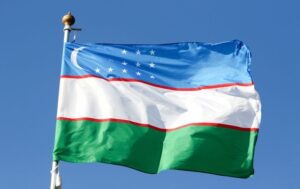
Uzbekistan has eliminated customs duties on imports of 82 types of raw materials and semi-finished products until January 1, 2027.
Zero rates for these types of products were first introduced in October 2021 and were valid until January 1, 2024.
The list includes, in particular: castor oil, asbestos, sodium hydroxide (caustic soda), dyes, artificial fur, artificial wax, ready-made adhesives, photo emulsion for textile printing, paper and cardboard, cotton fabrics, linen fabrics, fabrics made of artificial and synthetic fibers, glass fiber, glass fiber fabrics, loudspeakers, and others.
Measures to reduce customs duties were applied in order to support domestic manufacturing enterprises and increase exports of value-added products.
As a reminder, Uzbekistan previously extended zero customs duties for a number of food products and children’s clothing until January 1, 2027.
In addition, until January 1, 2031, special equipment, spare parts and components, raw materials and materials that are not produced in the country and are used in the technological processes of enterprises for the disposal of household, construction and medical waste, as well as the production of biodegradable polymer materials, are also exempt from customs duties.



