
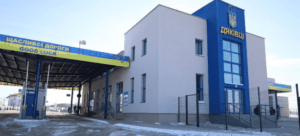
During the first day of the work of the checkpoint “Diakivtsi-Rakivets” 145 citizens were checked in and out, including 85 citizens of Ukraine, 56 citizens of Romania, 2 citizens of Italy and 2 citizens of Moldova.
As Ruslan Zaparanyuk, head of the Chernivtsi Regional Military Administration, reports in Telegram with reference to the data of the State Border Guard Service of Ukraine, also for a day 50 vehicles, including 47 cars and 3 minibuses crossed the new checkpoint.
“The checkpoint operates around the clock for pedestrian and vehicular traffic (including buses). By the decision of the Romanian side, the passage of trucks is temporarily not carried out,” the statement said.
As reported, February 10, Zaparanyuk announced the launch of a new international road border crossing point (IBCP) on the border with Romania “Dyakivtsi Rakovec. The reconstruction of the checkpoint began in 2015 as part of the project “Development of border infrastructure between Ukraine and Romania in the framework of the program “Ukraine-Romania-Moldova (2007-2013)”. Then the work was suspended and resumed in 2021.
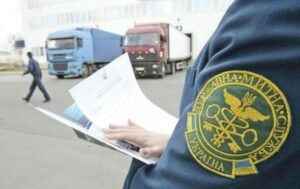
The Convention on the Joint Transit Procedure (CCTP) or the so-called “customs visa-free” for Ukraine came into force on Saturday: goods are already flowing into and out of the country under such a procedure, the Ministry of Finance reported.
“Today, October 1, Ukraine entered into force and business opened up the possibility of international movement of goods with 35 other participating countries under one transit document,” the press release says.
The Ministry of Finance clarified that the first country from which the cargo was sent for delivery to Ukraine under the joint transit procedure was Germany: Ukrainian customs officers already see the T1 transit declaration in the NCTS electronic transit system and are waiting for the truck to arrive.
In Ukraine, the first transit declaration for leaving the country was also issued: according to it, the cargo now follows through Poland to Germany.
Currently, the system is also awaiting the arrival of goods at the customs office of departure and other declarations, according to which the goods will be placed under the joint transit procedure and delivered to the customs offices of destination on the territory of the countries participating in the Convention, the report says.
The Ministry of Finance recalled that in accordance with the “customs visa-free” for the delivery of goods from one country to another, a single transit document is submitted: from the customs office of departure to the customs office of destination. This speeds up the passage of customs formalities at the border and reduces the associated costs for businesses. According to the forecast of the Directorate General for Taxation and Customs Union of the European Commission (DG TAXUD), Ukraine can enter the top ten countries in terms of the number of transit declarations.
“Customs is responsible for controlling the goods. We in the EU are striving to spend less time for control at the border, and more inside the country. In Ukraine, so far, most goods travel without checking inside the country – all control work takes place directly at the border. Therefore, queues form at the border. NCTS solves most of this problem: it is possible to submit a declaration to the system in advance, after checking inside the country, to put the necessary seals that are recognized in the EU. Then at the border, you only need time to read the barcode number, as it is done in a supermarket,” summed up the international expert of the Program for Public Financial Management in Ukraine (EU4PFM) Vytenis Alishauskas.
Ališauskas, CUSTOMS, customs visa-free, MINISTRY OF FINANCE, TRANSIT
In the first 10 days after the abolition of benefits, Ukrainians cleared 4,600 cars through customs and paid UAH 464 million to the budget, the State Customs Service reported.
“For 10 days of customs clearance of vehicles, almost UAH 464 million was paid to the state budget. From July 1 to July 10, the State Customs Service issued 4,662 units of vehicles purchased abroad with customs payments,” the agency said on the Telegram channel on Tuesday.
As the customs reminded, benefits for the import of goods, including cars, have been canceled since July 1. Thus, at present, imported vehicles are again subject to import duties, and individual entrepreneurs of groups 1-3, who are not VAT payers, must again import goods with VAT.
A situation at the customs has somewhat improved, the volume of customs clearance of goods by businesses is increasing, Minister of Finance of Ukraine Serhiy Marchenko has said.
“Compared to March, customs added a little: in March, the drawdown of customs revenues was 80%, now it is about 75%. There are some improvements. Taking into account the current benefits for customs clearance of imports, we can say that the situation has improved somewhat and business is increasing the volume of goods cleared,” the minister said in an interview with Interfax-Ukraine, adding that the data require a deeper analysis.
According to him, customs revenues to the budget amounted to UAH 8.3 billion in April, while tax revenues almost reached UAH 45 billion, and another UAH 22 billion went to the budget as grant assistance.
The State Customs Service will simplify the issuance of EUR.1 certificates for the export of goods for the period of martial law, the agency reported on its Telegram channel.
“For the period of martial law … the head of the State Customs Service instructed the heads of customs, under their personal responsibility, to ensure a simplified procedure for issuing certificates for the transport of EUR. relevant request from the customs administration of an EU country,” the agency said on Thursday.
Such certificates exempt from duties the import of goods into the EU, recalled the customs.
If there are any problematic issues regarding the issuance of these certificates, exporters can contact the relevant customs officers at (096) 133-22-79.
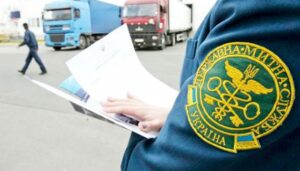
The State Customs Service will confiscate goods and vehicles when trying to smuggle under the guise of humanitarian aid instead of a fine, as it was in peacetime, first deputy head of the department Oleksandr Shutsky said.
“The state customs and the military administration warn: if earlier it was just a protocol on violation of customs rules and a fine, now the goods will be confiscated, and vehicles will also be confiscated,” he said during a press briefing in Zakarpattia region on Thursday.
Shutsky added that the confiscated property would subsequently be transferred to the Armed Forces of Ukraine and the military administration.
The official specified that since the beginning of the full-scale military aggression of the Russian Federation, there have been few attempts to pass off smuggling as humanitarian aid. Thus, the smugglers tried to carry household chemicals, food, hygiene products, and luxury goods under a simplified procedure without customs payments.
“We see that attempts have begun to cover (commercial deliveries) with public organizations and humanitarian supplies. Therefore, we warn,” he stressed.



