
Metinvest B.V. (Netherlands), the parent company of the Metinvest mining and metallurgical group, is set to repay $428 million on its 2026 bonds with an 8.5% annual interest rate and $42 million on other obligations in 2026, for a total of $470 million.
According to a presentation based on Metinvest B.V.’s annual report, the company is scheduled to pay $332 million on its 2027 bonds at 7.65% per annum and an additional $19 million on other obligations in 2027, for a total of $351 million.
In 2028, the group is to pay only $18 million on other liabilities, and in 2029—$500 million on the 2029 bonds at 7.75% per annum and another $50 million on other liabilities, for a total of $550 million.
It is noted that the scheduled payments include only the principal amount of the debt (excluding accrued interest, fees, and discounts) as of December 31, 2025. In turn, trade finance lines are predominantly revolving, and therefore excluded from this repayment profile.
The company’s total debt as of December 31, 2025, decreased by 15% compared to 2024—to $1.441 billion from $1.705 billion. Net debt at the end of 2025 stood at $1.065 billion, and at the end of 2024—$1.048 billion.
The presentation notes that in 2025, the group, in particular, fully repaid its senior bonds totaling EUR300 million in the first half of the year. Since the beginning of 2022, it has repaid a total of $801 million in debt.
In July 2025, the group secured an 11.5-year buyer credit facility of EUR23.6 million for Northern GOK to finance the purchase of equipment for the tailings thickening project. The facility is covered by Finnvera, the Finnish export credit agency.
As reported, over the past month, Metinvest has explored refinancing options and resumed negotiations with its largest bondholders to extend the maturity of a portion of its outstanding senior bonds maturing in April 2026. Ultimately, the group intends to fully repay the bonds but will continue to seek opportunities to access debt markets in the future.
In 2025, Metinvest reduced its EBITDA by 24.2% compared to the previous year—to $765 million from $1.009 billion. The company ended 2025 with a net loss of $191 million, compared to a net loss of $1.152 billion in 2024. Meanwhile, pre-tax profit stood at $77 million, whereas the company reported a pre-tax loss of $1.138 billion for 2024. Revenue for the past year decreased by 6% to $7.242 billion. The company reported an operating profit of $319 million for the reporting period, compared to an operating loss of $858 million in 2024.
Metinvest CEO Yuriy Ryzhenkov noted in his comments a “disciplined and responsible approach to debt management.”
“Between 2022 and 2025, we reduced total debt by approximately $800 million, to $1.441 billion as of December 31, 2025. This is a significant achievement, given the extraordinary circumstances in which we operated,” the CEO emphasized.
Metinvest is a vertically integrated group of mining and metallurgical enterprises. Its facilities are located in Ukraine—in the Donetsk, Luhansk, Zaporizhzhia, and Dnipropetrovsk regions—as well as in European Union countries, the United Kingdom, and the United States. The holding’s main shareholders are the SCM Group (71.24%) and Smart Holding (23.76%). Metinvest Holding LLC is the management company of the Metinvest Group.
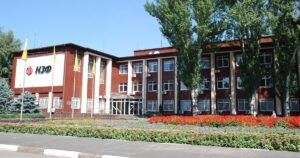
PrJSC Nikopol Ferroalloy Plant (NFP, Dnipropetrovsk region) is trying to recover UAH 95.825 million in debt from PrJSC Marganetsky Mining and Processing Plant (MGZK, Dnipropetrovsk region) under a repayable financial assistance agreement.
According to court documents in case No. 904/1083/26 in the Commercial Court of Dnipropetrovsk region, copies of which are available to Interfax-Ukraine, NZF has filed a lawsuit against MGZK and is seeking to recover the debt.
The claims are based on the defendant’s improper performance of the terms of the agreement for the provision of repayable financial assistance No. 2203530 dated November 21, 2022.
The court left the statement of claim without consideration and gave the plaintiff seven days from the date of delivery of this ruling to remedy the deficiencies in the statement of claim, namely to provide proper evidence of payment of the court fee in the amount of UAH 831,840 thousand.
The ruling came into force upon its signing by the judge on March 6, 2026, and was made public on March 9.
Earlier it was reported that the Zaporizhzhya Ferroalloy Plant (ZFP) filed a lawsuit to recover from MGZK the debt under the contract for the supply of ferroalloys No. 11-2022/32 dated January 27, 2022, in the total amount of UAH 42 million 174.790 thousand. The claims are based on the defendant’s breach of contract in terms of payment for the delivered goods.
NZF, ZZF, and MGZK are part of the informal Privat Group.
NZF is Ukraine’s largest producer of silicon and ferromanganese. The average monthly output of ferroalloys during stable operation of the enterprise is about 55-60 thousand tons.
According to the NDU data for the fourth quarter of 2025, Sofalon Investments Limited owns 15.503% of the shares of PJSC, Rougella Properties Ltd. – 9.6904%, Dolemia Consulting Ltd. – 15.7056%, Sonerio Holdings Ltd. – 9.2158%, Manjalom Limited – 5.8824%, Treelon Investments Limited (all – Cyprus) – 15.1013%.
The NFP is controlled by the EastOne group, created in the fall of 2007 as a result of the restructuring of the Interpipe group, as well as the Privat group (both based in Dnipro).
MGZK develops the eastern part of the Nikopol manganese ore deposit (Grushevsko-Basanska section). The combine includes four mines, one of which is under construction, one quarry – Grushevsky, and an enrichment plant.
According to NDU data for the fourth quarter of 2025, the largest shareholders of MGZK are Couttenmax Holdings Limited, Mosfilia Investments Limited, and Humax Enterprises Limited, each of which owns 23.8933% of the company’s shares, as well as Fianex Holdings Limited (all based in Cyprus), which owns 24% of the shares.
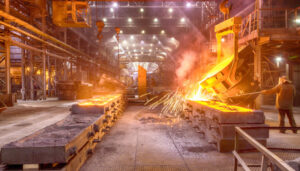
PrJSC Nikopol Ferroalloy Plant (NFP, Dnipropetrovsk region) and PrJSC Zaporizhzhya Ferroalloy Plant (ZFP) have reached a settlement agreement on the repayment of the principal debt of UAH 9.760 million due to NFP’s claim for the recovery of UAH 12 million.
According to the case materials available to Interfax-Ukraine, the settlement agreement was approved in case No. 908/3161/25 by the Commercial Court of Zaporizhzhia region and concluded on January 27, 2026.
According to the agreement, the relevant proceedings have been closed.
It is specified that NZF appealed to the court to recover UAH 12 million 6.09 thousand from ZZF under contract No. 2401889 dated September 30, 2024 in the amount of UAH 9 million 760.464 thousand, which is the cost of manganese agglomerate AM-40 supplied by NZF to ZZF.
The parties agreed that ZZF undertakes to pay the debt in the amount of UAH 9.760 million in tranches, the dates of which are attached. The debt repayment is to be completed by August 31, 2028.
The parties also agreed that the defendant undertakes to compensate the plaintiff for the costs incurred in paying the court fee in the amount of 50% in the amount of UAH 72,036 thousand.
NZF is the largest silicon and ferromanganese production enterprise in Ukraine. The average monthly output of ferroalloys during stable operation of the enterprise is about 55-60 thousand tons.
According to NDU data for the fourth quarter of 2025, Sofalon Investments Limitad owns 15.503% of the shares of PrJSC, Rougella Properties Ltd. – 9.6904%, Dolemia Consulting Ltd. – 15.7056%, Sonerio Holdings Ltd. – 9.2158%, Manjalom Limited – 5.8824%, Treelon Investments Limited (all – Cyprus) – 15.1013%.
The authorized capital of PJSC NZF is UAH 418.915 million.
NZF is controlled by the EastOne group, created in the fall of 2007 as a result of the restructuring of the Interpipe group, as well as the Privat group (both based in Dnipro).
PJSC Zaporizhzhya Ferroalloy Plant is one of the two main Ukrainian producers of this product.
According to the NDU for the third quarter of 2025, Matrimax Limited and Soltex Limited each own 22.4486% of the company’s shares, Tapesta Limited owns 18.8903%, Walltron Limited (all based in Cyprus) owns 18.642%, and Halefield Holdings Limited (Belize) owns 7.7508%.
The authorized capital of PJSC ZZF is UAH 227.955 million, and the nominal value of one share is UAH 0.1.
The first debts for fines imposed on bloggers and media outlets by PlayCity have appeared in the registers
The first multi-million dollar fines for advertising gambling can now be found in the Unified Register of Debtors. A total of 13 bloggers and 1 Telegram channel received fines from the State Agency for the Control of Gambling and Lottery Business in Ukraine PlayCity for advertising online casinos. Currently, 8 fines are being appealed by the violators. So far, none of the fines have been paid, but some have already been transferred for enforcement, and some are being appealed in court.
The first proceedings for unpaid fines for illegal casino advertising appeared in the Unified Register of Debtors. Thus, two proceedings for unpaid fines from the State Agency PlayCity in the amount of UAH 4.8 million and UAH 24,000 against blogger Karina Kuchmenko (Simbochka) appeared in the Unified Register of Debtors in early January this year.
We remind you that you can check for open proceedings due to debts and obtain a statement of their absence on the Unified Register of Debtors page.
This is the first active proceeding in the register. Previously, the Unified Register of Debtors had records of fines imposed by PlayCity on two other bloggers: Diana Levonovna Movsesyan (Instagram account @xl.rusalochka.life) and Maxim Andriyovych Lavrinenko (Telegram channel “Truha”). However, in both cases, the opening of proceedings has been refused. In response to a request from OpenDataBot, PlayCity explained that there are procedural reasons for this, in particular, due to formal requirements for documents and the opening of court proceedings to appeal the relevant decisions.

A total of 13 bloggers and one media outlet, namely the Telegram channel “Truha,” received fines for advertising online casinos. Currently, none of the fines imposed have been paid voluntarily. PlayCity explains that the law provides for a period of up to three months for voluntary payment from the moment the sanction is imposed. For some of the decisions, this period has not yet expired.
At the same time, some of the defendants have decided to defend their position in court. Currently, seven bloggers and one media outlet are appealing PlayCity’s decision. Most of the lawsuits have resulted in administrative proceedings, and the cases are pending in court. At the same time, no court decisions on the merits of the disputes have been made yet.
“We are consistently developing the practice of bringing to justice those responsible for illegal gambling advertising and will continue to respond to all identified violations within the limits of our authority. We are convinced of the legitimacy of the sanctions applied and expect to defend our position in court,” commented Gennady Novikov, head of the PlayCity state agency.
It should be noted that last year, PlayCity intensified its fight against illegal gambling advertising in the Ukrainian information space. This concerns non-compliance with the provisions of the Law of Ukraine “On Advertising” and the provisions of the Law “On State Regulation of Activities Related to the Organization and Conduct of Gambling.” These acts define both the prohibitions on advertising gambling and the amounts of fines for violating them.
The debt of the Ukrainian population for housing and communal services (HCS) in the third quarter of 2025 decreased by 5.4% compared to the previous quarter and amounted to UAH 100.8 billion. According to data from the State Statistics Service (SSS), Ukrainians paid a total of UAH 48.5 billion for housing and communal services in July-September 2025, which is 6.4% more than the amount charged, UAH 45.6 billion.
The debt for the reporting period for the supply of heat and hot water amounts to UAH 33.1 billion, the supply and distribution of natural gas – UAH 27.9 billion, the supply of electricity – UAH 16.5 billion, centralized water supply and sanitation – UAH 10.4 billion, apartment building management – UAH 9.5 billion, and household waste management – UAH 3.2 billion.
The highest level of debt for housing and communal services was recorded in Dnipropetrovsk (UAH 8.5 billion), Donetsk (UAH 4.3 billion), Poltava (UAH 3.2 billion), Kharkiv (UAH 1.9 billion), Kyiv (UAH 1.5 billion), Odesa (UAH 1.1 billion), Lviv (UAH 1 billion) regions and in Kyiv (UAH 2.8 billion).

The debt of the Ukrainian population for housing and communal services in the second quarter of 2025 amounted to UAH 106.645 billion.
According to data from the State Statistics Service (SSS), Ukrainians paid a total of UAH 64.341 billion for housing and communal services in April-June 2025, which is 25% more than the amount charged – UAH 51.46 billion.
The debt for the reporting period for the supply of heat and hot water amounts to UAH 35.165 billion, the supply and distribution of natural gas – UAH 32.321 billion, the supply of electricity – UAH 17.066 billion, centralized water supply and sanitation – UAH 10.155 billion, management of apartment buildings – UAH 8.836 billion, and household waste management – UAH 3.101 billion.
The highest level of debt for housing services was recorded in Dnipropetrovsk (UAH 8.699 billion), Donetsk (UAH 4.308 billion), Poltava (UAH 3.303 billion), Kyiv (UAH 2.031 billion), Kharkiv (UAH 1.521 billion), Odesa (UAH 1.48 billion), Lviv (UAH 1.09 billion) regions and Kyiv (UAH 2.342 billion).
The data does not include territories temporarily occupied by the Russian Federation and parts of territories where hostilities are (were) ongoing.



