
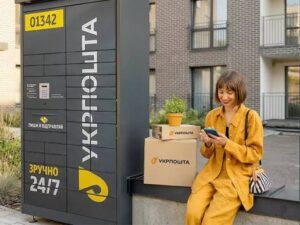
The national postal operator, JSC “Ukrposhta,” plans to complete the installation of parcel lockers in its branches during the third quarter of this year, bringing the total number of express pickup lockers to 600, according to the company’s CEO, Ihor Smiliansky
“We are already seeing … demand, to the point where we don’t have enough lockers. That’s why we’re currently purchasing additional parcel lockers; we can see that people like this service,” Smilyansky said in a comment to the Interfax-Ukraine news agency.
The domestic parcel locker service currently covers 15 regions of the country, where 376 of the 600 express pickup lockers have been installed. It was noted that during the second quarter, the first 70 Ukrposhta parcel lockers were put into operation in Kyiv as part of a project to expand the self-service network.
As for street-based parcel lockers, he said that by the end of 2026, “Ukrposhta” plans to increase their number to several thousand.
Last week, the national postal operator announced that, in partnership with the Ukrainian company “Modern-Expo,” it is launching the production and installation of 1,000 new street-based parcel lockers, primarily in Kyiv, Odesa, Lviv, Dnipro, and other major cities across the country.
As previously reported, Ukrposhta posted a net profit of 296.7 million UAH for the second quarter of 2026, compared to a net loss of 108 million UAH in the same period of 2025.
According to the report, Ukrposhta has 7,200 customer service locations, including 2,000 mobile post offices that serve 21,300 settlements.
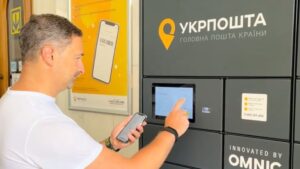
The national postal operator, JSC “Ukrposhta,” in partnership with the Ukrainian company “Modern-Expo,” is launching the production and installation of 1,000 new street-side mail kiosks, primarily in Kyiv, Odesa, Lviv, Dnipro, and other major cities across the country, the company’s CEO, Ihor Smilianskyi, announced on the company’s Telegram channel on Thursday.
According to him, these mail kiosks will be equipped with mailboxes that will allow users to both receive packages and send letters.
According to a press release from “Ukrposhta,” the company is inviting homeowners’ associations, property management companies, and representatives of residential complexes to collaborate.
It is anticipated that representatives of homeowners’ associations, property management companies, or residential complexes can submit an application on the national postal operator’s website to have the mail kiosks installed at the appropriate locations.
Ukrposhta explains that the company will prioritize residential complexes in major cities where there is no nearby brick-and-mortar post office, and where it is possible to place a parcel locker near the building’s entrance or in an open area of the residential complex in a location accessible to residents.
Other criteria include the availability of a solid, level surface; the ability to connect to a 220-volt power supply; and reliable mobile network coverage in the relevant area.
It is noted that coffee shops, stores, pharmacies, gas stations, and other businesses are also invited to collaborate.
“We will definitely contact you to inspect the location, agree on the installation site and terms of cooperation. And if everything is in order—we’ll sign a contract and install the parcel locker,” added Smiliansky.
Among other things, he also noted that the company will continue to purchase and install parcel lockers and expand its network through its partners’ parcel lockers.
Separately, the national postal operator announced that the cost of using parcel lockers remains unchanged—starting at 45 UAH. A customer’s package will be stored there for seven calendar days.
Ukrposhta also took the opportunity to reiterate its plans to install 1,000 parcel lockers nationwide, as well as 600 express pickup lockers directly in post offices.
As previously reported, Ukrposhta posted a net profit of 296.7 million UAH for the second quarter of 2026, compared to a net loss of 108 million UAH in the same period of 2025.
According to the report, Ukrposhta operates 7,200 customer service locations, including 2,000 mobile postal branches that serve 21,300 settlements.
DELIVERY, homeowners’ association, LOGISTICS, parcel locker, UKRPOSHTA

Nova Post in Poland has begun collaborating with Orlen Paczka—a network of approximately 6,500 pickup points and 8.5 parcel lockers—according to a company announcement posted Thursday on LinkedIn.
“We are constantly improving our logistics solutions to support business growth and ensure convenience for customers at every stage of delivery,” the company emphasized. Nova Post had previously partnered with InPost, Poland’s largest network, which operates over 35,000 pickup points, more than 27,000 of which are parcel lockers.
For its part, Orlen Paczka noted that the partnership with Nova Post is another step toward opening up its infrastructure to companies operating in the international market.
According to the press release, the service is available for the delivery of S, M, and L-sized packages weighing up to 20 kg.
Jakub Karon, CEO of Nova Post in Poland, said in an interview with Wiadomości Handlowe in June of this year that the company had a total of 122 branches throughout Poland, including 30 company-owned branches, 16 franchise branches, 31 mini-branches, and 45 PUDO branches, and its plan for 2026 is to open approximately 300 more branches. He emphasized that the Polish parcel locker market is oversaturated, so Nova Post currently has no plans to build its own network and will instead expand in this market through partnerships.
In 2021, the Polish conglomerate Orlen launched the Orlen Paczka postal service with its own pickup points and parcel lockers. In 2024, the service entered into a strategic partnership with Allegro, Poland’s largest marketplace.
As reported, last year the NOVA Group handled 522 million shipments, 29 million of which were in Europe. The group, which currently ranks 30th globally in parcel volume among express delivery and postal services, aims to enter the top 20 by 2030 and increase the number of shipments to 2 billion.
Vyacheslav Klimov, co-owner of Nova Poshta, noted during the “Dialogues with NV” event dedicated to European integration that Nova Post Europe, part of the NOVA Group, plans to double its network of branches in Europe by 2026 and keep its strategic focus on ensuring the fastest possible delivery times.
In the first half of 2026, 239 new service points were opened in Europe, bringing the total number of Nova Post’s own service points abroad to more than 950. Moldova and Poland led the expansion in the first half of the year, with 112 and 80 new service points, respectively. In addition, five Nova Post partner pickup points opened in New York in June.

The national postal operator, JSC “Ukrposhta,” reported a pre-tax profit of 122 million UAH in the first half of 2026, compared to a pre-tax loss of 318.8 million UAH during the same period last year and a pre-tax loss of 204.8 million UAH in the first quarter of this year.
“Operating profit (EBITDA)—which excludes the sale of assets, depreciation, and exchange rate fluctuations—amounted to 293 million UAH, nearly six times the target,” wrote the company’s CEO, Ihor Smilianskyi, on Facebook.
In the first half of 2025, EBITDA was negative at 100 million UAH, whereas in the first quarter of this year it turned positive at 25.4 million UAH.
“And we achieved this result despite the injuries and deaths of our employees, the loss of hundreds of new vehicles, damage to and loss of sorting centers, and daily attacks on our branches,” the company’s CEO emphasized.
According to him, the company’s capital as of mid-year exceeded 2.3 billion UAH, compared to 2.2 billion UAH at the beginning of the year.
It is noted that year-over-year growth in the number of packages in June 2026 ranged from 12% to 17%.
“Year-over-year growth in the number of packages in June 2026 ranged from 12% to 17%, depending on the segment, which indicates growing customer confidence,” the CEO emphasized.
Among other achievements, he highlighted a 98% on-time delivery rate, a ranking among the top three global postal operators in terms of international delivery quality, and a market share of over 50% in Ukraine’s highly competitive international shipping market.
“We launched ‘Ukrposhta.Apteka’ nationwide and, for the first time in Ukraine’s history, made it possible to pay by bank card in 100% of populated areas,” Smiliansky added.
The rest of the performance metrics for the first half of the year are not yet available.
The day before, Smiliansky announced the expansion of the network of express parcel lockers. Specifically, the service has been launched in the Lviv and Ivano-Frankivsk regions. Installation has also begun in the frontline regions of Kharkiv, Sumy, and Poltava. Previously, such postal kiosks had already been opened in Odesa, Vinnytsia, Khmelnytskyi, Mykolaiv, Kyiv (122 branches), Dnipro, Zaporizhzhia, and Kropyvnytskyi.
As reported, in January–March 2026, the company posted a net loss of 204.8 million UAH, which is 1.1 million UAH, or 0.5%, more than in the same period of 2025, while its revenue grew by 1.1% to 13 billion 118.42 billion UAH.

Veteran and civic activist Oleksandr Budko (Teren) has opened a franchise of the “Muza” ready-meal delivery service in Rivne, co-founded by chef Yevhen Klopotenko, according to Klopotenko’s press office.
“We spent a long time refining the ‘Muza’ franchise model before we began scaling it through partners. It’s important to me that people who open a franchise don’t just invest in the business, but also share our values. Oleksandr is exactly that kind of person,” commented Yevhen Klopotenko.
According to Teren, the decision to open a franchise was driven by a desire to influence the culinary culture in his hometown.
Klopotenko’s “Muza” delivery service specializes in restaurant-quality Ukrainian cuisine and is expanding through a franchise model. Rivne became the third city to host a location, following Kyiv and Lviv. The new location is at 32 Soborna St., Rivne. Orders can be placed via Glovo and Bolt Food, and customers can also pick up their orders in person.
Currently, the chain has 17 active locations (16 dark kitchens and one brick-and-mortar restaurant in Kyiv) and fulfills over 10,000 orders per month.
The “Muza” concept is “a restaurant at home without the cooking.” All dishes are created using Klopotenko’s original recipes. The menu features over 30 traditional Ukrainian dishes: borscht with smoked pear, bograch, varenyky, meat and fish cutlets, Poltava-style cutlet, as well as breakfasts, desserts, and signature fruit compotes and fruit drinks. The service’s pricing is designed for daily consumption. Prices for first courses start at 188 UAH, main courses at 225 UAH, and baked goods at 145 UAH.
The partners plan to launch an exclusive line called “Muza by Teren,” with the menu to be developed with the direct involvement of Oleksandr, who holds a degree in food technology.
In addition to Rivne, the “Musa” team is considering Dnipro, Odesa, Cherkasy, and Vinnytsia as priority cities for the project’s further development.

The Silpo chain, in partnership with PrivatBank and Mastercard, has expanded the Tap to Phone technology across its entire delivery coverage area.
Tap to Phone operates through the “Terminal” app and simplifies the payment process upon order pickup—for both customers and couriers.
Thanks to this technology, the courier’s smartphone functions as a payment terminal, so customers simply need to tap their bank card or another NFC-enabled device against it to pay.
The integration of the “Terminal” app into the network began gradually in June 2025, and by May 2026, with Mastercard’s support, the technology had expanded to cover the entire Silpo delivery area.
To date, over 500,000 customers have already taken advantage of Tap to Phone.
In particular, teams from Silpo, PrivatBank, and Mastercard decided to test the “Terminal” app in real-world conditions and became delivery drivers for a day. Throughout the day, they delivered orders to customers and accepted cashless payments using the technology.



