
Poland, Romania and Lithuania accounted for 83% of all diesel fuel imports into Ukraine in July 2026, indicating the high concentration of the country’s fuel logistics across three European routes.
In total, Ukraine imported 562,000 tonnes of diesel fuel during the month, 5% more than in July last year, according to a study by the A-95 Consulting Group.
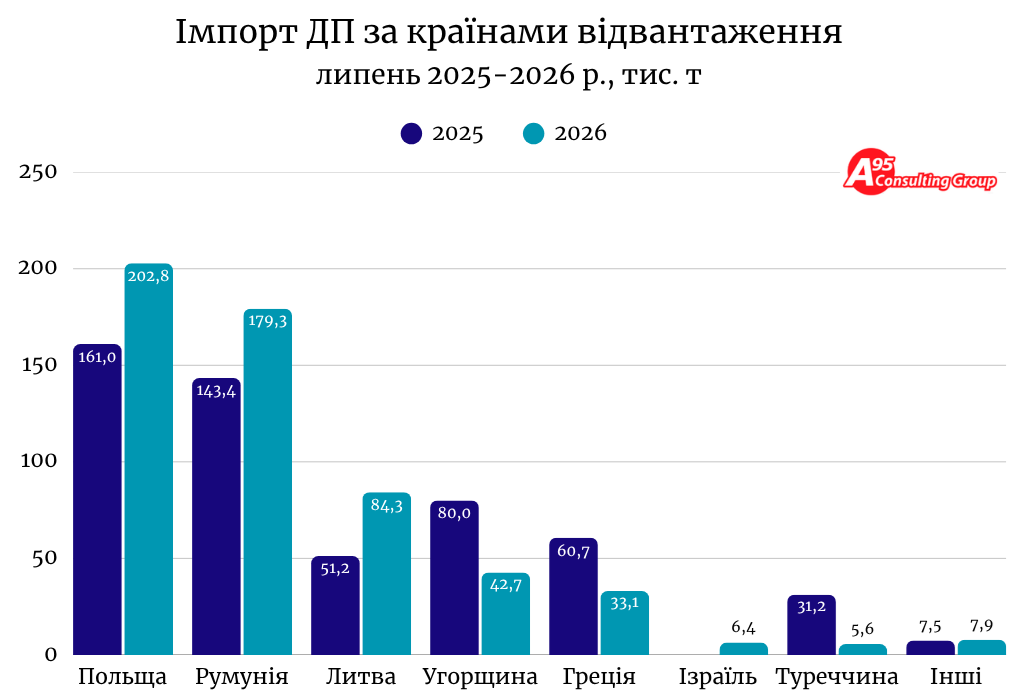
Poland was the largest supplier, providing 202,800 tonnes, or about 36% of total imports. Over the year, Polish supplies increased by 26%, from 161,000 tonnes.
Romania ranked second with 179,300 tonnes. Supplies increased by 25% and reached their highest level since the beginning of 2025.
Lithuania ranked third, demonstrating the highest growth rate among the three main suppliers. Imports from the country increased by 65%, from 51,200 tonnes to 84,300 tonnes.
Together, these three countries supplied about 466,000 tonnes of diesel fuel out of total imports of 562,000 tonnes.
This supply structure resulted from a significant restructuring of Ukraine’s fuel logistics.
According to A-95 Director Serhii Kuiun, the increased pressure on the Polish route is primarily associated with the record shallowing of the Danube and security risks.
At the same time, the importance of several alternative routes declined sharply. Supplies from Hungary decreased from approximately 80,000 tonnes in July last year to 42,700 tonnes this year, while supplies from Greece fell from 60,700 tonnes to 33,100 tonnes. Imports from Türkiye also declined to several thousand tonnes.
The high concentration of supplies allows the Ukrainian market to use the developed infrastructure of EU countries, but simultaneously increases its dependence on the stability of several major logistics corridors.
At the corporate level, ORLEN S.A. remains the largest supplier. Through its refineries in Poland and Lithuania, the company shipped 137,000 tonnes of diesel fuel to Ukraine, accounting for about a quarter of total imports.
Source: A-95 Consulting Group, Experts Club
The five largest diesel fuel importers in Ukraine accounted for approximately half of all foreign supplies in July 2026, according to data from the A-95 Consulting Group.
A total of 134 companies imported diesel fuel during the month, but the top five accounted for approximately 280,000 tonnes out of the total volume of 562,000 tonnes. Thus, their combined share amounted to approximately 49.8% of the import market.
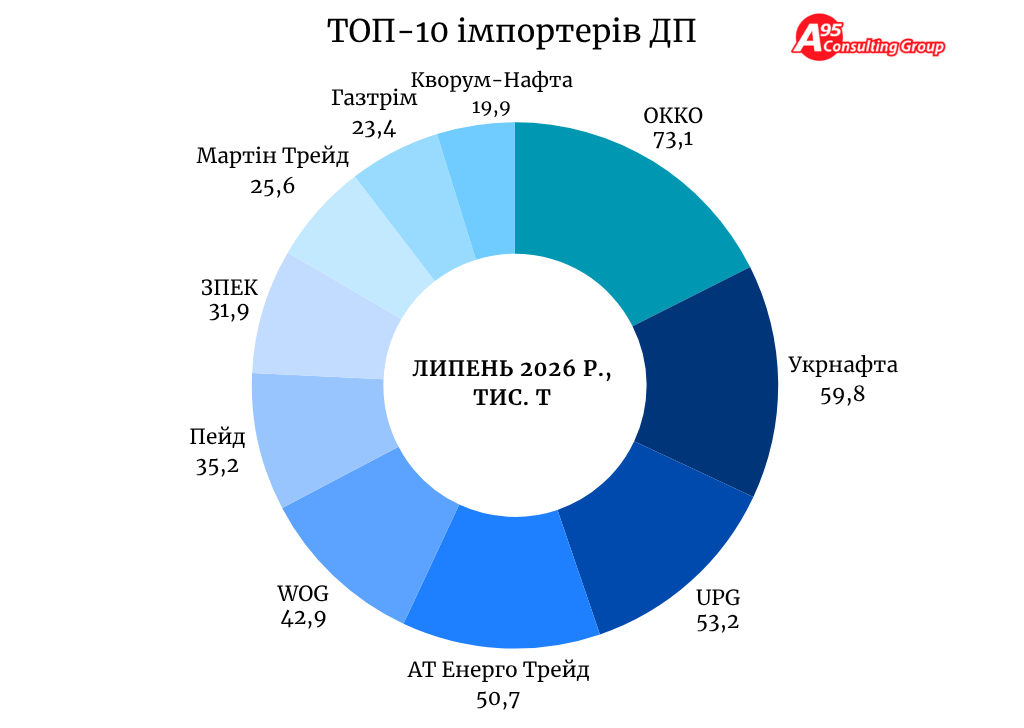
The OKKO Group was the largest importer, bringing in 73,100 tonnes of diesel fuel. Its supplies increased by 32% compared with July last year.
The state-owned Ukrnafta ranked second with 59,800 tonnes. The company demonstrated significantly stronger growth, increasing its imports 2.4-fold compared with July 2025.
UPG ranked third with a volume of 53,200 tonnes.
AT Energo Trade ranked fourth with 50,700 tonnes, while WOG placed fifth with 42,900 tonnes. These figures are presented in the A-95 infographic showing the top 10 diesel fuel importers for July.
Thus, OKKO and Ukrnafta alone accounted for almost 133,000 tonnes, or approximately 24% of total monthly imports.
At the same time, the highest growth rate among market participants was demonstrated not by a company in the top five, but by Zakhidna Palyvno-Enerhetychna Kompaniia (ZPEK). It increased its supplies 5.3-fold to 31,900 tonnes.
The ten largest importers also included companies with supply volumes ranging from approximately 20,000 to 35,000 tonnes.
The growing concentration of major suppliers is taking place against the backdrop of an overall increase in imports. In July, Ukraine imported 562,000 tonnes of diesel fuel, 5% more than a year earlier.
However, as A-95 Director Serhii Kuiun noted, even these volumes proved insufficient to meet the sharply increased demand. The market experienced a diesel fuel shortage due to a price-driven buying rush, increased activity among industrial and private buyers, and growing fuel consumption in the transport sector.
A-95 expects a more balanced situation in August as a result of increased supplies and lower global fuel prices.
Source: A-95 Consulting Group, Experts Club



