
Metinvest B.V. (Netherlands), the parent company of the Metinvest mining and metallurgical group, ended January–June of this year with a net loss of $202 million, compared to a net loss of $58 million in the same period last year.
According to a press release issued by Metinvest B.V. on Monday regarding the first half of this year, revenue for the period increased by 3%, to $3.657 billion from $3.555 billion.
The company’s operating profit for the reporting period fell by 64% to $73 million.
In the first half of 2026, adjusted EBITDA decreased by 8.3% compared to the same period last year—to $311 million from $339 million. At the same time, EBITDA for the mining segment fell by 30%, to $119 million from $169 million, while EBITDA for the metallurgy segment rose by 17%, to $249 million from $213 million.
The financial results reflect the group’s performance prior to the port shutdowns and the subsequent shutdown of the Southern GOK, as well as before the shelling of Zaporizhstal and Kametstal, which caused those facilities to shut down as well.
It is noted, however, that Metinvest’s enterprises in Ukraine continued to operate at varying levels of capacity utilization due to constraints related to security, power supply, logistics, and economic factors. Despite all the challenges, the group demonstrated strong financial results, which enabled it to fully and timely repay $428 million in bonds in April. Since the start of the war, Metinvest, together with its joint ventures and associated companies, has allocated $328 million to support Ukraine.
Metinvest CEO Yuriy Ryzhenkov noted in his commentary that the first half of 2026 was generally characterized by stable operational and financial performance. A key achievement was the successful redemption in April of bonds maturing in 2026. This event demonstrates Metinvest’s financial discipline and resilience. Since 2022, the group has fully repaid three separate bond issues, with total payments exceeding $1 billion. Importantly, all these obligations were met without restructuring, despite the loss of control over certain assets and the unprecedented challenges facing Ukrainian businesses.
After the end of the reporting period, operating conditions in Ukraine became increasingly difficult: intensified missile attacks and drone strikes heightened security risks, disrupted commercial shipping through Black Sea ports, and further complicated export and import logistics. Against this backdrop, the “Pivdenny GZK” joint venture temporarily suspended production. In August and September 2026, missile strikes on the group’s enterprises—Zaporizhstal and Kametstal—resulted in the deaths and injuries of employees and caused significant damage to production and support infrastructure, leading to the temporary shutdown of the affected facilities.
“We plan to gradually resume operations at these facilities and bring the blast furnaces back online step by step. This demonstrates our commitment to preserving a competitive Ukrainian steel industry, which continues to support the country’s economy,” the CEO noted.
At the same time, external operating conditions are becoming more challenging. “We find ourselves in a fundamentally new regulatory landscape, driven by the EU’s introduction of the Carbon Border Adjustment Mechanism (CBAM) and changes to trade quotas. Although the group remains committed to decarbonization and integration into the EU’s economic space, these measures are placing additional pressure on Ukrainian industry at a time when the country continues to defend itself against military aggression and preserve its industrial potential,” Ryzhenkov emphasized.
Metinvest is a vertically integrated group of mining and metallurgical enterprises. Its facilities are located in Ukraine—in the Donetsk, Luhansk, Zaporizhzhia, and Dnipropetrovsk regions—as well as in the European Union, the United Kingdom, and the United States. The holding’s main shareholders are the SCM Group (71.24%) and Smart Holding (23.76%). Metinvest Holding LLC is the management company of the Metinvest Group.
Agricultural holding company Astarta reported a net loss of EUR14.07 million in the first half of 2026, compared to a net profit of EUR42.27 million for the same period last year, according to a report filed by the company with the Warsaw Stock Exchange on Thursday.
According to the report, while all segments generated net profit in January–June of last year, each segment recorded a loss this year: in sugar production, a loss of EUR3.83 million replaced a profit of EUR8.35 million; in crop production, a profit of EUR20.07 million turned into a loss of EUR3.76 million; in cattle farming, a loss of EUR2.41 million was recorded instead of a profit of EUR10.68 million; and in soybean processing, a loss of EUR2.27 million was recorded instead of a profit of EUR5.84 million.
Crop production and soybean processing reported operating profits, while sugar production and livestock farming posted operating losses. Furthermore, livestock farming also reported a gross loss.
According to the report, Astarta’s consolidated revenue for the first half of the year decreased by only 0.1% to EUR 226.47 million, with export sales accounting for 62% compared to 61% in the first half of last year.
The agriculture sector led the way, with sales growing by 27% to EUR78 million, or 34% of total revenue. In sugar production, sales fell by 10% to EUR72 million, or 32% of total revenue; in soybean processing, by 7% to EUR51 million; and in livestock farming, by 15% to EUR25 million.
Gross profit for January–June of this year fell by half—to EUR46.01 million—as the cost of goods sold rose by 10% compared to the same period last year, and the estimated value of crops and livestock was reduced due to falling agricultural prices and rising costs.
Consolidated EBITDA fell 2.4-fold compared to the same period last year, to EUR34.32 million.
It is noted that net investments decreased by 41% to EUR27 million following the completion of investments in a protein concentrate production plant and ongoing planned capital expenditures in other segments.
According to the report, in the first half of 2026, net financial debt (excluding lease obligations) amounted to EUR81 million, compared to EUR28 million in the first half of 2025. Total net debt (including leases) increased by 44% to EUR220 million.
“Astarta” is a vertically integrated agro-industrial holding operating in eight regions of Ukraine and is the largest sugar producer in Ukraine. It comprises six sugar plants, agricultural enterprises with a land bank of 220,000 hectares, dairy farms with 22,000 head of cattle, an oil extraction plant in Hlobine (Poltava Oblast), seven grain elevators, and a biogas complex.
Astarta’s net profit for 2025 fell 4.2 times—to $19.94 million—while consolidated revenue decreased by 23%—to $472 million.

Kyivstar, Ukraine’s largest mobile operator, increased its EBITDA by 21.1% in the second quarter of 2026 to 8.3 billion UAH, while revenue rose by 27% to 14.9 billion UAH, according to the company’s quarterly report released on Friday.
“Kyivstar has demonstrated another quarter of broad-based profitable growth, and we are once again raising our full-year forecast,” Kyivstar CEO and President Oleksandr Komarov is quoted as saying in the document.
He noted that digital technologies now account for more than one-fifth of the company’s revenue, which is 7 percentage points higher than a year ago.
“We remain focused on leading Ukraine’s digital future and ensuring sustainable returns for our shareholders,” Komarov added.
In U.S. dollars, Kyivstar now estimates revenue growth in the second quarter of this year at 19.3%—to $339 million—and EBITDA at 13.7%, to $188 million, resulting in a margin of 55.4%.
Kyivstar’s net income was $77 million, with earnings per share of $0.33. Revenue from digital services grew by 94.7% to 3.3 billion UAH, accounting for 21.7% of total revenue, or 83%, to $73.7 million.
The number of Kyivstar’s multiplay customers in the second quarter of 2026 grew by 23.6% to 8.1 million, representing 39.9% of the total number of active mobile customers during the month. Revenue from these services increased by 47.4% to $139 million (up 56.9% to 6.2 billion UAH), or 41.1% of total revenue.
ARPU (Average Revenue Per User) for this period rose by 11.2% to $3.9 (up 18.3% to 172.7 UAH).
The report also states that the total number of monthly active digital users for the quarter was 29.3 million. Specifically, the figure rose by 8.2% at Uklon—to 5.2 million; by 0.7% at Helsi—to 5 million; stood at 6.3 million at Tabletki; and increased by 47.7% at KyivstarTV—to 3.6 million.
The online taxi service Uklon, which was consolidated into Kyivstar’s financial statements in April 2025, generated 1.448 billion UAH in revenue, or $32.8 million, in the second quarter of 2026. Its EBITDA amounted to 554 million UAH, or $12.5 million. The number of booked trips during this period increased by 4.5% to 43 million, while the number of completed trips rose by 25.9% to 1.4 million.
It is noted that as of the end of the second quarter of 2026, the Helsi healthcare information system had 109,000 paid subscribers; its revenue increased by 44.6% compared to the same period in 2025—to 105 million UAH—or by 35.9%—to $2.4 million. The service’s clients have access to 1,800 healthcare facilities. The number of patient visits reached 2.4 million.
Tabletki.ua, which was acquired in February of this year for $160 million, generated 342 million UAH, or $7.8 million, in the second quarter. EBITDA amounted to 274 million UAH, or $6.2 million. The average monthly number of orders reached 15 million, and gross merchandise value (GMV) reached $376 million.
Revenue for the Kyivstar TV platform in the second quarter of 2026 reached 614 million UAH, or $13.9 million, as the number of user sessions grew by 34.2% to 931 million.
The report specified that capital expenditures, excluding licenses and assets in the form of rights of use, amounted to $59 million. The company emphasizes that the capital expenditure intensity in the second quarter of 2026 was 17.3% and 26.6% over the past 12 months, which is 3.3 percentage points lower than the 29.9% recorded in the first quarter.
It is noted that going forward, the group expects revenue growth in dollar terms of 14–16% (previously projected at 11–14%) and EBITDA growth of 9–12% (previously indicated as 7–10%), while the capital expenditure rate will remain unchanged at 21–24%, assuming an average UAH/USD exchange rate of 44.5.
Free cash flow to shareholders, after accounting for lease and license expenses, increased by 32.2% to $104 million. Additionally, as of June 30, 2026, cash, cash equivalents, and deposits totaled 16.4 billion UAH, or $364 million.
Kyivstar added that more than 6 million of its customers currently use the Starlink Direct-to-Cell service, which during the reporting period also expanded its capabilities beyond messaging to include data transmission via specific apps—such as Google Maps, Viber, and WhatsApp—in areas without terrestrial coverage.
Among other things, during the second quarter of this year, the group acquired six solar power plants in the Lviv region (105 MW in total for $80.8 million), expanding its renewable energy portfolio nearly ninefold—to approximately 30% of expected energy needs—and strengthening its energy resilience.
The Uklon service launched the Uklon Store, signed an agreement to acquire E-wings, and conducted Ukraine’s first real-time testing of autonomous vehicles.
The group also signed a memorandum of understanding with the Ministry of Economy to explore the possibility of establishing an AI-ready data center, as well as a memorandum with the National Securities and Stock Market Commission of Ukraine to examine the possibility of providing domestic investors with access to the group’s Nasdaq-listed shares through established brokerage channels.
As reported, in the first quarter of 2026, Kyivstar increased its EBITDA by 28.5% to 7.5 billion UAH, while revenue grew by 31.3% to 13.9 billion UAH
In 2025, the company increased its EBITDA by 30% to 27 billion UAH, with revenue growing by 30.3% to 48.2 billion UAH; including in the fourth quarter, when EBITDA increased by 23.1% to 7.2 billion UAH, with revenue growing by 30.1% to 13.5 billion UAH.
DIGITALIZATION, EBITDA, KYIVSTAR, REVENUE, telecommunications
“Ukrtelecom,” the country’s largest fixed-line operator, increased its total revenue by 12.6% in the first half of 2026 compared to the same period last year—to 2.78 billion UAH, while EBITDA rose by 50% to exceed 810 million UAH, according to a company press release on Friday.
“As it has throughout the full-scale war, Ukrtelecom continues to implement its strategic approach: not merely to restore damaged networks, but to replace outdated infrastructure with modern telecom and IT equipment to implement a new optical telecom architecture and a modern IT landscape for the company,” emphasized Yuriy Kurmaz, CEO of Ukrtelecom, in the press release.
According to him, as of today, the company has over 95,000 km of fiber-optic network and is continuing a large-scale modernization of its infrastructure across the country.
It is noted that the EBITDA margin has risen to more than 29%.
The number of new connections in the residential segment increased by 81% compared to the same period last year, while the figure for small and medium-sized businesses rose by 17%.
Ukrtelecom specified that, as of the end of the first half of 2026, 1,400 medical facilities and 2,000 educational institutions were connected to the fiber-optic network. Meanwhile, revenue from fiber-optic internet services in the first half of 2026 increased by 12.5% compared to the same period last year.
Among other things, the fixed-line operator reported that revenue from commercial leases for the first six months of 2026 exceeded 320 million UAH, representing growth of more than 20% compared to the same period in 2025.
The company added that, according to survey results, the net promoter score (NPS) for new fiber-optic subscribers of the fixed-line operator in the first half of 2026 was more than 70%.
Separately, the CEO of Ukrtelecom noted that the company is simultaneously building fiber-optic networks while restoring and modernizing infrastructure damaged by hostilities in frontline regions of the Kharkiv, Sumy, Kherson, Mykolaiv, and Dnipropetrovsk regions, as well as other regions of Ukraine.
It is noted that in the first half of 2026, the company paid nearly 800 million UAH in taxes and fees to budgets at all levels.
The fixed-line operator is expected to continue investing in the development of telecommunications infrastructure.
In January–March 2026, Ukrtelecom reported a consolidated net profit of 15.46 million UAH, compared to a net loss of 652.95 million UAH for the same period in 2025.
As previously reported, in 2025, Ukrtelecom increased its consolidated net loss by 24.6% compared to 2025—to 294.87 million UAH—while its net revenue grew by 3.2%—to 4.27 billion UAH.
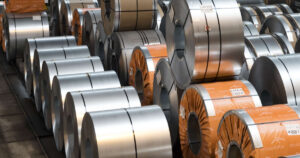
ArcelorMittal, the world’s second-largest steel producer, increased EBITDA by 23% in the second quarter of 2026 compared with the first quarter, to $2.06 billion, the company said in a statement. The figure rose by 11% compared with the same period last year.
Net profit amounted to $683 million, which was 18% higher than in the previous quarter but 62% below the profit recorded in the second quarter of 2025.
Revenue increased by almost 8% quarter-on-quarter and by 5% year-on-year in the second quarter, to $16.8 billion. The main reason for the improvement was a 4.4% increase in the average steel price.
ArcelorMittal’s capital expenditure amounted to $1.1 billion in April-June. Net debt increased to $9.5 billion at the end of June, compared with $9.3 billion as of March 31.
In the second quarter, the company increased steel production by 7.5% compared with the previous three months, to 14.3 million tonnes, versus 14.4 million tonnes a year earlier. Steel shipments amounted to 13.4 million tonnes in the quarter, compared with 12.8 million tonnes in the previous quarter and 13.8 million tonnes a year earlier. Iron ore production amounted to 13.5 million tonnes during the quarter, compared with 9.7 million tonnes in the first quarter and 11.8 million tonnes a year earlier.
Metinvest B.V. (Netherlands), the parent company of the Metinvest mining and metallurgical group, reduced its debt to $1.027 billion as of June 30, 2026, down from $2.242 billion at the end of 2021.
According to Metinvest B.V.’s annual report, released on Monday, Metinvest made significant progress in reducing its debt burden during the reporting period. As a result, total debt as of December 31, 2025, stood at $1.441 billion, a 15% decrease compared to the previous year. At the same time, the net debt-to-EBITDA ratio rose to 1.4x, an increase of 0.4x compared to the previous year.
It is noted that bonds listed on the Euronext Dublin stock exchange continued to constitute the bulk of the group’s capital structure—representing 88% of the debt portfolio, compared to 85% as of December 31, 2024.
Metinvest continued to actively manage its debt obligations. In the first half of 2025, the issued Senior Notes totaling EUR300 million were fully repaid upon maturity. As a result, the total amount of debt repaid since the beginning of 2022 reached $801 million.
In addition, it is noted that the overall reduction in debt during this period was driven by the full and timely repayment of senior bonds (two series); liability management measures, including cash tender offers and private repurchases; scheduled repayment of bank loans; a reduction in reliance on short-term trade finance; and the optimization of lease assets. These results were achieved despite the war and the loss of operational control over certain Ukrainian assets.
In parallel with measures to reduce its debt burden, Metinvest continued to secure targeted financing to support its operations and investment priorities. Specifically, in July 2025, a 11.5-year buyer’s credit facility in the amount of EUR23.6 million was secured for Northern GOK to finance the purchase of equipment for a project to thicken tailings. This credit line, guaranteed by the Finnish export credit agency Finnvera, marked Metinvest’s first instance of securing long-term financing for capital expenditures in Ukraine since the start of the full-scale invasion.
In addition, in April 2026, the group successfully completed the redemption of bonds maturing in 2026, marking another important milestone amid the ongoing war. To date, Metinvest has fully repaid three separate bond series, with total payments on these instruments exceeding $1 billion. These results were achieved despite the challenges of full-scale war, the loss of control over certain Ukrainian assets, and ongoing operational difficulties. At the same time, no debt has been restructured since the start of the war. According to pro forma figures, taking into account the redemption of the 2026 bonds, the group’s net debt-to-EBITDA ratio was less than 1x, the report notes.
As previously reported, Metinvest’s EBITDA in 2025 decreased by 24.2% compared to 2024—to $765 million from $1.009 billion. The year ended with a net loss of $191 million, compared to a net loss of $1.152 billion in 2024. Revenue decreased by 6% to $7.242 billion. At the same time, revenue from the mining segment fell by 25% year-over-year to $2.135 billion due to the absence of coking coal concentrate sales and a decline in iron ore product sales (by 11%). The segment’s contribution to total revenue was 29% (a decrease of 8 percentage points year-over-year).
In 2025, revenue from the metallurgical segment increased by 6% year-over-year to $5.107 billion, primarily due to growth in sales of finished products, semi-finished products (up 4% and 7%, respectively), and other products and services (up 40%). Meanwhile, coke sales fell by 20% year-over-year. This segment accounted for 71% of total revenue in the reporting period (an increase of 8 percentage points year-over-year).
For the year, the group posted an operating profit of $319 million, compared to an operating loss of $858 million in 2024.
At the time, Metinvest CEO Yuriy Ryzhenkov noted in his comments that the full-scale war continues to test both the nation and the group, which remains steadfast.
Metinvest is a vertically integrated group of mining and metallurgical enterprises. Its facilities are located in Ukraine—in the Donetsk, Luhansk, Zaporizhzhia, and Dnipropetrovsk regions—as well as in the European Union, the United Kingdom, and the United States. The holding company’s main shareholders are the SCM Group (71.24%) and Smart Holding (23.76%). Metinvest Holding LLC is the management company of the Metinvest Group.



