
The dollar is weakly strengthening against major world currencies on Thursday morning, investors are waiting for the results of the September meeting of the European Central Bank and evaluate the statements of members of the leadership of the Federal Reserve System.
The ICE-calculated index, which shows the dynamics of the US dollar against six currencies (the euro, the Swiss franc, the yen, the Canadian dollar, the pound sterling and the Swedish krona), is down 0.1%, the broader WSJ Dollar Index is up 0.1%.
The euro / dollar at 8:56 Moscow time is trading at $0.9996 compared to $1.0008 at the close of the previous session, the euro is losing about 0.1%.
The European Central Bank (ECB) is expected to raise key interest rates following the results of the September meeting immediately by 75 basis points (bp). The ECB has only once raised its base rate so sharply – a few days after the launch of the euro in 1999, but then it was a short-term technical adjustment, the Financial Times notes. The results of the meeting will be announced at 15:15 Moscow time on Thursday.
“There are no doves left in the ECB, only moderate and radical hawks,” said Katarina Utermeul, chief economist for European markets at Allianz SE.
The exchange rate of the American currency against the yen rose by 0.15% to 144.04 yen.
The yen has been the main casualty of the dollar’s recent rally as the Japanese currency is particularly sensitive to rising US long-term government bond yields, Investing.com writes.
“Any attempts to return to the 140 yen/$1 level have been short-lived, and in recent days the pair hit 144 yen/$1 for the first time since 1998,” wrote OANDA Senior Analyst Craig Erlam. to the dollar.”
The yen is under pressure from more hawkish comments from the Fed. Thus, the vice-president of the US Central Bank, Leil Brainard, said the day before that the Fed would have to raise the base interest rate to levels at which there would be a slowdown in economic activity.
The euro exchange rate against the US dollar will fall to $0.90 in the next six months against the backdrop of the political crisis in Italy and the reduction in Russian gas supplies, 69% of MLIV Pulse poll participants believe.
In addition, only 16% of respondents believe that Europe will be able to avoid recession in the next six months, Bloomberg quoted the results of a survey of 792 respondents.
Political problems in the euro zone’s third-largest economy could also lead to a fragmentation of the bond market, investors say. Thus, 21% of respondents believe that the spread between the yields of 10-year government bonds in Italy and Germany may exceed 500 basis points, updating the maximum since 2012.
In general, 41% of participants in the survey, conducted among portfolio managers and private investors, expect the beginning of the debt crisis in the eurozone in the next six months.

For the first time in 20 years, the euro exchange rate fell to parity against the US dollar on fears that the crisis in the European economy may be more significant than in the United States.
The euro/dollar is trading at $1.0017 at 8:55 am KST, compared to $1.0043 at the market close on Tuesday, with the euro shedding about 0.3%. During overnight trading, the euro traded against the dollar at a parity rate.
The ICE-calculated index, which shows the dynamics of the dollar against six currencies (the euro, the Swiss franc, the yen, the Canadian dollar, the pound sterling and the Swedish krona), rises by 0.4% to 108.43 points. Over the past five sessions, the index has gained 1.8%. The broader WSJ Dollar Index added 0.2%.
The dollar has been gaining in price lately as traders consider the US currency a defensive asset that will help save capital in the event of a recession in the global economy, writes Trading Economics.
In addition, the dollar is supported by expectations that the Federal Reserve System (Fed) will again raise the key interest rate by 75 basis points in July in order to curb inflation, which has been a record for 40 years.
June US consumer price data will be released on Wednesday. Experts expect inflation in the country to accelerate to 8.8% from 8.6% a month earlier.
The value of the pound fell during trading on Tuesday by 0.3% to $1.1861 against $1.1892 at the close of the previous session.
The exchange rate of the American currency paired with the yen is stable and is around 137.44 yen.

The National Bank of Italy and the National Bank of Ukraine (NBU) have launched a program for exchanging hryvnia for euros for Ukrainian refugees since June 21, the NBU press service reported on Friday.
According to the report, Ukrainians who have been granted a temporary residence permit in Italy or international protection will be able to exchange hryvnias in the amount of up to UAH 10,000 per person.
The exchange will be available at branches of the Italian Central Bank and branches of commercial partner banks (more than 400 branches throughout the country).
As reported, the hryvnia cash exchange program has already been launched in Poland, Germany, Belgium, Sweden and the Netherlands.

The Federal Ministry of Finance, the Federal Bank of Germany, German banks and the National Bank of Ukraine will launch a program for Ukrainian refugees to exchange cash hryvnia for euros on May 24, the press service of the German Ministry of Finance said.
According to the report, the Federal Ministry of Finance and the Federal Bank of Germany have signed an agreement with the National Bank of Ukraine on the initial volume of exchange of 1.5 billion UAH.
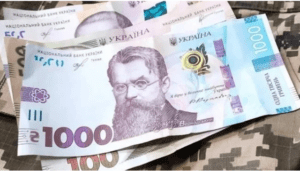
It is stated that refugees can exchange 100, 200, 500 and 1000 banknotes (up to 10 thousand hryvnias) for euros in German banks and savings banks participating in the program.
The conversion into euros takes place at the exchange rate published on the Bundesbank website (www.bundesbank.de/wechselkurse-ua), the report said.
The press service noted that the exchange will be registered in an online application submitted by the European Central Bank to ensure that the individual maximum amount of the exchange is not exceeded, for which the identity of each adult refugee wishing to participate in the exchange is recorded and verified.
It is specified that the exchange is initially possible within three months, and the losses resulting from the exchange are borne by the federal budget.
The Ministry of Finance of Ukraine at primary auctions on Tuesday, April 19, for the first time will offer buyers the full range of military bonds – both hryvnia and currency in dollars and euros.
According to the announcement of the Ministry of Finance, in particular, hryvnia military bonds with maturity in 6 months will be put up for auction. and 14 months, as well as 12 months. dollar bonds and 7-month. euro bonds.
Rates on these hryvnia bonds at the last auctions were respectively 10% and 11% per annum, on dollar bonds – 3.7%, and on euro bonds – 2.5% per annum.
As reported, the Ministry of Finance last week, at the seventh auctions for the placement of military bonds, was able to attract UAH 6.17 billion compared to UAH 0.96 billion a week earlier and UAH 3.33-4.88 billion in the previous three weeks. Currency notes were not offered last Tuesday.
The total volume of issuance of military bonds is up to UAH 400 billion. They can be bought by the National Bank, which has already purchased these securities under a separate procedure for UAH 40 billion.
At market auctions since March 1, their sales amounted to UAH 34.9 billion, $11.9 million and EUR143.4 million.



