
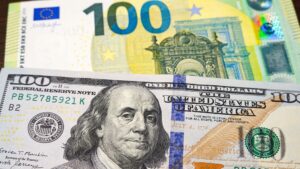
The National Bank of Ukraine (NBU) reduced its interventions in the interbank market by $63.9 million, or 4.9%, that week—to $1 billion 248.8 million, according to statistics on the regulator’s website.
According to the National Bank, during the first four days of last week, the average daily negative balance of corporate foreign exchange transactions decreased to $156.6 million from $217.2 million during the same period the previous week, totaling $626.2 million.
In the retail foreign exchange market, the average daily net outflow decreased to $46.9 million compared to $50.5 million during the same period the previous week, with retail purchases of non-cash foreign currency exceeding sales every day.
The official hryvnia-to-dollar exchange rate strengthened over the past week from 44.9857 UAH/$1 to 44.8526 UAH/$1, although on Tuesday, October 6, it weakened to a historic low of 45.0564 UAH/$1.
In the cash market, the buying rate for the dollar weakened by 2 kopecks to 44.66 UAH/$1, while the selling rate strengthened by 2 kopecks to 45.09 UAH/$1.
In August 2026, the volume of foreign currency purchases by Ukrainian households exceeded the volume of sales by $0.45 billion in dollar terms, compared to $0.5 billion in July of this year and $0.36 billion in August 2025.
According to data from the National Bank, in August, compared to July, cash currency purchases decreased by $68.8 million—to $1.9327 billion—while sales decreased by $17.0 million, to $1.4846 billion.
The volume of cash dollar purchases by the public in August increased by $28.9 million to $1,352.1 million, while sales decreased by $56.1 million to $1,034.6 million.
In the cash euro market in August, purchases by the public, in dollar terms, decreased by $108.1 million to $499.8 million, while sales increased by $26 million to $367.6 million.
As for bank customers’ non-cash foreign exchange transactions, both purchases and sales increased in August compared to July: purchases rose by $164.9 million to $11.1925 billion, and sales rose by $144.6 million to $7.6579 billion. At the same time, the volume of interbank transactions decreased by $409.9 million to $8,183 million.
On an annual basis, the volume of non-cash foreign currency purchases by bank customers increased by $2,904.0 million, sales by $998.2 million, and interbank transactions by $2,000 million.
In August, the official hryvnia-to-dollar exchange rate strengthened by nearly 14 kopecks compared to July—to 44.55 UAH/$1—while against the euro, the hryvnia weakened by nearly 61 kopecks—to 51.88 UAH/EUR1.
The National Bank’s net foreign exchange interventions in August rose to $4 billion 815.7 million, an increase of $24.7 million compared to July and $2 billion 119.8 million compared to August 2025.
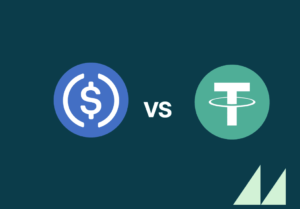
According to Fixygen, USDT and USDC reserves are largely invested in short-term U.S. Treasury bonds (US Treasuries) and repo transactions backed by them.
The market capitalization of USDT reached approximately $183 billion, while the amount of USDC in circulation in the second quarter totaled $73.3 billion.
Circle explicitly states that USDC reserves include short-term Treasury bonds and overnight repos backed by Treasury bonds, notably through a BlackRock fund.
As a result, the growing use of digital dollars automatically increases demand for U.S. government debt.
This is precisely why the U.S. administration views the proliferation of stablecoins not only as a fintech project but also as a way to boost international demand for the dollar and Treasury bonds.
BIS Chairman Pablo Hernández de Cos also acknowledged that stablecoins have the potential to lower the cost of U.S. government financing, although they may simultaneously increase the cost of bank financing.
bond, DOLLAR, stablecoin, U.S., USDT
According to Fixygen, the spread of stablecoins is becoming not only a technological issue but also a geopolitical one. Virtually the entire global market for stablecoins is denominated in dollars. The largest token, USDT, already has a market capitalization of about $183 billion, while the amount of USDC in circulation reached $73.3 billion in the second quarter.
For the U.S., this reinforces the international use of the dollar.
For Europe, the opposite risk arises: even as traditional payments migrate to the blockchain, they continue to flow primarily through the dollar-based system.
This is precisely why the European Central Bank is accelerating its work on digital payment instruments and central bank digital currency.
British authorities have also proposed assigning the Bank of England a separate mandate to support innovation in the payments sector, including stablecoins.
As a result, competition surrounding stablecoins is gradually becoming an extension of the currency competition between the dollar and the euro.
Foreign exchange interventions by the National Bank of Ukraine (NBU) on the interbank market in August remained close to July’s level, increasing by $24.7 million, or 0.5 percent, to $4.82 billion, according to data from the regulator’s website.
At the same time, the official hryvnia-to-dollar exchange rate strengthened by 0.3%, or 14 kopecks, in August, reaching 44.5505 UAH/$1 at the end of the month.
The volume of the National Bank’s interventions in the interbank market last week increased by 6.5%, or $77.9 million, compared to the previous week, reaching $1.27 billion.
According to the NBU, net interventions in August rose by 78.6%, or $2.12 billion, year-over-year.
From January through August, the regulator sold nearly $33.0 billion in foreign currency, which is 39.0%, or $9.25 billion, more than during the same period last year.
Over the 28 days of August, the average daily negative balance of legal entities’ currency purchase and sale transactions increased to $169.5 million from $151.8 million in July.
In the retail foreign exchange market, this figure rose from $19.4 million in July to $25.9 million in August.



