
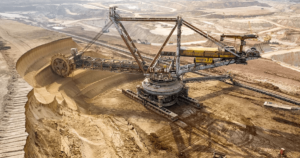
In January-November of this year, Ukraine reduced exports of titanium-containing ores and concentrates in physical terms by 95.7% compared to the same period last year, to 277 tons.
According to statistics released by the State Customs Service (SCS) on Friday, in monetary terms, exports of titanium-containing ores and concentrates fell by 95.2% to $496,000. The main exports were to Uzbekistan (35.61% of shipments in monetary terms), Turkey (35.01%), and Egypt (29.38%).
In addition, Ukraine imported 78 tons of titanium-containing ore worth $117,000 from China (98.29%, deliveries took place in January) and Kazakhstan (1.71%, deliveries took place in May) in the first 11 months of 2025.
During this period, Ukraine exported 2,466 tons of niobium, tantalum, vanadium, and zirconium ores and concentrates worth $3.954 million to Spain (48.90%), Germany (24.53%), and Italy (17.19%). At the same time, the country imported 441 tons of such ores worth $1.125 million from Spain (72.98%), the Czech Republic (12.89%), and China (11.82%).
As reported, in 2024, Ukraine reduced its exports of titanium-containing ores in physical terms by 37.5% compared to the previous year, to 7,284 thousand tons. In monetary terms, exports of titanium-containing ores and concentrates decreased by 40% to $11.654 million. The main exports were to Turkey (62.82% of shipments in monetary terms), Egypt (7.38%), and Poland (6.93%).
Last year, Ukraine imported 314 tons of titanium-containing ore worth $492 thousand from China (87.78%), Vietnam (6.11%), and Senegal (also 6.11%).
At the same time, experts pointed out the inconsistency of statistics on exports of titanium-containing ores. However, in response to a request from Interfax-Ukraine, the State Customs Service (SFS) of Ukraine stated that complete data on the export of titanium raw materials is not provided due to restrictions on the volume of export and import operations with military and dual-use goods, which are reflected in aggregate form under “Other goods.” They explained that, in particular, deliveries of titanium-containing ores from companies differ from the SCS data.
“We would like to inform you that these deliveries are included in the statistical exports from Ukraine, but are not reflected in the foreign trade statistics published by the State Customs Service (…) under commodity item UKTZED 2614 ”Titanium ores and concentrates” in view of the following (…) In accordance with the regulations (…), when protecting data for confidentiality purposes, any information considered confidential is reported in full at the next, higher level of product data aggregation,” the State Customs Service explained in its response to the agency.
It was clarified that information on customs clearance and movement across the customs border of Ukraine of goods subject to export control is included in the list of information containing official information in the SSU, in accordance with the relevant order.
In Ukraine, titanium-containing ores are currently mined mainly by PJSC “United Mining and Chemical Company” (UMCC), which manages the Vilnohirsk Mining and Metallurgical Plant (VGMK, Dnipropetrovsk region) and the Irshansk Mining and Processing Plant (IGZK, Zhytomyr region), as well as LLC “Mezhirichensky GZK” and LLC “Valky-Ilmenite” (both LLCs are located in Irshansk, Zhytomyr region). In addition, the production and commercial firm Velta (Dnipro) built a mining and processing plant at the Birzulivskyi deposit with a capacity of 240,000 tons of ilmenite concentrate per year.

Ukraine increased imports of goods in January-November 2025 by 18.5% in monetary terms to $75.4 billion, while exports decreased by 4.02% to $36.8 billion from $38.3 billion, according to the State Customs Service of Ukraine (SCS).
“At the same time, taxable imports amounted to $57.6 billion, which is 76% of the total volume of imported goods. The tax burden per 1 kg of taxable imports in January-November 2025 was $0.52/kg,” the SSU notes.
The countries from which the most goods were imported to Ukraine included China ($17 billion), Poland ($7.1 billion), and Germany ($5.9 billion).
The largest exports from Ukraine were to Poland ($4.6 billion), Turkey ($2.5 billion), and Germany ($2.2 billion).
Of the total volume of goods imported in January-November 2025, 67% fell into the following categories: machinery, equipment, and transport – $30.2 billion (during customs clearance of these goods, UAH 185.8 billion, or 29% of customs payments, was paid to the budget); chemical industry products – $11.4 billion (UAH 89 billion, or 14% of customs payments, was paid to the budget), fuel and energy products – $9.4 billion (UAH 188.4 billion, or 29% of customs payments, was paid).
The top three most exported goods from Ukraine were food products – $20.4 billion, metals and metal products – $4.3 billion, machinery, equipment, and transport – $3.4 billion.
“In the first 11 months of 2025, during customs clearance of exports of goods subject to export duties, UAH 1.2 billion was paid to the budget,” the SSU added.
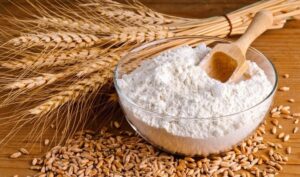
For the first time in 2025, a separate annual quota for the supply of 30,000 tons of Ukrainian flour to the European Union has been granted, which opens up opportunities for long-term planning for the domestic flour milling business, said Rodion Rybchinsky, director of the Ukrainian Flour Millers Association.
“The top 10 export-oriented companies have already invested around EUR 17 million in modernization and now understand that these investments will have prospects,” he said at the “Agribusiness in Ukraine” conference in Kyiv on Thursday.
He recalled that until 2022, flour was exported within the joint quota with wheat. Flour millers usually did not have time to deliver their products to the EU, as grain traders were the first to choose the quota. Only after the opening of trade preferences in 2022 did Ukrainian flour begin to actively enter the EU market, and in 2023, flour exports to EU countries amounted to 73,000 tons.
“These volumes became an argument in the negotiations: if 73,000 tons were successfully delivered to the EU, the question of Ukrainian flour’s non-compliance with European quality requirements would be moot,” said Rybchynskyi.
According to him, Ukrainian flour is now available in Germany, the Czech Republic, Spain, and Italy, which is clear proof of the high quality of Ukrainian products.
Rybchynskyi noted that during the 11 months of 2025, Ukraine supplied 26,000 tons of this product to the EU, so by the end of the year, domestic producers will be able to fully use the quota. At the same time, the biggest problem for flour millers in 2026, if we assess the prospects of the industry, will be the labor shortage.
He named the European Millers’ Congress in France as one of the most anticipated events in the industry next year, during which the Ukrainian side will try to find arguments and establish contact, in particular, with the Romanian Association of Flour Producers, as well as try to lay the groundwork for a review of quotas in 2028. According to Rybchynsky’s estimates, Ukraine is capable of supplying 300,000 tons of flour to the EU market.
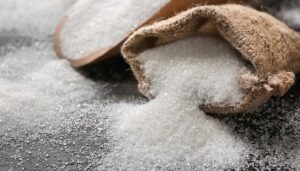
Ukrainian sugar in 2025 turned out to be a very bitter topic and a sore point in negotiations on trade in agricultural products with the European Union. The industry’s plans for 2026 are to increase the share of Ukrainian sugar on the European market, said Yana Kavushevska, head of the National Association of Sugar Producers of Ukraine “Ukrtsukor,” Yana Kavushevska at the conference “Agribusiness in Ukraine” in Kyiv on Thursday.
She noted that during the preparation of the updated trade agreement, the Ukrainian side was not prepared to deal with the powerful sugar lobby and its stakeholders in the EU, along with their strong support at the political level.
Another surprise was the European community’s bias against Ukrainian agricultural products. Among the most absurd myths, Kavushevska named the inexhaustible potential of the Ukrainian agricultural sector, the dominance of agricultural oligarchs, etc. Both Ukrainian agricultural associations and government officials had to refute these myths.
“One of the areas of our communication was to explain to Europeans that the Ukrainian sugar industry is a continuation of the European one. We use all the inputs that we purchase in the European Union in our work. (…) For every hectare of sugar beet, we purchase approximately $1,000 worth of goods in the EU. Accordingly, this year we have 200,000 hectares of sugar beet in Ukraine, for which we have purchased $200 million worth of products from the EU,” said the head of Ukrtsukor, adding that such arguments either surprise or are ignored by her European colleagues.
Speaking about the quotas that Ukraine received for sugar supplies to the EU under the updated trade agreement, Kavushevska noted that they had increased fivefold compared to the previous ones.
“Indeed, the results we have achieved with the quota received in the European Union for sugar show a fivefold increase — from 20,000 tons to 100,000 tons. Is this a lot or a little? Probably no one could be satisfied. But I am sure that if there had been no effective agricultural and social communication, this quota could have been smaller,” said the head of Ukrtsukor.
She stressed that the EU likes predictability, balance, and foreseeability. This is how she explained the need for Ukraine to introduce internal licensing for sugar exports to the European Union. In her opinion, this mechanism will allow Ukrainian sugar producers to eventually become not just technical suppliers of products to the EU, but gradually transform into full-fledged members of the European market.
“Yes, it costs producers who want to export additional expenses for obtaining documents, complications, and delays in possible deliveries. But this (internal quotas – IF-U) is what demonstrates to Europeans that we know how to work and regulate the market,” the expert explained.
Kavushevska named another complication of the updated trade agreement for sugar producers as the European Union’s application of the concept of a “critical quota” to Ukrainian sugar. It provides for the importer to deposit financial guarantees into special accounts, which will be returned to them 3-30 days after customs clearance of goods received from Ukraine. According to the expert, this mechanism is one of the ways to prevent the uncontrolled spread of Ukrainian sugar in the EU. At the same time, it is an unpleasant moment for European buyers, who have to freeze their own working capital for a certain period.
Speaking about the sugar producers’ plans for 2026, the head of the association said that the industry will continue to establish contacts with the European sugar industry and hopes that licensing will continue as an export mechanism. In addition, benchmarks will be developed for key production indicators so that the industry can prepare for integration into the European market.
“For Ukrainian sugar producers, the European market is virtually the only option. We cannot compete for Africa because Brazil will always dominate there logistically. Our task is to gain a foothold in Europe, increase Ukraine’s share as much as possible, and eventually ensure the European Union’s self-sufficiency in sugar,” Kavushevska concluded.
Ukraine exported 26,000 tons of wheat flour in the first five months of the 2025-2026 marketing year (MY, July-June), which is 11% less than in the same period of the previous MY. of which 5.4 thousand tons (-7%) were shipped in November, according to the information and analytical agency “APK-Inform.”
Analysts specified that the main volume of exports went to Moldova (30%), the Czech Republic (18%), and Palestine (16%).
“Importers have significantly reduced their purchases of Ukrainian products. For example, Moldova purchased 7.9 thousand tons this season, which is 10% less than in the previous season, and the Czech Republic purchased 4.7 thousand tons (-23%). Palestine reduced its imports, purchasing only 4.3 thousand tons compared to 5.7 thousand tons in the 2024/25 season (-25%),” experts said.
According to their estimates, in July-November 2025/26 MY, Ukraine produced 371.7 thousand tons of flour, which is 8% less than in the same period of 2024/25 MY.
“In general, wheat processing in 2025/26 MY is expected to reach 2.6 million tons, which is 2% less than last season,” APK-Inform predicts.
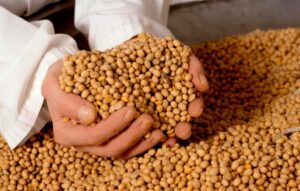
The Cabinet of Ministers has adopted a resolution introducing a mechanism for monitoring soybean and rapeseed exports, according to the press service of the Ministry of Economy, Environment, and Agriculture.
“We are introducing a transparent mechanism that allows producers, rather than intermediaries, to be exempt from export duties. The funds that the state will receive from traders’ duties will replenish a special budget fund and will be directed to programs to support frontline territories, where farmers work in the most difficult conditions, grants for processing, greenhouses, orchards, and insurance against military risks,” said Deputy Minister of Economy, Environment, and Agriculture Taras Vysotsky, whose words are quoted in a statement on the ministry’s website.
The Ministry of Economy noted that the document aims to ensure the fair application of export duty exemptions for certain categories of agricultural producers.
The new procedure establishes a monthly monitoring mechanism to be implemented by the Ministry of Economy to verify the compliance of exported product volumes with the data contained in the State Agrarian Register (SAR) regarding the actual products grown. If discrepancies are found between the declared and actual volumes grown, the Ukrainian Chamber of Commerce and Industry is obliged to cancel the expert conclusions.
“The introduction of such a mechanism ensures that only those exporters who have actually grown the products themselves will benefit from the exemption from export duties,” the ministry added.
The resolution ensures transparent and fair administration of the export duty exemption, prevents abuse during the export of soybeans and rapeseed, provides equal and fair conditions of competition for agricultural producers, and ensures state support for farmers, as only traders, not producers, will pay the duty, the statement said.
The government’s decision is expected to strengthen state control, ensure targeted budget revenues, and contribute to the stability of the agricultural sector. Monitoring will make it possible to simultaneously support conscientious producers and guarantee the replenishment of a special fund for the implementation of key agricultural development programs.
As reported, in September 2025, a law was passed introducing a 10% export duty on soybeans and rapeseed. Agricultural producers and cooperatives that export their own products are exempt from paying the duty. The duty is paid by traders and other exporters who are not producers. The mechanism is aimed at supporting farmers, stimulating domestic processing, and filling a special state budget fund to finance agricultural programs.



