
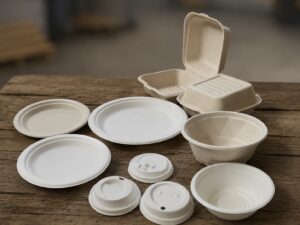
The EFI Group investment group plans to launch the second phase of plant-based cellulose packaging production in the first quarter of 2028 as part of the Pulp Master project, doubling production capacity to 100 million units per year, according to EFI Group founder Igor Liski.
“Currently, as part of the first phase of the project, production capacity of 50 million units per year has already been launched. Following the implementation of the second phase of production, scheduled for the first quarter of 2028, we plan to increase packaging production to 100 million units per year,” he said in an interview with Interfax-Ukraine.
According to Liski, the project is being financed through the founders’ own investments and a credit line.
“This model allows us to implement the project in phases, ensuring its stable development and controlled scaling,” Lisk explained.
He noted that Pulp Master has been developed as an export-oriented project from the very beginning: more than 90% of the products manufactured are planned to be supplied to foreign markets.
“Based on the results of a comprehensive market assessment, the company forecasts that even under a scenario of active consumption growth, the capacity of the Ukrainian market in this segment will amount to approximately 10 million units per year. With this in mind, Pulp Master has been developed as an export-oriented project from the very beginning,” said the founder of EFI Group.
According to Liski, raw materials for packaging production are currently sourced from European and Asian countries.
“Sugarcane fiber of Asian origin is primarily used to manufacture disposable tableware, as it best meets the requirements of this product category. The composition of the raw materials will gradually be optimized and adjusted as the project progresses,” he noted, adding that the overall goal of the project is to establish a system in Ukraine for producing pulp from byproducts of crop and fruit cultivation.
As previously reported, the first phase of the Pulp Master project, with a total cost of EUR5 million, recently began operations in Zhytomyr. The project is the group’s fourth in the field of eco-friendly packaging, but the first three production facilities operate on waste paper.
EFI Group was founded in 2007. It focuses on implementing business projects in Ukraine. Its investment areas include healthcare and medtech, the paper, food, and woodworking industries, and the supply of agricultural products.
Its portfolio includes Feednova, a manufacturer of animal fats and feed additives; the “Beehive” honey production plant; the “Medical Star” honey retail chain; the Zhytomyr Cardboard Plant; “Sem Ecopack,” the timber processor “Forest Technology,” the agricultural products supplier “Efi Agro,” the online medical hub Doc.ua, and others.
The full text of the interview with Liski will be published on the website of the “Interfax-Ukraine” agency.
Imports of goods into Ukraine from January through June 2026, in monetary terms, increased by 29% compared to the same period in 2025—from $38.3 billion to $49.3 billion, according to data from the Telegram channel of the State Customs Service (SCS) of Ukraine.
In contrast, the value of exports is growing more slowly: in January–June 2026, it totaled $21 billion, compared to $20 billion a year earlier.
“At the same time, taxable imports totaled $34.6 billion, accounting for 70% of the total volume of imported goods. The tax burden per kilogram of taxable imports in January–June 2026 was $0.58/kg,” the publication states.
The largest volumes of goods were imported into Ukraine from China ($13.9 billion), Poland ($4.7 billion), and Germany ($3.2 billion). The largest exports from Ukraine went to Poland ($2.4 billion), Turkey ($1.8 billion), and Italy ($1.3 billion).
Of the total volume of goods imported in January–June 2026, 72% consisted of the following categories: machinery, equipment, and transportation—$21.3 billion (upon customs clearance of these goods, 120.6 billion UAH, or 28% of customs duties, was paid to the budget); fuel and energy products—$7.4 billion (UAH 148.3 billion, or 34% of customs revenue), and chemical industry products—$6.9 billion (UAH 56.8 billion, or 13% of customs revenue).
The top three most exported goods from Ukraine were food products—$12.5 billion; metals and metal products—$2.2 billion; and machinery, equipment, and transportation vehicles—$1.8 billion.
The State Customs Service added that from January through June 2026, 802.3 million UAH was paid to the budget during customs clearance of exports of goods subject to export duties.
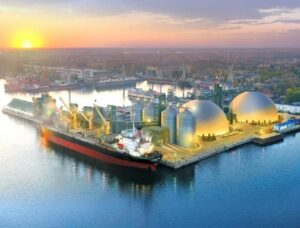
Nibulon Joint Venture LLC exported 3.15 million metric tons of agricultural products in the 2025/2026 marketing year (MY), a 32% increase from the previous season, when exports totaled 2.39 million metric tons, the company’s press service reported.
As noted in the statement, the company’s share of grain exports rose to 7% from 5.1% a year earlier.
The company attributes this growth to expanded cooperation with agricultural producers, updated trading approaches, an expanded export footprint, and a strengthened international trade presence.
According to the company, it currently works with approximately 4,000 agricultural producers and exports Ukrainian agricultural products to 26 countries worldwide.
Before the war, Nibulon Joint Venture LLC cultivated 82,000 hectares of land across 12 regions of Ukraine and exported agricultural products to more than 70 countries worldwide. In 2021, the grain trader exported 5.64 million metric tons of agricultural products—the highest volume in its history. After the war began, the company was forced to relocate its headquarters from Mykolaiv to Kyiv. In addition to 23 grain elevator complexes,
“Nibulon” has its own trucking and rail transport capabilities, as well as a fleet built at its own shipyard. During wartime, this fleet continues to provide river transportation services.
The company is also actively developing its own humanitarian demining unit to restore safety on leased lands and assist Ukraine’s agricultural sector. Nibulon is a certified mine action operator.
agricultural producer, AGRICULTURAL PRODUCTS, EXPORTS, GRAIN, NIBULON
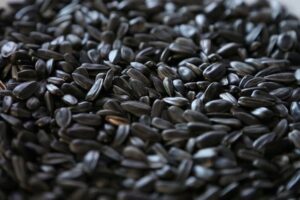
Ukraine exported 35,000 metric tons of sunflower seeds in the 2025/2026 marketing year, according to the Ukrainian Grain Association.
The association noted that sunflower seeds have traditionally been processed primarily within the country.
Total exports of oilseeds in the 2025/2026 marketing year declined: Ukraine exported 2.7 million metric tons of soybeans, 1.82 million metric tons of rapeseed, and 35,000 metric tons of sunflower seeds.
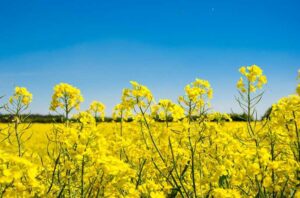
Ukraine exported 1.82 million metric tons of rapeseed during the 2025/2026 marketing year, compared to 3.2 million metric tons in the previous season, according to the Ukrainian Grain Association.
Germany was the main market for Ukrainian rapeseed, accounting for 876,000 metric tons. Belgium imported 453,000 metric tons, the Netherlands—247,000 metric tons, the Czech Republic—112,000 metric tons, and the United Kingdom—109,000 metric tons.
According to the UGA, the decline in rapeseed exports was due to a lower harvest and the introduction of an export duty on this crop.

The “Yarich” confectionery group has raised $10 million from the Norwegian state investment fund Norfund, which it will use to modernize production and further develop the business, Norfund announced,
“Yarich’s impressive growth in recent years, despite the war, reflects the strength and dedication of its management and owners. Supporting strong teams and helping reliable companies achieve further growth is a key part of Norfund’s investment approach,” said Norfund Project Manager Anastasia Andriyevska.
According to the fund, the funds will be used to modernize production facilities, specifically to install a new pretzel production line, which will enable the company to expand its product range and enter new market segments.
“This investment is a strong signal of confidence in Ukrainian business and the resilience of our team. It will facilitate further expansion into new product categories and continued growth in both the Ukrainian and export markets,” said Tetyana Shermolovych, the company’s CEO.
Norfund noted that Yarych’s production site in the Lviv region, which employs about 500 people, is a key hub for export development. In recent years, the company has significantly increased its exports, primarily to Poland.
Yarych Holdings Limited is the parent company of the “Yarych” confectionery group, whose production facilities are located in the village of Staryi Yarychiv in the Lviv region. The group specializes in the production of long-lasting cookies and crackers under the Yarych brand. The holding company directly owns 84.94% of Yarych Confectionery Factory LLC, while another 15.06% is owned by Yarychiv LLC.
Norfund is Norway’s state-owned investment fund, which finances private companies and projects in developing countries with the aim of creating jobs and supporting sustainable economic development. In Ukraine, the fund operates through the Investment Fund for Ukraine, established in late 2024 to support Ukrainian businesses and attract private capital.
As previously reported, the Norwegian government allocated 250 million Norwegian kroner for Norfund’s investments in Ukraine as part of the Nansen Support Program.
In late 2025, the fund also invested $15 million in the Rebuild Ukraine Fund (REBUF), managed by Dragon Capital, and approximately EUR8.5 million in the expansion of the M10 industrial park in the Lviv region.
BUSINESS, confectionery industry, EXPORTS, INVESTMENTS, MODERNIZATION, Norfund, PRODUCTION, YARYCH



