
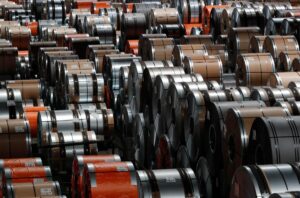
In January–May of this year, Ukrainian companies reduced their consumption of rolled metal products by 2.22% compared to the same period last year, down to 1,592.4 thousand metric tons.
According to a press release from the “Ukrmetallurgprom” association on Tuesday, 732.4 thousand metric tons were imported during this period, accounting for 45.99% of the domestic rolled steel consumption market.
According to “Ukrmetallurgprom,” in January–May 2026, Ukrainian steel companies produced 2.340 million metric tons of rolled steel (93.3% of the figure for the same period in 2025), of which, according to the State Customs Service of Ukraine, approximately 1.480 million metric tons—or 63.2%—were exported. In January–May 2025, the share of exports was 61.5% (1.541 million metric tons out of a total rolled steel production of 2.507 million metric tons).
The share of semi-finished products in export shipments in January–May 2026 was 41.22%, which is significantly higher than the figure for the first five months of 2025 (32.23%). The share of flat products in exports from January through May 2026 is virtually the same as in January through May 2025 (46.96% and 46.59%, respectively). The share of long products, however, is noticeably lower than the figure for January–May 2025 (11.82% in 2026 versus 20.18% in 2025).
The structure of imports in January–May 2026 is characterized by a marked dominance of flat-rolled products over structural steel (62.42% and 28.59%, respectively); however, in January–May 2025, the dominance of flat-rolled products over long products was significantly greater (76.83% and 21.23%, respectively).
“In January–May 2026, the domestic market capacity amounted to 1 million 592.4 thousand metric tons of rolled steel, of which 732.4 thousand metric tons, or 45.99%, consisted of imports. In January–May 2025, the domestic market capacity was 1,557.8 thousand metric tons, of which 591.8 thousand metric tons, or 37.99%, were imported. “Thus, in January–May 2026, the domestic market capacity decreased by 2.22% compared to January–May 2025, while the share of imports increased by 8%,” the press release states.
According to the State Customs Service, the main export markets for Ukrainian rolled metal in January–May 2026 were the European Union (78.6%), the rest of Europe (11.7%), and the CIS (6.9%).
Among importers of rolled metal in January–May 2026, other European countries ranked first (47.8%), followed by Asian countries (26.6%) and the EU-27 (16.0%).
As previously reported, Ukraine’s rolled metal market grew by 21.73% in 2025 compared to 2024, reaching 4 million 1.6 thousand metric tons. Imports totaled 1 million 603.6 thousand metric tons, accounting for 40.07% of domestic rolled metal consumption.
Ukraine’s rolled steel market in 2024 contracted by 6.26% compared to the previous year—to 3 million 288.4 thousand metric tons, while in 2023 it grew 2.19 times compared to 2022—to 3 million 505.6 thousand metric tons.
EXPORTS, IMPORTS, METALLURGY, rolled metal, UKRMETALLURGPROM
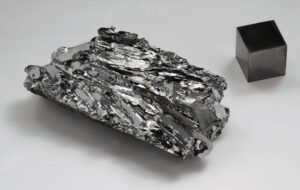
In January–May 2026, Ukraine reduced imports of zinc and zinc products by 34.2% compared to the same period last year, to $14.029 million.
In May, imports of zinc and zinc products amounted to $3.499 million.
Zinc exports for the first five months of 2026 totaled $466,000, while in January–May 2025 they were $523,000. In May, zinc exports amounted to $174,000.
As reported, in 2025 Ukraine reduced imports of zinc and zinc products by 9.6% compared to 2024—to $52.982 million. Zinc exports for the past year reached $1.234 million, compared to $563,000 a year earlier.
Pure metallic zinc is used to restore precious metals, protect steel from corrosion, and for other purposes.

In May 2026, the Export Credit Agency (ECA) supported exports by Ukrainian companies to the tune of 1.16 billion UAH.
According to the agency’s website, Ukrgasbank provided the largest volume of support in cooperation with partner banks, backing UAH 1.059 billion in exports.
The largest volume of supported exports came from enterprises in Kyiv (UAH 879.3 million) and Chernihiv (UAH 88.7 million) regions.
The main importing countries for products from Ukrainian manufacturers insured by ECA in May were the UAE (UAH 879.26 million), the Netherlands (UAH 154.19 million), Kazakhstan, and Kyrgyzstan—each with UAH 44.35 million.
In terms of sectoral structure, the largest shares were accounted for by milk processing and the production of butter and cheese, the cultivation of pome and stone fruits, the production of wallpaper, sawmilling and planing, and the production of industrial refrigeration and ventilation equipment.
ECA, EXPORTS, UAE, UKRGASBANK
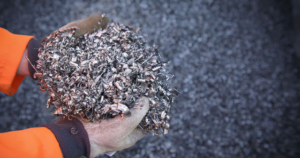
In January–May 2026, Ukraine cut imports of lead and lead products by 71.9% compared to the same period last year, down to $958,000.
In May, imports of lead and lead products amounted to $199,000.
At the same time, exports of lead and lead products in January–May of this year increased by 4.9% compared to the same period last year—to $3.818 million. In May, $891,000 worth of lead was exported.
As reported, Ukraine increased imports of lead and lead products by 3.3 times in 2025, reaching $7.801 million. Exports of lead and lead products last year decreased by 17.8%, to $9.377 million.
Lead is currently used primarily in the production of lead-acid batteries for the automotive industry. In addition, lead is used in the manufacture of bullets and certain alloys.

Ukraine is rapidly increasing its exports of frozen raspberries, blackberries, and other berries: their value rose from $53.4 million in 2023 to $114.6 million in 2024 and $176.4 million in 2025, according to a study of Ukraine’s berry and nut sector presented at the forum “Development of Exports in Ukraine’s Berry and Nut Sector” in Kyiv last week.
According to Olga Gvozdeva, advisor to the director of the State Agency “Office for Entrepreneurship and Export Development,” the main markets for these products are Poland, Germany, the Czech Republic, and France, reported a correspondent for the Interfax-Ukraine news agency.
According to the study, exports of fresh berries—blueberries, blackberries, and cranberries—declined to $22.4 million in 2025 after growing from $16.8 million in 2023 to $27.9 million in 2024. The main buyers remain the Netherlands, the United Kingdom, Germany, and Moldova.
According to the study, exports of shelled walnuts, after increasing from $68.1 million in 2023 to $82 million in 2024, fell to $61.9 million in 2025. The largest buyers of this product were France and the Netherlands.
Exports of walnuts in shell also declined—from $8.6 million in 2024 to $5.5 million in 2025, with Iraq remaining the main market, the document states.
“After a decline in 2022, we are now gradually catching up to previous levels,” Gvozdeva noted.
The study of Ukraine’s berries and nuts sector was prepared by the Office for Entrepreneurship and Export Development based on data from the State Statistics Service of Ukraine, the State Customs Service of Ukraine, and FAOSTAT.

In January–May 2026, Ukraine increased imports of tin and tin products by 89.3% compared to the same period last year, reaching $3.292 million.
In May, imports of tin and tin products amounted to $555,000.
At the same time, exports of tin and tin products in January–May 2026 rose to $593,000 from $86,000 in January–May 2025. In May, $54,000 worth of tin was exported.
As reported, in 2025, imports of tin and tin products to Ukraine rose by 36.5% compared to 2024—to $4.352 million. Exports of tin and tin products amounted to $241,000, compared to $389,000 a year earlier.
Tin is used primarily as a safe, non-toxic, corrosion-resistant coating in its pure form or in alloys with other metals. The main industrial applications of tin are in tinplate (tin-coated iron) for food packaging, in solders for electronics, in plumbing, in bearing alloys, and in coatings made of tin and its alloys. The most important tin alloy is bronze (with copper).



