

According to Experts.news, the structure of Ukraine’s dairy exports has changed significantly over the past year: the share of butter and other milk fats in foreign exchange earnings has more than halved, while dry and condensed milk have become the largest export category, according to an analysis by the Union of Dairy Enterprises of Ukraine (UDEU).
In August 2025, butter and other milk fats under commodity code 0405 accounted for 36% of the value of Ukraine’s dairy exports, whereas in August 2026, their share fell to 15%. At the same time, the share of dry and condensed milk increased from 24% to 37%, and that of whey from 5% to 11%.
The change in structure occurred gradually. Butter accounted for 36% in August 2025, falling to 25% in October, to 22% in March 2026, and to 15% in August. At the same time, the share of dry and condensed milk rose from 24% to 24%, then to 35% and 37%, respectively. Thus, the shift in the structure of Ukrainian dairy exports occurred primarily between the fall of 2025 and the spring of 2026.
According to the SMPU’s assessment, one of the factors was the situation on the global market for milk fats. Butter prices were under pressure, and the Global Dairy Trade index fell for nine consecutive auctions at the end of 2025. Since the export structure is calculated in value terms, the decline in butter’s share is linked not only to physical shipment volumes but also to changes in global prices.
At the same time, experts cite the growing role of whey as the most notable structural change. Its share of export revenue more than doubled over the year. By August 2026, dry milk, condensed milk, and whey together accounted for 48% of the value of Ukraine’s dairy exports.
The share of cheeses—which are considered higher-value-added products with potentially higher profit margins—remained virtually unchanged, at about 24% in August 2025 and 25% a year later. Thus, the structure of Ukraine’s dairy exports is shifting increasingly toward commodities and raw materials.
This trend is unfolding against the backdrop of a general deterioration in the dairy industry’s trade balance. According to data published by the Ukrainian Dairy Producers Association (SMPU) on September 2, Ukraine exported $176.9 million worth of dairy products in January–August 2026, which is 20.5% less than during the same period last year. At the same time, imports increased by 24.7% to $247.2 million.
In volume terms, butter exports fell by roughly half over the eight-month period, while shipments of dry milk and condensed milk decreased by 7%. At the same time, exports of fermented milk products rose by 28%, milk whey by 1.1%, and cheese by 0.9%.
As a result, Ukraine shifted from a trade surplus in dairy products to a trade deficit. For January–August 2026, the deficit totaled $70.3 million, whereas a year earlier the surplus had reached $24.1 million. The export-to-import ratio fell from 1.12 to 0.72.
On the import side, cheese remains the largest category, although its share in August fell year-over-year from 82.3% to 76.9%. At the same time, the share of imported milk and cream, whey, and butter increased, intensifying competition for Ukrainian processors in the domestic market.
The Union of Dairy Enterprises of Ukraine (SMPU) brings together Ukrainian milk producers and processors and represents the interests of companies in the industry. The organization was founded in 2001.
Original source: analysis by the Union of Dairy Enterprises of Ukraine on Ua Dairy

The raspberry harvest in Ukraine in 2026 will likely be lower than last year’s, but the decline in supply was offset by record-high purchase prices, said Taras Bashtannik, president of the Ukrainian Fruit and Vegetable Association (UFVA), in an interview with SEEDS published on September 2, 2026.
According to him, it is still too early to talk about a new record in terms of physical raspberry production volumes.
“I wouldn’t rush to declare a record in terms of volume, that’s for sure. In my opinion, there are fewer raspberries this year than last. In monetary terms, it could be a record or a repeat of last year’s result, because the price of raspberries this year is even higher than last year,” Bashtannik noted.
The most telling factor of the season was the sharp rise in the cost of raw materials for processing. According to the UPOA president, purchase prices for raspberries intended for processing and freezing reached 193–195 UAH per kg, excluding VAT, during certain periods.
Bashtannik noted that the Ukrainian market had never previously recorded such high purchase prices. Thus, the lower yield this season was largely offset by the higher price of the berries.
At the same time, the Ukrainian raspberry market remains predominantly export-oriented. According to the UPOA president’s estimate, 90–95% of the raspberries produced in Ukraine are exported, while domestic consumption remains relatively low.
“I would say that 90–95% of raspberries are exported. And this trend will most likely continue,” he said.
One of the main constraints on further production growth remains the high demand for manual labor. According to Bashtannik, raspberries are essentially harvested by hand, and the possibilities for mechanizing this process are still limited. This hinders rapid expansion of cultivation areas even when market prices are high.
High purchase prices also confirm the shortage of high-quality raw materials on the European market. According to EastFruit, Ukraine already ranks first in the world in net raspberry exports, and export revenue in the 2025/26 season reached a record $250.8 million, an increase of approximately 65% compared to the previous season.
Thus, the 2026 season for Ukrainian raspberry producers could set a record not in terms of harvest volume, but in terms of the value of products sold. How the situation develops will depend on the harvest in Ukraine and major European producing countries, as well as on demand from companies that freeze and process berries.
agricultural sector, Bashtannik, BERRIES, EXPORTS, RASPBERRIES, UKRAINE
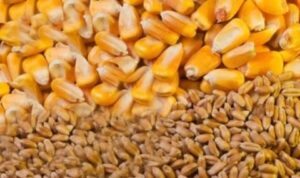
Prices for food and feed wheat in Ukraine remained unchanged over the week—at $185 and $175 per metric ton, respectively, on a CPT Odessa basis, according to brokerage firm Spike Brokers in its weekly market review.
According to the broker, Ukraine exported approximately 612,700 metric tons of wheat in August. The top destinations were Spain (118,200 metric tons), Egypt (116,100 metric tons), and Algeria (78,100 metric tons). These three countries accounted for about 51% of August’s exports.
From September 1–3, Ukraine exported about 116,800 metric tons of wheat, or nearly 39,000 metric tons per day, compared to an average of about 20,000 metric tons per day in August. Destinations included Tunisia, Egypt, Indonesia, and Israel.
The price of corn also remained unchanged over the week: on a CPT Odessa basis, it stood at $185 per metric ton, and on an FCA Chop basis, at $225 per metric ton.
In August, Ukraine exported about 300,000 metric tons of corn. During the first three days of September, corn exports totaled about 69,200 metric tons. The main export destinations were Italy, Turkey, Germany, and the Netherlands.

Rail shipments of grain to Danube ports in August 2026 nearly tripled compared to July—reaching 248.8 thousand metric tons, while shipments to the ports of Greater Odesa fell by 94.9%—to 68.5 thousand metric tons, according to a weekly review by the brokerage firm Spike Brokers.
Overall, rail grain shipments to seaports, including domestic shipments to Izmail, totaled approximately 317,300 metric tons in August, compared to 1.440 million metric tons in July. According to the brokerage firm, there was a sharp shift in cargo flows from the Greater Odessa region to the Danube.
In August, 1.297 million metric tons of grain were transported by rail—34.7% less than in July and 53.9% less than in August 2025. The average daily load amounted to 39.2 thousand metric tons, which is 22.5% lower than in July and 55% lower than in August 2025.
Exports of grain and milled products totaled 672.2 thousand metric tons, down 58.5% month-over-month and approximately 74% year-over-year. A total of 113,000 metric tons of vegetable oil were transported—15.4% more than in July and 54.7% more than in August 2025. Transportation of oilcake and meal totaled 167.1 thousand metric tons, down 9.3% month-over-month and 7.4% year-over-year.
In August, 501.8 thousand metric tons were transported via land crossings, compared to 208.8 thousand metric tons in July—a 2.4-fold increase.
The average daily throughput of grain cars through the main western border crossings in August was 192.8 cars, compared to 71.3 cars in July. The highest average daily figure was on the Polish route—56.6 cars. Through Hungary, 49.4 cars were transported per day; through Romania, 45.5; and through Slovakia, 41.4 cars.
Unlike in July, the August flow was distributed much more evenly among the four corridors.
As of September 3, there were 8,221 railcars en route to border crossings, of which 1,346 were loaded with grain, compared to 9,273 and 1,414 railcars, respectively, at the end of August. During the first days of the month, the total backlog decreased by approximately 11%, while the grain backlog decreased by 5%.
In August, 325,000 metric tons of agricultural products were exported via road border crossings, compared to 289,200 metric tons in July—an increase of 12.4%. Compared to August 2025, the volume was 23.7% higher.
Nearly half of August’s road freight traffic was destined for Poland—150,100 metric tons, or 46.2%. Among the largest categories in August were poultry meat—30,200 metric tons, sunflower oil—24,800 metric tons, ethyl alcohol—23,100 metric tons, sugar—18,600 metric tons, fruits and nuts—16.9 thousand metric tons, and soybean meal—15 thousand metric tons.
During the first three days of September, 33 thousand metric tons were exported by road, or about 11 thousand metric tons per day, compared to an average of 10.5 thousand metric tons per day in August.
In August, Ukraine exported 2.146 million metric tons of agricultural products in UKT ZED groups 01–24, worth $1.280 billion. The grain segment accounted for 987,100 metric tons, or 46% of the total volume, in the final August statistics: 612,700 metric tons of wheat, 305,700 metric tons of corn, and 68,700 metric tons of barley were shipped. Rapeseed accounted for another 292,600 metric tons, or 13.6% of exports. The three main vegetable oils totaled 279,100 metric tons, while sunflower and soybean meal totaled 187,200 metric tons.
The largest physical volumes went to Germany—227.1 thousand metric tons, Turkey—203.8 thousand metric tons, Italy—188.1 thousand metric tons, Poland—179.3 thousand metric tons, and the Netherlands—171.7 thousand metric tons. Together, these five countries accounted for about 45% of August’s exports.
From September 1–3, Ukraine exported 331.4 thousand metric tons of agricultural products worth $167.7 million, or about 110.5 thousand metric tons per day.

According to Experts.news, Ukraine has a strong chance of taking first place in the world during the 2026/27 season—not only in terms of net exports but also in terms of the total volume of frozen raspberry exports—amid a sharp decline in harvests among its main competitors, Serbia and Poland, according to the August analytical report by the Ukrainian Berry Growers Association.
The association estimates that Serbia’s raspberry harvest in 2026 could total about 30,000 metric tons, compared to approximately 65,000 metric tons in a typical season—the lowest figure in about 30 years. Production was affected by spring frosts, plant diseases, heat, and extreme drought: Serbia received only about 7 mm of precipitation in August.
The situation has also worsened in Poland, where spring frosts damaged berry plantations. The reduction in supply immediately affected European prices: the cost of Serbian IQF raspberries reached about 7 euros/kg, which is approximately 51% higher than last year’s level.
This creates a favorable price window for Ukrainian suppliers. Ukraine is already the world leader in net exports of frozen raspberries—that is, export volume minus imports. During the 2025/26 season, from June 2025 to May 2026, the country exported 63,300 metric tons of frozen raspberries for a record $250.8 million. Export revenue rose by 65% year-over-year, and the average price was 3.96 euros per kilogram.
The new season also began with high prices. In June 2026, Ukraine exported approximately 2,150 metric tons of frozen raspberries at an average price of 4.14 euros per kilogram. The main export destinations were the Czech Republic, Poland, and Germany.
Over the past few years, Ukraine’s frozen raspberry sector has significantly strengthened its position in the European market. Based on 2024 results, EastFruit analysts estimated Ukraine’s exports at approximately 65,1 thousand metric tons, while Serbia exported about 67,7 thousand metric tons. However, Serbia simultaneously imported about 4,700 metric tons of berries for subsequent re-export, so its net exports amounted to about 63,000 metric tons. Ukraine, which imports virtually no raspberries, became the world leader in this category for the first time.
Poland also remains one of the largest hubs for the global trade in frozen raspberries; however, its role is largely tied to the processing and re-export of imported berries. According to EastFruit estimates, in 2024, more than half of the frozen raspberries exported by Poland consisted of imported raw materials, a significant portion of which came from Ukraine. Poland’s net exports were estimated at only about 16,000 metric tons.
At the same time, Ukraine is gradually reducing its dependence on Polish intermediaries. Between 2022 and 2024, Poland’s share of Ukrainian frozen raspberry exports fell from 63% to 35%, while the combined share of Germany, the Czech Republic, Austria, and France rose to 48%. During this period, direct shipments to Germany increased 4.5-fold, to the Czech Republic 4.2-fold, and to Austria 33-fold.
The key factor in Ukraine’s ability to maintain its leading position remains the quality of processing. A significant portion of the added value is generated not during the berry cultivation stage, but during sorting, individual quick freezing (IQF), packaging, and direct sales to European retail chains and industrial consumers. Therefore, further growth in processing capacity may be no less important than the expansion of the plantations themselves.
According to the latest available FAOSTAT data for 2024, Russia remained the world’s largest raspberry producer—at approximately 213,800 metric tons—followed by Mexico in second place with 175,500 metric tons and Serbia in third with 94,000 metric tons. Next were the United States with approximately 82,1 thousand metric tons and Poland with about 76,9 thousand metric tons. Ukraine produced about 33,6 thousand metric tons. These figures reflect domestic raspberry production specifically and do not correspond to export rankings, as part of the harvest is consumed domestically, and some countries actively import the berries for processing and re-export.
In the global trade of frozen raspberries, Ukraine, Serbia, and Poland remain the key players. Ukraine has led in net exports since 2024, while Serbia has maintained a slight lead in gross shipments. In the broader HS 081120 tariff category, which also includes frozen blackberries and some related berries, Chile is among the major exporters; therefore, customs rankings cannot be fully equated with the ranking for raspberries specifically.
If the forecast by the Ukrainian Berry Growers Association proves accurate, the 2026/27 season could be the first in which Ukraine simultaneously ranks first in the world in both net and gross exports of frozen raspberries.
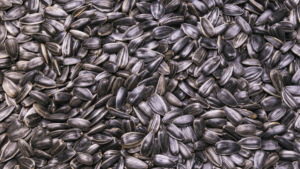
The price of sunflower seed in Ukraine rose by $20 over the week—to $460 per metric ton, including VAT, on a CPT mill basis, according to a weekly market review by the brokerage firm Spike Brokers.
According to the brokers, Ukrainian oilseeds showed varying trends that week depending on the sales destination. The price of sunflower seeds on a CPT mill basis rose from $440 to $460 per metric ton, while rapeseed on an FCA Chop basis rose from $550 to $555 per metric ton; however, on a CPT mill basis, rapeseed prices fell from $485 to $480 per metric ton.
“The western export channel commands a higher premium, while port and domestic processing parities remain at a discount,” the review notes.
From August 1–27, sunflower oil exports fell by 42.5% compared to the same period in July—to 131.3 thousand metric tons from 228.4 thousand metric tons. Ukraine exported almost no sunflower seeds—0.6 thousand metric tons compared to 2.6 thousand metric tons a month ago. At the same time, overseas sales of sunflower meal increased by 28%—to 83.1 thousand metric tons from 64.9 thousand metric tons.
During this period, Ukraine exported 255,2 thousand metric tons of rapeseed, compared to 11,8 thousand metric tons during the corresponding period in July, marking a 21.6-fold increase. Rapeseed oil exports rose 4.6-fold—to 69,4 thousand metric tons from 15,2 thousand metric tons, respectively. The main buyers of rapeseed were Germany (109.2 thousand metric tons), the Netherlands (84.3 thousand metric tons), and the Czech Republic (25.1 thousand metric tons), which accounted for about 86% of August’s exports of this product.
Soybean exports from August 1–27 fell by 55.6% to 27.1 thousand metric tons. Soybean oil exports totaled 33.3 thousand metric tons, down 11% from the same period in July, while soybean meal exports totaled 70.7 thousand metric tons (-28.9%). Total exports of soybeans, soybean oil, and soybean meal amounted to 131.1 thousand metric tons, compared to 197.8 thousand metric tons during the same period in July, a decrease of 34%.
For GMO soybeans, the price on a CPT port basis fell from $420 to $410 per metric ton, and on a CPT mill basis from $425 to $400, while the FCA Chop price rose from $435 to $450 per metric ton. In the non-GMO soybean segment, the CPT port price fell from $440 to $430 per metric ton, while the FCA Chop price rose from $470 to $475.
According to Spike Brokers, the price differential between western and other destinations for oilseeds continues to widen. Specifically, the spread between FCA Chop and CPT mill for GMO soybeans widened from $10 to $50 per metric ton over the week, while the difference between FCA Chop and CPT port for non-GMO soybeans increased from $30 to $45 per metric ton.



