

Ferrexpo plc, a mining and ore processing company with its main assets in Ukraine, produced 2,041,789 metric tons of pellets in January–September of this year, which is 27% lower than in January–September of last year (2,808,594 metric tons), and in the third quarter, it reduced production of this product by 24% compared to the second quarter—to 656,650 thousand metric tons from 860,213 thousand metric tons.
According to the company’s press release on Wednesday, total production of marketable products (pellet and iron ore concentrate) for the first nine months of 2026 fell by 54% compared to the first nine months of 2025—to 2,336,135 metric tons. In particular, production of premium-grade Fe67% concentrate totaled 294,346 thousand metric tons, compared to 2,259,294 thousand metric tons (a decline of 87%). The company also produced 1,737,398 thousand metric tons of premium-grade pellets (a 36% decrease) and 304,391 thousand metric tons of DR pellets (compared to 81,787 thousand metric tons produced in the first nine months of 2025).
The press release notes that Ferrexpo remains committed to ensuring the safety and well-being of its personnel and continues to take extensive measures to protect employees, their families, and local communities.
At the end of August 2026, the Group recorded an increase in the Lost-Time Injury Frequency Rate (LTIFR)—calculated as a 12-month rolling average—to 0.28 (compared to 0.18 at the end of June); however, this rate remains below the five-year average (0.44). August 2026 marked the sixth consecutive year without a single fatality at the
Group’s production facilities; however, as reported in July 2026, an incident occurred involving a chartered vessel carrying Ferrexpo cargo: it was struck and damaged by Russian drones, resulting, unfortunately, in the death of a crew member.
A liquidity shortage, limited logistics capacity, and a temporary halt in production led to a decline in output during the reporting quarter: total production in the third quarter amounted to 780,000 metric tons, down from 963,000 metric tons in the second quarter.
The share of high-quality DR (direct reduction) pellets in the overall product mix remained stable throughout the quarter, and in quantitative terms, their production volume from the beginning of the year through the end of September increased by 272% compared to the same period last year.
On September 4, 2026, the Group announced that it had successfully raised approximately $100 million in capital; this decision received overwhelming support from shareholders on September 21, 2026. The funds raised strengthened the company’s balance sheet and enabled it to resume production.
The Group continues to actively manage its cash expenditures. These measures include reducing staff working hours, steadily cutting back on purchases of goods and services, and suspending all non-critical capital expenditures (CapEx), overhead costs, and expenditures on corporate social responsibility programs. The Group remains in the final stages of negotiations with a reputable trade finance provider regarding a secured credit line (as previously reported); however, the timing of the finalization of the definitive documents has been affected, in particular, by prolonged logistical disruptions on the Group’s Black Sea export route and, as a result, the Group’s ability to deliver products to the trade finance provider under the relevant purchase and sale agreement. Since the potential financing agreement has not yet been concluded, there is no certainty that it will be signed on the terms described or concluded at all.
Commenting on the Group’s performance, Acting Chairman of the Board of Directors Lucio Genovese noted: “In September, we were pleased to note that Ferrexpo’s shareholders approved, by an overwhelming majority, a $100 million capital raise. This process took place under challenging conditions. Over the summer months, the economic situation in Ukraine deteriorated, which, combined with various legal proceedings against the group, posed a serious test of investors’ willingness to invest in Ukraine. Despite this, we managed to successfully complete the capital raise, receiving subscriptions that exceeded the planned amount.”
According to him, raising funds was necessary because the decision by Ukrainian tax authorities to delay VAT refunds significantly weakened our cash position. Limited liquidity forced us to cut production volumes and implement even stricter cost-cutting measures. “We took extensive measures to address this situation, including making difficult decisions to place employees on mandatory leave or switch them to a reduced workweek. We recognize that this has been a source of immense stress for our employees amid already difficult circumstances, and that the resulting reductions in wages, procurement volumes, and tax payments have had a broader socioeconomic impact on the community,” the press release states.
It also notes that, despite our significant efforts, it eventually became clear that additional funds were needed to maintain production, as well as to preserve jobs and livelihoods.
“Raising funds has allowed us to resume production, albeit at significantly lower volumes compared to the period before the full-scale invasion. Due to significant restrictions on access to Ukrainian ports, opportunities to increase exports—and thus production capacity—are currently limited. Due to the temporary suspension of production in
August and the launch of a single pellet production line in September, total production for the quarter amounted to just under 800,000 metric tons,” the press release states.
As previously reported, Ferrexpo produced 3,221,461 metric tons of pellets in 2025, which is 47% lower than in the previous year (6,070,541 metric tons). At the same time, total production of marketable products (pellets and iron ore concentrate) for 2025 decreased by 9%—to 6,141,759 metric tons. Specifically, production of marketable concentrate amounted to 2,920,298 metric tons, compared to 709,803 metric tons, respectively. The company also produced 81,787 thousand metric tons of DR pellets (489,720 thousand metric tons in 2024) and 3,139,674 thousand metric tons of premium-grade pellets (a 44% decrease).
In 2024, Ferrexpo increased pellet production by 58% compared to 2023—to 6,070,541 metric tons from 3,845,325 metric tons. In 2023, the company produced 3.845 million metric tons of pellets, which is 36.5% less than in 2022.
Ferrexpo owns a 100% stake in Yeristivsky GZK LLC, a 99.9% stake in Bilanivsky GZK LLC, and 100% of the shares in Poltavsky GZK PJSC.

Ferrexpo, a mining company with its main assets in Ukraine, reduced its capital expenditures (additions to property, plant, and equipment) by a factor of 2.1 in January–June of this year compared to the same period last year—to $13.892 million from $29.457 million.
According to Ferrexpo’s semi-annual report, additions to property, plant, and equipment totaled $63,755 million as of the end of 2025.
It is also noted that during the six-month period ended June 30, 2026, the net book value of disposals of property, plant, and equipment was $5,509 million (as of December 31, 2025 – $181,000; as of June 30, 2025 – $1,218 million). The total amount of depreciation accrued for this period was $12.951 million (as of December 31, 2025—$65.802 million; as of June 30, 2025—$34.418 million).
Assets under construction include capital projects in progress totaling $196.039 million (December 31, 2025 – $197.838 million; June 30, 2025 – $188.150 million) and capitalized costs for surface development work performed prior to the start of production, amounting to $29,280 million (December 31, 2025 – $31,223 million; June 30, 2025 – $31,712 million), relating to portions of ore bodies expected to be brought into operation only in future periods.
In addition, it is clarified that once ore production begins, capitalized stripping costs are reclassified as mining assets, and depreciation begins to accrue.
The carrying value of property, plant, and equipment includes capitalized borrowing costs related to qualifying assets totaling $18.349 million (as of December 31, 2025 – $21.4 million; as of June 30, 2025 – $23.826 million). During the period ended June 30, 2026, or the comparative periods, no borrowing costs were capitalized.
The report explains that the Group’s impairment testing of assets is based on cash flow projections for the remaining estimated useful lives of the Horishneplavnynske-Lavrykivske and Yeristivske fields, which, according to current approved mining plans, are scheduled to end in 2058 and 2048, respectively.
According to the report, the group’s long-term financial model is continuously updated. This process takes into account current operating conditions, which depend to a significant extent on the stability of the power supply, energy prices, the availability of logistics networks, as well as other potential negative factors caused by the war. Due to current restrictions, the production capacity used to forecast cash flows under the base-case scenario is expected to amount to approximately 32% of the pre-war level in fiscal year 2026, rising to about 63% in 2027 and returning to pre-war levels in the second half of 2028.
Regarding key assumptions, the cash flow forecast for the next five years is based on an average index price for iron ore (65% iron content) of $115 per metric ton on a CFR (Northern China) basis. In assessing the expected long-term sales price, the Group takes into account the results of external and internal analyses of supply and demand dynamics in the international market for iron ore pellets and concentrate in the short and long term, as well as specific local supply and demand indicators affecting the Group’s major customers. Due to growing demand for high-quality concentrate and the expected margin calculated based on projected market conditions, the share of concentrate production in the current long-term model has increased significantly.
At the same time, the Group is expected to adjust the mix of iron ore products in its production plan in accordance with future market conditions and taking into account the operational situation in Ukraine at that time. The Group’s main cost items, in particular production and transportation costs, are determined taking into account local inflationary pressures, the dynamics of the hryvnia-to-U.S. dollar exchange rate, short- and long-term trends in energy supply and demand, as well as expected changes in the prices of raw materials related to steel production, which could significantly affect the cost of certain production materials. Regarding the logistics route through Ukraine’s
Black Sea ports, which is currently inaccessible, given the importance of this route both for the parties to the conflict and for global grain shipments, management believes that the situation will improve in 2027, and therefore expects that Ukraine’s Black Sea ports will once again become accessible to the Group for the purpose of selling to certain markets.
Given the increase in the share of concentrate production in the current long-term model, management analyzed whether this might indicate that the assets used to produce pellets and concentrate constitute two separate cash-generating units (CGUs). After a thorough analysis, management concluded that it remains appropriate to test the
Group’s non-current operating assets as a single CGU, given the high level of vertical integration of production at the Group’s main subsidiary—Poltava Mining and Processing Plant—and the absence of largely independent cash flows.
It is also reported that the Group conducts transactions on market terms with entities under the common control of Kostyantyn Zhevago and his related parties. Such transactions are considered part of the Group’s ordinary course of business. During 2025, the group posted a bond in the amount of 5 million UAH (or approximately $120,000) on behalf of a senior executive of one of the group’s subsidiaries in Ukraine. The bail payment was related to court and other legal proceedings initiated by certain government agencies against the Group’s subsidiaries and senior management representatives in Ukraine. In March 2026, the court overturned the bail order, after which the funds were returned to the subsidiary. No such payments were made during the first six months of 2026.
The Group has virtually no debt obligations: as of June 30, 2026, it had a net cash position of $21 million (compared to $47 million as of December 31, 2025). Excluding lease obligations totaling $10 million (December 31, 2025: $11 million), the Group had no outstanding interest-bearing loans or credits as of June 30, 2026, and December 31, 2025.
As of June 30, 2026, Ferrexpo’s long-term corporate credit rating and debt rating, as assigned by Moody’s, was Caa3 with a “negative” outlook. At the Group’s request, Fitch and S&P no longer provide ratings.
As previously reported, Ferrexpo ended the first half of 2026 with a net loss of $14.9 million, which is 13.2 times less than the figure for the first half of 2025; revenue fell 2.3 times to $196 million. The company reduced capital expenditures (CapEx) to $10 million from $28 million in January–June 2025, allocating 88% of these expenditures to projects necessary to maintain operations and only 12% to development projects.
Ferrexpo owns a 100% stake in Yeristivskyi Mining and Processing Plant LLC, 99.9% of Bilanivskyi Mining and Processing Plant LLC, and 100% of the shares in Poltava Mining and Processing Plant PJSC.
FERREXPO, INVESTMENT, IRON ORE, MINING AND PROCESSING PLANT, UKRAINE
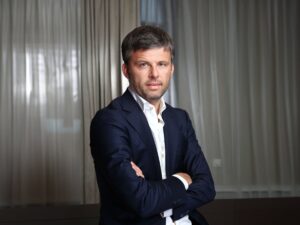
Andriy Verevsky, the principal owner and head of the Kernel agricultural holding, received 230,270,035 shares of Ferrexpo—a mining company with its main assets in Ukraine—following an additional share issuance, giving him 21.99% of the voting rights, according to the company’s statement to the stock exchange.
According to Ferrexpo’s semi-annual report, the voting stake of the largest shareholder—Fevamotinico S.a.r.l., which is wholly owned by The Minco Trust—whose beneficiaries are Konstantin Zhevago and two other members of his family—has decreased to 45.3% of the issued voting share capital (excluding treasury shares) from 49.3% at the beginning of the year.
In addition, BlackRock, Inc. reported that, together with its affiliates, it once again controls less than 5% of the voting rights, as was the case prior to September 14 of this year, when it announced that it had acquired 5% of the voting rights in Ferrexpo, of which 1.34% were held directly through shares and another 3.66% through financial instruments.
As previously reported, Ferrexpo’s shareholders’ meeting on September 21 approved an additional share issuance totaling approximately $100 million, of which about $50 million was provided by Verevsky and another approximately $40 million by Fevamotinico.
The shares were placed at a price of 16.5 pence per share, which is 42.3% lower than the share price on the London Stock Exchange on April 30 of this year, while on the day of the meeting, trading closed at 28.28 pence, and the shares are currently trading at 34.30 pence per share.
Ferrexpo noted that the new shares represented approximately 73.1% of the company’s existing shares prior to the capital raise. It was expected that upon completion of the capital raise, the owner of “Kernel” would hold 21.44% of the increased share capital.
The company clarified that after admission to trading, its total issued share capital will consist of 1 billion 62 million 816.44 thousand common shares, each of which carries one vote; however, 15 million 830,814 thousand shares are currently treasury shares and therefore do not carry voting rights. Taking this information into account,
Verevsky’s stake in the authorized capital, including treasury shares, amounts to approximately 21.67%.
Ferrexpo announced that it had reached an agreement on a capital increase on September 3–4 of this year. As of August 28, the company’s cash position had decreased to approximately $26.4 million, and after deducting lease obligations, it stood at approximately $17.8 million, compared to $21 million in the middle of this year and $47 million at the beginning of the year—which was sufficient to keep the company operating only until approximately the end of October.
The Board of Directors believes that the $100 million raised will be sufficient to meet the group’s immediate and short-term operational needs, allowing it to operate at a reduced level for the next 18 months. The funds raised will be used primarily to resume temporarily suspended mining and processing operations in Ukraine, to cover deferred expenses across all operations—including repairs and maintenance—and to maintain financial flexibility given the ongoing uncertainty surrounding operations in Ukraine.
To carry out the recapitalization, the board of directors held negotiations with Fevamotinico, during which the latter objected to an excessive dilution of its shares—below the 45.2% threshold of the authorized capital—even though this would have reduced the risks to Ferrexpo stemming from its ties to Zhevago, who is subject to Ukrainian sanctions. The largest shareholder also stipulated that, as a result of the recapitalization, no one other than Verevsky would hold a stake exceeding 15%.
As for Verevsky, his requirement as the anchor investor was that Ferrexpo refrain from any alternative fundraising through shares or other transactions.
The offering was conducted through an accelerated book-building process, with Panmure Liberum Limited and Peel Hunt LLP serving as joint global coordinators and bookrunners.
Ferrexpo owns a 100% stake in Yeristovsky GOK LLC, a 99.9% stake in Bilanivsky GOK LLC, and 100% of the shares in Poltava GOK PJSC.
Ferrexpo ended the first half of 2026 with a net loss of $14.9 million, which is 13.2 times less than the figure for the first half of 2025. The company’s revenue fell 2.3 times to $196 million.
The London Stock Exchange (LSE) suspended trading in Ferrexpo shares in early May due to the company’s inability to publish its annual financial statements on time, but resumed trading on September 7.

Ferrexpo, a mining company with assets in Ukraine, ended the first half of 2026 with a net loss of $14.9 million, which is 13.2 times less than in the first half of 2025, according to the company’s report released on Friday.
According to the report, revenue fell 2.3-fold to $196 million due to a decline in sales volume, while EBITDA was negative at $4 million, compared to a positive $4 million in the first half of 2025, reflecting the combined impact of lower sales volumes and selling prices, as well as rising production costs.
Following the morning release of the financial results, the stock rose from 28.9 pence to 32.88 pence and closed at 32.48 pence, representing a 13.33% increase over the previous day’s closing price. The last time the stock traded at such a high price was more than five months ago.
Ferrexpo noted that it deliberately reduced capital expenditures (CapEx) to $10 million from $28 million in January–June 2025, allocating 88% of these expenditures to projects necessary to sustain operations and only 12% to development projects.
Due to prolonged delays in VAT refunds and the resulting decline in financial liquidity, the group was forced to reduce production to a single pellet production line, according to the report.
Total commercial output for the first half of the year amounted to 1.556 million metric tons, which is 40% less than in the previous half-year (ending December 31, 2025) and 54% less than in the first half of 2025.
The production mix in the first half of 2026 consisted of 89% pellets and 11% marketable concentrate, compared to 61% and 39%, respectively, in the first half of 2025, when the higher share of concentrate production provided additional market opportunities during a period of reduced demand for pellets and lower market premiums, Ferrexpo noted.
Interim Chairman of the Board Lucio Genovese recalled that in early September, the company was able to raise $100 million through an additional share issuance, which significantly strengthened its liquidity position and provided additional financial stability and greater flexibility to manage the ongoing operational and financial pressures facing the business.
“However, the additional capital does not resolve the underlying issues arising from the prolonged withholding of VAT refunds, the war in Ukraine, constraints on logistics and energy infrastructure, as well as the need to maintain disciplined cash and working capital management,” he noted.
On Friday Ferrexpo clarified that C1 production costs rose to $81.3 per metric ton from $77.1 in the first half of 2025 due to increased mining and maintenance activities, the impact of higher electricity and fuel prices, and rising personnel costs.
It is noted that the group has made significant efforts to reduce costs in order to maintain financial stability. These measures include reducing employees’ working hours, cutting back on the procurement of goods and services, and suspending all non-critical capital expenditures, overhead costs, and corporate social responsibility expenditures.
In addition, there were no impairment losses in the first half of 2026, whereas in the first half of 2025, they amounted to $154 million.
In the report, Genovese emphasized that the continued suspension of VAT refunds by Ukrainian tax authorities remains a significant financial challenge: as of June 30, the net balance of VAT pending refund stood at $82.7 million, and as of September 24, the State Tax Service had suspended VAT refunds totaling 3.885 billion UAH, or $86.9 million.
The report also notes that during the first six months of 2026, Ferrexpo received news of the deaths of 11 more colleagues who served in the Armed Forces of Ukraine, bringing the total number of fatalities since the start of Russia’s full-scale invasion to 67, whereas in 2024 and 2025, the number of fatalities was 11 each year.
According to the report, as of the end of June 2026, 804 Ferrexpo employees were serving in the Armed Forces of Ukraine, and 218 had been demobilized, whereas at the end of 2025, those figures were 771 and 194, respectively, and a year earlier—706 and 160.
Ferrexpo owns 100% of Yeristovsky GOK LLC, 99.9% of Bilanivsky GOK LLC, and 100% of the shares of Poltava GOK PJSC.
The London Stock Exchange (LSE) suspended trading in Ferrexpo shares in early May due to the company’s inability to publish its annual financial statements on time, but resumed trading on September 7.
In 2025, the company’s revenue fell by 16% to $787 million, its EBITDA dropped 2.5 times to $28 million, and its net loss rose nearly 4.5 times to $223.9 million.
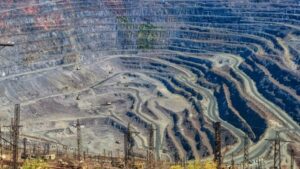
Mining company Ferrexpo, with its core assets, will hold general meetings of shareholders on September 21 and October 9 of this year to review its 2025 performance and the results of raising $100 million through an additional share issuance.
According to a stock exchange announcement, Ferrexpo plc is convening the meetings to consider certain standard resolutions that are typically submitted to shareholders for approval at the company’s annual general meeting, which took place on June 29, 2026. However, additional time was required to finalize the Group’s financial results for the year ended December 31, 2025, as the implementation of the relevant financing decision—necessary for the preparation of financial statements on a going-concern basis—was pending.
On September 3, 2026, the company announced plans to raise capital through a $100 million stock offering, and on September 4, 2026, it reported the results of this offering (during which $100 million was successfully raised). The fundraising process is expected to be completed on September 22, 2026, subject to shareholder approval at a separate general meeting of the company scheduled for September 21, 2026.
It is clarified that the matters to be considered at the meeting on October 9 differ from those to be considered at the general meeting on September 21, 2026, regarding the capital raise.
“Shareholders are advised to review the separate circular and notice of the general meeting, published on September 4, 2026, for more detailed information regarding the raising of share capital and the voting procedure at that meeting. The following matters will be considered at this general meeting (in a form generally consistent with that proposed to shareholders in previous years): consideration of the annual report and financial statements of the Group for the year ended December 31, 2025; approval of the directors’ compensation report; approval of the reappointment of the Group’s auditor, MHA Audit Services LLP; and authorization of the Audit Committee of the Board of Directors to determine the auditor’s compensation,” the announcement states.
Ferrexpo owns a 100% stake in Yeristivskyi Mining and Processing Plant LLC, a 99.9% stake in Bilanivskyi Mining and Processing Plant LLC, and 100% of the shares in Poltava Mining and Processing Plant PJSC.
CAPITAL, FERREXPO, MINING AND PROCESSING PLANT, share issue, SHAREHOLDER
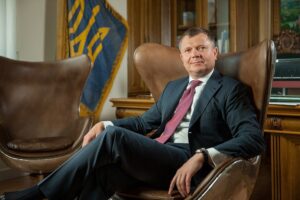
Ferrexpo, a mining company with its main assets in Ukraine, has secured a $15 million credit line from Fevamotinico SaRL, a company owned by Minco Trust, whose ultimate beneficiary is businessman Konstantin Zhevago.
According to a stock exchange announcement, Ferrexpo plc has entered into a loan agreement with its largest shareholder, Fevamotinico, which will provide an unsecured credit line in the principal amount of $15 million.
The purpose of the loan is to provide the company with immediate access to liquidity until the completion of the capital raising process totaling approximately $100 million, as announced on September 4, 2026, as well as to support working capital needs and production operations, which resumed on September 7. The loan effectively serves as an advance payment of a portion (approximately $40 million) of the funds that Fevamotinico has committed to contribute as part of the capital raising.
It is specified that interest on the loan is accrued at a rate of 9.75% per annum; the maturity date is 12 months after the date the funds are disbursed. Repayment of the loan, together with accrued interest, will be made by offsetting the amounts that Fevamotinico is required to pay to Ferrexpo under the share subscription agreement following the company’s listing. This loan is subordinated; therefore, claims under it will be satisfied after the claims of the company’s existing unsecured creditors.
If the general meeting to be held on September 21, 2026, does not approve the capital raise or if the placement agreement is terminated, the company may decide to repay the loan by issuing new common shares at the placement price (or, if the fair market value is lower than the placement price, at such lower price as agreed upon by the company and Fevamotinico), subject to compliance with all legal or regulatory requirements regarding such issuance of shares, including obtaining prior approval from independent shareholders.
In addition, as long as the loan remains outstanding, the loan agreement restricts the group members’ ability to raise debt or provide collateral for obligations, except for those falling within specified permitted categories (in particular, a potential credit line to finance trade transactions, as well as certain agreements entered into in the ordinary course of business or between group companies) .
The terms of the loan provide for certain standard events of default that entitle Fevamotinico to demand early repayment of the loan. However, Fevamotinico has agreed not to take any action to collect the loan debt in cash prior to its maturity date. The loan agreement also contains a standstill provision, under which Fevamotinico undertakes not to make any claims against Ferrexpo or to initiate proceedings for its liquidation, external administration, or any other insolvency-related proceedings, nor to facilitate such actions by other parties.
If the fundraising does not take place and the placement agreement is terminated, the principal amount of the loan, together with accrued but unpaid interest, will be due for repayment in cash on the maturity date, unless the alternative repayment mechanism described above—involving the transfer of shares—is successfully implemented. If Ferrexpo is unable to repay the loan in cash by the specified deadline, and the alternative repayment mechanism involving shares is not implemented, the company will have to raise additional financing or negotiate other terms for settling the debt with Fevamotinico.
Fevamotinico is a related party of Ferrexpo under the UK Listing Rules, as it is a significant shareholder of the company and has the right to vote (or control the exercise of voting rights) with respect to 49.27% of the votes at the general meeting of shareholders. Accordingly, the granting of the loan is considered a related-party transaction.
The company’s directors consider the terms of the loan to be fair and reasonable in the interests of the shareholders. The Board of Directors received appropriate advice from BDO LLP, which acts as the company’s sponsor. In providing this advice to the directors, BDO LLP took into account the commercial assessment of the loan conducted by the directors themselves.
Ferrexpo owns a 100% stake in Yeristovsky GOK LLC, a 99.9% stake in Bilanivsky GOK LLC, and 100% of the shares in Poltava GOK PJSC.



