

According to The Serbian Economist, Serbia’s Elixir Group and Germany’s K+S have launched production of a new water-soluble fertilizer for agriculture at the Prahovo ChemPark site in Serbia. The product will be marketed in Europe under the brand name soluMAP®.
Simply put, production has begun in Prahovo of a fertilizer that dissolves quickly in water and is used in modern plant nutrition systems—primarily in drip irrigation and other precision application methods. This is important for the European market, as such supplies will be geographically closer and delivery times shorter. K+S explicitly states that the project is intended to strengthen the reliability of supply for European customers.
The site is located in Prahovo on the Danube, near the borders with Romania and Bulgaria. K+S notes that this simplifies logistics across Europe and to Turkey, while the proximity to Elixir’s phosphoric acid production facilities provides the project with a local raw material supply.
The Elixir and K+S project was announced back in 2023. At that time, it was reported that the investment would amount to €35 million, and the capacity of the new plant in Prahovo would be 50,000 tons per year. Production was planned to begin in 2026.
For Elixir, this launch also reinforces the role of Prahovo ChemPark as a major industrial and chemical hub. The group describes itself as the leading producer of phosphoric acid in the region and the largest producer of compound mineral fertilizers in Southeast Europe, with over 70% of its output exported to more than 85 countries.
The tMAP 12-61 product is a fertilizer with a high phosphorus and nitrogen content. The numbers 12-61 indicate the proportion of the main nutrients: 12% nitrogen and 61% phosphorus.
It is used in drip irrigation, fertigation, and foliar feeding, especially during the early stages of plant growth when crops need phosphorus for root system development.
https://t.me/relocationrs/2448
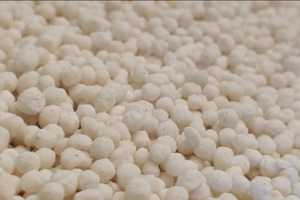
In January-June 2025, Ukraine increased fertilizer imports by 25% to 1.563 million tons compared to 1.25 million tons, according to Infoindustry, an industry analytical agency.
Its analysts noted that nitrogen fertilizers remained the main driver, with imports of 842 thousand tons (+19.5% compared to the first half of 2024). Although the largest relative increase in imports is observed in NPK fertilizers, it is only 379 thsd tonnes in physical weight, which is about 40-45% of the demand for the first half of the year, which was in the pre-war years.
Experts have noted an increase in fertilizer prices. For example, the average price of imported nitrogen fertilizers increased by 33.77% to $515 from $385 per ton. Imports of urea, the main fertilizer imported, have increased significantly.
“In NPK, we have noticed a significant increase in price and stability in terms of consumer priorities – the leaders are NPK 8:24:24, 15:15:15 and 10:26:26,” Infoindustry stated.
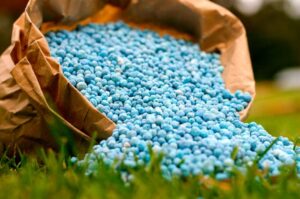
The possibilities for increasing exports of Ukrainian mineral fertilizers and controlling their imports, in particular preventing the import of fertilizers from the aggressor country through other countries, were discussed by the Minister of Agrarian Policy and Food of Ukraine, Vitaliy Koval, at a working meeting with representatives of domestic mineral fertilizer producers at the ministry, according to a press release on the ministry’s website.
“This meeting was supposed to answer the question of how to increase exports of Ukrainian fertilizers to Africa, Asia, and further to the EU. Representatives of Ostchem (the largest producer of nitrogen fertilizers) and the Union of Chemists of Ukraine were unanimous at this meeting: imports remain the key problem,” said Oleg Arestarkhov, director of corporate communications at Group DF, to the Interfax-Ukraine news agency.
According to him, it is imports that prevent Ukrainian companies from expanding production and increasing exports, primarily imports from countries of the former Soviet Union, which have a single market with Russia: Kazakhstan, Uzbekistan, Turkmenistan, and Azerbaijan, which account for almost half (300,000 tons) of all nitrogen fertilizer imports.
“They have access to cheap gas, so they can dump prices. Total imports of nitrogen fertilizers in the first four months of 2025 amounted to 1.2 million tons, of which 689,300 tons were nitrogen fertilizers. For comparison, Ukrainian production for the four months will be about 500,000 tons,” Arestarkhov said.
He added that Ukraine is losing the urea market, and a new trend is that China has begun to actively supply low-quality cheap ammonium sulfate.
According to the Ostchem representative, due to growing imports, Ukrainian enterprises are operating at the break-even point, which is holding back capital investment in industrial sites and forcing them to lay off workers.
An additional problem for Ukrainian producers is Russian shelling, after which Ostchem had to shut down its workshops several times in the first quarter due to damage to the external gas and energy infrastructure.
“It is logical that we are waiting for support from the government. We spoke openly about this at the meeting and provided them with all the statistics. The dominance of imports is one of the reasons for the decline in the industry. This is also the reason why Dniproazot and the state-owned Odesa Port Plant cannot start production. If the government lends a helping hand, it will see an increase in exports,” Oleksiy Golubov, president of the Ukrainian Chemists’ Union, told the Interfax-Ukraine news agency.
In turn, Minister Koval emphasized the instructions of Ukrainian President Volodymyr Zelenskyy to expand the geography of exports, in particular to the Middle East and Africa, as well as to open a mineral fertilizer hub in South Africa and develop trade between the two countries.
“Ukraine has all the prerequisites for mineral fertilizers to become not only a means of strengthening food security within the country, but also a strategic export commodity,” said the head of the Ministry of Agrarian Policy.
According to the press release, representatives of investment companies, including umgi, also participated in the meeting.
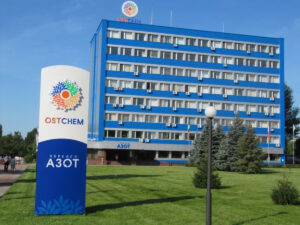
In January-March 2025, the nitrogen holding Ostchem produced 529.3 thousand tons of mineral fertilizers, which is 26.5 thousand tons, or 5.3% more than in the same period of 2023.
“The production structure changed in line with demand and imports: the share of ammonium nitrate and urea decreased, while the share of the most popular type of fertilizer, UAN (urea ammonium nitrate), increased,” the holding said in a statement on Thursday.
Ammonia nitrate production in the first quarter of 2025 decreased to 226,500 tons from 246,000 tons last year, urea to 116,700 tons from 123,500 tons, while UAN production increased from 123,800 to 162.2 thousand tons, and VAS (lime-ammonium nitrate, which is produced only at Rivneazot) – to 15.8 thousand tons from 10.8 thousand tons.
In total, Cherkasy Azot produced 394.8 thousand tons of products, and Rivneazot produced 134.4 thousand tons.
“Ostchem enterprises faced forced production stoppages due to drones entering the territory of our plants and the destruction of external gas and energy infrastructure in the Cherkasy and Rivne regions. Force majeure led to forced disruptions in fertilizer supplies, so we apologize to our customers,” the release said, citing Group DF’s head of corporate communications, Oleg Arestarkhov.
According to him, this was the most difficult season because the holding suffered huge losses due to emergency shutdowns and restarts of production facilities, but he confirmed that fertilizer orders would be fulfilled.
He also thanked the staff of the State Emergency Service of Ukraine for their help in extinguishing the fires, as well as others involved in restoring the destroyed energy and gas infrastructure.
The release also notes that the Ostchem nitrogen holding company revised its strategy in 2025: the new priority is to reduce production risks through investments in the energy independence of enterprises.
“With rising electricity prices and continuing risks, the nitrogen business is forced to take steps to ensure the stability of production chains and reduce external energy consumption,” the holding company explains.
Ostchem is Dmitry Firtash’s Group DF nitrogen holding company, which brings together the largest mineral fertilizer producers in Ukraine. Since 2011, it has included Rivneazot and Cherkasy Azot, as well as Severodonetsk Azot and Stirol, which are not operating and are located in the occupied territories.
Cherkasy Azot (Cherkasy, Ukraine) is one of Ukraine’s largest chemical companies. Its designed production capacity is 962,700 tons of ammonia per year, 970,000 tons of ammonium nitrate per year, 891,600 tons of urea per year, and 1 million tons of UAN per year.
PJSC Rivneazot is one of the largest chemical companies in Western Ukraine. On April 12, 2024, Group DF and South Korea’s Hyundai Engineering signed an agreement to build a chemical hub in Rivne. The project involves the construction of plants for the production of green ammonia and hydrogen based on renewable energy sources, as well as new enterprises and production sites for the production of nitrogen fertilizers and chemical derivatives.
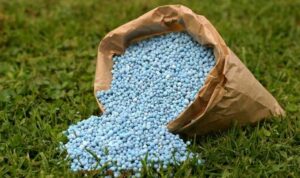
The plants of nitrogen holding Ostchem produced 1.8 million tons of mineral fertilizers in 2024, down 13% from 2023, according to a press release from Group DF International’s corporate communications department.
According to the report, Cherkasy-based Azot maintained its production level at 1.4 million tons in 2024, while Rivne Azot reduced its output by 22% and produced 407 thousand tons, down from 528 thousand tons a year earlier.
According to Group DF International, the key products produced by Ostchem’s plants were ammonium nitrate – 760.2 thousand tons (41.9% of the total), UAN – 506.7 thousand tons (27.9%), urea – 401.9 thousand tons (22.2%), and ammonia – 75 thousand tons (4.1%).
The reasons for the decline in production were low grain prices on global markets, power outages, the ongoing war and imports of cheap, low-quality fertilizers.
“Ukrainian farmers are going through difficult times, and the margins of their businesses have fallen significantly. This affects the domestic demand for mineral fertilizers – sometimes priority was given to cheaper fertilizers of dubious quality, which were imported en masse last year. We play the long game, and even in the most difficult times we ensure high international quality of our products and 100% fulfillment of our obligations. Even during the periods of forced shutdowns of Rivne Azot due to power outages, these business values remained unchanged, as Ukrainian farmers could see,” said Sergiy Pavlyuchuk, Chief Operating Officer of Ostchem’s nitrogen business.
The holding reported that in 2024, the average annual capacity utilization of Ostchem did not exceed 70%. Uncontrolled imports did not allow Ukrainian enterprises to operate at full capacity.
“Unfortunately, we were forced to cut staff and optimize costs. According to my estimates, the decline in the chemical industry was about 10%, and this is the result of growing imports and ineffective industrial policy,” Pavliuchuk said.
He added that in 2025, Ostchem has adapted to the military business environment and will continue to focus on developing new industrial sites, energy efficiency, ensuring stable operations and improving product quality in the new environment.
“The key objective for 2025 is to ensure production sustainability in the current unstable energy supply environment, reduce production risks, and replace imports with better quality. Our long-term strategic priority remains the same: import substitution and, consequently, an increase in market share. We will continue to invest in the production of the most popular fertilizers and expand our product line. First of all, we are talking about investment projects related to the launch of urea and industrial gases production,” summarized Pavliuchuk.
Ostchem is a nitrogen holding of Dmitry Firtash’s Group DF that unites the largest mineral fertilizer producers in Ukraine. Since 2011, it has included Rivne Azot and Cherkasy Azot, as well as Sievierodonetsk Azot and Stirol, which are out of operation and located in the occupied territories.
Cherkasy Azot PrJSC (Cherkasy, Ukraine) is one of the largest Ukrainian chemical enterprises. The design production capacity is 962.7 thousand tons per year of ammonia, 970 thousand tons per year of ammonium nitrate, 891.6 thousand tons of urea, and 1 million tons per year of UAN.
Rivne Azot is one of the largest Ukrainian chemical companies in Western Ukraine. On April 12, 2024, Group DF and South Korean Hyundai Engineering signed an agreement to build a chemical hub in Rivne. The project envisages the construction of green ammonia and hydrogen plants based on renewable energy sources; new enterprises and production sites for nitrogen fertilizers and chemical derivatives.
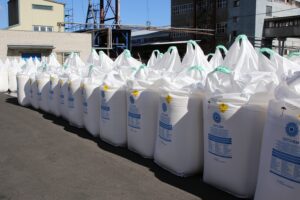
The plants of nitrogen holding Ostchem produced 520.6 thousand tons of mineral fertilizers in the first quarter of 2024, which is only 1% more than in the first quarter of 2023 (515.5 thousand tons), the holding said in a statement on Wednesday.
“The growth in production of the Ukrainian chemical industry has stopped due to the uncontrolled growth in fertilizer imports from Poland, as well as Russia-friendly Azerbaijan and Turkmenistan,” the company said.
According to the company, in the first quarter of 2024, fertilizer imports increased by 35% to 701.2 thousand tons.
It is specified that Cherkasy Azot produced 404.3 thousand tons in January-March this year, while Rivne Azot produced 128 thousand tons of fertilizers.
According to the report, the production structure remains fairly stable: ammonium nitrate is the leader (246 thousand tons produced), followed by urea-ammonium nitrate (UAN) (123.8 thousand tons) and urea (123.5 thousand tons). Production of limestone-ammonium nitrate (LAM) increased slightly year-on-year to 15.8 thousand tons, and ammonia to 9.08 thousand tons.
Ostchem noted that it met its obligations in full during the spring sowing season, but in 2024 the negative industry trend intensified, with fertilizer imports significantly exceeding domestic production.
“In the first quarter of 2024, imports amounted to 701.2 thsd tonnes, exceeding domestic production by 35%. Imports continue to kill domestic production: four fertilizer producers have already been shut down – OPP, Dniproazot, Rivneazot and Sumykhimprom,” commented Oleg Arestarkhov, Head of Corporate Communications at Group DF.
It is noted that Ukrainian producers continue to lose ground in the Ukrainian market in most fertilizer segments, except for UAN.
“First of all, Ukrainian chemical plants are dramatically losing the urea market: in the first quarter, Ukraine produced 123.5 thousand tons of urea, while imports amounted to 181 thousand tons. 88% of all imported urea came from Azerbaijan and Turkmenistan, countries friendly to Russia,” Arestarkhov added.
According to him, Poland is also strengthening its position as the largest importer of fertilizers to Ukraine, as it is currently flooded with cheap Russian and Belarusian fertilizers that are not subject to EU sanctions, which is why all the excess fertilizers from the Polish market are being redirected to Ukraine.
According to Ostchem, in 2023, Poland imported 1.016 million tons of urea, of which urea from Russia accounted for 34% (345 thousand tons). At the same time, in the first quarter of 2024, Poland has already become the undisputed leader among importers of such fertilizers as ammonium nitrate (52 thousand tons out of 109.7 thousand tons of total imports), ammonium sulfate nitrate (7.9 thousand tons out of 9.4 thousand tons), UAN (17.4 thousand tons), and NPK (63.2 thousand tons out of 144.3 thousand tons) in the Ukrainian market.
In the first quarter, Ukraine imported 121.9 thousand tons of sulphate (China is the leader with 75.3 thousand tons) and 74.6 thousand tons of superphosphate (Bulgaria – 37.3 thousand tons and Greece – 27.4 thousand tons),
“Unfortunately, behind the loud slogans of Ukrainian government officials within the Buy Ukrainian campaign, there are no practical steps to reduce imports and protect the Ukrainian fertilizer producer,” Arestarkhov emphasized, recalling the specific proposals of the Ukrainian Chemists Union to protect the domestic market that were submitted to the government.
Ostchem is the nitrogen holding of Dmitry Firtash’s Group DF, which unites the largest mineral fertilizer producers in Ukraine. Since 2011, it has included Rivne Azot and Cherkasy Azot, as well as Severodonetsk Azot and Stirol, which are out of operation and located in the occupied territories.
Cherkasy Azot PrJSC (Cherkasy, Ukraine) is one of the largest Ukrainian chemical companies. Its design production capacity is 962.7 thousand tons per year of ammonia, 970 thousand tons per year of ammonium nitrate, 891.6 thousand tons of urea, and 1 million tons per year of UAN.
Rivne Azot is one of the largest Ukrainian chemical companies in Western Ukraine. On April 12, 2024, Group DF and South Korean Hyundai Engineering signed an agreement to build a chemical hub in Rivne. The project envisages the construction of green ammonia and hydrogen plants based on renewable energy sources; new enterprises and production sites for nitrogen fertilizers and chemical derivatives.



