

The cost of 12 lean dishes for the 2025 Christmas table is 913.57 UAH, which is 11% more than last year, according to the Ukrainian Agribusiness Club (UACB)
“Food prices on the eve of the Christmas holidays show mixed trends: thanks to a record drop in vegetable prices, the cost of some traditional dishes has decreased, but the total cost of the Christmas table has increased due to the rise in prices for fruit, fish, and groceries,” the association explained.
Analysts noted that a distinctive feature of this winter season was “vegetable deflation.” Thanks to a good harvest, prices for vegetables used in borscht have fallen significantly: cabbage has fallen in price by 73%, carrots by 63%, onions by 58%, potatoes by 54%, and beets by 51%. This has led to significant savings in the preparation of dishes such as cabbage dumplings (their cost has fallen by 47%), potatoes with garlic (-40%), and vinaigrette (-18%). Even lean borscht will cost 18% less this year than last year.
At the same time, the main symbols of the Christmas table – kutia and uzvar – have noticeably increased in price, according to the UACB. The kutia index rose by 37%. This is due to the rise in prices of all its components: nuts jumped in price by 60%, honey by 40%, and poppy seeds and raisins by more than 30%. The ingredients for uzvar led the way in terms of price growth: prunes rose in price by 168%, dried pears by 140%, and apples by 110%, which led to a 150% increase in the price of the drink.
Fish dishes also became more expensive: the cost of herring rose by 24%, and fish (hake) for baking – by 25%. In addition, the final cost of dishes is influenced by sunflower oil, which is a basic element of the Lenten table and has risen in price by 22% over the year.
As for meat dishes (for those who do not observe Lent or are already preparing for the New Year), their preparation is more expensive than last year. Baked pork neck will cost 7% more (330 UAH/kg). Lard is outpacing the growth in meat prices – over the year, the product has increased in price by 16% and costs 272 UAH/kg. The cost of meat borscht has increased by 27%, reaching 196 UAH, with pork ribs accounting for over 60% of the price (119.5 UAH per 500 g). Chicken prices are rising due to the increase in feed costs, while pork prices are stabilizing due to imports.
Sliced cheese will be one of the most expensive items on the New Year’s table—700 UAH/kg, which is 40% more than last year. Despite the general trend of declining wholesale prices for raw milk, producers are maintaining high prices for cheese and butter due to expensive energy resources. Eggs, which are essential for Olivier salad, rose by 10% compared to the same period last year and reached 81.6 UAH per dozen, according to the UACB.
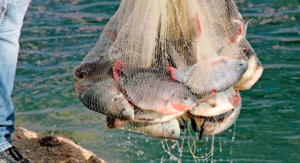
Auctions for the right to special use of aquatic biological resources in fishery water bodies (or parts thereof) in 2026 will be held on December 8 in the Prozorro.Prozori state electronic trading system, according to the State Agency for Fisheries.
“This will allow entrepreneurs to prepare their material and technical base in advance and plan their economic activities,” the agency noted.
A total of 246 lots will be put up for auction for industrial fishing in 2026, namely: Kremenchuk Reservoir – 59 lots, Dnipro-Buzka Estuary System – 35 lots, Kamyanske Reservoir – 32 lots, Kaniv Reservoir – 27 lots, the lower reaches of the Dniester River (with lakes, the Turunchuk branch) and the Dniester Estuary – 17 lots, the Danube River – 16 lots, Kyiv Reservoir – 15 lots, Dnipro Reservoir – 11 lots, Tiligul Estuary – 10 lots, Berezan Estuary – 8 lots, Dnipro River within Chernihiv Oblast – 8 lots, Desna River with lakes within Chernihiv Oblast – 8 lots.
The State Agency for Fisheries invited business entities that plan to engage in commercial fishing and have declared their right to do so by submitting a corresponding electronic declaration to participate in the auction.
“This is your opportunity to legally, transparently, and honestly obtain the right to industrial fishing, contributing to the food security of the state,” the agency emphasized, adding that detailed information about the lots, auction dates, starting prices, guarantee deposit amounts, volumes and types of aquatic biological resources, fishing gear, etc. can be found on the State Agency for Fisheries’ information resources and in the state system “Prozorro.Sales.”
PJSC “Lviv Regional Production Fish Factory” has opened an innovative fish processing plant in Lviv region, according to the press service of the State Agency for Land Reclamation, Fisheries and Food Programs.
According to the report, the plant’s capacity of 6,800 square meters allows it to process up to 25 tons of raw materials and produce 12.5 tons of finished products daily. Both fish from its own farms and imported raw materials are used for production.
The plant has three levels: two production floors and a technical floor where the engineering systems are located. The space is divided into four main areas: ramps for loading raw materials and shipping finished products, “wet” rooms for processing raw, salted, and smoked fish, “dry” rooms for the production of preserves and semi-finished products, and sanitary and utility rooms for personnel.
The plant has implemented international food quality and safety management systems (ISO 9001, ISO 14001, ISO 22000), which will enable the company to not only supply the domestic market but also export its products.
Once full production capacity is reached, 283 new jobs will be created. The company currently employs 82 people. Last year, it produced 1,382 tons of products and paid UAH 6.4 million in taxes to the budget.
Plans include expanding the export line, introducing biotechnologies for waste disposal, creating a related feed production facility, and entering new international markets.
“We are honored to open the largest fish processing plant in Eastern Europe. This is not just a production facility — it is a strategic step in the development of national aquaculture. We are not only investing in processing, but also changing our approach: from farming to delivering high-quality, safe, and tasty end products to consumers. Thanks to modern technologies, we are improving recipes and striving to change the culture of fish consumption in our country,” said Taras Vysotsky, Deputy Minister of Economy, Environment, and Agriculture.
According to him, the ministry will continue to work on promoting the consumption of domestically produced fish among Ukrainians. In particular, fish continues to be purchased at auctions on the Prozorro.Prozori platform for the Armed Forces of Ukraine, penitentiary institutions, law enforcement agencies, etc.
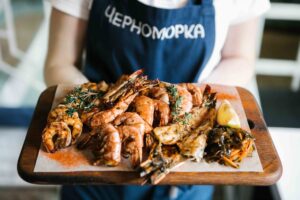
The Chornomorka fish restaurant chain has announced the opening of restaurants in the capitals of Lithuania and Hungary.
“We are opening new Chornomorkas. Even two: in Vilnius and Budapest! So if you like to fry fish, we miss you very much – join the team,” the chain said in a Facebook post.
According to its website, as of May, the chain operates 36 restaurants in Ukraine, Moldova, Slovakia, the Czech Republic, Austria, and Poland.
Ukraine and China are working to open the Chinese market for Ukrainian peas, poultry, corn, and fish products, the press service of the State Service for Food Safety and Consumer Protection reports.
“China is an important market for national exporters of agricultural products, so on behalf of the head of the State Service of Ukraine for Food Safety and Consumer Protection, Serhiy Tkachuk, the service and the competent authority of China continue to interact on a regular basis. Our goal is to open seven new markets. This is a long process of coordination, but step by step we are succeeding,” said Oleh Osiyan, First Deputy Head of the State Consumer Service, at a meeting with representatives of the General Administration of Customs of the People’s Republic of China (GACC).
The parties discussed draft bilateral international agreements on the export of peas, wheat flour, pet food, beef, corn, poultry, and wild-caught aquatic products from Ukraine to China. Each of these documents is at a different stage of development and approval.
“Currently, the protocol on peas is at the stage of finalizing domestic approval in Ukraine, and the texts have been sent to the competent authority of China for consideration. This is one of the markets that is at the final stage of opening. After the signing of the bilateral protocol, new opportunities for pea exports will open up for Ukrainian agricultural businesses,” said Vadym Chaikovskyi, Deputy Head of the State Service of Ukraine for Food Safety and Consumer Protection and Chief State Phytosanitary Inspector of Ukraine.
It should be reminded that the last Ukrainian product to be granted access to the Chinese market was honey. The form of the health certificate for its export was agreed upon earlier this year.
The requirements of the countries of destination for the export of food products of animal and plant origin are published on the official web portal of the State Service of Ukraine on Food Safety and Consumer Protection.
“Currently, our Chinese colleagues are considering draft protocols on the export of poultry and fish. The State Service of Ukraine on Food Safety and Consumer Protection sent its proposals on the text of the protocol in the fall. The protocol on wild-caught aquatic products has already passed domestic approval and is at the stage of final approval by the Chinese side. The texts of the protocols on beef and pet food are also undergoing the stage of internal approval,” said Volodymyr Kusturov, Deputy Head of the State Service of Ukraine for Food Safety and Consumer Protection and Chief State Veterinary Inspector of Ukraine.
Representatives of the State Food and Consumer Service and the GACC discussed in detail the steps for further cooperation, draft bilateral agreements, and agreed to continue active cooperation on the development of international trade between Ukraine and China.
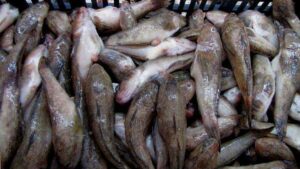
In Odessa, spontaneous trade in fish and seafood of unidentified catch near markets, shopping centers, etc., is prohibited, reported in Telegram-channel of the Odessa City Hall “Odessa. Officially”.
“We also inform the heads of enterprises and institutions carrying out their activities in the territory of the city of Odessa, regardless of ownership of the ban (restriction) of sale of fish and seafood unspecified place of catch”, – said in a message published on Sunday.
The corresponding decision was taken at an extraordinary meeting of the commission on technogenic and environmental safety and emergency situations of the Executive Committee of the Odessa City Council on June 17, 2023.



