

Forbes has published its 50 Over 50: Innovation 2026 list, which includes 50 women over the age of 50 who continue to exert a significant influence on science, medicine, artificial intelligence, robotics, biotechnology, space research, industry and the technology business. The ranking was published on August 11, 2026, and is part of the broader Forbes 50 Over 50 project, which includes a total of 200 women in four categories — Innovation, Impact, Investment and Lifestyle.
An important clarification is that Forbes does not assign all 50 participants positions from No. 1 to No. 50. On the main Innovation page, the names are listed alphabetically. The de facto exception was Ritu Narayan, founder of the transportation startup Zum, whom both the company and the entrepreneur herself describe as the “No. 1 honoree” in the Innovation category and the face of the issue’s cover. However, Forbes did not publish a complete numerical ranking of the remaining 49 positions.
Narayan, who grew up in India and built her career in Silicon Valley, created Zum, a technology platform modernizing the U.S. school bus system using artificial intelligence, GPS and electric vehicles. Forbes values the startup at approximately $1.7 billion, with 2025 revenue of $333 million.
The 50 honorees also include Stanford professor Zhenan Bao, who works on electronic skin and wearable electronics; 2025 Nobel Prize laureate Mary Brunkow; NASA science program leader Nicola Fox; MIT School of Engineering dean Paula Hammond; MIT professor and developer of wireless medical technologies Dina Katabi; Takeda head Julie Kim; astrophysicist and dean of MIT’s School of Science Nergis Mavalvala; former Yahoo chief and Dazzle AI founder Marissa Mayer; HubSpot chief Yamini Rangan; Cummins leader Jennifer Rumsey, and many others.
An analysis by Experts.News reveals an interesting geography of the list. Forbes itself does not publish separate statistics by nationality, so it is more accurate to speak about the countries of birth and origins of the participants. By this measure, the United States clearly dominates: most of the women in the Innovation-50 were born and built their careers specifically within the American scientific and entrepreneurial environment.
Among the participants born outside the United States, several countries stand out. Serbia is represented by two natives — Vunjak-Novakovic and Matarić. India — Ritu Narayan and Yamini Rangan. China — Zhenan Bao and Michelle Zhou. Morocco — Bahija Jallal and Wafaa Mamilli. Serbia therefore belongs to a small group of countries that produced two participants in the Innovation-50. Zhou’s Chinese origin is confirmed by the Association for Computing Machinery, while Mamilli herself lists Casablanca as her city of birth; Roche lists her citizenships as French, Moroccan and U.S.
Among other countries, Pakistan, Syria, South Korea, Thailand, France, the United Kingdom and Israel each have one participant on the list. For example, Nergis Mavalvala was born in Lahore, Pakistan; Dina Katabi in Damascus; Julie Kim in Seoul; Thai Lee in Thailand; Aude Oliva in France; Nicola Fox in Hitchin, England; and Daphne Zohar in Israel.
At the same time, the list’s main geographical conclusion concerns not so much passports as the concentration of talent within the American innovation ecosystem. Even most of the women born in Serbia, India, China, Pakistan, Syria, South Korea or France now work at American universities and companies — MIT, Stanford, Columbia, USC, Berkeley, HubSpot, Cummins and other organizations. Four participants on the list are associated with MIT alone — Paula Hammond, Dina Katabi, Nergis Mavalvala and Aude Oliva.
For a Ukrainian audience, it is notable that there are no Ukraine-born women in the Forbes 50 Over 50: Innovation 2026 category. However, the structure of the list itself demonstrates a model that is also relevant to Ukraine: a significant share of the most successful scientists and technology entrepreneurs are migrants or people originating from other countries who developed and implemented their innovations after integrating into major international universities, research centers and venture ecosystems. In this respect, the example of the two women born in Belgrade is particularly illustrative for Eastern European countries.
The full Innovation-50 includes Maya Ajmera, Lauren Antonoff, Katrina Armstrong, Zhenan Bao, Wendy Barnes, Charlie Blackwell-Thompson, Karen Blanks Ellis, Marsha Anderson Bomar, Christine Brown, Mary Brunkow, Jennifer Tour Chayes, Karen S. Carter, Margaret Dawson, Cindy Eckert, Karen Eng, Katie Farmer, Nicola Fox, Paula T. Hammond, Lisa Harris, Lisa Gelobter, Jacqueline Hinman, Colette D. Honorable, Janice Bryant Howroyd, Bahija Jallal, Sabrina Martucci Johnson, Dina Katabi, Julie Kim, Debra Laskin, Tessa Lau, Thai Lee, Emily Liman, Wafaa Mamilli, Christina Maslach, Maja Matarić, Nergis Mavalvala, Marissa Mayer, Vivienne Ming, Aude Oliva, Ritu Narayan, Yamini Rangan, Shubhi Rao, Jennifer Rumsey, Heather Shoemaker, Ellen Stofan, Gordana Vunjak-Novakovic, Susie Wee, Beth Wozniak, Laura Yecies, Michelle Zhou and Daphne Zohar.
Thus, the 2026 Forbes list demonstrates two trends at once. The first is that an innovation career after the age of 50 increasingly continues for decades and can lead to major scientific and entrepreneurial achievements well beyond the traditional career peak. The second is that the United States remains the main center of attraction for such specialists, while simultaneously making use of the talents of scientists and entrepreneurs born in dozens of other countries.
Original source: Forbes — 2026 50 Over 50: Innovation
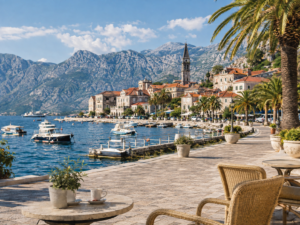
Montenegro and Albania have been included in Forbes’ list of the best overseas destinations for retirement in 2026, according to the Experts Club information and analysis centre.
Forbes published its annual review, The Best Places To Retire Abroad In 2026, on July 31, later updating it on August 5. The publication selected 96 recommended places in 24 countries on five continents, with half of the countries represented located in Europe.
When compiling the list, Forbes took into account the cost of living, the quality and cost of healthcare, taxes, crime levels and political stability, transportation accessibility, the possibility of obtaining long-term residence status, the prevalence of the English language, as well as risks associated with climate change and natural disasters.
At the same time, no ranking from first to 24th place was compiled — the countries are presented in alphabetical order. Therefore, for example, Albania’s position near the beginning of the list does not mean that Forbes recognized it as the best country for retirees.
The list includes Albania, Argentina, Austria, Belize, Canada, Colombia, Costa Rica, Cyprus, France, Greece, Ireland, Italy, Malaysia, Malta, Mauritius, Mexico, Montenegro, Panama, Portugal, Slovenia, Spain, Thailand, Uruguay and Vietnam. Mauritius and Vietnam were included in the annual list for the first time.
In Montenegro, Forbes highlighted Podgorica, Bar, Perast and Tivat. The publication estimates the cost of living in the country at less than half the U.S. average, the level of serious crime as low, and the political situation as stable.
Forbes assesses the quality of healthcare as adequate, although it notes that foreigners with complex medical problems often turn to specialists in Italy or Germany.
A separate advantage of Montenegro is the possibility of obtaining a residence permit through the purchase of real estate. According to the conditions cited by Forbes for American retirees, the path to permanent residence begins with a renewable one-year residence permit, for which it is necessary to confirm pension income of more than $19,000 per year.
At the same time, Forbes draws attention to the risks of wildfires, floods and earthquakes — an especially relevant factor against the backdrop of major fires on the Adriatic coast in the summer of 2026.
In neighboring Albania, Forbes recommends considering Tirana, Durrës, Sarandë and Vlorë.
According to the publication, the cost of living there is approximately half the U.S. level. Among the advantages cited are the Mediterranean climate, the seacoast, a relatively low crime rate and a relatively simple procedure for legalizing residence.
For Americans, it is particularly convenient that they can stay in Albania for up to a year as tourists, which provides enough time to arrange a longer-term status. Forbes states that for retirement immigration, a couple will subsequently need to confirm about $20,000 in annual income from abroad.
Among the traditional European destinations, Forbes retained Portugal, Spain, Italy, France and Greece.
Portugal is assessed as a country where the cost of living is approximately one-third lower than in the United States, with relatively affordable healthcare and a comparatively simple D7 program for financially independent foreigners to reside in the country.
In Spain, expenses, according to Forbes, are approximately 30% lower than in the United States, while healthcare is characterized as high-quality and inexpensive. At the same time, the publication pays particular attention to wildfires, extreme heat and flooding. As a result, some areas, including the Costa del Sol, were removed from the list of specifically recommended locations this year, while in France, Bordeaux was removed.
Vietnam became one of the most affordable destinations: Forbes estimates living expenses at approximately one-quarter of the U.S. level. However, a significant disadvantage is the absence of a dedicated retirement visa, which means foreigners have to use successive 90-day electronic visas.
Mauritius entered the list for the first time thanks to its relatively low cost of living, affordable healthcare and a special permit for foreign retirees. Forbes estimates the cost of living at more than 50% below the U.S. level and states that a couple must confirm about $18,000 in annual retirement income.
Thus, one of the notable results of the list for the Balkans was the inclusion of both Albania and Montenegro, while Serbia was not included in the Forbes 2026 list. At the same time, this does not mean that the publication considered it less suitable for retirees: Forbes compiles an editorial selection rather than a comprehensive comparative ranking of all countries in the world.
The study itself is primarily aimed at US citizens – Forbes compares expenditure with US levels, takes into account tax treaties with the US, Social Security rules and eligibility for Medicare. For citizens of other countries, the financial, tax and immigration conditions may differ significantly.

The net worth of Telegram founder and sole owner Pavel Durov has fallen to $6.6 billion from $17.1 billion a year earlier, according to a new Forbes estimate. Thus, the entrepreneur’s capital has decreased by approximately 61%, or 2.6 times.
The key reason for the revaluation was the deterioration of market conditions. Telegram’s debt obligations were an additional factor putting pressure on the valuation. According to Forbes, on March 22, 2026, the company must redeem the remainder of its first bond issue for approximately $1.1 billion. The Financial Times previously reported that Telegram had already placed a new $1.7 billion bond issue, while IPO plans remain in question amid Durov’s legal problems in France.

OTP Bank has been ranked among the top three business champion banks by Forbes Ukraine magazine. It took second place in terms of efficiency and stability.
The article calls OTP BANK a model of balance in key ranking indicators. “Restrained growth, no excessive liquidity, which is typical for many banks with foreign capital, but top-three efficiency and good stability,” the Forbes article notes.
In particular, OTP Bank was included in the list of banking institutions with assets exceeding $1 billion, where it ranked third. The magazine’s analytical department also compiled a list of the “Second League” – leaders among banks with less than $1 billion in assets.
In total, the magazine’s rating includes the 20 largest and most efficient banks in Ukraine. Their activities were analyzed based on an integrated indicator of efficiency (profitability), dynamics, stability, and liquidity. As stated in the article, the main task was to find out which bankers had built (or rebuilt) a high-quality banking business during three years of full-scale war. The material is available in the print version of the magazine No. 2 (35), April-May 2025.
As a reminder, in March, OTP BANK was among the top five leaders in the bank stability rating according to the Minfin portal.

Founder and CEO of Tesla Inc. and SpaceX, Elon Musk surpassed Amazon founder and former CEO Jeff Bezos to top the Forbes list of the world’s richest people.
Musk’s fortune, according to the publication, was $219 billion as of March 11. At the same time, the amount given does not include Musk’s recently acquired 9.2% stake in Twitter.
Bezos’ net worth was $171 billion, he took second place on the list. Bezos has been the richest man in the world for the past four years.
The top 5 richest people in the world also include Frenchman Bernard Arnault ($158 billion) and Americans Bill Gates ($129 billion) and Warren Buffett ($118 billion).
Meanwhile, data cited by Forbes showed that the total net worth of the list’s dollar billionaires has fallen to $12.7 trillion from $13.1 trillion in 2021. And the list itself has become shorter by 87 positions – it consists of 2668 people. And yet, 40% of the new list of billionaires have been able to increase their wealth over the past year.
There are seven representatives of Ukraine on the list. In the highest place – 687th – Rinat Akhmetov with $ 4.2 billion. At the same time last year, with $ 7.6 billion, he occupied the 327th line.
Then come Victor Pinchuk – 1579th with $1.9 billion (a year ago – $2.5 billion), Vadim Novinsky and Konstantin Zhevago – 2190th with $1.3 billion (in 2021, respectively, $1.4 billion and $2.3 billion). billion), ex-owners of PrivatBank Gennady Bogolyubov and Igor Kolomoisky – respectively 2448th with $1.1 billion and 2578th with $1 billion (a year ago – $1.7 billion and $1.8 billion).
The list also included for the first time the co-founder of the fintech bank Revolut Vlad Yatsenko – $1.1 billion.
At the same time, the wealth of Russian billionaires has fallen by more than $260 billion. There are 34 fewer Russian citizens on the new list.
Of the 2,668 billionaires, 327 are women, up from 328 the previous year by Forbes. The number includes women who share their wealth with their spouses, the publication noted. At the same time, 101 women from the list are “self-made” billionaire, that is, they independently earned capital.
Forbes counted the most female billionaires in the USA (90), China (63) and Germany (35).



