
Transportation prices in Ukraine in July 2026 were 18.6% higher than a year earlier, according to data from the State Statistics Service. In just one month, transportation prices rose by 1.3%. The most significant increase was recorded in passenger road transportation—up 6% in July and 30.8% compared to July 2025.
Overall, transportation services rose in price by 28.9% over the year and by 25.7% since the beginning of 2026. Passenger rail transportation became 2.7% more expensive over the month and 15.5% more expensive over the year.
Another significant factor remains the cost of fuel. In July, fuel and lubricants became 0.1% cheaper compared to June; however, compared to July of last year, they were 28% more expensive, and since the beginning of the year—26.5% more expensive.
Thus, transportation costs are rising significantly faster than the overall consumer market: annual inflation in Ukraine stood at 7.7% in July, while transportation inflation was 18.6% and transportation services inflation was 28.9%.
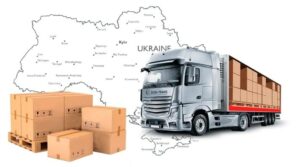
Freight volume in January–May 2026 increased by 4.1% compared to the same period in 2025, reaching 133.8 million metric tons, while passenger traffic decreased by 5.6% to 849.3 million passengers, according to a report by the State Statistics Service.
According to its data, 61.3 million metric tons of freight were transported by rail during the first five months of 2026, which is 3.3% less than during the same period last year, while freight turnover fell by 13.8% to 36.1 billion ton-kilometers.
Road freight transport in January–May of this year increased by 22.1% to 59.6 million metric tons, while freight turnover rose by 10.9% to 17.8 billion metric ton-kilometers.
The largest number of passengers in January–May 2026 was carried by road transport—398.4 million, which is 3.7% more than during the same period in 2025.
A 3.2% increase was also recorded for the metro—138.9 million.
At the same time, the number of passengers carried by rail decreased by 15.1% compared to the same period last year—to 21.6 million; by trams—by 23.1%—to 98.5 million; and by trolleybuses—by 15.6%—to 191.6 million.
As previously reported, the volume of freight transported in January–April 2026 increased by 5% compared to the same period in 2025, reaching 104.4 million metric tons, while passenger traffic decreased by 7% to 658.8 million people.
FREIGHT, PASSENGER, State Statistics Service, TRANSPORT, TRANSPORTATION
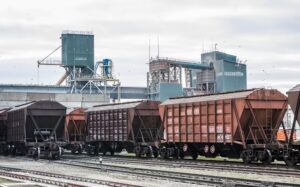
The Ministry of Community and Territorial Development of Ukraine has published a draft order that provides for a 30% increase in rail freight rates effective August 1, 2026, and the standardization of rates for the transportation of empty railcars.
According to the explanatory note accompanying the document, the need to revise the rates stems from the deteriorating financial condition of JSC “Ukrzaliznytsia,” whose revenues are insufficient to cover current expenses. The ministry noted that the last tariff revision took place nearly four years ago, while between July 2022 and April 2026, the industrial producer price index rose by 252.1%.
According to the Ministry of Development, in 2025, freight volumes decreased by 12.5% compared to the previous year, and Ukrzaliznytsia’s net loss amounted to 7.6 billion UAH. In the first four months of 2026, the loss reached 9.3 billion UAH.
The ministry noted that without tariff indexation, the company’s projected net loss for 2026 will exceed 13 billion hryvnias, and the funding shortfall will reach over 26 billion hryvnias.
The draft order also provides for the completion of the unification of tariffs for the transportation of empty railcars. For railcars used for unloading cargo in tariff classes 1 and 2, tariffs will increase by approximately 60%, while for railcars used for cargo in tariff class 3, they will remain unchanged.
The Ministry of Development expects that the proposed changes will allow Ukrzaliznytsia to partially cover its funding shortfall in 2026 and secure additional financial resources amounting to approximately 8.6 billion UAH.
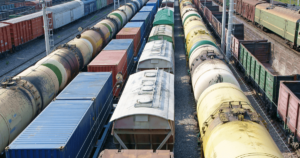
Starting May 1, Ukrzaliznytsia (UZ) is fully implementing an automated service for scheduling freight car repairs with the aim of minimizing human error, improving the efficiency of rolling stock utilization, and reducing downtime.
“In fact, from now on, the entire process—from repair planning to final billing—will take place online within a single system,” UZ notes on Facebook.
The company explains that to have cars repaired at its facilities, three online stages must be completed, including the already operational planning and contract stage, during which information on available capacity, rates, and terms is published in the system, and the car owner submits an electronic application with an annual repair plan. After that, the parties conclude a contract online using a qualified electronic signature (QES).
In the second stage (application submission and repair), which began on May 1, the client makes an advance payment, submits the application independently by selecting the production unit to receive the service, after which the railcars are sent for repair. All work is performed according to an automatically generated queue.
In the third stage (completion and billing), after repairs, the system generates certificates of completion and necessary documents with a QES. These become available in the customer’s electronic account, after which final billing takes place.
“Thus, customers receive a fully digital process without paper documents: the contract, requests, repair tracking, and all settlements—all in one service. A personal account is automatically created for each customer, and contracts can be renewed online,” the post concludes.
The Ministry of Infrastructure of Ukraine agreed with the proposal of Ukrzaliznytsia (UZ) to increase tariffs for the transportation of goods by 70%.
Minister Oleksandr Kubrakov signed the corresponding order No. 441 “On amendments to the coefficients applied to the tariffs of the Collection of tariffs for the carriage of goods by rail within Ukraine and related services” on June 22, and it was registered with the Ministry of Justice on June 24.
Unlike several previous increases last year, this time the coefficients have been increased equally – by 70% – for all 20 types of cargo.
“From July 1, 2022, the Ministry of Infrastructure will carry out a planned indexation of tariffs for freight transportation,” Oleksandr Kamyshin, the head of the board of Ukrzaliznytsia, announced in the announcement of a press conference scheduled for June 29.
According to the explanatory note to the draft order, which Interfax-Ukraine got acquainted with, UZ plans to receive an additional over UAH 11 billion by the end of 2022 thanks to this increase in tariffs.
The company indicated that in the first five months of this year, due to the war, cargo transportation fell by 2.9 times – to 27.1 million tons, including in domestic traffic by 2.7 times – to 14.5 million tons, for export – 2.5 times, up to 10.8 million tons, for import – 6.4 times, up to 1.6 million tons, while transit fell almost 10 times – up to 0.3 million tons.
Ukrzaliznytsia also indicated that its estimated cost of restoring war damage would exceed UAH 100 billion.
As reported with reference to the order of the Ministry of Infrastructure of October 29, 2021, since the beginning of 2022, tariffs for the transportation of a group of goods of the 1st tariff class by rail have increased by 9%.
This was preceded by a decision to increase tariffs from August 17, 2021 for cargo transportation of a group of goods of the 1st and 2nd tariff classes by 8%, and from January 2022 – by 20.4% and 6.5%, respectively.
At that time, UZ estimated additional revenues from tariff increases at UAH 2 billion in 2021 and UAH 12.3 billion in 2022.
Ukrzaliznytsia in 2021, according to preliminary data, received UAH 457 million in net profit against a loss of UAH 11.9 billion a year earlier.
Tariffs for sea freight and air cargo have increased, while the cost of international road haulage has stabilized, but there may be queues at the key automobile checkpoints, Viktor Shevchenko, the co-owner of Zammler logistics group, has told Interfax-Ukraine. “Compared to the beginning of the year, now due to coronavirus [COVID-19] epidemic spread, tariffs for sea freight have risen by an average of $150-200 per TEU. A jump in prices occurred in March, as China began to recover production activity, demand for cargo departures increased, there was a shortage of places, respectively, the cost increased,” he said.
According to Shevchenko, due to the following sanitary and hygienic safety rules, procedures for processing goods in ports are delayed.
According to him, in connection with the epidemic, there is no air traffic now, thus, cargo carried earlier by passenger flights is delivered by cargo planes.
“Accordingly, there are not enough places for cargo departures. Airlines that continue to fly to Ukraine with cargo planes have increased tariffs. Now a place for departure should be booked a few days before departure, tariffs are provided in the mode for today,” the co-owner of Zammler said.
Shevchenko also said that over the past week, the situation with international trucking has changed dramatically.
“If last week tariffs on imported freight were 40-50% higher than pre-quarantined, to date the price situation has stabilized. Last week there was a shortage of transport in Europe due to high demand (recipients tried to replenish stocks of goods). But now we see a shortage of goods, namely enterprises are suspending operations, the volume of exports and imports is declining,” he said.
According to Zammler’s forecasts, the queues at key automobile checkpoints will soon resume again due to the closure of the Hrebenne-Rava-Ruska checkpoint.
Shevchenko said that the cost of freight traffic in the territory of Ukraine due to the epidemic has not yet changed.
“There is a slight decline in volumes, to 10%. It is difficult to predict the further value, since it directly depends on the stability of the exchange rate,” he said.
Zammler Group is a Ukrainian group of logistics companies with offices in Europe and Asia. The group companies provide all types of logistics services for the B2B segment.



