
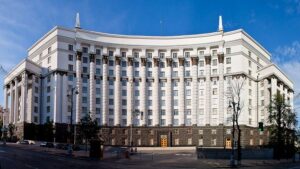
The Cabinet of Ministers has authorized the sale of over-the-counter drugs at gas stations, provided that the appropriate license is obtained, according to Health Minister Viktor Lyashko.
“We have authorized the sale of over-the-counter drugs at gas stations, provided that the appropriate license is obtained. This applies to situations where there are no pharmacies nearby: in villages, in frontline communities, or late at night outside of large cities. We are only talking about safe, over-the-counter drugs that people use on their own. In wartime, this is especially important, as gas station chains often remain operational even during power outages. The requirements for sales at gas stations ensure the quality and safety of medicines. This will help lower prices and make medicines more affordable,” he wrote on Facebook.
According to him, the government has also made a number of decisions, in particular, pharmacies in state and municipal hospitals are required to sell only the three lowest-priced drugs from the National Catalog among drugs with the same composition and effect.
In addition, specialists with a broader range of qualifications, as defined by law, can now be employed in pharmacies and pharmacy outlets.
“In rural areas and frontline communities, medicines can be dispensed in pharmacies (without manufacturing) by specialists with at least a junior bachelor’s degree in nursing and a certificate in pharmacy (retail sale of medicines). This allows pharmacies to build more effective teams, especially in communities with staff shortages, while ensuring the quality and safety of pharmaceutical care for patients,” Lyashko wrote.
In addition, the government has regulated the rules for providing marketing services in the pharmaceutical sector.
“This refers to transparent tools for promoting drugs at points of sale: providing information, placing materials, or participating in loyalty programs. The launch of the National Price Catalog makes it impossible to use marketing as a tool for covertly increasing the cost of drugs—the declared prices are fixed, and promotion becomes a mechanism for informing and increasing accessibility for patients,” the minister noted.
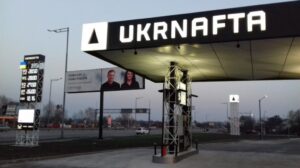
UKRNAFTA, Ukraine’s largest network, has completed the rebranding of petrol stations that previously operated under the Shell brand, which is an important step for the company and the development of its retail infrastructure.
“The completion of the Shell rebranding is another important step in the formation of a modern, efficient, and competitive UKRNAFTA network,” Ukrnafta JSC said in a press release on Friday.
The stations have undergone a complete rebranding, including the interior, exterior, identity, retail space, and zoning. All gas stations have been brought up to UKRNAFTA’s uniform standards for floor plans, layout, service processes, and category management. The customer journey has been unified, coffee and food areas have been revamped, service has been standardized, etc.
“Today, all 663 UKRNAFTA gas stations operate as a single operating system — the largest fuel retail network in Ukraine,” the company noted.
Ukrnafta, in particular, has significantly strengthened its presence on key highways, in Kyiv, and in strategically important regions.
The company claims that stations that have undergone the transformation from Shell to UKRNAFTA are already showing growth in fuel sales and significant growth in non-fuel product groups, such as food, coffee, and non-food items.
“Today, UKRNAFTA is the most dynamically growing network of gas stations in the country: it is already in the top three in terms of fuel sales and is moving towards a leading position,” the statement said.
Full standardization makes the retail direction more structured and predictable in terms of operations and economic indicators, the company notes.
As reported, in January 2025, the Antimonopoly Committee of Ukraine granted PJSC Ukrnafta permission to purchase more than 50% of the shares of Alliance Holding LLC, which operates the Shell gas station network in Ukraine.
The joint venture between Shell and Mussa Bazhaev’s Russian Alliance Group to manage the gas station network in Ukraine began operations in August 2007. Shell owned a 51% stake in the joint venture, while Alliance owned 49%. Alliance transferred about 150 gas stations to the joint venture, while Shell contributed cash, licenses, and the brand.
In 2014, it became known that sanctioned Russian businessman Eduard Khudainatov had bought Bazhaev’s oil assets. In June 2022, he was sanctioned by the European Union, and in October 2022, by Ukraine.
In October 2023, the Ukrainian Ministry of Justice filed a lawsuit with the High Anti-Corruption Court of Ukraine to recover Khudainatov’s assets for the state. As a result of the proceedings, 49% of Alliance Holding was recovered for the state. In April 2024, this share was transferred to the State Property Fund.
In November 2024, Overseas Investments, part of the Shell group of energy and petrochemical companies, registered 51% of the authorized capital of Alliance Holding in accordance with the decision of the Appeals Chamber of the High Anti-Corruption Court.
Ukrnafta JSC is Ukraine’s largest oil producer and operator of the largest national network of gas stations, UKRNAFTA. In 2024, the company entered into an asset management agreement with Glusco. In 2025, it completed a deal with Shell Overseas Investments BV to purchase the Shell network in Ukraine. In total, it operates 663 gas stations.
The company is implementing a comprehensive program to restore operations and update the format of its network of gas stations. Since February 2023, it has been issuing its own fuel vouchers and NAFTAKarta cards, which are sold to legal entities and individuals through Ukrnafta-Postach LLC.
The largest shareholder of Ukrnafta is Naftogaz of Ukraine with a 50%+1 share. In November 2022, the Supreme Commander-in-Chief of the Armed Forces of Ukraine decided to transfer to the state the corporate rights of the company that belonged to private owners, which is now managed by the Ministry of Defense.
FDI McDonald’s Ukraine Ltd, which is developing the McDonald’s fast food chain in Ukraine, plans to develop partnership programs with gas station chains, Vitaliy Stefurak, McDonald’s Ukraine Development Director, said in an interview with Interfax-Ukraine.
As reported, in the summer of 2023, McDonald’s opened its first restaurant near the highway, near Zhytomyr, on the M-06 Kyiv-Chop highway, and the restaurant is located next to a WOG gas station.
“This is an example of a partnership project, the essence of which is that at a certain point on the highway, all the necessary range of services needed by motorists and travelers is formed. The same goes for the opportunity to eat. This is not competition, but a complement to each other and a choice for visitors. This year, we plan to implement such projects in regional centers, cities with a population of over a million or their satellites. For the next few years, we continue to consider locations to open McDonald’s restaurants in conjunction with gas stations on key highways,” said Stefurak.
At the same time, he emphasized that none of the key players or gas station chains has an exclusive right to work with McDonald’s.
“We focus exclusively on the location and weigh how well it meets our requirements. Of course, first of all, we work with key players. This is WOG, which you mentioned, and we are already cooperating with KLO. And now we are building our restaurant next to the OKKO filling station in Odesa, but this restaurant will be located in the city, not on the highway,” said Stefurak.
Such projects are not experimental, but part of a well-developed strategy that determines where it would be appropriate to build a new McDonald’s.
“We are open to cooperation with various partners, because the location has always been and remains the key for us,” said the chain’s development director.
The first McDonald’s restaurant in Ukraine was opened on May 24, 1997 in Kyiv.
As reported, on September 20, 2022, McDonald’s began a phased opening of restaurants in Ukraine. By February 24 of the same year, the chain had 109 restaurants in 24 cities across the country. As of spring 2024, there are 101 restaurants in operation.
At the end of 2023, it increased its revenue by 3.9 times compared to the previous year, up to UAH 12.9 billion, according to Opendatabot.
According to the financial results for 2023, the company’s net profit amounted to UAH 1.29 billion, compared to a loss of UAH 2 billion in 2022.
The value of McDonald’s Ukraine Ltd’s assets amounted to UAH 5.54 billion, while the amount of liabilities increased 2.3 times to UAH 829.7 million.
The number of employees in 2023 increased by 7% to 9,614.
McDonald’s in Ukraine is a founding partner and the largest corporate partner of the Ronald McDonald House Foundation in Ukraine.
According to the Unified State Register of Legal Entities and Individual Entrepreneurs, the participant of FDI in McDonald’s Ukraine Ltd. is MCD Europe Limited (100%, London, UK).
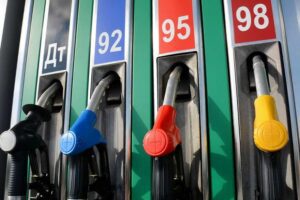
The Verkhovna Rada of Ukraine at its plenary session on Wednesday adopted by 255 votes bill No. 7668-d on the return of excise taxes on motor fuel.
According to the head of the Verkhovna Rada of Ukraine Committee on Finance, Tax and Customs Policy Daniil Getmantsev, the excise rate for gasoline and diesel is EUR100 (hereinafter per 1000 liters), for liquefied gas, butane and isobutane – EUR52, for alternative motor fuel and biodiesel – EUR100.
At the same time, a zero excise rate for fuel has been set for the Ministry of Defense. “This benefit will be valid exclusively for the Ministry of Defense during the period of martial law and the state of emergency,” said Yaroslav Zheleznyak, People’s Deputy (Voice faction), on the Telegram channel.
According to him, the law comes into force one day after its publication, so the return of excises should be expected at the end of September.
VAT for all types of fuel remains at 7%.
As reported, in March 2022, the Rada canceled excise taxes on motor fuel.

Since the beginning of the war, the number of gas stations in Ukraine has decreased three times, and private fuel consumption has decreased by about the same amount, said Sergey Kuyun, director of the A-95 consulting group.
“According to our estimates, a third of the total number of gas stations is operating, this is about 2.5 thousand stations, before the war there were 7.5 thousand. Of course, the main reason is the lack of fuel. Consumption has also decreased three times compared to the pre-war level,” he said at a closed briefing at the Media Center in Lviv on Monday.
At the same time, Kuyun noted that traders or network owners are forced to provide their most strategic and powerful facilities, located mainly in regional centers or on main routes, while peripheral stations are forced to stand idle, although there are also a lot of consumers there.
According to him, the shortage of fuel became especially aggravated after the shutdown of the Kremenchug Oil Refinery as a result of a missile attack by Russian invaders.
“Many companies, especially in central, eastern and southern Ukraine, have lost their main source of supply for themselves. The only way out for them is to independently import through the western border. This is mainly about the fact that small regional companies go abroad with fuel trucks and bring fuel,” he explained.
At the same time, the state’s restriction of fuel prices and the high cost of delivery does not allow to activate this type of supply, the expert believes.
“This supply is very long, only 800 km can be traveled to the border. And the cost of this fuel is higher than the prices set by the government. Accordingly, they do not have any economy or at least a break-even level, and, accordingly, there is no motivation,” he said. director of “A-95”.
In his opinion, the way out of the situation could be a temporary waiver of state regulation, so that as many companies as possible could leave and bring fuel from abroad. However, there are no signals yet that the government is ready to take such steps, he noted.
“There are certain debates going on, let’s hope that we will wait for the right and necessary decisions,” Kuyun said, adding that the government is worried about prices in this case.
At the same time, he called responsible the decision to significantly reduce taxes on fuel, although already insufficient. “In fact, it abolished these taxes altogether, a very necessary step, but then we had a working Kremenchuk Oil Refinery. Now the situation has changed and requires new steps to fill the market. There can be no simple solutions in this situation,” the expert expressed his conviction.
As reported, in March, the Verkhovna Rada, at the initiative of the government, zeroed out the excise tax on fuel and lowered the VAT rate to 7% from 20%.
According to the government’s decision, the price of “premium fuel” cannot be more than 5% higher than the price of conventional fuel. As of the end of March, taking into account the marginal trade margins, the maximum price for “regular” gasoline for sale through a network of filling stations should not exceed UAH 33.53/liter, for “regular” diesel fuel – UAH 37.43/liter.
On April 2, the Russian invaders destroyed the infrastructure of the Kremenchug oil refinery with their shelling, and it stopped working.



