

Experts Club has released a video analysis dedicated to the dynamics of gold production in the world by leading countries. Over the past half-century, the structure of global gold production has changed significantly: while South Africa and the USSR were the leaders in the 1970s, by the 2020s, China, Australia, and Russia had taken the lead.
China is now the largest gold producer in the world, having led the field by a significant margin for almost 20 years. Russia is in second place, Australia in third.
Further down the top ten are Canada, the US, Ghana, Mexico, Indonesia, Peru, and Uzbekistan.
In the 1970s and 1990s, South Africa dominated, accounting for up to two-thirds of global gold production. The gradual depletion of deposits and rising costs led to a decline in its share. South Africa has now fallen out of the top ten countries in terms of gold production.
In the 1990s, Russia took the lead, and in the last two decades, there has been significant growth in gold production in Australia, Canada, and African countries (Ghana, Mali).
Total global gold production has more than doubled since 1975, exceeding 3,600 tons per year by 2023–2024.
Since the early 2020s, gold has been steadily updating its historical highs amid geopolitical instability and inflationary risks. As of September 2025, the price of gold reached about $3,710-$3,730/ounce. This rapid rise in price is supported by increased demand from central banks, investment flows into ETFs, and expectations of lower interest rates in the US.
For more details on the struggle between countries for global leadership in gold production, see the video from Experts Club – https://www.youtube.com/shorts/DWbzJ1e2tJc
“Gold is not only used in the jewelry industry and finance, but also in electronics (coating contacts and connectors, where high conductivity and corrosion resistance are important), modern computers and smartphones are impossible without the use of gold. Gold is used in aviation and space technology, medicine, and lasers. Gold is also used as a catalyst in chemical reactions (for example, in the production of certain types of fuel),” commented Maxim Urakin, candidate of economic sciences and co-founder of the Experts Club information and analytical center, in the video.
The rise in prices confirms the importance of gold as a “safe haven” in times of global turbulence.
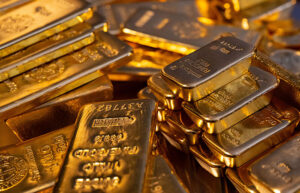
Gold traded at a four-month high on Monday amid growing demand for safe-haven assets and uncertainty surrounding US monetary policy.
The price of gold on the spot market rose 0.9% to $3,475.94 per ounce, its highest level since April 22. December futures for the precious metal on Comex rose 0.8% to $3,542.6 per ounce, according to trading data.
Analysts attribute the rise in gold prices to investor concerns about the independence of the Federal Reserve (Fed), uncertainty over US tariffs, and the upcoming release of the August US employment report.
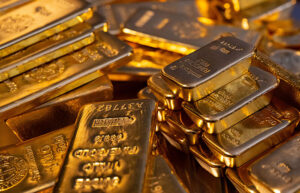
Gold prices rose to a record high on news that the US would impose tariffs on 1-kilogram gold bars imported from Switzerland. During Friday trading on the Comex exchange, December futures for the precious metal reached $3,534.1 per ounce, a historic high. They are currently trading at $3,484.5 per ounce, up 0.9% from the previous close.
The US Customs and Border Protection agency said that gold bars weighing 1 kg and 100 ounces (2.8 kg) should be classified under a customs code that is subject to import duties, according to a July 31 ruling seen by the Financial Times.
The customs decision came as a surprise to the industry. Experts had assumed that these types of gold bars would be classified under a different customs code that would not be subject to the new duties imposed by US President Donald Trump.
Kilogram bars are the most common form of trade on Comex, the world’s largest gold futures market, and account for the bulk of gold bar exports from Switzerland to the US.
Relations between Washington and Bern deteriorated after the US announced last week that it would impose 39% import duties on products from that country. According to customs data, gold is one of Switzerland’s main exports to the US.
“The prevailing opinion was that precious metals remelted by Swiss refineries and exported to the US could be shipped without paying duties,” said Christoph Wild, president of the Swiss Precious Metals Association. The decision to impose the duty is “another blow” to gold trading between Switzerland and the US, he believes.
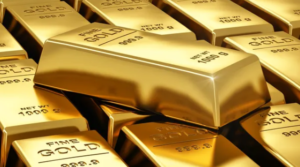
Serbia has decided to repatriate all its gold reserves stored abroad and transfer them to the territory of the country. This is reported by Bloomberg agency, citing sources in financial circles. The total value of assets is estimated at about 6 billion dollars at current market prices.
According to the agency, Serbia will be the first country in Eastern Europe to decide on the full return of physical gold reserves from such traditional depositories as Great Britain, Switzerland and the United States.
The decision comes amid increasing geopolitical instability, inflationary pressures and uncertainty in global markets. Serbian authorities view the physical placement of gold domestically as an additional guarantee of liquidity and sovereignty, especially in case of emergency economic or currency shocks.
As of mid-2025, Serbia’s foreign exchange reserves total approximately EUR 25.3 billion, of which:
– more than 40 tons of gold (equivalent to about EUR 2.7 billion),
– the rest are foreign currency assets, including euros, dollars and SDRs (IMF Special Drawing Rights).
Traditionally, a significant portion of Serbian gold reserves has been held at the Bank of England in London, one of the world’s largest repositories of precious metals. This bank serves more than 30 nations, including the Netherlands, Germany, Hungary and others, which have also undertaken partial gold refunds over the years.
The reasons for the return are explained by several key considerations:
– Guarantee of physical control – in the face of possible international sanctions, geopolitical risks or asset blockages.
– Precedents for blockages – including the UK’s refusal to transfer gold to Venezuela, which heightened anxiety among developing countries.
– Strengthening macro-financial resilience – physical gold domestically is seen as a tool to stabilize national currencies in the event of crises.
Gold repatriation is a global trend in recent years. Such steps have been taken by:
– Germany – returned more than 300 tons of gold from Paris and New York;
– Hungary – tripled its gold reserves and transported them to the country;
– Turkey – repatriated the entire volume of gold from the US in 2018.
Serbia’s decision to return gold to its territory is not only a financially logical move, but also a political signal reflecting the growing role of sovereignty and autonomy in the management of state assets. Against the backdrop of global fragmentation of economic blocs and sanctions risks, even small economies are seeking to minimize external dependence, especially in matters related to key reserves.
https://t.me/relocationrs/1208

According to the April report of the World Gold Council, Uzbekistan has once again become the world leader in gold sales.
In April 2025, total gold purchases by central banks worldwide amounted to 12 tons, which is 12% less than in March and significantly below the average for the last 12 months (28 tons). This is the second consecutive month of decline in purchases.
WGC experts believe that the decline in demand may be linked to record gold prices recorded at the beginning of the year. Although central banks usually adhere to a long-term strategy, the rise in the price of gold may have temporarily reduced interest in active purchases.
The largest purchase in April was made by the National Bank of Poland, which increased its reserves by 12 tons to 509 tons. This exceeded the European Central Bank’s reserves of 507 tons. In total, Poland has purchased 61 tons of gold since the beginning of the year.
Other notable buyers included the central banks of the Czech Republic (+3 tons), China (+2 tons), Turkey (+2 tons), Kyrgyzstan (+2 tons), Kazakhstan (+1 ton), and Jordan (+1 ton).
Amid general caution in the gold market, the Central Bank of Uzbekistan continued to sell off its reserves, selling another 11 tons in April. Thus, for the third month in a row, the republic has maintained its position as the largest seller of the precious metal. Since the beginning of the year, gold reserves have decreased by 26 tons to 356 tons.
Uzbekistan retains its status as the largest gold exporter in 2025.
As of May 1, the country’s total gold and foreign exchange reserves reached $49.25 billion, equivalent to 15 months of imports. At the same time, foreign exchange reserves exceed $11 billion.

Record price growth
In 2025, gold reached historic highs, exceeding $3,500 per ounce, which is 28% higher than at the beginning of the year. This growth is driven by global economic and political factors, including:
US trade tariffs: the introduction of 10% tariffs on imports caused economic uncertainty, stimulating demand for gold as a safe asset.
Central bank purchases: active accumulation of gold, especially by Asian countries, increased demand.
Political instability: conflicts and sanctions have prompted investors to seek stable assets.
Analysts predict further growth in gold prices:
Goldman Sachs: up to $3,700 by the end of 2025.
JP Morgan: may exceed $4,000 in the second quarter of 2026.
Gov Capital: in an optimistic scenario, up to $4,631 by December 2025.



