

The European Commission on Tuesday re-introduced tariff quotas on Ukrainian honey due to the excess of quota-free volumes of its supplies to the European market, according to a press release from the EC.
“From August 21 to June 5, 2025, imports of Ukrainian honey to the EU will be carried out under the tariff quota of the Deep and Comprehensive Free Trade Area (DCFTA), which has been in force since 2016 between the two parties. The automatic re-introduction of this tariff quota is the result of the revised Autonomous Trade Measures (ATM), which are effective from June 6, 2024,” the statement said.
The EC recalled that the revision of these ATMs includes an emergency brake for seven agricultural products, which will be automatically triggered if imports reach the average annual imports recorded between July 1, 2021 and December 31, 2023. For honey, this average is 44.418 thousand tons.
The European Commission pointed out that, according to Article 4 of Regulation 2024/1392, after reaching these volumes, the EC has 14 days to reintroduce the relevant tariff quota from the DCFTA between the EU and Ukraine. Since the imports of honey from Ukraine have already exceeded the volumes established by this quota since the beginning of 2024, additional imports will be subject to most-favored-nation (MFN) duties. In particular, a new tariff quota will be introduced from January 1, 2025, until June 5, 2025, which will correspond to 5/12 of the threshold set for the emergency braking. For honey, the new quota will amount to 18,507 tons.
At the same time, the European Commission notes that imports of Ukrainian honey to the EU have been fairly stable over the past five years, averaging about 49 thousand tons per year.
As reported, the European Commission introduced quotas for the supply of eggs and sugar to the European Union from June 2, 2024 to June 5, 2025. For eggs, the new quota is set at 9,662 thousand tons, and for sugar – at 109,44 thousand tons.
According to Article 4(7) of the Regulation on autonomous trade measures applicable to Ukrainian products, Ukraine will be able to supply to the EU from June 6, 2024 to June 5, 2025 without paying any duty 57,101 thousand tons of poultry meat, 9,662 thousand tons of eggs, 109,439 thousand tons of sugar, 18,507 thousand tons of honey, 4.648 million tons of corn, 1,017 thousand tons of oats, and 8,603 thousand tons of cereals.

Ukrainian honey producers have strengthened their positions in the global honey market over the past 10 years and increased export volumes in the period from 2012 to 2023 by more than five times, the press service of the Ukrainian Club of Agrarian Business (UCAB) said.
“In 2024, Ukrainian honey, despite the difficulties of a full-scale war, continues to demonstrate a steady positive dynamics in the world market. For the first three months of this year, honey exports amounted to more than 23 thousand tons, which in money equivalent is $44 million. The greatest demand is constantly observed in the countries of the European Union, in particular in Germany, Poland and France, which account for almost half of foreign currency earnings,” – said analysts.
According to their information, Ukraine has been in the top 5 world exporters of honey for several years. Thus, according to the results of 2023 Ukraine in honey exports takes the fourth place among the traditional world leaders with 55.4 thousand tons. In this rating it is ahead of China with 152.6 thousand tons, India – 98.7 thousand tons, Argentina – 68.9 thousand tons, and on the fifth position is Brazil with 28.5 thousand tons of honey.

Ukraine is exhausting its tariff-free quotas for honey, corn and chicken supplies to the European Union, European Commissioner for Agriculture Janusz Wojciechowski said at a conference after the Council of Agricultural Ministers meeting in Brussels on Monday.
“I am pleased that today, during the discussion on Ukraine, member states generally expressed positive views on the new autonomous trade measures and on the safeguard measures introduced. It was the initiative of the European Commissioner for Agriculture to introduce these import limits, and they are working. They were activated for three products – sugar, eggs and oats. We are observing the situation with other sensitive products. Honey, whose exports have already reached 89% of the limits, corn – 67%, and chicken – 59%,” he said.
Wojciechowski emphasized that European politicians’ accusations against the EU’s Common Agricultural Policy that it is aimed at reducing domestic production and further increasing dependence on imported products are unfounded. The EU has been and will remain the largest exporter of agricultural products in the world, he assured.
According to the European Commissioner, the EU’s agricultural trade surplus in 2023 reached a record EUR 70 billion. This year, this record may be broken, as in the first quarter alone, the EU’s trade surplus with third countries already amounted to EUR 18 billion.
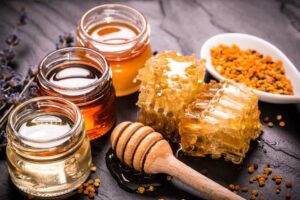
In January-May 2024, Ukraine exported 589.86 tons of organic honey, which exceeds last year’s figures, the OrganikInfo portal reported, citing data from the Organic Standard certification body.
According to the report, in recent years, the dynamics of growth in organic honey exports has been observed. Thus, in 2021, 269.33 tons of honey were exported abroad, in 2022 – 698.05 tons, and in 2023 – 702.9 tons.
“Organic honey is not among the top 10 products exported from Ukraine, but Ukraine remains one of the leading exporters of honey, including organic honey, and demand in the world is only growing,” said organic market analysts.
According to the data, in 2022, honey ranks 4th in terms of the volume of products imported to the EU and has a share of 9.2% of all organic imports.

In 2023, the countries of the European Union imported 163.7 thousand tons of honey for a total of EUR359.3 million, according to the Statistical Office of the European Union (Eurostat).
Exports of honey from the EU countries amounted to only 24.9 thousand tons worth EUR146 million.
Over 10 years, since 2013, imports have increased by 20%, exports – by 14%.
Last year, the main suppliers of honey to the EU were China (60.2 thousand tons, or 37% of all foreign supplies), Ukraine (45.8 thousand tons, 28%), Argentina (20.4 thousand tons, 12%), Mexico (10.7 thousand tons, 7%) and Cuba (4.7 thousand tons, 3%).
The UK became the main importer of honey from the European Union – 4.3 thousand tons. Saudi Arabia, Switzerland and the United States imported more than 3 thousand tons.
The largest buyer of foreign honey among the EU countries was Germany, which imported 41 thousand tons in 2023. Belgium took the second place (31.4 thousand tons), and Poland was the third (23.3 thousand tons). Spain was the leading exporter (7.1 thou tons).
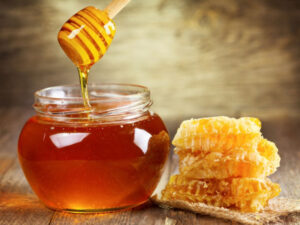
Ukraine in 2023 supplied the European Union market with 45.8 thousand tons of honey, which was the second result and accounted for 28% of all imports of this product by the Commonwealth countries, Eurostat reports.
According to the report, the largest supplier of honey in 2023 was China with 60.2 thousand tons and 37% of the market share, the third place belonged to Argentina with 20.4 thousand tons (12%), the fourth – Mexico with 10.7 thousand tons (7%), the fifth – Cuba with 4.7 thousand tons (3%).
The largest importer of honey in 2023 was Germany, which imported 41 thousand tons of honey from outside the EU, accounting for 25% of all EU imports. Belgium was the second largest importer with 31.4 thousand tons (19%), followed by Poland with 23.3 thousand tons (14%), Spain with 15.7 thousand tons (10%) and France with 7.7 thousand tons (5%).
In total, EU members imported 163.7 thousand tons of natural honey from non-EU countries in 2023, worth EUR359.3 million. At the same time, EU member states exported 24.9 thousand tons worth EUR146.0 million.
The UK was the leading buyer of honey produced in the EU in 2023 with 4.3 thousand tons (17% of all non-EU honey exports). This was followed by Saudi Arabia with 3.5 thousand tons (14%), Switzerland with 3.4 thousand tons (13%), USA with 3.3 thousand tons (13%) and Japan with 2.5 thousand tons (10%).
Spain was the largest exporter. It sent 7.1 thousand tons of honey to countries outside the EU, which amounted to (29% of all exports of this product from the EU). It is followed by Germany with 5.5 thousand tons (22% of all exports), Romania with 1.7 thousand tons (7%), Hungary with 1.6 thousand tons (6%) and Greece with 1.5 thousand tons (6%).
Source: https://ec.europa.eu/eurostat/en/web/products-eurostat-news/w/ddn-20240520-1



