
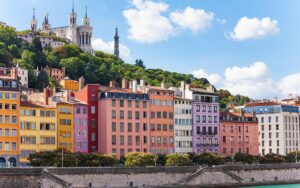
The proportion of European Union residents living in their own homes in 2024 was 68%, while 32% of the population rented a house or apartment, according to the interactive review “Housing in Europe – 2025 edition” by the EU statistical office Eurostat.
According to the data, the highest rates of home ownership were recorded in Romania (94% of the population live in their own homes), Slovakia (93%), Hungary (92%), and Croatia (91%). The only EU country where the majority of the population prefers to rent is Germany, where 53% of residents are tenants. In Austria, the share of tenants is 46%, and in Denmark, it is 39%.
Eurostat notes that in all EU countries except Germany, ownership remains the dominant form of housing, although in large cities and capitals, the proportion of rentals is traditionally higher than in small towns and rural areas.
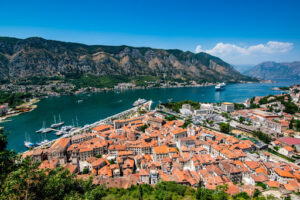
In January-November 2025, the Croatian residential real estate market cemented its status as one of the most expensive and dynamically growing in the EU. Official statistics and private research show double-digit price growth amid a slowdown in the number of transactions and an increased role of the state in addressing the issue of housing affordability.
According to the State Statistics Office (DZS), the average price per square meter of new housing in Croatia in the first half of 2025 was €2,754. This is approximately 15.9% more than in the first half of 2024 and 5.3% higher than in the second half of 2024.
By region. – Zagreb: around €2,958 per square meter (+4.5% year-on-year), rest of Croatia: around €2,511 per square meter, with growth in these cities and towns reaching 22% over the year, reflecting the rapid rise in housing prices in coastal and tourist regions.
The House Price Index shows that in the second quarter of 2025, residential property prices rose by 4.4% compared to the previous quarter and by 13.2% compared to the same period in 2024. According to Eurostat, this is one of the highest figures in the EU in terms of quarterly and annual growth.
According to market analysts’ estimates, the average price of housing (including secondary housing) in the fall of 2025 approached €2,800–2,900 per square meter across the country, which is approximately 70–80% higher than in 2020. At the same time, the average price of apartments is estimated at over €3,800–4,100 per square meter, while houses are slightly cheaper.
Market data shows that the gap between the coast and inland regions is widening:
In Split, the average asking price in October 2025 reached around €5,315 per square meter, almost 15% more than a year earlier.
In Dubrovnik, an apartment costs on average more than €4,100 per square meter, and in prestigious locations, the range is €5,000–7,000 and above.
In Istria and popular locations in Central and Southern Dalmatia, typical prices range from €3,500 to €7,000 per square meter, depending on the class of the property and its proximity to the sea.
Inland regions (e.g., Slavonia) remain significantly cheaper, often in the range of €1,000–2,000 per square meter.
In Zagreb, the average price for apartments is estimated at around €3,400–3,500 per square meter, but there is a significant gap between districts within the city. Analysis of private listings shows that the central and “tram” areas of the capital are significantly more expensive than the suburbs.
A separate trend in 2025 is stagnation and even a slight decline in house prices in some segments. According to one of the largest ad portals, the average price of houses in Zagreb in the middle of the year was around €1,200 per square meter, with price growth slowing more sharply than for apartments.
Despite high prices, the market has not yet shown a full correction. Some analytical reviews note a decline in the number of transactions in the first half of 2025, but this has had virtually no impact on price levels, especially in coastal regions, where supply remains limited.
At the same time, rising interest rates and tighter mortgage lending conditions, which began in 2023–2024, are limiting the options for some households, especially young families. In 2025, the Croatian National Bank tightened macroprudential requirements for banks and mortgage loans in an effort to curb overheating in the housing market and risks to financial stability.
According to Arvio’s report for the first quarter of 2025, foreigners accounted for about 7.19% of all real estate transactions in Croatia. The most active buyers were:
citizens of Slovenia – approximately 30.2% of foreign transactions,
Germany – approximately 21.1%,
Austria – approximately 10.4%.
The total number of transactions involving foreigners has been declining for the third consecutive year: an estimated 13,300 in 2022, 12,300 in 2023, and 11,600 in 2024.
Foreigners traditionally concentrate on the Adriatic coast (Istria, Kvarner, Dalmatia) and the islands, where new apartments and houses ready for immediate occupancy or rental are in demand. It is external demand, combined with limited supply, that largely supports the high and rising price level.
The sharp rise in prices and the decline in housing affordability prompted the government to adopt the first comprehensive National Housing Policy Plan until 2030 in 2025.
Key facts on which the document is based:
there are about 2.39 million housing units in the country, with about 40% not used for permanent residence,
over the past five years, the price of new apartments has increased by approximately 54%,
young families face difficulties in accessing mortgages and a shortage of affordable housing.
In fact, the state is trying to simultaneously cool down overheated market segments and expand the supply of affordable apartments, especially in the medium and long-term rental market.
Based on statistics for the first three quarters and market participants’ expectations, the baseline scenario for the end of 2025 and 2026 is as follows:
Prices will continue to rise, but at a slower pace than the double-digit rates seen in 2023-2024. Already in the second half of 2025, some analysts are noting a slowdown in growth, especially in the housing segment and in regions far from the sea.
The gap between the coast and inland regions will remain: tourist and premium locations will become more expensive faster, while “continental” Croatia will remain relatively affordable, which may support internal migration and local demand.
According to analysts’ estimates, the share of foreign buyers will remain at around 8% of all transactions by the end of 2025 or will decline slightly due to high prices and affordability issues.
The implementation of the National Housing Plan until 2030 will play an important role, including the launch of affordable rental programs, the activation of vacant housing stock, and the adjustment of subsidized home purchase programs.
For Croatia, where real estate has become a key tool for household savings and an object of interest for foreign capital, the coming years will be a test of its ability to combine the goals of economic growth, tourism development, and ensuring basic housing affordability for its own citizens.

The housing price index in Ukraine for July-September 2025 stands at 112%, while for the same period in 2024, the figure was 111.7%, according to the State Statistics Service (SSS).
According to its data, in the primary market, housing prices slowed their growth to 12.8% in the third quarter of 2025, compared to 14.1% in the third quarter of last year. One-room apartments saw the highest price increase — 13.3%. The price increase for two-room apartments was 13.3%, and for three-room apartments – 11.7%.
In contrast, prices in the secondary market accelerated their growth to 11.5% in July-September 2025, compared to 10.5% in the same period of 2024. One-room apartments rose in price by 12.5%, and two- and three-room apartments by 11.4%.
According to the statistics agency, compared to the previous quarter, housing prices rose by 0.3%, with the primary market rising by 0.2% and the secondary market by 0.3%.
According to the State Statistics Service, in the third quarter of 2025, prices in the primary market rose by 9.1% for one-room apartments compared to the fourth quarter of 2024, by 8% for two-room apartments, and by 7.4% for three-room apartments. In the secondary market, they rose by 9.1%, 7.8%, and 7.6%, respectively.
Overall, housing prices rose by 12.7% in the first three quarters compared to the same period last year. In the primary market, the increase was 14.8%, and in the secondary market, it was 11.6%.
As reported, according to the State Statistics Service, housing prices in 2024 rose by 12.7%.
The State Statistics Service noted that the figures do not include temporarily occupied territories and parts of territories where hostilities are (were) ongoing.

Citizens of Ukraine and Russia are among the top ten foreign buyers of housing in Bulgaria in 2024–2025, according to a study by the Experts Club analytical center and data from the Bulgarian Real Estate Association.
According to the study, the top 10 countries whose citizens are most active in buying real estate in Bulgaria are: Great Britain, Germany, Greece, Israel, Romania, Turkey, Italy, Russia, Ukraine, and Poland.
Foreigners account for a significant share of transactions in the housing market. According to one international analytical resource, the number of foreign buyers of residential real estate in Bulgaria in 2024-2025 has increased by approximately 18%, and the overall market is showing steady price growth. According to local experts, the percentage of foreigners in some coastal projects may reach 30% of the total number of buyers.
Foreign buyers are most interested in properties on the Black Sea coast – in Varna, Burgas, and Nessebar – as well as in the mountain resorts of Bansko and Pamporovo, where real estate is considered both for personal use and as an investment for rental.
Analysts note that Ukrainians have firmly established themselves in the top 10 due to a combination of relocation and investment demand: some buyers view Bulgaria as a safe EU jurisdiction during the war, while others see it as an opportunity to earn income from renting out property in tourist regions.
The growth in foreign demand is supporting price increases: over the past year, the cost of housing in Bulgarian seaside resorts has risen by an average of 8-10%, and in Sofia by 7-10%.
At the same time, according to estimates by the European Commission and a number of analytical reviews, housing in Bulgaria in 2025 is overvalued by approximately 10-15% relative to fundamental indicators, but experts are not yet talking about a critical “bubble” in the market.
In the next 2–3 years, Experts Club analysts expect foreigners to keep showing interest in Bulgarian real estate, but with a change in the demand structure: they estimate that the share of buyers from the EU, Ukraine, and Israel will grow, while the role of Russian buyers in new deals may continue to decline amid sanctions and capital movement restrictions.
According to data from the National Statistical Institute of Bulgaria and international reviews, in the second half of 2024, housing prices in the country rose by 15% year-on-year and by 87% compared to 2015. At the same time, the average price per square meter in the country remains significantly lower than in most EU countries, making Bulgaria one of the most affordable real estate markets in the Union for foreign investors.
Russian citizens traditionally account for a significant share of owners, especially on the coast. According to Bulgarian sources, in the Burgas region alone, more than 5,200 properties owned by Russians are officially registered, while across the country as a whole, there are several tens of thousands of properties. At the same time, in recent years, the share of new purchases by Russians has been declining, and some of the properties are being put on the market and bought by Bulgarian and Western European buyers.
Source: https://expertsclub.eu/rynok-zhytla-bolgariyi-analiz-vid-experts-club/
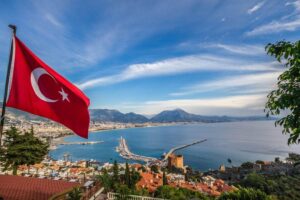
According to the Turkish Statistical Institute (TÜİK), in September 2025, sales of real estate to foreigners in Turkey fell by 7.7% year-on-year to 1,867 properties. The share of transactions with foreigners in the total volume was 1.2%. Most purchases were made in Istanbul (744), followed by Antalya (557) and Mersin (124).
Among foreign buyers, Russians took first place with 267 properties, followed by Iranians with 202 and Iraqis with 146. The top five also included citizens of Germany with 121 and Ukraine with 118. In January-September, foreigners purchased 14,944 properties, which is 12.6% less than a year earlier.
A total of 150,657 residential units were sold on the Turkish market in September, which is 6.9% more than in September 2024.
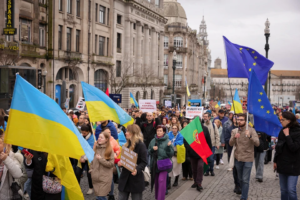
According to Eurostat, as of the end of July 2025 there are 4,373,455 citizens of Ukraine under temporary protection in EU countries. Over the month their number increased by 30,980 people, that is approximately by 0.71% compared to the June level — the dynamics are moderate but stable, indicating a continuing, though not surging, movement of people in search of safety. The overwhelming majority of beneficiaries of this regime — about 98.4% — are Ukrainians, which makes the group of aid recipients extremely homogeneous and requires focused integration measures.
The distribution by countries remains concentrated: the key burden is borne by Germany, Poland, and the Czech Republic. In Germany there are about 1,196,645 people — roughly 27.8% of the total; in Poland — about 992,505 people (around 23%); in the Czech Republic — about 378,420 people (about 8.8%). Taken together this is almost three-fifths of all recipients of protection, therefore it is precisely these economies and their social systems that first react to any changes in inflow: in large agglomerations the issues of housing affordability become acute, the need for school places and language courses grows, and municipal budgets face continuous obligations.
In such conditions, reception policy inevitably shifts to an integration agenda. Coming to the fore are the accelerated recognition of qualifications, intensive language programs, access to kindergartens and schools, as well as reskilling instruments. The labor market becomes the main shock absorber: the faster people move into formal employment, the lower the budgetary burden and the more noticeable the multiplier effect for domestic demand. At the same time, the housing issue remains the key risk: concentration in capital and industrial regions pushes rental rates upward and increases social tension. Effective responses appear to be targeted rent subsidies, accelerated renovation and construction of social housing, as well as a more even distribution of placements among municipalities.
Finally, the predictability of financing and interagency coordination at the EU and national government levels becomes critically important. Even with the current “soft” monthly increase, unreliable sources of funds quickly turn a manageable situation into a problem for local budgets. On the horizon of the coming months, the key indicators of resilience will be the growth rates of protection beneficiaries, the share of those employed, indicators of school and preschool integration, the dynamics of rental rates in concentration regions, and the speed of transition from emergency measures to long-term programs. Overall, the picture of stable but continuing growth with high concentration in Germany, Poland, and the Czech Republic requires shifting efforts from short-term aid to systemic integration — precisely this will make it possible to reduce budgetary costs and turn the humanitarian response into a sustainable socio-economic result.
EU, GERMANY, HOUSING, Labor market, MIGRATION, POLAND, REFUGEES, SOCIAL POLICY, TEMPORARY PROTECTION, UKRAINIANS



