
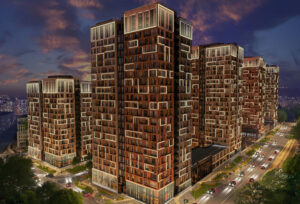
In 2026, Hong Kong remained the world’s most expensive city for purchasing a downtown apartment, according to the Deutsche Bank Research Institute’s study “Mapping the World’s Prices 2026.”
The average cost of housing in the city’s central districts is estimated at $27,753 per square meter. Zurich, Seoul, Singapore, and Geneva follow in the ranking. Despite a price decline of approximately 10% compared to pre-pandemic levels, Hong Kong retained its top spot.
Compared to the previous edition of the study, the average price per square meter in Hong Kong rose from $26,749 to $27,753. High real estate prices remain one of the main factors limiting housing affordability, even for city residents with relatively high incomes.
High real estate prices also affected Hong Kong’s ranking in the quality of life index. The city dropped from 48th to 55th place out of 69. Among other negative factors, the study’s authors cite air pollution and long commutes to work.
The Polish government has approved a bill requiring the mandatory registration of apartments and houses rented to tourists for short periods. Rentals lasting up to 30 days will officially be classified as hotel services.
The bill must still be reviewed by parliament and signed by the president. Most of the new rules are set to take effect 14 days after the adopted law is published in the official gazette.
A central element of the reform will be the creation of a nationwide registry of tourist accommodations—the Centralny Wykaz Turystycznych Obiektów Noclegowych. This registry will include not only hotels and guesthouses but also private apartments offered through Airbnb, Booking.com, and other platforms.
Each property will be assigned a unique identification number. Owners will be required to include this number in all listings. Online platforms will be required to verify the presence of a registration number and provide booking information to government authorities.
For owners, this means that informal short-term rentals will become significantly riskier. Operating without registration, failing to include an identification number in a listing, or providing false information will result in administrative fines of up to 50,000 zlotys, which is approximately 11,600 euros.
Apartments for short-term rental will have to comply with health, building, and fire safety requirements. Each property must display the house rules, information on quiet hours, and contact information for the owner or manager. However, there are no plans to automatically subject residential buildings to the same fire safety requirements as full-fledged hotels.
Local authorities will be granted the right to designate zones where short-term rentals of private apartments will be restricted or completely prohibited. Such measures may be applied primarily in historic centers and the busiest tourist areas of Warsaw, Kraków, Gdańsk, Sopot, and other cities. The restrictions will not automatically apply to officially classified hotels, motels, and guesthouses.
Residents of apartment buildings, housing communities, and housing cooperatives will be granted additional powers. They will be able to request that the municipality inspect an apartment if tourists regularly disturb the peace, violate safety rules, or disrupt public order.
In the event of repeated violations, the property may be removed from the registry. In such a case, renting it to tourists will be prohibited, and the property may not be re-registered for at least one year. A property owner’s refusal to allow an inspection may also serve as grounds for removal.
Authorities explain the reform as necessary to reduce the informal sector, improve tourist safety, and ensure a level playing field for private landlords and the hotel industry. The Ministry of Sport and Tourism emphasizes that the government does not intend to completely ban affordable short-term rentals, which are used by many Polish families.
For investors, the changes mean higher costs for registering and maintaining properties. Owners will have to register each apartment, comply with safety requirements, and take into account the possibility of local restrictions. The reform may prove particularly challenging for owners of multiple apartments in popular tourist areas.
The reform is also linked to the implementation of EU Regulation 2024/1028 on the collection and exchange of data in the short-term rental market, which has been in effect in the European Union since May 20, 2026. The European rules provide for uniform registration mechanisms and the transfer of information by platforms to government agencies.
Thus, Poland is transitioning from a relatively unregulated model of daily rentals to a system similar to the regulation of the hotel industry. The final deadlines and wording will depend on the bill’s passage through parliament; however, property owners are already advised to prepare documentation for their properties and verify their compliance with health, building, and fire safety requirements.

According to Serbian Economist, Montenegro’s potential accession to the European Union by 2028 could become a new factor driving up real estate prices in the country, especially in the premium segment along the coast.
According to market experts, investors have about two years left to invest in Montenegrin properties before the country’s EU status ultimately locks in higher prices. Over the 20 years of Montenegro’s independence, the average cost of coastal real estate has risen from approximately 1,000 euros per square meter to 8,000–15,000 euros per square meter in premium branded residences.
Ana Zloković, sales director for the Luštica Bay complex, believes that, based on the experience of other countries in the region, potential EU accession could boost Montenegro’s real estate market by another 30% or so. According to her, the mere anticipation of membership is already driving up demand.
Kieran Kelleher, Managing Director of Savills Croatia & Montenegro, offers a more cautious assessment. He anticipates price increases of 30–40% for certain properties but warns that the era when investors could easily double their money in Montenegrin real estate is over. In his view, the market has already factored some of its future potential into current prices.
Experts cite not only the fact of European integration itself but also infrastructure modernization as the main driver of further growth. Montenegro is currently held back by poor roads, outdated airports, and overloaded border crossings, and resolving these issues could take at least five years. Improved transportation access is expected to increase tourist traffic and boost the value of resort real estate.
Analysts identify the “golden triangle” of Kotor–Tivat–Herceg Novi as the most promising area. In the Bay of Kotor, prices in the premium segment range from 4,000 to 15,000 euros per square meter. Stone houses in the Old Town of Kotor, a UNESCO World Heritage Site, are of particular interest: such properties are scarce, suitable for rental, and, according to experts, better protected against depreciation.
On the Budva Riviera, the price range is estimated at 3,000–12,000 euros per square meter; however, experts warn of the risks of market oversaturation and excessive development in Budva. Bar and Ulcinj remain more affordable destinations, with prices around 2,000–5,000 euros per square meter and potentially higher growth rates due to their low starting point.
The factor of European integration for Montenegro has indeed strengthened. According to the Council of the EU, the country applied for membership in 2008, received candidate status in 2010, and accession negotiations began in 2012. All 33 negotiation chapters have already been opened, 16 of which were provisionally closed as of mid-June 2026.
In addition, the 28th Intergovernmental Conference on Montenegro’s accession is scheduled to take place in Brussels on July 14, at which it is planned to provisionally close negotiations on Chapters 8—Competition—and 29—Customs Union. This confirms that Montenegro remains the most advanced candidate for EU accession among the countries of the Western Balkans.
https://t.me/relocationrs/3229

Indian citizens became the largest group of foreign real estate buyers in Dubai in 2026, according to data from the DXB Interact platform, as reported by Gulf Today and Khaleej Times.
According to DXB Interact, Indian buyers accounted for 20.59% of total real estate purchases in the emirate as of late February 2026. In a Khaleej Times article citing Harbor Real Estate and DXB Interact, this figure was rounded to 20.6% as of early 2026.
Buyers from the United Kingdom ranked second with a share of 13.26–13.3%, followed by Egyptian citizens in third place with 12.6%. Next came the United States—about 9%, Pakistan—6.9%, Saudi Arabia and Australia—5.7% each, Germany—about 4.2%, France—3.8%, and Canada—about 3%.
Just outside the top ten, according to DXB Interact, are the Netherlands with a 2.83% share, Russia at 2.5%, Morocco at 2.33%, Spain and Kuwait at 2.11% each, Turkey at 2.05%, and Nigeria at 1.89%.
Analysts attribute foreign buyers’ sustained interest in the Dubai market to political stability, the absence of income tax, the possibility of 100% foreign ownership of properties in freehold zones, and long-term residency programs, including the Golden Visa.
Compact apartments remain the most active segment of the market. According to the Khaleej Times, one-bedroom apartments accounted for 34.9% of sales, or 27,590 transactions; studios accounted for 23.4%, or 18,471 transactions; and two-bedroom apartments accounted for 20.7%, or 16,399 transactions. This demand reflects investors’ interest in liquid properties with a lower entry threshold and rental yield potential.
Among Dubai’s districts, Dubai Islands led in apartment sales with 8.4 billion dirhams, followed by Airport City with 7.2 billion dirhams and Business Bay with 6 billion dirhams. In the villas and buildings segment, Al Yalayis 1 took first place with 10.6 billion dirhams, while Me’aisem Second led the land plots segment with 10.1 billion dirhams.
Harbor Real Estate assesses the current situation as a transition of the Dubai market from a phase of rapid growth to a more sustainable cycle. According to the company, demand is increasingly being driven by end buyers and long-term investors, rather than short-term speculators.
An increase in supply could be an additional factor contributing to market stabilization. According to the Khaleej Times, citing a report by Harbor Real Estate, more than 160,000 residential units are scheduled for completion in 2026, although the actual number of units completed is expected to be significantly lower. For comparison: approximately 39,700 units were completed in 2025, and 30,500 in 2024
Regarding the Dubai real estate market, the ranking of foreign buyers shows that demand remains geographically diversified. India and the United Kingdom retain key positions, but buyers from the Middle East, North Africa, North America, Australia, and Europe also play a significant role. This reinforces Dubai’s status as one of the leading international centers for real estate investment.
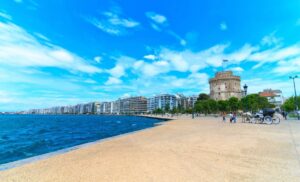
The residential real estate market in Northern Greece continues to rise in price amid high demand from foreign buyers, who are primarily interested in apartments in Thessaloniki, the Chalkidiki Peninsula, and the coastal regions of Thrace, according to a study by Spitogatos Insights for the first quarter of 2026.
According to the study, between 2022 and 2026, average home prices in Thessaloniki rose by 61% to 2,300 euros per square meter. In Macedonia (a region of Greece), the figure rose by 53.7% to 1,992 thousand euros per square meter, and in Thrace, it rose by 38.3% to 1,5 thousand euros per square meter.
Chalkidiki remains the most expensive market in Northern Greece, where the average housing price in the first quarter of 2026 reached 2,716 thousand euros per square meter. The municipality of Thessaloniki came very close to this level at 2,667 thousand euros per square meter, while Kavala led in growth over the past five years—up 68.1% to 2,194 thousand euros per square meter.
In the rental market, Thessaloniki also remains the largest center of demand: the average rent has risen by 34.3% since 2022, to 9.4 euros per square meter per month. In the municipality of Thessaloniki itself, rent reaches 10.4 euros per square meter, and in Chalkidiki—12.3 euros per square meter, due to the strong influence of tourism.
Foreign buyers most often consider the suburbs of Thessaloniki, Chalkidiki, the municipality of Thessaloniki itself, Kavala, and Pieria. The top ten destinations most in demand among foreign buyers also include Evros, Serres, the Rhodopes, and Xanthi.
Apartments are the main focus of demand from foreign buyers. They lead the way in both the purchase and rental segments. Detached houses and townhouses follow in terms of interest.
According to analysts’ estimates, foreign capital is gradually moving beyond major cities and penetrating more actively into the coastal and border regions of Eastern Macedonia and Thrace.
The published materials do not provide data on the nationalities of foreign buyers.

Airbnb is transitioning hosts to a new service fee model: instead of the previous structure, under which hosts typically paid about 3% and guests paid a separate service fee, the platform is introducing a single commission for hosts.
Now, most hosts will pay 15.5% of the booking price. Airbnb explains this as a move to make pricing more transparent: guests will see the total cost without a separate service fee on top.
For hosts, this means they’ll need to adjust their prices. If they don’t change their rates, their net payout will decrease. According to Airbnb’s example, for a $100 booking, a host will receive $84.50 after the commission is deducted.
The transition is taking place in phases. For hosts outside the European Economic Area, the deadline for adjusting prices is September 15; for hosts within the EEA, it is October 13.
For the short-term rental market, this will increase pressure on property owners and management companies: they will have to recalculate rates, discounts, and financial models.



