

Rising housing and rent prices in Europe are increasingly limiting people’s access to adequate housing and increasing the risk of homelessness, according to the European Union Agency for Fundamental Rights (FRA)’s annual report, Fundamental Rights Report: Challenges and Achievements in 2025.
According to the FRA, between 2015 and 2024, home prices in the EU rose by an average of 53%, while rents increased by nearly 17%. The agency notes that the housing crisis is becoming not only an economic issue but also a human rights issue, as the right to adequate housing is becoming increasingly inaccessible to vulnerable groups.
“Rising costs are affecting many people and families, as more and more people cannot afford housing and are at risk of becoming homeless,” said FRA Director Sirpa Rautio.
According to an estimate by the European Federation of National Organizations Working with the Homeless (FEANTSA), cited by the FRA, there were nearly 1.3 million homeless people in the EU in 2025. The agency identifies young people, private-market renters, low-income families, migrants, refugees, and people already on the brink of social exclusion as particularly vulnerable.
The FRA notes that more than two-thirds of EU residents own their homes, yet among those with incomes below the at-risk-of-poverty threshold, fewer than half are homeowners. This exacerbates inequality: rising housing prices increase the wealth of property owners but worsen the situation for renters and those without access to mortgages.
The report covers all 27 EU countries, as well as three candidate countries or countries potentially linked to the European integration process—Serbia, Albania, and North Macedonia.
The housing crisis is becoming one of the key social challenges for Europe. Rising housing prices are already affecting not only the real estate market, but also demographics, labor mobility, social stability, and trust in public institutions.
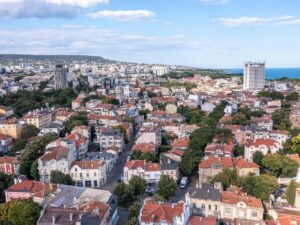
According to The Serbian Economist, an unusual price paradox has emerged in the real estate market of neighboring Bulgaria: in Varna and Plovdiv, existing homes are rising sharply in price, while prices for new construction have fallen.
According to data from the National Statistical Institute of Bulgaria, in the fourth quarter of 2025, housing prices in the country rose by 12.6% compared to the same period the previous year. At the same time, compared to the third quarter, growth has nearly stalled, amounting to just 0.3%.
The main imbalance is evident between new construction and the secondary market. Nationwide, existing housing rose in price by 15% year-over-year, while new construction rose by 9%.
In Varna, the gap was particularly pronounced: the overall price index rose by 15.1%, but new construction fell in price by 1%, while existing housing rose in price by 23.4%. In Plovdiv, the overall increase was 8.6%, new construction fell by 0.8%, and the secondary market rose by 16.8%.
The reason for this paradox is a shortage of move-in ready apartments. Buyers who need housing immediately are turning more actively to the secondary market. Against the backdrop of limited supply, this is driving up prices for ready-to-move-in apartments. New construction, on the other hand, faces more cautious demand, uncertainty regarding completion dates, and project-related risks.
A similar but less pronounced gap is also evident in other cities. In Sofia, secondary housing prices rose by 14%, while new construction prices rose by 11.3%. In Burgas, secondary housing prices rose by 17.6%, while new construction prices rose by 7.3%. In Stara Zagora, secondary housing prices rose by 23.3%, while new construction prices rose by 10.5%.
For investors and buyers, this is an important signal: the Bulgarian market is not falling, but is becoming more selective. Buyers are willing to pay a premium for a finished apartment in a good location, but are now more cautious about properties under construction.
For the market, this signifies a transition from frenzied growth to a more subdued phase.
https://t.me/relocationrs/3023

According to Serbian Economist, Montenegro’s housing stock is growing rapidly, but its population is not. According to UNECE data, the 2023 census recorded 392,900 residential properties in the country—78,200 more than in 2011.
Over the past 12 years, the number of apartments and houses has increased by approximately 26%, while the population has remained unchanged at around 624,000 people.
As a result, there are now 627 apartments and houses per 1,000 residents in Montenegro. This is approximately 21% higher than the EU average.
The main problem is that only 54% of housing is used for permanent residence. About 46% of properties stand vacant or are used seasonally, as vacation homes or for tourist rentals.
On the coast, this is linked to tourism, foreign buyers, and short-term rentals. In the north of the country, the reason is different—population outflow and depopulation.
A telling example is Žabljak: there, the number of homes has increased by more than 30%, even though the population has shrunk by about 18%.
For Montenegro, this is becoming a structural problem. Real estate and tourism generate quick profits, but they do not solve the issue of affordable housing for local residents. In Budva, Kotor, Tivat, and Bar, there is formally plenty of housing, but living there permanently is becoming increasingly expensive.
The main conclusion: Montenegro is facing the paradox of the tourism economy—the number of apartments and houses is increasing, while affordable housing for permanent residents may be decreasing.

According to the think tank Experts Club, Kyiv ranked 36th out of 37 European cities in the Global Property Guide’s housing cost ranking, according to data from the updated “Square Meter Prices in European Cities” table for April 2026, published on the study’s website.
The average housing cost in the Ukrainian capital is estimated at €1,970 per square meter. Over the past year, the figure has risen by 2.6%, and over two years—by 0.9%.
In the ranking, Kyiv emerged as one of the most affordable markets in Europe. Only Chisinau ranks lower than the Ukrainian capital in the table, where the average price of apartments is 1,720 euros per square meter. At the same time, Kyiv is cheaper not only than Western European capitals but also than most cities in Central and Southeastern Europe.
For comparison, in Belgrade the average price of new properties is 3,333 thousand euros per square meter, in Podgorica—2,141 thousand euros, in Bucharest—2,250 thousand euros, in Sofia—€2,300, in Athens—€2,500, in Budapest—€3,061, and in Zagreb—€3,781
Kyiv’s low ranking in the European table reflects the war’s impact on the real estate market, investment risks, limited external demand, and buyer caution. Unlike many European capitals, where prices are supported by mortgages, migration, and stable investment demand, the Ukrainian market remains dependent on security, macroeconomics, and the recovery of business activity.
At the same time, positive annual dynamics indicate that the Kyiv market is not in a state of sharp decline. Year-over-year growth of 2.6% indicates the presence of domestic demand, particularly in the segments of completed housing, high-quality properties, and locations with developed infrastructure.
Kyiv remains Ukraine’s largest real estate market and the country’s main hub of business activity. It accounts for a significant portion of the demand for residential, office, retail, and rental properties. Once the active phase of the war ends, the capital could become one of the key hubs for the recovery of investment activity.
For now, Kyiv remains one of the most affordable major European cities in terms of housing costs in euros. For potential investors, this may mean a low entry threshold, but at the same time, a high level of country, military, and regulatory risk.
The Global Property Guide study is available at: https://www.globalpropertyguide.com/europe/square-meter-prices

According to data from Idealista, the cost of renting a home in Spain hit an all-time high in May 2026, averaging 15.1 euros per square meter per month.
Rents rose by 0.6% over the month and by 4% year-over-year. The previous high was recorded in early 2026, when the average rate stood at around €15 per square meter. Thus, the Spanish rental market continues to grow despite the government’s attempts to curb pressure on the housing market.
The rise in prices is linked to a persistent imbalance where demand exceeds supply, particularly in major cities, tourist regions, and areas with a high concentration of jobs. The market is also influenced by a shortage of affordable rental housing, the shift of some apartments to short-term rentals, rising demand from migrants and students, as well as caution among landlords following tighter regulations.
In April 2026, the average rent in Spain was €15 per square meter, which was 5.2% higher than in April 2025. In May, the figure rose to €15.1 per square meter, though the annual growth rate slowed to 4%.
The most expensive markets remain the major economic and tourist hubs. In Madrid, the average rent in April reached €23.3 per square meter per month, which is 8.6% higher than a year earlier. This is one of the highest levels among the country’s largest markets.
At the provincial level, rents rose across nearly all of Spain in the spring of 2026. Prices rose in 49 of 50 provinces, with the sole exception being Barcelona, where a decline of 8.5% was recorded. The largest increases were recorded in Lleida, Toledo, Guadalajara, and Segovia.
High rental rates are intensifying social and political pressure surrounding the housing market. In recent years, Spanish authorities have been discussing restrictions on short-term rentals, expanding affordable housing, regulating rental rates in high-demand areas, and offering incentives to landlords willing to rent out apartments at moderate prices.
For foreign buyers and investors, rising rents mean continued interest in Spanish real estate as an income-generating asset, but at the same time, they increase regulatory risks. In regions with a housing shortage, authorities may tighten rules for vacation rentals and impose additional restrictions on short-term rentals.
Spain remains one of the largest real estate markets in Southern Europe. Rental demand is driven by major cities, international migration, tourism, the student sector, and the remote work market. The tightest market conditions persist in Madrid, Barcelona, the Balearic Islands, the Canary Islands, Malaga, Valencia, and other popular cities and coastal regions.

According to data from the Portuguese National Institute of Statistics (INE), foreign buyers purchased 41,086 houses and apartments in Portugal in 2025, a 6.6% increase from the previous year.
Brazilian citizens became the largest group of foreign buyers. In 2025, they purchased 9,808 properties, a 27.5% increase from 2024. Angolan citizens ranked second with 4,145 purchases, a 2.2% increase. The French took third place, purchasing 3,765 properties, a 6.2% decrease from the previous year.
According to INE data, foreign buyers with tax residency in Portugal completed 34,834 transactions, an increase of 11.4% compared to 2024. At the same time, purchases by non-residents declined: foreigners without tax residency in Portugal purchased 8,471 properties, which is 13.3% less than a year earlier. This marked the third consecutive year of declining activity among non-residents.
This gap indicates a shift in the structure of foreign demand. The Portuguese real estate market is increasingly relying not on traditional foreign investors, but on foreigners already residing in the country. These may include migrant workers, relocators, families with long-term residence permits, and members of diasporas, primarily Brazilian and Angolan.
Foreigners, as before, are purchasing more expensive properties than local residents. According to INE data, the average value of real estate purchased by buyers with tax residency in Portugal was €234,120. Buyers from EU countries paid an average of €335,640, while buyers from non-EU countries paid €470,277 per property. British and American buyers purchased particularly expensive properties: the average transaction price was €512,585 and €479,403, respectively.
Geographically, demand from non-residents remains concentrated in the most attractive regions. In 2025, the Algarve accounted for 29.7% of non-resident transactions, the Northern region for 20%, the Central region for 14.9%, and Greater Lisbon for 12.5%. In terms of transaction value, the Algarve’s dominance is even more pronounced: the region accounted for 42.4% of total non-resident investment in housing.
The INE also noted strong growth among buyers from Ukraine, Cape Verde, and Venezuela: the number of transactions by citizens of these countries increased by more than 25% in 2025. However, the exact number of properties purchased by Ukrainians is not disclosed in the brief INE publication or in reports by the Portuguese media.
For Ukrainians, Portugal remains an attractive destination due to its safety, access to the EU, labor market, diaspora ties, and the possibility of long-term residency. At the same time, following the removal of real estate as a basis for the Golden Visa, investment demand has become less tied to obtaining a residence permit and more dependent on actual relocation, income levels, and long-term residency plans.
Thus, Portugal’s housing market maintains high foreign demand, but its structure is changing. Brazilians have strengthened their leadership due to linguistic and migratory proximity; Angolans remain an important group of buyers; and the French, British, and Americans continue to play a major role in the higher-end segments. Ukrainians are not yet among the largest buyers but are demonstrating one of the most notable growth rates.



