

In the first half of 2026, foreign citizens purchased 62,327 residential properties in Spain, which is 13% less than during the same period last year. At the same time, the average price of homes purchased by foreigners rose by 9.4% to a record €2,644 per square meter, according to data from the General Council of Notaries of Spain (Consejo General del Notariado) released on October 15.
According to the Notarial Statistical Information Center (CIEN), this marks the largest annual decline in the number of transactions involving foreign buyers since the first half of 2020. The share of foreigners in the total number of residential property transactions fell to 18.3%, compared to 19.2% a year earlier and 20.3% in 2024.
The most notable decline was seen among buyers who do not have Spanish resident status. They purchased 22,940 properties, 18% fewer than a year earlier. This category accounted for 36.8% of all transactions by foreign buyers.
Foreigners residing in Spain purchased 39,387 properties, or 63.2% of the total number of purchases by foreign citizens. Compared to the first half of 2025, their activity declined by 10%.
Despite the decline in the number of transactions, housing prices continued to rise. Non-residents paid an average of €3,493 per square meter, which is 11.8% more than a year earlier. For foreign residents, the average price was €2,102 per square meter (+9.8%), while Spanish citizens purchased homes for an average of €1,971 per square meter (+8.7%).
Moroccan citizens were the largest group of foreign homebuyers in the first half of the year, accounting for 4,960 transactions, or 8% of the total number of foreign purchases. For the first time, they surpassed British citizens in this category, who accounted for 4,541 transactions (7.3%).
Italy took third place with 4,109 transactions (6.6%), Romania fourth with 3,974 transactions (6.4%), and Germany fifth with 3,907 transactions (6.3%).
The highest average price of purchased real estate was recorded among U.S. citizens—€3,948 per square meter. They were followed by buyers from Sweden (€3,839), Germany (€3,763), Switzerland (€3,760), and Norway (€3,588).
Ukrainians also remain a significant group of foreign buyers of Spanish residential real estate. Although the notary office’s brief report for the first half of 2026 does not provide specific absolute figures for Ukrainian citizens, the relevant information is contained in the official statistics of the Spanish College of Registrars.
According to the registrars’ data, in the first quarter of 2026, Ukrainians accounted for 3.08% of all registered residential property purchases by foreigners, ranking tenth among nationalities. This corresponds to approximately 764 transactions.
In the second quarter, the share of Ukrainians was 2.94%, and their ranking dropped to eleventh. Based on the total number of registered transactions by foreigners, Ukrainian citizens accounted for approximately 789 purchases.
Thus, according to the results of the first half of 2026, Ukrainians may have purchased about 1,550 residential properties in Spain, based on the methodology of the Board of Registrars.
However, the statistics from registrars and notaries are not identical. According to registrars, foreigners purchased approximately 51,600 properties during the first half of the year, while notaries recorded 62,300 transactions. This discrepancy stems from differences in the stages of transaction registration and statistical reporting methods. Therefore, the estimated number of purchases by Ukrainians cannot be directly correlated with the total number of transactions according to notary data.
At the same time, notary statistics show that the largest annual decline in purchases by specific nationalities was recorded among citizens of Russia (-26.2%), China (-26.1%), the United States (-22%), Bulgaria (-21.6%), Belgium (-21.3%), and the United Kingdom (-21%).
Among the main groups of foreign buyers, only citizens of Venezuela (+10.2%) and Colombia (+7.4%) showed an increase in the number of properties purchased.
Geographically, foreign buyers remain most active in tourist and coastal regions. Specifically, in the Valencian Community, non-residents purchased 9,250 properties, accounting for 40.3% of all purchases in this category in Spain. Another 5,800 transactions took place in Andalusia, and 2,046 in the Canary Islands.
Among foreign residents, the highest number of transactions was recorded in Catalonia—8,516—the Valencian Community—8,196—and Andalusia—6,007.
The number of home purchases by foreigners declined in nearly all of the country’s autonomous communities. The exceptions were Castile-La Mancha (+4.4%) and Extremadura (+3.3%).
The sharpest declines were recorded in Cantabria (-20.5%), the Canary Islands (-20.3%), and the Autonomous Community of Madrid (-19.7%). In the Balearic Islands and Valencia, the number of transactions fell by 15.4%.
At the same time, prices for foreign buyers rose in 15 of the 17 autonomous communities. The most significant price increases occurred in Cantabria (+23%), Asturias (+22.3%), Extremadura (+16.4%), Valencia (+15.6%), and Madrid (+15.4%).
Current statistics indicate a shift in the Spanish market: after several years of high activity, the number of purchases by foreigners has begun to decline, while the value of purchased real estate continues to reach new highs.
For international investors and foreigners planning to move to Spain, this means rising costs for purchasing a home even as demand weakens. At the same time, regional differences remain significant, and the market for coastal resorts continues to differ substantially from that of the country’s inland regions.
The Consejo General del Notariado is the national representative body of the Spanish notarial profession. Its statistical center, CIEN, analyzes data on notarized transactions. The Colegio de Registradores maintains separate statistics on registered real estate rights, including data broken down by the buyers’ citizenship.

According to Serbian Economist, Montenegrin police have deported six Ukrainian citizens suspected of establishing a network of cooperation with one of the “high-risk organized crime groups” (OCGs) operating in the country.
According to police, the operation lasted several days and was aimed at identifying foreigners whose presence and activities could pose a threat to the country’s internal and national security. As a result of the investigations, police reported uncovering links between six Ukrainians, aged 28 to 33, and one of the organized criminal groups.
Following the investigation, the police initiated the revocation of the temporary protection previously granted to these Ukrainian citizens. Subsequently, a decision was made to deport all six individuals and ban them from returning to Montenegro for a period of five years. They were forcibly removed from the country via Podgorica Airport and the Božaj border crossing on the border with Albania.
Another Ukrainian citizen, who is currently outside Montenegro, was barred from entering the country on the same grounds. Thus, the measures affected seven individuals: six were deported, and one was barred from entry.
During the operation, various communication devices, GPS tracking devices, drones, devices for interpersonal communication, and other items were seized from those inspected. The police stated that they will continue to inspect foreigners as part of measures to counter threats to national security.
At the same time, it is important to clarify the legal aspect of the report: the police are specifically referring to suspicions of collaboration with an organized criminal group and the results of operational checks. The official statement contains no information about a court verdict that has taken effect regarding these citizens or about criminal charges brought against them. Therefore, it is currently incorrect to refer to them as members of a criminal group based on the published data.
Since 2022, the Ukrainian community has become one of the largest foreign communities in the small country of Montenegro. The actual number of Ukrainians with valid temporary protection can now be conservatively estimated at 6,000–7,000 people.
The situation is less clear regarding regular residence permits and permanent residency. The most recent complete breakdown by nationality from the Ministry of the Interior showed that as of October 31, 2023, 5,208 Ukrainian citizens held regulated temporary or permanent residence permits in Montenegro. The Ministry of Internal Affairs has not yet released any more recent official public data specifically regarding Ukrainian temporary or permanent residence permits for 2026. Therefore, it is not possible to state, for example, that exactly 5,000 or 7,000 Ukrainians currently hold regular temporary residence permits. In 2025, local media, citing registration data from the Ministry of Internal Affairs, estimated the total Ukrainian community at 10,000 people. This represents about 1.6% of the country’s population. For comparison, the latest census indicates that Montenegro’s permanent population is 623,633.

Indonesia is expanding the use of digital technologies to monitor foreign nationals, including artificial intelligence, facial recognition systems, specialized databases, and drones for border surveillance.
Hendarsam Marantoko, Director General of Indonesia’s Immigration Service, stated that in the future, technology should account for about 70% of the immigration system’s operational infrastructure. The statement was made during the opening of the Immigration Lounge in Bali.
Part of the new system is already operational. Ngurah Rai International Airport in Bali uses automated border gates and facial recognition to verify passengers against their travel documents and immigration databases. In April 2026, this technology helped identify a foreign national arriving in Bali who was wanted by U.S. law enforcement agencies.
Another key component is the Subject of Interest (SOI) system. It is integrated with the central immigration information system SIMKIM and enables officials to check, in near real time, on foreigners of heightened interest to law enforcement agencies, analyze their data, and decide on further actions.
At the same time, Indonesia is developing the “Digital Fence” project. The Immigration Service, in collaboration with the Bandung Institute of Technology, is working on using drones to patrol hard-to-reach border areas and detect people crossing the border outside of official checkpoints.
The digitization of border control also affects ordinary foreigners legally residing in or vacationing in the country. Hotels, apartments, guesthouses, and other lodging facilities use the APOA app—Aplikasi Pelaporan Orang Asing—to submit information about foreign residents to immigration authorities. In 2026, the authorities continue to expand the use of this system.
At the same time, on-the-ground monitoring is being strengthened. The country operates the PIMPASA program—Petugas Imigrasi Pembina Desa—under which immigration officers are assigned to specific communities and collaborate with local authorities and residents. Their tasks include gathering information on the whereabouts and activities of foreign nationals and the early detection of potential violations.
This new model is being applied particularly actively in Bali, where authorities intensified checks on foreign nationals in 2026. During the first phase of Operation Dharma Dewata, the immigration service identified 62 foreign nationals with various violations. In the next phase, another 66 people were detained or summoned for inspection. Among the most common violations cited were failure to comply with registration and public order rules, misuse of a residence permit, and overstaying the permitted period of stay.
However, tighter controls do not mean the introduction of new restrictions directly on the purchase of real estate or the acquisition of residence permits by foreigners. The focus is primarily on deeper digital integration of existing immigration controls: the authorities want to know when and through which port of entry a person entered the country, on what basis they are in Indonesia, where they reside, and whether their actual activities correspond to the type of visa or residence permit they hold.
For foreign property owners, investors, and long-term residents of Bali, the practical implication of these changes is that discrepancies between visa status and actual activities will become easier to detect. This applies, for example, to working on a tourist visa, overstaying one’s visa, or engaging in commercial activities without the appropriate authorization.
Indonesian authorities view these tighter controls as part of a broader immigration strategy. In June 2026, the head of the immigration service identified its three main elements: strengthening border controls, monitoring foreigners within the country, and integrating digital services.

In the first half of 2026, foreign citizens purchased 51,627 residential properties in Spain, which is approximately 4% more than during the same period last year and marks the highest figure in the history of relevant statistics from Spanish registries.
The second quarter proved to be the most active: foreigners concluded more than 26,8 thousand transactions, and their share of all registered housing purchases reached 15.98%—a historic high, according to data from the Colegio de Registradores de España.
At the same time, the overall Spanish housing market, on the contrary, cooled off somewhat in the second quarter. The number of transactions fell by 5.7% compared to the previous quarter—to 167,934 thousand, with sales of new-construction properties dropping by 11.5% to 34,919 thousand. Thus, foreign demand strengthened against the backdrop of a decline in overall buyer activity.
British citizens remained the largest group of foreign buyers in the first half of the year. They purchased 3,567 properties, although the number of transactions fell by approximately 10% year-over-year.
Dutch citizens came in a close second—with 3,489 purchases, a 12% increase compared to the first half of 2025. The gap between the two largest groups was just 78 transactions. In the second quarter alone, British buyers closed 1,843 deals, while Dutch buyers closed 1,830.
Official statistics for the second quarter show that British buyers accounted for 6.99% of all foreign transactions, while Dutch citizens accounted for 6.94%. Germans came in third with a 6.11% share.
Germany retained its third place among the largest foreign markets, although demand from German buyers declined slightly over the first half of the year—by approximately 2%. At the same time, the number of purchases by Italian citizens rose by 11%, by Poles—also by 11%, by French citizens—by 3%, and by Irish citizens—by 6%. Belgian demand, on the other hand, fell by approximately 16%.
Thus, the structure of foreign demand in Spain is becoming increasingly diversified. Just ten years ago, British buyers were significantly ahead of other nationalities, whereas now the gap between the United Kingdom, the Netherlands, Germany, and the next group of European buyers has narrowed considerably. In the first quarter of 2026, for example, British and Dutch buyers accounted for 6.82% and 6.56%, respectively, of foreign purchases.
The most detailed official report from the Colegio de Registradores for the first quarter of 2026 shows that Ukrainians ranked 10th among foreign buyers, accounting for 3.08% of all foreign real estate transactions; Ukrainian citizens made approximately 765 purchases over the three-month period.
In terms of the number of transactions at the start of the year, Ukrainians trailed behind the British, Dutch, Moroccans, Germans, Italians, French, Romanians, Poles, and Belgians, but outpaced citizens of China, Sweden, Ireland, the U.S., and Russia.
By comparison, Chinese nationals accounted for 2.69% of foreign purchases, while Russians accounted for only 1.44%. Thus, the share of Ukrainians was more than twice that of Russians.
The full official report for the first half of the year, broken down by nationality, has not yet been presented in the registrars’ brief press release; therefore, the exact number of purchases made by Ukrainians over the six-month period should be interpreted with caution. If the share remains at around 3%, this could amount to approximately 1,500 transactions for January–June; however, this is an estimated figure and not a separately published official statistic.
In support of these statistics, Ukraine’s largest international real estate agency—HomiUm—notes a steady increase in demand for real estate in Spain and confirms the long-term investment potential of this market.
According to the company’s CEO, Artur Brazilevsky: “One in five of our agency’s clients buys real estate specifically in Spain.”
The opposite trend is observed among Russian citizens. In the first half of the year, Russians purchased fewer than 1,000 properties, and the number of transactions fell by more than 20% year-over-year.
In the second quarter, the share of foreign buyers reached 32.27% in the Balearic Islands and 31.03% in the Valencian Community. At the same time, the share of foreign buyers increased in all of the country’s autonomous communities.
In the first quarter, a high concentration of foreign demand was also observed in the Canary Islands—22.78% of transactions—and in the Region of Murcia—21.73%. In the province of Alicante, foreigners accounted for about 44.7% of home sales, and in Málaga, more than a third.
Overall, over the past 12 months, foreign citizens have purchased approximately 99,400 homes in Spain, meaning the market has come very close to the 100,000 mark for foreign transactions per year.
The growth in international demand is occurring alongside a sharp rise in real estate prices. The average registered price of housing in the second quarter reached a new all-time high of 2,487 euros per square meter, increasing by 2.4% quarter-over-quarter and by 9.2% year-over-year. The resale index showed even more significant year-over-year growth—16.7%.
Thus, despite a decline in the total number of transactions in Spain, foreign demand continues to strengthen. At the same time, the market is becoming less dependent on traditional British and German buyers: the role of the Netherlands, Poland, and a number of other European countries is growing, while Ukrainians remain among the most prominent nationalities in the Spanish real estate market.
Brazilevsky, FOREIGNER, Homium, HOUSING, REAL ESTATE, SPAIN, UKRAINE
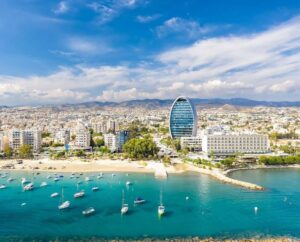
Cyprus’s real estate market continued to grow rapidly in the summer of 2026: from January through July, 12,047 real estate purchase and sale agreements were filed with the country’s land registries, a 14% increase compared to the same period last year.
In July, approximately 2,040 contracts were registered, which is about 11% higher than the figure for July 2025. Thus, July became one of the busiest months for the Cypriot real estate market this year. The data is based on statistics from the Department of Land and Geodesy of the Republic of Cyprus.
Demand from foreign buyers continues to play a significant role in the market’s growth.
In July, Cypriot citizens concluded 1,211 transactions, which is 12% more than a year earlier. They accounted for about 59% of the market. Another 829 contracts, or approximately 41%, were concluded by foreign buyers.
Of these, buyers from European Union countries concluded 277 contracts, compared to 274 in July of last year—an increase of just 1%.
Demand from citizens of non-EU countries grew much faster. They concluded 552 transactions, compared to 478 a year earlier—a 15% increase. Thus, more than two-thirds of all July purchases by foreigners were made by citizens of third countries.
In the first seven months of 2026, sales to buyers from countries outside the EU increased by 19% year-over-year, with growth recorded in all five administrative districts under the control of the Republic of Cyprus.
Limassol, Paphos, and Larnaca attract the most foreigners
The geographic distribution of demand among local and foreign buyers differs significantly. Among Cypriots, sales in Limassol grew particularly rapidly—in July, they increased by 39%, to 445 transactions. In Paphos, growth stood at 29%, while domestic demand declined in Larnaca and Famagusta.
Foreign demand is particularly noticeable in coastal areas. In July, non-EU citizens signed 150 contracts in Larnaca, a 42% increase from the previous year. Paphos traditionally remains one of the island’s most foreigner-oriented markets, while Limassol is the largest market for high-end real estate and corporate relocation.
From January through July, foreigners from the EU and third countries together accounted for approximately 41% of all real estate sales in Cyprus.
The Land Registry’s preliminary statistics do not break down the nationalities of foreign buyers by country. However, the Cypriot Ministry of the Interior has previously provided more detailed data on nationalities to Parliament.
According to government statistics for the period from September 2024 to September 2025, the composition of foreign buyers varies significantly by region.
In Limassol, Russian citizens led the way among foreign buyers with 846 purchases, followed by Israelis with 571 and Greek citizens with 261.
In Paphos, British citizens constituted the largest group—890 purchases—followed by Israelis—683—and Russians—327.
In Larnaca, Israeli citizens were particularly active buyers—850 properties—followed by Lebanese—723—and British—302.
In Nicosia, Greek citizens led the way with 403 purchases, followed by Romanian citizens with 112, Russian citizens with 80, and Lebanese citizens with 79. The Ministry of the Interior submitted this data to the Cypriot Parliament, and it was subsequently published by the Cyprus Mail.
Ukrainian citizens are also among the active buyers of Cypriot real estate, although they do not yet rank among the top three groups.
The most detailed breakdown by country, provided by the Cypriot Ministry of the Interior to Parliament in January 2025, covered transactions from 2021 through early 2025.
According to these data, Ukrainians were among the top ten most common nationalities of buyers in four coastal districts—Limassol, Paphos, Larnaca, and Famagusta. In Limassol and Paphos, they were preceded by Russians, British, Israelis, Greeks, Romanians, and Chinese.
As for Nicosia, there is separate data on applications by foreign citizens to purchase real estate in 2024. Ukrainians accounted for 4% of these applications, the same percentage as British citizens. Chinese and Lebanese nationals each accounted for 16%, Russians for 14%, Israelis for 10%, Syrians for 6%, and Egyptians for 5%.
However, it is currently impossible to accurately calculate the number of purchases made specifically by Ukrainians between January and July 2026: the DLS’s monthly public statistics group Ukraine together with all other countries outside the EU.

President of Ukraine Volodymyr Zelensky is in favor of deferring admission of foreigners to land purchase when launching the land market.
“For a while, we should sell land only to Ukrainians. Only to them,” he said during a press marathon in Kyiv on Thursday.
This period may last several years, the president specified.



