

International Atomic Energy Agency (IAEA) Director General Rafael Grossi is planning a third visit to the Russian-occupied Zaporizhzhia NPP in the near future after the full-scale invasion.
“With the establishment of the five principles and my intention to report any violations, it is important that I go to the plant again to assess developments since my last visit in late March,” said Grossi, quoted in a statement on the IAEA website Friday evening.
He expressed concern about several developments at ZNPP. First of all, this is the absence of reserve power lines to supply the plant for its own needs, although there were four of them before the war.
At the same time, the head of the IAEA noted that ZNPP had been relying on the only functioning 750 kV power line for three months already, after its failure, as it happened last time on May 22, the largest nuclear power plant in Europe was forced to switch to emergency diesel generators.
He added that Ukraine cannot repair the 330 kV transmission line located in its controlled territory that was damaged on March 1 because of military operations, and the Russian Federation also has not repaired the open 330 kV switchyard at the Russian-controlled Zaporizhzhya TPP adjacent to ZNPP in order to restore the other three 330 kV lines.
“The IAEA team of experts who are at ZNPP have not yet been granted access to ZNPP to assess the situation, despite Rosatom’s assurance that they would be able to go there. Consultations are continuing to ensure access. Our experts need to see with their own eyes what the current situation looks like and whether it is possible to restore the backup power supply there,” stressed Grossi.
According to Grossi, the tense situation at the ZNPP is underscored in particular by the mine explosions near its site, which were reported by the IAEA team last week, as well as the May 17 disruption of automatic data transmission from eight radiation monitoring stations located near the plant.
He explained that Ukraine provides data to the IAEA’s International Radiation Monitoring Information System (IRMIS), which collects near real-time radiation monitoring data from more than 6,000 stations worldwide. In the absence of automatic communication, daily radiation monitoring data from eight stations are provided to the IAEA team at ZNPP and subsequently made public on IRMIS.
According to Grossi, he told the Ukrainian authorities that the IAEA was dealing with the issue with the plant management and the relevant officials.
He also noted that the planned rotation of the current IAEA expert team – the eighth since the mission was established last September – had been postponed due to local weather conditions. At the same time, new teams of IAEA experts arrived at all Ukrainian-controlled nuclear power plants, including the Chernobyl plant.
In general, describing the situation at Ukrainian nuclear power plants, the Head of the IAEA pointed out that the reactor of the Pivdenno-Ukrainian Nuclear Power Plant, which was stopped on May 22, had returned to its full capacity. In addition, he noted that the transportation of spent nuclear fuel to the centralized storage facility in the Chernobyl zone had been resumed. At the same time, he noted that on May 29, an unmanned aerial vehicle was detected near the Khmelnytskyi nuclear power plant.
Grosi also confirmed that within the framework of the comprehensive medical assistance program implemented by the agency, including psychological support, the IAEA experts would deliver necessary medical equipment to several nuclear power plants.
In addition, he said, the IAEA has arranged two more deliveries of equipment for nuclear power plants in recent days, this time of satellite communication systems, antennas and spectrometers, made possible by contributions from Britain and the United States.
“With 18 deliveries since the beginning of military operations, the IAEA has facilitated a package of international assistance to Ukraine totaling EUR5 million in support of nuclear safety,” Grossi concluded.
As reported, at the end of May the head of the IAEA proposed 5 safety principles for the Zaporizhzhia NPP
First, the ZNPP should not be used as a storage facility or a base for storing heavy weapons (i.e., MLRS, artillery systems and ammunition, tanks) or military personnel that could be used for an attack from the plant.
Second, there should be no attacks from or against the plant, in particular on reactors, spent fuel storage facilities, other critical infrastructure or personnel.
The third principle is to eliminate the risk of loss of external power supply, for which it must be made available and safe.
Fourth – all structures, systems, and elements necessary for safe and reliable operation of ZNPP must be protected against encroachments or acts of sabotage.
As a fifth principle, he pointed out that no actions should be taken that undermine the above principles.
He said he formed this set as a result of intensive consultations with Ukrainian leadership as well as Russia.
On June 2, the Ukrainian State Nuclear Regulatory Inspectorate (SNRIU) reported that Russian hijackers had blocked the transmission of information from the Automated Radiation Situation Monitoring System (ARMS) of the Zaporizhzhia NPP that they occupied.

International Atomic Energy Agency (IAEA) Director General Raphael Grossi will visit the Zaporizhzhya nuclear power plant in Ukraine next week to personally assess the seriousness of the nuclear safety situation at the site and to stress the urgency of protecting it during the ongoing military conflict in the country.
“This will be the second time Director General Grossi has crossed the front lines to reach Europe’s largest nuclear power plant, and the first since he established a permanent presence of IAEA experts at the site in southern Ukraine last September 1,” the IAEA press office said in a statement.
Grossi stressed that he was determined to do everything possible to help reduce the risk of a nuclear accident.
“Despite the fact that we have been at the site for seven months now, the situation at the Zaporizhzhia NPP is still unstable. The threats to nuclear safety and security are all too clear, as is the need to act now to prevent an accident with potential radiological consequences for the health and environment of people in Ukraine and beyond. So I am continuing to work on a proposal to protect the plant,” he said.
Grossi said his trip to Ukraine is also aimed at ensuring that regular rotations of IAEA experts to and from the site are maintained and improved after the very difficult circumstances faced by the experts during the previous rotation in February, which was delayed by almost a month. He will be accompanied by a new group of IAEA experts, which will be the seventh to be present at the site since the IAEA Support and Assistance Mission to Zaporozhye was established.
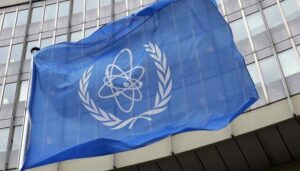
Energy Minister Herman Halushchenko called on his European colleagues to support Ukraine’s candidacy for the Board of Governors of the International Atomic Energy Agency (IAEA).
The Energy Ministry reported in its Telegram channel on Monday that Galushchenko made such a proposal during an informal meeting of EU energy and transport ministers in Stockholm on February 27.
“The Energy Minister said that Ukraine is putting forward its candidacy for the IAEA Board of Governors for 2023-2025 and urged the meeting participants to join the discussion of this issue and support the Ukrainian application,” the ministry said.
The head of the Energy Ministry during the meeting thanked the EU representatives for the 10th package of sanctions against Russia and stressed the need to not only maintain the pressure on the aggressor, but also to extend it to all areas of the Russian energy sector, in particular the nuclear industry, the ministry said.
According to Galushchenko, the time has come to implement sanctions against Rosatom.
“It is time to go further and impose sanctions against Rosatom, which covers up the Russian regime’s nuclear terrorism and sponsors the Russian army. We welcome the decision by Finland, Bulgaria and the Czech Republic to refuse to cooperate with Russia in the nuclear industry and call on other partners to take this step,” the minister said.
According to the IAEA, the Board of Governors is one of the agency’s two governing bodies along with the annual general conference of the IAEA member states.
The Council reviews the IAEA’s financial statements, program and budget and makes recommendations on them to the general conference. It reviews applications for membership in the agency, approves safeguards agreements, and publishes the IAEA’s safety standards. It also appoints the Agency’s Director General, who is approved by the General Conference.
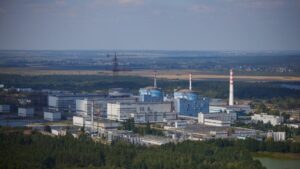
An IAEA permanent monitoring mission began its work at the Khmelnitsky NPP on January 23, the State Nuclear Regulatory Inspectorate of Ukraine (SNRIU) said on its website Tuesday.
“Last week, the same International Atomic Energy Agency missions were launched at the operating Pivdenno-Ukrainian and Rivne nuclear power plants, as well as at the Chernobyl nuclear power plant, which is in the decommissioning phase,” the inspection noted.
IAEA specialists have been working permanently at the Zaporizhzhya NPP, which is under occupation by Russian invaders, since September 2022.
The SNRIU informed that the KNPP hosted a working meeting with the participation of representatives of the IAEA, the acting head of the State Nuclear Regulatory Committee of Ukraine, Oleg Korikov, the chief state inspector for nuclear and radiation safety of Ukraine, as well as the KNPP Director General Andriy Koziura. The parties stated that the main goal of the mission was to maintain nuclear and radiation safety at Ukrainian nuclear facilities under the conditions of the war unleashed by Russia.
At the same time, Gosatomregulirovanie head Oleg Korikov once again noted the importance of documenting all the impacts on nuclear and radiation safety resulting from the Russian aggression, the SNRIU added.
As reported, the IAEA deployed its permanent monitoring missions at all Ukrainian nuclear power plants in response to an official request from the Ukrainian government.

After opening a permanent mission of the International Atomic Energy Agency at the Pivdenno-Ukrainian NPP, such missions began their work at the Rivne NPP and in the Chernobyl NPP zone, said Rafael Grossi, director general of the agency.
“IAEA continues to expand its presence in Ukraine. Today I launched the IAEA Support and Assistance Mission in Chernobyl,” Grossi said on Twitter Wednesday.
He noted that agency specialists will remain at all Ukrainian nuclear power plants to provide vital nuclear safety assistance “during these difficult and challenging times.”
Earlier, the IAEA Director General announced the opening of a mission to the Rivne NPP.
For its part, the RNPP noted on Facebook on Wednesday that two IAEA nuclear safety and security experts remain at the RNPP site for a permanent mission.
“Their purpose will be to continuously monitor and control the nuclear and radiation safety of the power plant. The mission members will report on any threats that may be posed by military activities and will also keep in touch with the agency about the needs of the plant,” the report explains.
RAES Director General Pavel Kovtonyuk said he hopes IAEA’s permanent missions to nuclear power plant sites will not allow the aggressor country to disrupt the safety and physical protection of the power plants.
“The experts will also see the work of our personnel and equipment during probable attacks on the energy infrastructure. Our close liaison with the IAEA will emphasize the importance of security issues for nuclear power plants by international institutions and the UN,” Kovtonyuk commented, as quoted in the RAES report.
According to the head of Gosatomregulirovanie Oleg Korikov, cited in a report of RAEC, it is necessary to work out mechanisms of complete cessation of cooperation with Russia in the use of nuclear energy and mechanisms to limit the rights of Russia at the IAEA.
The RAEC specified that up to 12 experts of the agency would work at all Ukrainian nuclear power plants, which should become an important step in the work to assist Ukraine in the conditions of Russian aggression.
As it was reported, on 16 January, the IAEA mission started its work at the Pivdenno-Ukrainian nuclear power plant, and since September, the agency’s permanent mission has been working at the Russian-occupied Zaporizhzhia nuclear power plant. The decision to open an IAEA mission at the Khmelnitsky nuclear power plant was also announced.
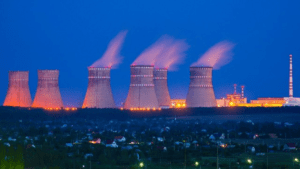
A mission of the international atomic energy agency has opened its presence at the Pivdenno-Ukrainian nuclear power plant, an Interfax-Ukraine correspondent reports.
The flag of the IAEA, in the presence of its head Rafael Grossi, was hoisted on the territory of the plant on Monday.
Grossi said the mission was badly needed because of the military situation in Ukraine.
“I am happy to be here. After Zaporizhzhia NPP, we are expanding our presence to other nuclear power plants in Ukraine. Today is the first step, and we will continue to work in this direction,” Grossi said after the flag-raising ceremony.
For his part, Energy Minister Herman Galushchenko welcomed the start of the IAEA mission, saying that it was important because of Russia’s aggression against Ukraine and the threats that the aggressor poses by terrorizing Ukrainians even on New Year’s Eve.
As reported, the IAEA announced the deployment of its permanent missions to three nuclear power plants in Ukrainian-controlled territory – in addition to the PAEC, the Khmelnytsky and Rivne nuclear power plants, and the Chernobyl nuclear power plant area. The IAEA permanent mission has been working for several months at the Russian-occupied Zaporizhzhia NPP, the largest in Europe.



