

Despite the fact that the Register of Seized Assets contains tens of thousands of items, the number of assets with real economic potential accounts for only a small portion of the portfolio, said Pavlo Velykorechanyn, an expert on the Verkhovna Rada’s Anti-Corruption Committee and former deputy head of ARMA, in an exclusive interview with the Interfax-Ukraine news agency.
According to him, a significant portion of the property exists only on paper in the registry or is in such a condition that commercial management of it is impractical.
Among such assets, Velykorechanyn cited ruined farms, old, unusable vehicles, illiquid basement spaces, property lacking the necessary documentation, as well as assets destroyed after the start of the full-scale war.
Agricultural assets that have effectively ceased to exist for a long time—such as records of unharvested crops from previous years—constitute a separate category.
In Velykorechanyn’s view, ARMA must conduct a comprehensive identification of the portfolio and separate out the business assets that are truly economically attractive.
It is advisable to promptly sell illiquid or rapidly depreciating property through auctions rather than keeping it on the registry for years.
He also proposed reviewing court decisions regarding assets for which a manager has not been appointed within several months. Otherwise, the state continues to finance the storage and security of property that is gradually losing value.
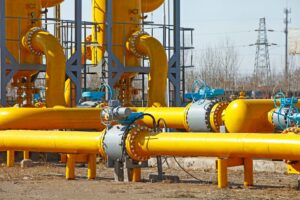
According to Interfax-Ukraine, the relative level of gas reserves in European storage facilities has reached its lowest value on this date in recorded history.
Previously, the all-time low for storage levels at this time of year was recorded in 2021 (the pandemic impacted the industry’s capacity). However, since the start of the injection season, the 2026 trend has steadily been closing the gap with the previous record low.
The average level of gas reserves in Europe’s underground storage facilities reached 57.11% at the end of the gas day on August 1, according to data from Gas Infrastructure Europe (GIE), the association of European gas infrastructure operators. The reserve level on the same date in 2021 was slightly higher—57.28%. A day earlier, the figures were different: as of July 31, 2026, the level stood at 56.88% (higher), while as of July 31, 2021, it was 56.83% (lower).
Natural gas storage levels in Europe are a key indicator for the global gas market. The total capacity of the EU’s storage system is 109 billion cubic meters of active gas. Collectively, Europe has become the largest importer in the global LNG market. Gas Infrastructure Europe brings together operators active in the transportation and storage of natural gas, as well as LNG. The statistical database covers the operation of underground natural gas storage infrastructure since 2011, and the receipt and regasification of LNG since 2012. Gas days in the European gas industry are counted starting at 6:00 a.m. Central European Time (CET).
Renewable sources are expected to contribute to the EU’s energy balance. Since the beginning of August 2026, wind power in Europe has been meeting an average of 10% of electricity demand, according to the WindEurope association. A year ago, in August 2025, the contribution of wind power plants stood at 14%.
Europe is also actively importing liquefied natural gas (LNG). However, in August 2026, gas imports from abroad are down 7% compared to last year’s level. LNG imports in August 2026 may drop to 6.9 million metric tons.
The spot price for “next-day” delivery at the benchmark European TTF hub closed at $696 per 1,000 cubic meters on Friday, up from an average of $626 in July.

President of Ukraine Volodymyr Zelensky has signed the law “On Amendments to the Forest Code of Ukraine regarding the National Forest Inventory” No. 643-IX, which the Verkhovna Rada adopted on June 2, 2020.
“The law provides for the creation in Ukraine of a new system of collecting reasonable data on the forest fund for the purpose of further planning, forestry, the state forest cadastre, forest monitoring and the like,” the head of state’s website reported on Tuesday.
The document introduces the concept of a national forest inventory, defines its purpose and sources of financing.
The procedure for conducting a national forest inventory is approved by the Cabinet of Ministers of Ukraine, it will be carried out at the expense of the state budget or other sources not prohibited by law.
According to the law, persons authorized to conduct a national forest inventory during examinations have the right to be on land plots of the forest fund of Ukraine, except as otherwise provided by law.
Information obtained from the results of the national forest inventory is entered into the state land cadastre.
The law comes into force on the day after its publication.
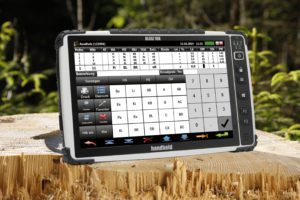
Latschbacher Group, together with Austrian partners, offers ground-based laser scanning technology for forest inventory in Ukraine, as well as studies based on simulation of forest growth, Volodymyr Molochko, a specialist in accounting harvested forest and solutions for tracking forest supply chains at Timber & Equipment GmbH from Latschbacher Group, has reported.
“We prepared calculations of the project. We’ve performed various calculations that will help soberly evaluate different ways of conducting an inventory. According to our estimates, the cost of implementing the national forest inventory in Ukraine using modern methods with laser technology will be about EUR 10 million,” he said in an interview with the Interfax-Ukraine agency.
Gunther Bronner, a specialist in accounting technologies for growing forests at Umweltdata GmbH, explained that traditionally the national forest inventory is carried out using standard methods based on laying sampling points and creating special teams.
According to data from Austrian experts, Ukraine plans to carry out the national forest inventory using standard methods, which will take five years and substantially more funds. In particular, they noted it is necessary to lay more than 16,000 sample points across the entire forest area in Ukraine, process 400 points a month, which will require at least nine teams of two people each.
“If to look at the costs spent on conducting the national forest inventory, the time and effort spent on it, and compare the benefits actually gained from this with the capabilities of laser scanning from an airplane, there will be no other alternative but to get into a deep depression,” Molochko believes.
According to Bronner, several countries, in particular Austria and Ireland, use an alternative method of laser scanning, and the experience of Austria with mixed forests and mountainous terrain similar to those in Ukraine would be very useful for Ukraine. He added that new laser technologies allow to significantly expand knowledge about the growing forest, the boundaries of forest areas, the topography, species and assortment composition, get a comprehensive model of crown heights, as well as identify forest areas infected by the beetle and plan its harvesting, build forest roads and get the maximum economic effect.
“A thorough mapping of forest resources will open the way to a quality forest management system. We estimate losses from inefficient forest management in Ukraine at tens of millions of euros per year, and these are optimistic figures,” Molochko said.
He specified that the forest area in Ukraine is approximately 10.4 million hectares, which is comparable to Poland, where the forest area is about 9.2 million hectares or Germany, which has 10.7 million hectares of forests. However, legal timber harvesting in Ukraine is about 20 million cubic meters per year, while in Poland and Germany the figure is about 40 million cubic meters and 64 million cubic meters respectively.



