
According to Interfax-Ukraine, Ukrainian Prime Minister Serhiy Koretskyi held his first meeting with the Supervisory Board of NAEK “Energoatom,” emphasized the need to overhaul the company’s management as soon as possible, and promised all necessary support.
“I held my first meeting with the Supervisory Board of Energoatom. The government expects the Supervisory Board to carry out a thorough overhaul of the company’s management. This is a top priority. The government will provide all necessary support,” he wrote on his Telegram channel following Wednesday’s meeting.
The prime minister emphasized that “the new top management must be formed as soon as possible following a transparent competition.”
According to him, he also discussed the state-owned company’s financial condition and preparations for the fall-winter period with members of the Supervisory Board.
“Such meetings will take place regularly,” he said.
As previously reported, according to a forecast by First Deputy Prime Minister for Energy Denis Shmyhal, NAEK “Energoatom” will have a new chairman of the board and a new executive body no later than October, based on the results of a competition for which the deadline for submitting applications was July 31, 2026.
As for NJSC “Naftogaz of Ukraine,” for which President Volodymyr Zelenskyy has proposed appointing former Ukrainian Prime Minister Yulia Svyrydenko as chair, Oleksandr Vizir, coordinator of the “Energy and Climate” sector at the Ukraine Facility Platform and corporate governance expert Oleksandr Vizir noted in a comment to “EnergoReform” a week ago that negotiations are most likely still ongoing with the independent members of the company’s Supervisory Board (SB), which has the authority to appoint the chairman of the board or the person acting in that capacity.
For her part, Olga Babiy, a former member of the National Commission for State Regulation of Energy and Public Utilities (NKREKU), noted in a comment to “EnergoReform” that Yulia Svyrydenko is “the ideal solution for Naftogaz” and does not know why she has not yet been appointed.
During Question Time for the government in the Verkhovna Rada on August 21, Prime Minister Koretskyi noted that he considers it ideal if another person were appointed as the new chair of the board of NJSC “Naftogaz of Ukraine” after the 2026/27 fall-winter period (FWP).
COMPETITION, ENERGOATOM, ENERGY SECTOR, GOVERNMENT, MANAGEMENT
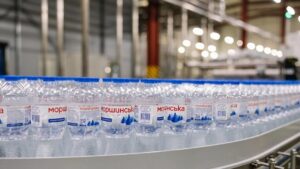
The National Agency for Asset Tracing and Management (ARMA) received five bids by the deadline for the competition to select a manager for IDS Ukraine—the producer of “Morshynska” and “Mirgorodska,” which is linked to Russian oligarch Mikhail Fridman.
“The competitive selection process has reached its final stage. Next up is the evaluation of the submitted proposals and the selection of the most professional and capable administrator,” the agency reported on Facebook on Saturday.
IDS Ukraine’s assets were transferred to ARMA’s management pursuant to a court ruling. This involves an integrated production complex with a full cycle of operations: from mineral water extraction to production and distribution of products, including abroad. In late 2024, the Ministry of Justice filed a petition with the High Anti-Corruption Court (VAKS) to transfer the corporate rights of all seven companies in the group to the state, but the case is still pending in court.
In March 2023, an administrator—LLC “Carpathian Mineral Waters”—was selected for two companies in the group—PJSC “Morshyn Mineral Water Plant ‘Oscar’” and PJSC “IDS” (IDS Ukraine)— but the agreement was not approved by the Antimonopoly Committee, and in 2025 it was terminated as unfulfilled.
In the fall of 2025, then-Prime Minister Yulia Svyrydenko announced that ARMA had launched a procedure to transfer the entire IDS asset complex to management through a public auction. On June 22, 2026, it was reported that ARMA would make another attempt to select a manager.
IDS Ukraine opposes holding the tender. Among its arguments is that more than 50% of the company’s shares are owned by verified international investors: the Patarkatsishvili family (34.83%), the Georgian government (7.73%), and minority shareholders (7.45%). It was also noted that ARMA does not have the proper authority to hold the competition and has not identified the assets as required by law.
In addition, IDS Ukraine stated that all shareholders—not just sanctioned individuals with Russian citizenship—have been completely removed from management and do not have access to the company’s revenues.
Revenues to Ukraine’s state budget from assets under ARMA’s management in January–July 2026 amounted to only 210 million UAH, compared to 1.3 billion UAH for the same period in 2025, said Pavlo Velykorechanyn, an expert with the Verkhovna Rada’s Anti-Corruption Committee and former deputy head of ARMA, in an exclusive interview with the “Interfax-Ukraine” news agency.
Thus, revenue has fallen by more than six times.
For comparison, according to Velykorechanyn, 7.5 billion hryvnias were transferred to the state budget in 2023, in part due to major cases involving special confiscation.
He noted that the current 210 million hryvnias is largely the result of managing assets transferred to ARMA back in 2024–2025. A significant portion of the revenue is linked to payments from Naftogaz.
According to Velykorechanyn’s assessment, there are currently virtually no new economically attractive assets in the agency’s portfolio. Furthermore, regarding certain properties, the results of tenders to select managers are being annulled, after which courts rule such decisions unlawful, forcing the state to fund property appraisals again.
He identified the length of the procedure for transferring assets to management as a separate problem. While the property remains without a manager, the state is forced to bear the costs of its security and maintenance, while the asset may physically deteriorate or lose value.

Despite the fact that the Register of Seized Assets contains tens of thousands of items, the number of assets with real economic potential accounts for only a small portion of the portfolio, said Pavlo Velykorechanyn, an expert on the Verkhovna Rada’s Anti-Corruption Committee and former deputy head of ARMA, in an exclusive interview with the Interfax-Ukraine news agency.
According to him, a significant portion of the property exists only on paper in the registry or is in such a condition that commercial management of it is impractical.
Among such assets, Velykorechanyn cited ruined farms, old, unusable vehicles, illiquid basement spaces, property lacking the necessary documentation, as well as assets destroyed after the start of the full-scale war.
Agricultural assets that have effectively ceased to exist for a long time—such as records of unharvested crops from previous years—constitute a separate category.
In Velykorechanyn’s view, ARMA must conduct a comprehensive identification of the portfolio and separate out the business assets that are truly economically attractive.
It is advisable to promptly sell illiquid or rapidly depreciating property through auctions rather than keeping it on the registry for years.
He also proposed reviewing court decisions regarding assets for which a manager has not been appointed within several months. Otherwise, the state continues to finance the storage and security of property that is gradually losing value.
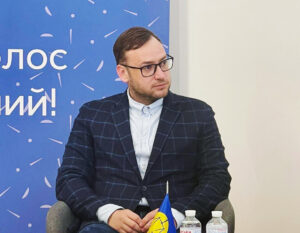
Holding a new competition to select an asset manager for IDS Ukraine, the producer of the “Morshynska” and “Mirgorodska” mineral waters, before the High Anti-Corruption Court issues a ruling may have limited prospects, said Pavlo Velykorechanyn, an expert with the Verkhovna Rada’s Anti-Corruption Committee and former deputy head of ARMA, in an exclusive interview with the “Interfax-Ukraine” news agency.
ARMA previously announced another tender to select an asset manager for IDS Ukraine and expects to hold it in September.
However, according to Velykorechanyn, there are legal obstacles that could significantly dampen the interest of potential participants.
In particular, certain court rulings lack a clear prohibition on current operators from using the companies’ assets. This could complicate the actual transfer of control to the new manager.
In addition, according to the company’s own data, the share of individuals subject to sanctions in IDS Ukraine is 49.7%, i.e., less than 100%. Under the new legislation, in such a situation, management requires either the consent of the other co-owners or a decision to forfeit the relevant share to the state budget.
The High Anti-Corruption Court (HACC) is currently considering a case regarding the forfeiture of the asset to the state; a decision is expected in the fall.
“Until the HACC issues a decision to forfeit this stake to the state and it is transferred to the State Property Fund, the prospects for ARMA conducting any tenders regarding IDS are highly uncertain,” Velikorechanyn noted.
Previously, several attempts were made to transfer IDS Ukraine’s assets into management. In particular, an agreement was signed with the company “Karpatska Dzherelna,” but the procedure for approving the concentration with the Antimonopoly Committee lasted about a year and a half and was not completed, after which the agreement was terminated.
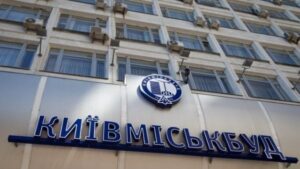
PJSC HC Kyivmiskbud received additional capitalization in the amount of UAH 2.56 billion and renewed its management team, according to the company’s press service.
As noted in the release, thanks to the support of the Kyiv City Council, the Kyiv City State Administration, and the mayor of Kyiv, PJSC HC Kyivmiskbud received additional capitalization in the amount of UAH 2.56 billion and is moving on to the next stage of its anti-crisis plan. In particular, the supervisory board has been strengthened, with Petro Panteleev, acting first deputy head of the Kyiv City State Administration, appointed as its new chairman.
The supervisory board also decided to change the company’s management board. Valery Zasutsky, a professional builder and member of the National Association of Builders of Ukraine, has been appointed as the new chairman of the management board.
“These steps are necessary for the further implementation of the company’s anti-crisis plan in 2026, in particular, to stabilize the company’s financial condition; establish more transparent communication and productive cooperation with investors; and gradually resume construction on the company’s facilities.
Communication with the government has also been strengthened to resolve the issue of compensating Kyivmiskbud PJSC with UAH 2.28 billion for the Ukrbud facilities transferred to the company,” the release said.



