
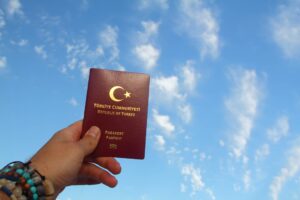
Turkish authorities have begun the process of revoking the citizenship of 687 foreigners who, according to investigators, obtained Turkish passports through fictitious real estate transactions and forged property appraisal reports. The original source of this information was a statement by Turkish Justice Minister Akin Gürlek, published on August 4, 2026. The operation was coordinated by the Organized Crime Investigation Bureau of the Istanbul Chief Prosecutor’s Office. Investigative actions took place simultaneously in 16 provinces across the country.
According to the investigation, participants in the scheme purchased relatively inexpensive real estate and then, using forged expert reports, artificially inflated its value to the minimum threshold required to obtain Turkish citizenship. The transactions were accompanied by fictitious bank transfers designed to create the appearance of investment inflows.
As a result, Turkish authorities estimate that the country was deprived of approximately 2.5 billion Turkish lira—or roughly $52 million—that was supposed to have been invested by foreign applicants.
As part of the investigation, arrest warrants were issued for 90 people, and 72 suspects have already been detained. The government has placed seven companies that may have been linked to the scheme under its control. Additionally, 1,045 properties, a hotel in Bodrum, 15 vehicles, a yacht, and funds in ten bank accounts have been seized.
It is important to note that this does not yet involve the automatic and immediate revocation of passports, but rather the initiation of legal proceedings. Citizenship will be revoked once it is confirmed that a specific applicant obtained it based on fraudulent documents or a transaction that did not meet legal requirements.
Turkey’s investment citizenship program has been in effect since 2017. Currently, a foreigner can apply for a Turkish passport by purchasing real estate worth at least $400,000. The property cannot be sold for three years, its value must be verified by an authorized appraisal company, and payment must be made through the banking system. Alternative options include an investment or a bank deposit of at least $500,000.
The Ministry of Justice, the Istanbul Prosecutor’s Office, and the Turkish media have not yet disclosed the nationalities of the 687 individuals initially implicated. However, data on previous participants in the investment program and foreign buyers of Turkish real estate allow us to identify groups that potentially used such services more frequently.
Between 2018 and 2021, approximately 19,600 foreigners obtained Turkish citizenship through the investment program. Iran, Iraq, Afghanistan, and Russia were cited as the main countries of origin for applicants, and since 2022, Ukrainian and Russian citizens have significantly increased their purchases of Turkish real estate and have become the most prominent groups of applicants for investment-based citizenship.
According to official statistics from the Turkish Statistical Institute (TÜİK), in 2025, Russians purchased 3,649 residential properties in Turkey, Iranian citizens purchased 1,878, and Ukrainian citizens purchased 1,541. These three countries ranked first among foreign buyers of Turkish housing. This trend continued in 2026. In June, Russian citizens purchased 381 residential properties, while Ukrainians and Iranians each purchased 170 properties.
Based on this data, it is most likely that among the 687 investors under investigation are citizens of Russia, Iran, and Ukraine, who are simultaneously among the largest real estate buyers and the most active participants in the investment citizenship program. The list of those under investigation may also include individuals from Iraq and Afghanistan who participated in the program in previous years.
Additional risks may arise for the spouses and children of investors if they obtained citizenship as family members of the primary applicant. Turkish authorities have not yet clarified whether such relatives are included in the announced total of 687 people or whether their status will be reviewed automatically or through separate procedures. The investigation will likely lead to stricter scrutiny of appraisal companies, bank transfers, intermediaries, and the sources of funds. For new applicants, this may mean longer processing times and additional requirements, but it does not indicate that the investment citizenship program itself is being shut down.
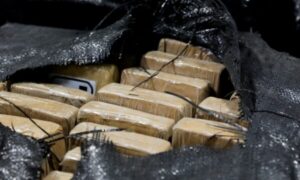
According to Serbian Economist, organized crime groups from the Western Balkans have ties in Venezuela and are involved in investigations related to cocaine smuggling, Radio Free Europe (RFE) reports.
According to RSE, networks from the Balkans are considered by international organizations, including Europol and Interpol, to be key players in the supply of cocaine from Latin America to Europe, with Venezuela seen as one of the links in this logistics chain.
Sasha Djordjevic, an expert at the Global Initiative against Transnational Organized Crime (GI-TOC), told RSE that Venezuela is important for cocaine flows as a “strategic outlet” to the Atlantic, although it is not the only and main point of support in the region for Balkan groups.
RSE notes that interest in Venezuela’s role in drug trafficking has intensified following the early January arrest of Venezuelan leader Nicolas Maduro, who has been charged in the US and pleaded not guilty in a New York court on January 5.
As one example, RSE cites the case of the detention of the Aressa off the coast of Aruba in February 2020, when, according to the publication, about five tons of cocaine were seized and 11 Montenegrin crew members were detained. In March 2021, an Aruban court sentenced them to prison terms ranging from nine to 15 years. In addition, according to RSE, Europol linked Serbian citizen Miroslav Starčević, who was detained in May 2023 along with other suspects, to this case, and the proceedings in Serbia are currently under judicial review, according to the publication.
RSE also notes that Europol reported no direct cooperation with Venezuela, so information about the possible involvement of Balkan groups is obtained indirectly – through the law enforcement agencies of the countries in the region, while the Interior Ministries of Serbia and Montenegro, according to RSE, did not respond to requests prior to the publication of the material.

The Interdepartmental Commission on International Trade has extended for five months the antidumping investigation into Ukraine’s import of plywood originating from Belarus, initiated on June 22, 2020.
The decision of the commission of July 13, 2021 to initiate an investigation comes into force from the moment of its publication, it is indicated in the notification published in the Uriadovy Kurier newspaper dated July 23.
“The commission, in accordance with the adopted decision, decided to extend the antidumping investigation into the import of plywood originating from the Republic of Belarus to Ukraine by 18 months,” the notice says.
As reported, the said antidumping investigation, the decision on which entered into force on June 25, 2020, was initiated by Ukraine on the basis of complaints from Ukrainian companies, namely Kostopil Plywood Plant LLC, Ukrhosptovary Private Enterprise, Uniplit LLC, Standard 2002 LLC, Start production cooperative.
According to the applicants, during the observation period up to the third quarter of 2019, the share of plywood imports from Belarus increased in absolute terms by 691%, in terms of consumption – by 559%, and production – by 858%. At the same time, the price of imported plywood was higher than the price of the applicant (except for 2016-2017), which led to a negative trend in its performance in the domestic market.
Ukraine has initiated a special investigation into imports of sodium hypochlorite into Ukraine (according to foreign economic activity code 2828 90 00 00), regardless of the country of origin and export.
According to the report in the Uriadovy Kurier newspaper, the Interdepartmental Commission on International Trade adopted the corresponding decision on May 19, having considered the statement of JSC Dniproazot.
Based on the results of the consideration, the Commission found that the application contained sufficient substantiated evidence, on the basis of which it can be assumed that imports of sodium hypochlorite to Ukraine were carried out in such volumes and on such conditions that could cause significant harm to the national producer.
Within 30 days from the date of publication of this report, the Ministry of Economy registers the interested parties of the special investigation and considers the requirements for holding hearings.
According to the State Statistics Service, imports under a broader code (other hypochlorites) in the first quarter of 2021 amounted to almost 1,500 tonnes for $500,000, including from Italy – 90 tonnes for $160,000 and Russia – 75 tonnes for $120,000.
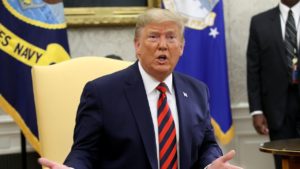
U.S. President Donald Trump said he considers the investigation of the impact of ex-Vice President Joe Biden on the resignation of Prosecutor General of Ukraine Viktor Shokin in 2016 to be his duty.
“As President, I have an ‘obligation’ to look into corruption, and Biden’s actions, on tape, about firing the prosecutor, and his son’s taking millions of dollars, with no knowledge or talent, from a Ukrainian energy company, and more millions taken from China,” he wrote on Twitter commenting on the investigation in the framework of the impeachment proceedings initiated by the Democrats.

The Antimonopoly Committee of Ukraine (AMCU) has started an investigation on the indices of possible anti-competitive coordinated actions when fixing price on the energy coal of state-run mines for the needs of thermal power plants (TPP) and combined heat and power supply plants (CHPP).
“The committee established that within 2017-2018 Energy and Coal Industry Ministry of Ukraine held meetings with state-owned enterprise Derzhvuhlepostach, PJSC Donbasenergo, LLC DTEK Energo, Ukrinterenergo State Foreign Trade Company, PJSC Cherkasy Khimvolokno, LLC TehNova company to reach the agreements over fixing prices for coal products of state-run enterprises for TPPs and CHPs that is confirmed by the protocols of these meetings,” reads by regulator-issued report.
According to the AMCU, these companies are potential competitors in the electricity and steam coal markets, respectively, the support of these companies to increase prices for coal products for TPPs and CHPs to a certain level could lead to distortion of competition.
In this regard, the committee began consideration of the case regarding anti-competitive actions of these companies, violation by the Energy and Coal Industry Ministry of law on the protection of economic competition in the form of inducing business entities to take anti-competitive concerted actions and promotion of such violations.
As reported, in recent years Ukraine’s Energy and Coal Industry Ministry during meetings recommended prices for coal sales of state mines for thermal power plants.



