
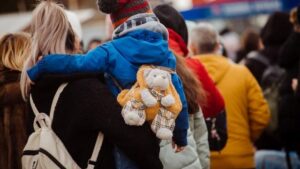
As of June 2026, approximately 3.9 million people in Ukraine remain internally displaced, according to a report by the International Organization for Migration (IOM).
“Although the proportion of internally displaced persons has remained at about 12% of the population since 2023, the report shows that the longer displacement lasts, the more difficult it is for families to meet their basic needs. Nearly seven out of ten internally displaced persons have been away from home for more than two years. This indicates the increasingly protracted nature of displacement in Ukraine,” the report states.
At the same time, people continue to be forced to leave their homes: in January–June of this year alone, approximately 132,000 people were forced to flee.
“Stable displacement figures should not be interpreted as a sign of stable living conditions. Many displaced families are depleting their savings, cutting back on essential expenses—including healthcare—and moving to less suitable housing in an effort to meet their basic needs. Long-term support remains essential to help people regain stability and make informed and voluntary decisions about their future,” said Dejan Keserović, Deputy Head of the IOM Mission in Ukraine.
According to the report, 87% of displaced families were forced to resort to at least one coping strategy to manage their situation. Most commonly, people spent their savings (75%), reduced their use of utilities (59%), and cut back on healthcare expenses (53%). One in five households also reported moving to lower-quality housing, and 17% reported being behind on rent payments.
Safety remains the main criterion in people’s decisions about the future: 82% of internally displaced persons indicated that they would like to return home only after hostilities have ceased. At the same time, an increasing number of people are considering the possibility of integrating into the communities where they currently live: the proportion of those interested in local integration rose from 51% in March to 58% in June 2026. This underscores the need to provide support to displaced families where they are, while also monitoring the risks of premature or unsafe returns.
Approximately 2.15 million people, or 56% of all internally displaced persons in Ukraine, come from territories that were fully or partially occupied at the time of the survey. They are more likely to face protracted displacement, significant hardships, and more limited opportunities for return.
“The report’s findings show why emergency assistance alone is not enough. People need long-term support in the areas of housing, livelihoods, access to healthcare, protection, and other essential services. This will help them make informed and voluntary decisions—whether to integrate where they currently live, move to another location, or safely return home when conditions permit,” IOM emphasized.
The report is based on the latest survey of the Ukrainian population, conducted by IOM from April 23 to June 30, 2026, with support from the Humanitarian Fund for Ukraine, the European Union, and the governments of Canada and Sweden.

Approximately 5.7 million people from Ukraine remain displaced worldwide, 3.8 million are internally displaced, and 4.1 million have returned from displacement either within Ukraine or from abroad, according to the International Organization for Migration (IOM).
“Displacement remains a defining feature of the crisis,” said an IOM spokesperson in a statement on the recent attacks in Ukraine, published on the organization’s website on Tuesday.
IOM also expresses deep concern about the continuing rise in civilian casualties across Ukraine and stresses the urgent need for measures that prioritize the protection of civilians and provide necessary humanitarian assistance.
“The civilian population of Ukraine continues to bear the heavy burden of war as Russian strikes hit towns and villages on the front line and beyond. In July 2025 alone, the Office of the United Nations High Commissioner for Human Rights recorded 286 deaths and 1,388 injuries, the highest monthly figure since May 2022,” the statement said.
The IOM also stresses the urgent need for measures that prioritize the protection of civilians and provide necessary humanitarian assistance.
IOM, UKRAINIANS, WAR



