
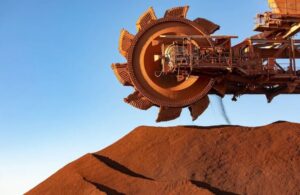
In January–August of this year, Ukraine’s mining companies reduced exports of iron ore raw materials (IORM) by 27.2% in volume terms compared to the same period last year—down to 15,774,950 metric tons from 21,679,221 metric tons.
According to statistics released by the State Customs Service (SCS), 1,865,697 thousand metric tons of iron ore were exported in August, 1,875,428 thousand metric tons in July, 2,021,299 thousand metric tons in June, in May—2,239,167 thousand metric tons of raw materials, in April—2,163,837 thousand metric tons, in March—2,300,467 thousand metric tons, in February – 1,254,516 thousand metric tons, in January – 2,054,539 thousand metric tons.
Over the first eight months of 2026, foreign exchange earnings from mineral ore exports decreased by 26.1% to $1,206,589 million.
In addition, Ukraine imported 235 metric tons of raw materials worth $68,000 in January–August 2026, whereas in January–August 2025, it imported 86,000 metric tons worth $58,000.
As previously reported, Ukraine’s mining companies reduced ore exports in physical terms by 8% in 2025 compared to the previous year—to 30,995,363 metric tons from 33,699,722 metric tons, and foreign exchange earnings decreased by 16.6%—to $2,337,765 million from $2,803,223 million. Exports were primarily destined for China (44.98% of shipments in monetary terms), Slovakia (17.15%), and Poland (16.09%).
In addition, in 2025, Ukraine imported $95,000 worth of raw materials totaling 130 metric tons from the Netherlands (46.32%), Italy (36.84%), and Norway (13.68%), whereas in the previous year it imported 2,042 thousand metric tons worth $414 thousand.
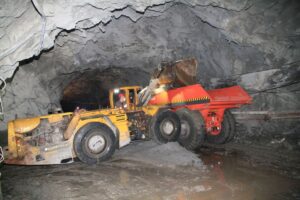
Based on its performance in January–June of this year, the Kryvyi Rih Iron Ore Plant (KZRK) saw its net loss increase by 9.4% compared to the same period last year—to 1 billion 407.383 million UAH.
According to KZRK’s interim report, available to the agency “Interfax-Ukraine,” revenue from ordinary operations during this period fell to 336.132 million UAH from 1 billion 250.939 million UAH.
The uncovered loss as of the end of June 2026 amounted to 876.156 million UAH.
As previously reported, KZRK’s net loss in the first quarter increased 4.4-fold compared to the same period last year—to 378.948 million UAH from 85.925 million UAH. During this period, revenue from ordinary activities decreased to 135.457 million UAH from 705.526 million UAH.
From January through September 2025, KZRK increased its net loss by 3.2 times compared to the same period in 2024—to 1,487.217 million UAH; net income for this period decreased by 41.6%—to 1,601.822 million UAH.
The annual report for 2025 has not yet been published.
KZRK ended 2024 with a net loss of 2 billion 14.015 million UAH, whereas in 2023 it amounted to 63.411 million UAH. Net revenue in 2024 amounted to 3 billion 443.081 million UAH, compared to 5 billion 577.923 million UAH in 2023.
It was previously reported that on May 23, 2025, “Your Energy Supplier” LLC (Kyiv) filed a petition with the Commercial Court of Dnipropetrovsk Oblast to initiate bankruptcy proceedings against KZRK due to outstanding payments for electricity consumed. The Commercial Court of Dnipropetrovsk Oblast ruled to open bankruptcy proceedings against KZRK on June 9 of this year.
KZRK specializes in underground iron ore mining. It comprises four mines: “Pokrovska” (formerly “Zhovtneva”), the “Kryvyi Rih” mine (“Batkivshchyna”), “Kozatska” (formerly “Hvardiyiska”), and “Ternivska” (formerly the Ordzhonikidze Ore Administration, later the Lenin Ore Administration).
According to data from the National Securities and Stock Market Commission for the first quarter of 2026, the main shareholder of KZRK is Starmill Limited (Cyprus), which owns 99.8812% of its shares. Operational control of the combine was exercised by the “Privat” Group prior to the initiation of bankruptcy proceedings.
In May 2023, Ukraine imposed sanctions against dozens of foreign companies linked to Russian individuals that own significant assets in Ukraine, including KZRK. Some of these assets had already been seized, but the sanctions paved the way for their confiscation. The corresponding Presidential Decree No. 279 of May 12 was published on the President’s website. In particular, the list of legal entities includes Starmill Limited, which owns 99.89% of KZRK under the operational control of the Privat Group.
The company’s authorized capital is 1 billion 991.233 million UAH.
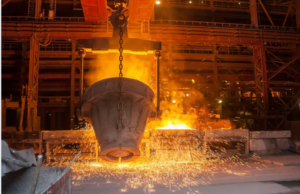
Metinvest Group’s mining companies reduced iron ore pellet production by 17% in January–June 2026 compared to the same period last year, down to 2.717 million metric tons.
The decline was due to a temporary shutdown of one of the sintering machines in the first quarter caused by damage to the power supply system. The equipment resumed operations in April, according to the group’s official operating report published on July 31.
Production of pellets with an iron content of at least 65% decreased by 19% to 2.629 million metric tons. Output of pellets with an iron content of less than 65% more than doubled to 88,000 metric tons.
Total iron ore concentrate production in the first half of the year amounted to 7.763 million metric tons, remaining virtually unchanged from 7.725 million metric tons a year earlier.
The descriptive section of the official PDF erroneously states 7.263 million metric tons. However, the report’s table and the press release page list 7.763 million metric tons. This figure is also confirmed by the combined production volumes for the first and second quarters—3.882 million metric tons each.
Output of marketable iron ore products decreased by 5% to 7.144 million metric tons. At the same time, production of marketable iron ore concentrate increased by 4% to 4.427 million metric tons.
Production of concentrate with an iron content of less than 67% rose by 10% to 4.075 million metric tons, while production of high-quality concentrate with an iron content of at least 67% fell by 34% to 352,000 metric tons.
In the second quarter, production of commercial iron ore products increased by 3% compared to the first quarter, reaching 3.624 million metric tons. Pellet production rose by 10% to 1.422 million metric tons, while production of commercial concentrate decreased by 1% to 2.202 million metric tons.
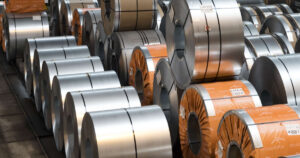
ArcelorMittal, the world’s second-largest steel producer, increased EBITDA by 23% in the second quarter of 2026 compared with the first quarter, to $2.06 billion, the company said in a statement. The figure rose by 11% compared with the same period last year.
Net profit amounted to $683 million, which was 18% higher than in the previous quarter but 62% below the profit recorded in the second quarter of 2025.
Revenue increased by almost 8% quarter-on-quarter and by 5% year-on-year in the second quarter, to $16.8 billion. The main reason for the improvement was a 4.4% increase in the average steel price.
ArcelorMittal’s capital expenditure amounted to $1.1 billion in April-June. Net debt increased to $9.5 billion at the end of June, compared with $9.3 billion as of March 31.
In the second quarter, the company increased steel production by 7.5% compared with the previous three months, to 14.3 million tonnes, versus 14.4 million tonnes a year earlier. Steel shipments amounted to 13.4 million tonnes in the quarter, compared with 12.8 million tonnes in the previous quarter and 13.8 million tonnes a year earlier. Iron ore production amounted to 13.5 million tonnes during the quarter, compared with 9.7 million tonnes in the first quarter and 11.8 million tonnes a year earlier.
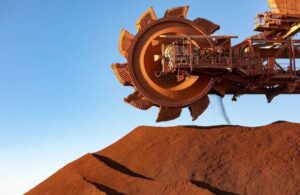
In January–May of this year, Ukraine’s iron ore mining companies reduced iron ore exports by 26.1% in volume terms compared to the same period last year—to 10,125,260 tons from 13,545,967 tons.
According to statistics released by the State Customs Service (SCS) on Friday, 2,239,167 thousand tons of IOR were exported in May, 2,163,837 thousand tons in April, 2,300,467 thousand tons in March, in February – 1,254,516 thousand tons, and in January – 2,054,539 thousand tons.
In the first five months of the year, foreign exchange earnings from mineral ore exports decreased by 28.6% to $766.946 million.
Mineral ore exports were mainly shipped to China (44.10% of shipments in monetary terms), Slovakia (18.09%), and Poland (14.73%).
In addition, Ukraine imported 224 tons of raw materials worth $62,000 from the Netherlands (38.71%), Poland (32.26%), and Italy (29.03%) in January–May 2026, whereas in January–May 2025, it imported 65,000 tons worth $46,000.
As reported, Ukraine’s mining enterprises reduced ore exports in physical terms by 8% in 2025 compared to the previous year—to 30,995,363 tons from 33,699,722 tons, foreign exchange earnings decreased by 16.6%—to $2.337765 billion from $2.803223 billion. Exports were mainly directed to China (44.98% of shipments in monetary terms), Slovakia (17.15%), and Poland (16.09%).
In addition, in 2025, Ukraine imported $95,000 worth of raw materials totaling 130 tons from the Netherlands (46.32%), Italy (36.84%), and Norway (13.68%), whereas in the previous year it imported 2,042 tons worth $414,000.

The Sukha Balka mine (Kryvyi Rih, Dnipropetrovsk Oblast), part of Alexander Yaroslavsky’s DCH Group, has commissioned two new iron ore mining sections, which are scheduled to be developed throughout the spring.
According to information in the DCH Steel corporate newsletter on Thursday, for each production unit, the company’s specialists take into account the specific characteristics of the ore deposit and the mining-geological conditions. After analyzing the data, they apply technological solutions that ensure the most efficient extraction possible.
It is noted that on March 13, at the Yuvileina Mine, block 110-116 in the “Glavny” deposit was put into production on the seventh sub-level of the “minus” 1,420 m horizon. Given the characteristics of the ore body, the classic mining method using scraper winches was employed here. The block’s reserves are estimated at 37,200 tons, with an average iron content of 59.25%. The block’s reserves are expected to last for two months of operation.
In addition, it is reported that at the Frunze Mine, technological processes—from preparation to loading—are carried out using self-propelled machines. On March 19, Block 51-57 was commissioned here, located in the “Druzhba” deposit at a depth of “minus” 1,227 m. The block’s reserves amount to 48,200 tons of high-quality raw material (62.83%), which will be sufficient for three months of stable operation.
“A differentiated approach to technology selection—from the scraper method to the use of self-propelled equipment—allows for flexible operation in various mining conditions and maintains stable raw material quality,” the corporate publication notes.
Since the beginning of 2026, four new production units with a total reserve of 258,900 tons have been put into operation at the Sukha Balka mine. In particular, in March, Block 67-71 was commissioned at the Yuvileina Mine on the seventh sub-level of the “Shurfa” deposit at the “minus” 1,420 m level.
The Sukha Balka Mine is one of the leading enterprises in the mining industry in Ukraine. It extracts iron ore using underground mining methods. The mine complex includes the Yuvileina and Frunze mines.
In May 2017, the DCH Group acquired the mine from the Evraz Group.



