
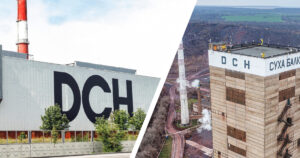
The Sukha Balka mine (Kryvyi Rih, Dnipropetrovsk region), part of Alexander Yaroslavsky’s DCH group, has prepared a new block of the Golovnyi iron ore deposit at the Yuvileina mine with reserves of 126,000 tons.
“Miners at the Yubileinaya mine have prepared a new block 30-34 for extraction, located at a depth of 1,420 meters on the first sublevel of the Golovnoy deposit. The block’s reserves amount to 126,000 tons of high-quality raw materials with an iron content of 58.75%,” the DCH Steel corporate newspaper reported on Thursday.
In addition, it is reported that the Sukha Balka mine and the Dniprovsky Metallurgical Plant (DMZ) paid almost UAH 650 million in taxes and fees to budgets of all levels in 2025. The mine transferred UAH 359.1 million to the consolidated budget. The largest share in the structure of payments was rent for the use of subsoil for the extraction of minerals – UAH 157.3 million. In addition, UAH 78.2 million was paid in single social contribution (SSC), UAH 69.1 million in personal income tax, UAH 20.5 million in land rent, and UAH 19.2 million in military tax, etc.
In 2025, DMZ contributed UAH 290.5 million to the state and local budgets. In particular, it paid UAH 103.5 million in land rent, UAH 68.1 million in SSC, UAH 64.5 million in personal income tax, UAH 30 million in value added tax, and UAH 17.9 million in military tax.
The Sukha Balka mine is one of the leading enterprises in the mining industry in Ukraine. It extracts iron ore using underground methods. The mine includes the Yuvileina and Frunze mines.
The DCH Group acquired the mine from the Evraz Group in May 2017.
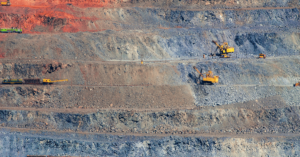
In January-May this year, Ukrainian mining companies reduced exports of iron ore in physical terms by 12.8% year-on-year to 13 million 545,967 thousand tons from 15 million 542,428 thousand tons.
According to the statistics released by the State Customs Service on Friday, during this period, foreign exchange earnings from the export of iron ore decreased by 21.5% to $1 billion 73.888 million from $1 billion 367.161 million.
Exports of iron ore were carried out mainly to China (44.98% of supplies in monetary terms), Slovakia (17.17%) and Poland (16.65%).
In addition, in January-May 2025, Ukraine imported iron ore worth $46 thousand in the amount of 65 tons from the Netherlands (46.67%), Norway (28.89%) and Italy (24.44%), while in the same period last year it imported 303 tons worth $121 thousand.
As reported, in 2024, Ukraine increased exports of iron ore by 89.8% compared to 2023 – up to 33 million 699.722 thousand tons, while foreign exchange earnings increased by 58.7% to UAH 2 billion 803.223 million.
In 2024, Ukraine imported iron ore worth $414 thousand in a total volume of 2,042 thousand tons, while in 2023, 250 tons of this raw material were imported for $135 thousand.
In 2023, Ukraine decreased exports of iron ore in physical terms by 26% compared to 2022 – to 17 million 753.165 thousand tons. Foreign exchange earnings amounted to $1 billion 766.906 million (down 39.3%). The company imported iron ore for $135 thousand, totaling 250 tons.
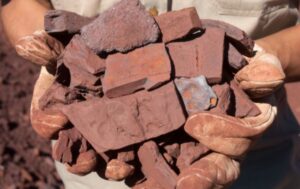
In January-March this year, Ukrainian mining companies reduced exports of iron ore by 5.7% in physical terms compared to the same period last year, to 8 million 492.479 thousand tons.
According to the statistics released by the State Customs Service on Tuesday, foreign exchange earnings from iron ore exports decreased by 20.3% to $687.788 million during this period.
Exports of iron ore were carried out mainly to China (46.46% of supplies in monetary terms), Poland (16.05%) and Slovakia (16.14%).
In January-March 2025, Ukraine imported iron ore worth $24 thousand in the amount of 43 tons from Norway (54.17%) and Italy (45.83%), while in the same period last year it imported 245 tons worth $67 thousand.
As reported, in 2024, Ukraine increased its exports of iron ore by 89.8% compared to 2023 – up to 33 million 699.722 thousand tons, while foreign exchange earnings increased by 58.7% to UAH 2 billion 803.223 million.
In 2024, Ukraine imported iron ore for $414 thousand in a total volume of 2,042 thousand tons, while in 2023, 250 tons of this raw material were imported for $135 thousand.
In 2023, Ukraine decreased exports of iron ore in physical terms by 26% compared to 2022 – to 17 million 753.165 thousand tons, foreign exchange earnings from iron ore exports amounted to $1 billion 766.906 million (down 39.3%). In 2023, Ukraine imported iron ore worth $135 thousand in a total volume of 250 tons.
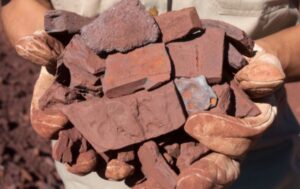
In January-February of this year, Ukrainian mining companies reduced exports of iron ore in physical terms by 1.2% compared to the same period last year, to 5 million 595.706 thousand tons.
According to the statistics released by the State Customs Service on Tuesday, foreign exchange earnings from iron ore exports decreased by 18.7% to $449.388 million during this period.
Exports of iron ore were carried out mainly to China (46.50% of supplies in monetary terms), Poland (17.35%) and Slovakia (14.31%).
In January-February 2025, Ukraine imported iron ore worth $1 thousand in the amount of 5 tons from Italy.
As reported, in 2024, Ukraine increased its exports of iron ore by 89.8% compared to 2023 – up to 33 million 699.722 thousand tons, while foreign exchange earnings increased by 58.7% to UAH 2 billion 803.223 million.
In 2024, Ukraine imported iron ore for $414 thousand in a total volume of 2,042 thousand tons, while in 2023, 250 tons of this raw material were imported for $135 thousand.
In 2023, Ukraine decreased exports of iron ore in physical terms by 26% compared to 2022 – to 17 million 753.165 thousand tons, foreign exchange earnings from iron ore exports amounted to $1 billion 766.906 million (down 39.3%). In 2023, Ukraine imported iron ore worth $135 thousand in a total volume of 250 tons.
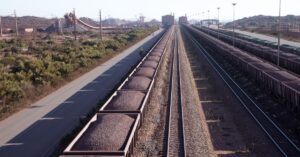
In January-February of this year, Ukrainian mining companies reduced exports of iron ore in physical terms by 1.2% compared to the same period last year, to 5 million 595.706 thousand tons.
According to the statistics released by the State Customs Service on Tuesday, foreign exchange earnings from iron ore exports decreased by 18.7% to $449.388 million during this period.
Exports of iron ore were carried out mainly to China (46.50% of supplies in monetary terms), Poland (17.35%) and Slovakia (14.31%).
In January-February 2025, Ukraine imported iron ore worth $1 thousand in the amount of 5 tons from Italy.
As reported, in 2024, Ukraine increased its exports of iron ore by 89.8% compared to 2023 – up to 33 million 699.722 thousand tons, while foreign exchange earnings increased by 58.7% to UAH 2 billion 803.223 million.
In 2024, Ukraine imported iron ore for $414 thousand in a total volume of 2,042 thousand tons, while in 2023, 250 tons of this raw material were imported for $135 thousand.
In 2023, Ukraine decreased exports of iron ore in physical terms by 26% compared to 2022 – to 17 million 753.165 thousand tons, foreign exchange earnings from iron ore exports amounted to $1 billion 766.906 million
(down 39.3%). In 2023, Ukraine imported iron ore worth $135 thousand in a total volume of 250 tons.
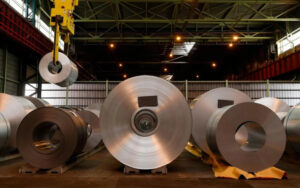
In 2024, Metinvest Mining and Metallurgical Group significantly increased its total exports and sales of iron ore to more than 12 million tons and significantly reduced production costs, Metinvest CEO Yuriy Ryzhenkov said in an interview with Forbes Ukraine.
“We have fully returned to the operational efficiency improvement program. For example, we have reconfigured our business process to use our own raw materials. And by most indicators, I mean technical, technological, and production ones, we have returned to the best results of 2020-2021,” the CEO stated.
According to him, the main disadvantage is the electricity outage and problems with its import. Another problem is the increase in tariffs for the services of natural monopolists, primarily the increase in electricity transportation tariffs and logistics. In addition, the aggressor’s offensive towards Pokrovsk. As a result, the group was forced to suspend the mine’s operations due to the inability to ensure electricity supply and safety factors for employees.
“We were preparing for this and diversified our supply chain for the same coal – we contracted as much as we could from other companies and shipped it for Ukraine’s needs from our plant in the US. We will definitely not stop steel production because of the temporary shutdown of the Pokrovsk mine. But it will have a serious impact on the company’s economy. Instead of supplying coal via the nearest logistics route, from Pokrovsk to Zaporizhzhia and Kamianske, we will now have to buy coal all over the world, and the logistics component will have a significant impact on our production costs. In general, up to 10% of the cost of coal,” said the CEO.
Answering a question about Donald Trump’s economic policy and expectations for the consequences for the global economy, Ryzhenkov explained that “it is not really known which initiatives of Donald Trump are serious and which are working to raise rates or invite to a dialogue.”
“We see tumultuous actions that make waves in the entire global economy, currencies, and so on. How will it all end? When a major power like the United States turns to protectionism, it is a serious problem for the global economy and, by the way, for the United States itself. It’s just that they will feel the consequences later – in three to four years,” the top manager predicts.
In turn, he noted that Metinvest’s deliveries to the US are insignificant – not even within the margin of error: “The largest share is pig iron, which is not subject to duty, and I think this will not change – it is the raw material for the American economy.”
Speaking about staffing issues, the CEO said that more than 20% of the group’s employees, or 30% of those liable for military service, are currently mobilized. Ryzhenkov believes that we need a normal, well-thought-out reservation system that will allow us to work. Reservations are not a privilege for business, as some say, but an integral part of preserving the economic basis of the state’s defense capability. If the economy does not work, Ukraine will lose the war, despite the support of the West.
As for the export strategy, it has not changed much compared to the period before the full-scale war.
“There are our key markets – Ukraine, the EU countries, where we supplied more than 50% of our products before the full-scale invasion. And then there are all the others, the so-called balance markets, which are characterized by a more opportunistic approach to supply. When it’s profitable for us, we go there, and when it’s not profitable, we don’t go there,” the CEO stated.
The Group’s key markets for iron ore are the EU countries. And the company has expanded them, entering Scandinavia and the Nordic countries. What we cannot sell in the EU due to limited consumption volumes is sold to Southeast Asia: China, South Korea, and so on, said the company’s CEO.
“The main thing we have focused on is the production of iron ore with a higher iron content, which is now in demand. We have already mastered its production at our joint venture, Pivdennyi GOK. Before the full-scale invasion, we did it at our Central GOK,” explained the CEO.
Regarding the forecast – what factors will have the greatest impact on exports in 2025 and what are the potential critical risks – Ryzhenkov divides them into several blocks. The first is to maintain the competitiveness of Ukrainian producers in foreign markets. This requires that state-owned monopolies do not create additional tariff pressure on operating businesses.
The second is maintaining access to foreign markets (it is important to preserve the liberalization of steel trade with the EU, the US, and the UK) and strengthening sanctions against the Russian metals and mining industry, which continues to sell slabs and pig iron to the EU because of the position of certain countries.
The third is a consistent environmental and industrial policy of the state on eco-modernization and decarbonization. Ukraine needs a delay in the CBA because of the war. And confirming the criticality of booking and engaging veterans in the workforce will remain a relevant factor because of the risk of losing qualified personnel.
“As for new challenges, it is access to financing for modernization and green transition projects in the mining and metals sector, as well as ensuring stable demand for Ukrainian steel in the domestic market. But these topics are post-war, and we can talk about them separately when peace comes,” the expert believes.
Speaking about the energy independence of Metinvest’s enterprises, the CEO said that the group has its own generation, about 45-50 MW, which provides the most critical processes – about 10% of the company’s energy consumption. Another 40 MW of gas-fired generation is under construction, which will be commissioned in 2025, and solar panels are also being installed.
Regarding investments, the CEO emphasized that due to security risks, the company cannot invest in Ukraine as before. There were serious investment plans in Mariupol, Kryvyi Rih, Zaporizhzhia, and Kamianske. Nevertheless, in 2024, the total investment volume reached about $670 million at the group’s sites in Ukraine. This includes both OPEX and CAPEX. As soon as the company is able to attract financing, there will be plans for large projects.
This year, we also have many plans, for example, a tailings pulp thickening project at Northern GOK and the repair of blast furnace No. 9 at Kametstal are being implemented at our own expense. The volume of investments in these projects in Ukraine alone is about $50 million.
Investment plans abroad include the largest project for the coming years – the construction of a green steel plant in Italy. The estimated cost of the joint project is EUR 2.5 billion.
Among other potential acquisitions, the company is interested in Eastern and Southern Europe – regions where it is possible to create synergies with the group’s existing business processes and Ukrainian assets. The company may take part in a tender for the sale of the Polish plant Huta Chestochowa, which once belonged to the Industrial Union of Donbass.
“In Ukraine, we have a $8 billion strategy for the green modernization of Ukrainian enterprises for 7-10 years. We are ready to launch this strategy as soon as the war is over and Ukraine receives security guarantees,” Ryzhenkov added.
“Metinvest is a vertically integrated group of steel and mining companies. The group’s enterprises are mainly located in Donetsk, Luhansk, Zaporizhzhia and Dnipro regions. The main shareholders of the holding are SCM Group (71.24%) and Smart Holding (23.76%), which jointly manage it.
Metinvest Holding LLC is the management company of Metinvest Group.



