
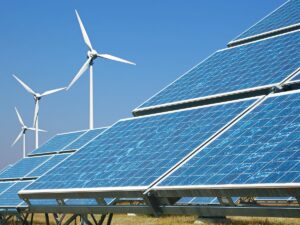
The European Bank for Reconstruction and Development (EBRD) plans to provide a loan of up to $45 million (equivalent to EUR 38 million) to Energy RTB 2 LLC, a subsidiary of the Kernel Group, the bank announced on its website.
“The project is expected to be co-financed by a parallel loan of up to $10 million,” the statement said.
The bank has completed its final review of the project, and approval by the Board of Directors is expected.
The project is expected to receive partial first-loss risk coverage from the European Union under the Ukraine Investment Facility (UIF).
“This program promotes the ‘green’ transition of the Ukrainian economy by supporting sustainable investment in green urban infrastructure, the greening of logistics chains, energy efficiency, and the transfer of ‘green’ technologies in industrial processes, commercial activities, and construction,” the EBRD explained.
The program also provides support to companies directly affected by the military conflict to ensure rapid recovery and resilience to the consequences of the ongoing war.
As reported with reference to Kernel CEO Yevgen Osipov, the company intends to invest approximately $400 million in the energy sector over the next two years,
“We have made a strategic decision to enter the energy sector. Our liquidity is one of the components of these new investments. We already implemented a $20 million pilot project last year, and over the next two years we plan to invest $400 million in this area,” he said.
According to Osipov, the company is planning large-scale projects in wind and solar power generation, as well as energy storage systems (ESS) with a total capacity of about 600 MW. Currently, the holding company is in the process of securing financing from international financial institutions, including the EBRD.
In January 2026, during the World Economic Forum in Davos, Osipov announced Kernel’s strategic goal of becoming a leading player in the green energy sector. At that time, the company confirmed the implementation of its first pilot 20-MW solar power plant project and plans to build a 250-MW solar power plant in the Chernivtsi region.
Kernel Agricultural Holding is the world’s largest producer and exporter of sunflower oil, Ukraine’s largest grain exporter, an operator of an extensive network of logistics assets, and a leading producer of grains and oilseeds in Ukraine. It is one of the largest producers and sellers of bottled oil in Ukraine. It is also engaged in the cultivation and sale of agricultural products.
In the first half of fiscal year 2026 (FY, July–December 2025), Kernel reduced its net profit by 33% compared to the same period in 2025, to $119 million. Consolidated revenue amounted to $1.924 billion, which is 1% less than in the first half of FY 2025. EBITDA fell by 14% to $247 million.
Kernel, one of Ukraine’s largest agricultural holdings and a major taxpayer in the country’s agricultural sector, has signed a purchase agreement to acquire a 100% stake in Enselco Holding Limited — an agricultural holding with a land bank of 190,000 hectares, controlled by Kernel’s chairman of the board of directors and its majority owner, Andriy Verevskyi.
“The total transaction amount is $348 million, reflecting a 5% discount ($18 million) from an independent fair market value appraisal of $366 million, prepared by a reputable international valuation expert at the company’s request and under the supervision of its independent directors,” according to a statement by Kernel on the Warsaw Stock Exchange.
It is noted that the purchase price was determined by the company’s directors, who have no conflict of interest, and accepted by the seller—Veretsky—and the discount was applied to ensure that the transaction provides a clear economic benefit to the company compared to the independently assessed fair value.
According to the statement, Enselco currently manages a consolidated agricultural business comprising 190,000 hectares of leased farmland, its own network of grain storage facilities, agricultural machinery and equipment, as well as a fleet of grain railcars. The scope of the transaction includes agricultural assets that Kernel previously sold in 2022–2023 for $210 million, as well as additional assets acquired and integrated by Enselco since then, including 56,000 hectares of leased land, a network of grain storage facilities, grain railcars, agricultural machinery and equipment, and related working capital.
Payment will be made in two installments: $300 million will be paid immediately upon signing the purchase and sale agreement, and the remaining amount by June 30, 2026.
“This transaction will secure the company’s core production supply chain and support the group’s grain export and oilseed processing value chains. Mr. Andriy Verevskyi abstained from voting on the board of directors’ resolutions approving the transaction,” the statement concludes.
Kernel Agri-Holding is the world’s largest producer and exporter of sunflower oil, Ukraine’s largest grain exporter, an operator of an extensive network of logistics assets, and a leading producer of grains and oilseeds in Ukraine. It is one of the largest producers and sellers of bottled oil in Ukraine. It is engaged in the cultivation and sale of agricultural products.
In the first half of fiscal year 2026 (FY, July–December 2025), Kernel reduced its net profit by 33% compared to the same period last year—to $119 million. Consolidated revenue amounted to $1.924 billion, which is 1% less than in the first half of FY 2025, while EBITDA fell by 14% to $247 million.
Kernel, one of Ukraine’s largest agricultural holdings and a major taxpayer in the country’s agribusiness sector, paid 5.7 billion UAH in taxes and fees to budgets at all levels in 2025, the company’s press service reported on Thursday.
According to the company’s statement, nearly 2.4 billion UAH went to local budgets, approximately 2.1 billion UAH to the state budget, and 1.2 billion UAH constituted the unified social contribution (USC). In total, since the start of the full-scale invasion, the company has contributed over 19.5 billion UAH to Ukraine’s budgets.
At the same time, according to the company’s financial report, in the first half of fiscal year 2026 (FY, July–December 2025), Kernel reduced its net profit by 33% compared to the same period last year—to $119 million. Consolidated revenue amounted to $1.924 billion, which is 1% less than in the first half of FY 2025, while EBITDA fell by 14% to $247 million.
“The agricultural sector operates under constant pressure from military risks. However, it is important for Kernel to maintain stable payments. Even with declining margins, we continue to provide significant revenue to the budget,” said the company’s CFO, Serhiy Volkov.
The company added that the total losses incurred by enterprises due to Russia’s military aggression over the past year alone are estimated at nearly UAH 135 million. At the same time, since 2022, Kernel has allocated over UAH 4.5 billion to support the Ukrainian Armed Forces and local communities.
Kernel Agricultural Holding is the world’s largest producer and exporter of sunflower oil, Ukraine’s largest grain exporter, an operator of an extensive network of logistics assets, and a leading producer of grain and oilseeds in Ukraine. It is one of the largest producers and sellers of bottled oil in Ukraine. It is engaged in the cultivation and sale of agricultural products.

Kernel, one of Ukraine’s largest agricultural holdings, invested $25 million in logistics sustainability and infrastructure in July–December 2025 (the first half of fiscal year 2026), the company said in its financial report.
“Net cash used in investing activities amounted to $145 million during October-December 2025. The outflow of funds mainly consisted of $120 million invested in financial assets as part of the group’s liquidity management strategy, and $25 million in capital expenditures, mainly related to the reconstruction of the transshipment terminal in Chornomorsk, agricultural machinery, backup power equipment, and grain transport cars,” the document says.
According to the report, the group’s total capital investments for the entire reporting half-year amounted to $55 million. In addition to infrastructure projects, $25 million was invested in agribusiness, in particular in upgrading the fleet of precision farming equipment, and about $5 million was spent on other capital expenditures. Thus, the company continues to implement projects to modernize the logistics chain and ensure the autonomy of production capacities.
As reported, the cost of sales in the second quarter increased by 28% compared to the previous quarter. The holding explained this dynamic by a 55% increase in the cost of delivery and handling of cargo, which was a result of higher insurance premiums due to increased Russian attacks on civilian vessels in the Black Sea port area during the reporting period.
Kernel is the world’s largest producer and exporter of sunflower oil, the largest exporter of grain from Ukraine, an operator of an extensive network of logistics assets, and a leading producer of grain and oilseeds in Ukraine. It is one of the largest producers and sellers of bottled oil in Ukraine. It is also engaged in the cultivation and sale of agricultural products.
Kernel’s net profit in the first half of fiscal year 2026 (FY, July–December 2025) decreased by 33% compared to the same period last year, to $119 million. The agricultural holding’s consolidated revenue for the reporting period amounted to $1.924 billion, which is 1% less than in the first half of FY 2025. EBITDA decreased by 14% to $247 million.

Kernel, one of Ukraine’s largest agricultural holdings, reported EBITDA of $103 million in October-December 2026 fiscal year (FY, July 2025-June 2026), down 13% from the same period last year, according to a report on Friday.
According to the report, consolidated revenue in the second quarter of FY 2026 amounted to $1 billion 98 million, which is 4% less than in the second quarter of FY 2025, but compared to the previous quarter, revenue grew by 33% thanks to an increase in sales of grain, vegetable oils, and meal as the harvest campaign gained momentum and export activity accelerated.
Kernel noted that the loss from changes in the fair value of biological assets in the second quarter of FY 2026 amounted to $43 million, compared to $33 million in the second quarter of FY 2025.
The cost of goods sold increased by 28% compared to the previous quarter, mainly reflecting higher costs of goods for resale and raw materials used, as well as a 55% increase in delivery and handling costs due to higher insurance premiums amid increased Russian attacks on civilian vessels during the reporting period.
As a result, gross profit decreased by 20% year-on-year to $126 million, reflecting lower profitability in the infrastructure, trading, and oilseed processing segments.
At the same time, Kernel managed to reduce general and administrative expenses by 26% to $55 million, reflecting a decrease in payroll-related expenses.
The company’s net profit for October-December 2025 amounted to $13 million, which is 2.3 times less than in October-December 2025. It is noted that the group incurred financial expenses of $21 million, which is 21% more than in the previous quarter, mainly due to an increase in expenses related to the extension and modification of lease agreements, while other expenses in the second quarter of FY 2026 reached $20 million, mainly due to an increase in the Group’s social expenses.
It is noted that Kernel received an operating profit before working capital changes of $113 million in the second quarter of FY 2026, which is 2.3 times more than in the previous year. The strong growth mainly reflects a low comparative base, as the previous year’s result was significantly affected by non-cash trading gains recognized by Avere.
According to the report, changes in working capital resulted in a cash outflow of $249 million in the second quarter of FY 2026, to $331 million, primarily due to an increase in inventories of $209 million, to $644 million, as well as the temporary allocation of a portion of liquidity to liquid securities.
“This reflects a normalization of seasonal purchasing patterns as the company resumed its typical inventory build following the harvest in the first half of the fiscal year. The previous season was atypical due to slower sales by farmers and a smaller grain harvest, which limited inventory accumulation and distorted the normal working capital cycle,” the document says.
It is specified that stocks related to the oilseed processing segment increased by 23% compared to the previous quarter, to $348 million, thanks to growth in sunflower seed and vegetable oil stocks. Grain stocks grew more sharply, 2.3 times compared to the previous quarter, to $296 million, as the group accumulated corn and other grains during the peak harvest season.
In physical terms, edible oil volumes by weight increased by 8% compared to the previous quarter, to 106,000 tons, while sunflower seed stocks reached 334,000 tons. Grain stocks, mainly corn, wheat, and soybeans, increased 2.6 times compared to the previous quarter, to 1.6 million tons.
Net cash flow used in investing activities amounted to $145 million during October-December 2025: the outflow consisted mainly of $120 million invested in financial assets as part of the group’s liquidity management strategy and $25 million in capital expenditures, mainly related to the reconstruction of the transshipment terminal in Chornomorsk, agricultural equipment, backup power equipment, and grain railcars.
As of the end of 2025, Kernel’s total debt amounted to $782 million, up 8% from the previous quarter. The increase was mainly due to more active use of credit lines to finance seasonal working capital requirements.
Net debt increased 3.4 times compared to the previous quarter to $451 million, while the leverage ratio as of December 31, 2025, decreased to 1.1 times net debt to EBITDA.
Overall, in the first half of FY 2026, consolidated revenue decreased by 1% compared to the same period in FY 2025, to $1 billion 924 million, EBITDA decreased by 14%, to $247 million, and net profit decreased by 33%, to $119 million.

Kernel, one of Ukraine’s largest agricultural holdings and elevator operators, is focusing its current investment activities on specific technological solutions for the development of its elevator network and will implement its own engineering developments at these facilities, said Sergey Shcherban, head of Kernel’s storage department, at the Grain Storage Forum in Kyiv on Friday.
The expert noted that the construction of new large facilities in the format of “sand elevators” (projects “from scratch” – IF-U) currently requires a long investment cycle – from 8 to 10 years. In this regard, the company is directing its available capital budget (CAPEX) toward improving the efficiency of existing assets.
“Our budget is specifically targeted at specific technological solutions. In particular, we have developed our own grain recuperator, which we plan to install at least at two elevators in cooperation with the Sokol company. This development will save 20% of energy when drying grain in certain types of dryers,” Shcherban explained.
According to him, Kernel will soon begin producing its own cleaning equipment. The agricultural holding’s specialists have developed a machine for cleaning, calibrating, and sorting grain, which allows working with raw materials of any quality.
“We have acquired the technology, and now this equipment is being put into practice. The recuperator and cleaning machine are our own designs. We need to approach the solution of non-standard problems of agricultural producers through process optimization,” emphasized the head of the department.
Kernel is the world’s largest producer and exporter of sunflower oil, the largest exporter of grain from Ukraine, and a leading producer of grain and oilseeds in Ukraine. It is one of the largest producers and sellers of bottled oil in Ukraine. It is engaged in the cultivation and sale of agricultural products.
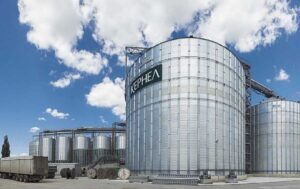
Kernel is the largest operator in the grain storage market in Ukraine. It has a network of more than 60 elevators with a one-time storage capacity of about 3.5 million tons. Its main assets are concentrated in the Poltava, Cherkasy, Chernihiv, Sumy, and Kirovohrad regions. The agricultural holding’s logistics infrastructure is supported by assets in the ports of Chornomorsk, including the powerful Transbalkterminal grain terminal (over 190,000 tons of storage capacity) and a stake in the Olymp terminal.
In fiscal year 2025 (FY, July 2024 – June 2025), Kernel supplied 8 million tons of agricultural products to the global market. The agricultural holding company earned $238 million in net profit, which is 42% more than in FY 2024. Kernel’s consolidated revenue in FY 2025 reached $4.115 billion, which is 15% more than in the previous financial year.
The company’s debt obligations at the end of September amounted to $726 million, including bank credit lines of $104.5 million compared to $146.7 million at the beginning of the year.



