

The cost of construction work and materials in Ukraine has risen by approximately 30% since the beginning of 2026, with the labor shortage remaining the main factor driving up prices, according to Oleksiy Koval, CEO of Perfect Group.
According to him, labor costs are rising the fastest, followed by construction materials in terms of the rate of increase. However, this estimate of approximately 30% growth does not account for the additional impact of currency fluctuations and indexation.
The cost structure for apartment renovations has also changed. Before the full-scale war, materials accounted for about 70% of renovation costs, while labor accounted for 30%. Now the ratio is closer to 50/50, and in some cases, the cost of labor already exceeds the cost of the materials themselves.
The labor shortage affects more than just finishing work. Developers are having difficulty finding concrete workers, crane operators, and other skilled professionals.
Another factor driving up costs during the fall and winter months may be the expenses associated with providing autonomous power supply to construction sites. During power outages, interior construction work requires the use of diesel generators; accordingly, costs depend on the price of fuel.
Perfect Group already includes generators and uninterruptible power supply systems in the budgets for new projects. Looking ahead, the company is also considering the use of solar panels and gas generators.
According to Koval’s assessment, there are no signs of a slowdown in the growth of construction costs yet.
Perfect Group has been involved in residential and commercial real estate in Ukraine since 1991.
CONSTRUCTION, cost of construction, LABOR, REAL ESTATE, UKRAINE
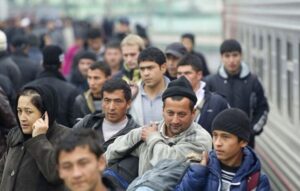
In 2025, 9,582 work permits were issued to foreign nationals and stateless persons, and 3,310 were revoked. Thus, 6,272 migrant workers remained in the country, accounting for 0.14% of the 4.5 million workers needed to fill the labor market, a well-informed government source told the Interfax-Ukraine news agency.
The State Employment Service also confirms the small share of foreigners in the domestic labor market. According to the agency’s statistics, prior to the full-scale invasion, employers received approximately 21,000 work permits for foreigners annually.
“After 2022, this figure decreased and has not yet reached pre-war levels. For example, 4,720 permits were issued in 2024, and 7,483 in 2025. This is more than half the number issued before the start of the full-scale war,” the Employment Service’s website states.
The State Migration Service provides slightly different statistics. As of December 31, 2025, there were 47,684 foreigners and stateless persons (temporary residents) registered in Ukraine. Of these, 8,440 temporary residence permits were issued for the first time in 2025.
However, all agencies agree that the share of foreigners in the domestic labor market is negligible. After all, when processing documents, aside from the employer’s consent, numerous issues arise regarding visas, SBU checks, residence permits, and other matters, which is why only a fraction of workers actually come to Ukraine.
Thus, despite labor migration, the labor market is increasingly feeling a shortage of workers.
“That is why it is now necessary to develop a new migration policy, taking as an example the legislation of countries that are successful in this regard, such as Canada, Australia, or Israel. Then there will be no speculation, and the problem of securing a workforce for Ukrainian businesses will be resolved,” the agency’s source emphasized.
Although, in his opinion, it is certainly best to focus on preserving the domestic labor force so that Ukrainians return from the EU rather than leave for it. And only after that, once we understand how many workers are lacking and in which sectors, should we attract foreign workers for specific projects, establishing rules for employer companies and ensuring oversight of them by the State Labor Service.

Having a baby in the United States has always attracted future parents from all over the world. In addition to the high level of medical services, this gives the child a unique opportunity to automatically become a US citizen, regardless of the status of their parents. But will the rules for granting citizenship change due to Donald Trump’s new executive order?
Donald Trump’s executive order to abolish birthright citizenship has sparked heated debate not only in America but around the world. This practice, known as jus soli (“right to the land”), has become the subject of litigation and political confrontation. How will this affect maternity tourism in the United States and the future of those who plan to give birth in America?
According to the decree, US government agencies must stop issuing citizenship to children born in the United States to parents who do not have legal status. However, this decree is unlikely to become law in the coming years. The granting of citizenship remains strictly regulated by the 14th Amendment to the US Constitution, which guarantees the right to citizenship to every person born in the country.

The order has been subject to widespread legal challenges. The attorneys general of 22 states have filed lawsuits challenging the unconstitutionality of the decision. And the Federal Court in Seattle has already blocked the order by imposing a temporary moratorium. The lawsuits argue that citizenship is a right guaranteed by the constitution, and even the president cannot cancel it with a single decree.
Even if the moratorium is in effect or the decree is blocked by the courts, the issuance of citizenship to children continues as usual. For many parents, the right to citizenship is the main reason for choosing to give birth in the United States. A US citizen child receives privileges in education, employment, and social security, and also opens up the possibility for parents to obtain the right to reside in the US in the future through family reunification.
Giving birth in the United States is attractive not only because of citizenship. The high level of medicine, modern equipment, and qualified doctors ensure comfort and safety for mother and child. Many people also appreciate the tropical climate and relaxed atmosphere, which contributes to easy recovery after childbirth.

Service packages include:
– Assistance in choosing a clinic and a doctor.
– Arranging accommodation and transfers.
– Legal support for the preparation of documents for the child.
– Childbirth and medical support during pregnancy.
The company’s clients note the high level of service and care. For example, one of the mothers notes: “The whole process, from the organization to the delivery itself, was as comfortable as possible. We felt safe, and the doctors are true professionals. Many thanks to the AIST team!”
Despite attempts to change the citizenship policy, the likelihood of Trump’s decree being implemented is low due to strong opposition from the judiciary and the public. Court proceedings will drag on for years, and children born in the United States will continue to receive citizenship under the 14th Amendment.
Thus, there is no cause for concern for those planning to give birth in the United States. American citizenship remains a profitable investment in the child’s future, and the services of professionals such as AIST will help make this process as comfortable as possible
AIST, birth tourism, LABOR, TRUMP, USA



