

The “Aurora” supermarket chain has invested 13 million hryvnias in strengthening product quality control; the consumer product testing laboratory began operations in Poltava on June 2, according to the company’s press office.
“Our laboratory is about transparent quality control and trust. We want both manufacturers and shoppers to see how the quality of products that end up on Aurora’s shelves is determined. Moreover, anyone can bring a product in for testing—even if it wasn’t purchased in our stores. This helps foster a new culture of consumption based on openness, objectivity, and trust,“ emphasized Natalia Izyumets, Quality Director of the ‘Aurora’ supermarket chain.
The laboratory is located next to the ”Aurora” Support Office in Poltava and has a separate entrance for visitors. Large panoramic windows allow visitors to observe the product testing process in real time.
A distinctive feature of the consumer testing laboratory is its openness to visitors. Anyone can submit a request to have a product tested, specifying the testing criteria themselves. After the tests are conducted, the results can be received via email or discussed with specialists in person.
The lab team consists of six specialists in quality control and product testing. The lab’s specialists work with over 25,000 product SKUs across various categories—from electronics, children’s products, and tableware to cosmetics, household chemicals, and food products. Here, they verify safety, reliability, and compliance with declared specifications and current legislation. The data obtained is shared with suppliers and the chain’s commercial department, enabling the rapid improvement of the product range and enhancement of product quality.
“For example, when inspecting a cleaning product, in addition to weight and volume, we check the consistency—that is, whether there is any separation, whether there is sediment—because cleaning products should not normally contain sediment or lumps. If there is any, that’s not good. We record this, include it in the inspection results, and submit a request to the suppliers,” notes Anna Tokach, an incoming quality control specialist at the “Aurora” chain.
Professional equipment is used for testing, which allows for simulating real-world conditions for product use. Specifically, in the lab, they check product shelf life using a climate chamber, test wooden products for moisture content, USB cables for compliance with the stated power rating, cosmetics for acidity level using a pH meter, and electrical goods for compliance with technical specifications and safety of use.
Special attention is given to high-risk products. For example, products involving open flames are tested in a special combustion chamber equipped in accordance with all fire safety requirements.
The opening of the consumer testing laboratory is part of Aurora’s long-term strategy to raise quality standards and promote responsible consumption.
“Aurora” was founded in 2011 by Lev Zhydenko, Taras Panasenko, and Lesya Klymenko. As of the end of 2025, the chain has over 1,800 stores in Ukraine and more than 60 in Romania. The retail chain’s headquarters are located in Poltava.
According to Opendatabot, the owner of Vygidna Pokupka LLC, which operates the chain, is the Cypriot company “Aurorail Investments Limited”; its beneficial owner is Lev Zhydenko, and among the owners are funds managed by Horizon Capital.
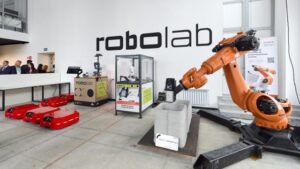
Ukraine’s first robotics laboratory, RoboLab, has begun operations at the Kyiv National University of Construction and Architecture (KNUCA), according to Acting Minister of Digital Transformation Oleksandr Bornyakov.
“I want this place to become a platform where all students, not only from KNUCA, but also anyone who can come here to get involved and test solutions. We, in turn, will work to ensure that there are more such laboratories in other places,” Bornyakov emphasized, according to a correspondent from Interfax-Ukraine.
According to him, this laboratory is designed for about 30 workplaces.
It is noted that the laboratory is equipped with mechatronics kits, robotic arms, 3D printers and scanners, robotic platforms, a VR system for engineering simulation and prototyping, as well as other technical equipment. An important feature of this laboratory is that students from other higher education institutions can also use it.
During the opening ceremony, Irina Legkobit, Director General of the Association of Robotics and Automated Systems, said that the laboratory has a separate practical area where 3D printers will be installed for students to work on their projects. Individual workstations have also been created where students can assemble parts and perform the necessary technical operations.
In a comment to the agency, Natalia Denikeeva, Deputy Minister of Digital Transformation of Ukraine for Digital Economy, noted that the Ministry of Digital Transformation, together with the Ukrainian Startup Fund and the Ministry of Education, is preparing a resolution that will allow the project to be scaled up to five more laboratories. In particular, there are plans to hold an open competition with clearly defined criteria for selecting the winner, similar to the competition won by KNUSA.
“The approach to the project will be structured in such a way that part of the money will be provided by the state, and the higher education institution will have to find partners, donors, businesses, and organizations willing to co-finance the project,” explained the Deputy Minister of Digital Transformation of Ukraine for Digital Economy.
Denikeeva specified that it is also planned to attract businesses, both financially and through the expertise of leading companies such as Hitachi and Mitsubishi.
According to her, by the end of the year, it is planned to determine the winners and finance higher education institutions, start work, and if some of the repairs cannot be completed, they will be completed in early next year.
In September 2025, the Ministry of Digital Transformation reported that KNUCA was selected from among 16 higher education institutions in Kyiv. In particular, the winner for the launch of robotics laboratories was selected by an independent jury due to its experience in the field of robotics and its ability to provide space and a team of specialists.
The RoboLab project is being implemented by the Association of Robotics and Automated Systems on the initiative of the Ministry of Digital Transformation of Ukraine, in partnership with the Ministry of Education and Science of Ukraine and with the support of the Ukraine-Moldova American Enterprise Fund, the technology company Ajax Systems, Deus Robotics, and Profi Robotics.
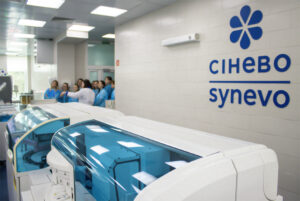
In 2025, as part of the medical guarantee program (MGP), the Sinevo laboratory performed 3.7 million tests, the total cost of which exceeded UAH 900 million at laboratory prices, and received UAH 162 million from the National Health Service of Ukraine (NSZU) for them.
“The difference of more than UAH 700 million was financed by Sinevo at its own expense and became the company’s contribution to the scaling of the MGP,” the laboratory explained.
According to its press release, the total number of tests performed last year under this program increased by 25% compared to 2024. More than 500,000 Ukrainians took tests under the PMG at Sinevo last year, which is half more than in 2024.
“Among the factors contributing to the increase in cooperation are the demand for Sinevo’s services under the PMG among the population, as well as the expansion of the network of branches where free tests are provided by the National Health Service,” the laboratory specified.
It noted that, in particular, during the fourth quarter of 2025, residents of cities in the Dnipropetrovsk, Zaporizhzhia, Poltava, Sumy, and Kharkiv regions had the opportunity to take tests free of charge under the PMG.
In total, Sinevo provided tests under the PMG in more than 200 branches in 35 cities of Ukraine.
Sinevo specified that the company is currently preparing for new contracting.

Last year, Dila Medical Laboratory opened 14 partner branches and expanded its network to 238 branches.
According to the laboratory in a press release, partner branches were opened in Kyiv, Lviv, Poltava, Dnipro, Rivne, and other cities.
Dila currently has the largest number of branches in Kyiv, Kyiv, Chernivtsi, Chernihiv, Rivne, and Kirovohrad regions.
In addition, in 2024, Dila performed 9.3 million tests for 1.3 million patients.
Last year, the most popular tests were complete blood count, thyroid-stimulating hormone (TSH), vitamin D (25-hydroxycalciferol), complete urine count, ferritin, fasting venous blood glucose, and C-reactive protein (CRP). At the same time, vitamin D and glycated hemoglobin were not among the top 10 most popular tests in 2023.
It is also reported that last year the share of clients who used comprehensive tests was growing.
According to the press release, last year Dila paid about UAH 380 million to the budgets of various levels, which is 24% more than in 2023, and provided UAH 56.7 million in aid, including almost UAH 35 million for medical tests for the military in the departments, UAH 5 million for the program of assistance to military hospitals “Helping the Strongest”, UAH 13.5 million to charitable organizations, and UAH 2.2 million of targeted assistance to the military. On the occasion of the Day of the Doctor, Dila donated UAH 200 thousand to the needs of the volunteer medical battalion “Hospitallers”. The Dila Foundation opened an additional fundraising campaign and raised UAH 110 thousand.
In partnership with Superhumans, a center for rehabilitation, prosthetics and reconstructive surgery for war-affected people, Dila Laboratory conducted about 32 thousand tests worth UAH 8.6 million.

The State Service for Medicines and Drug Control has suspended the license of the laboratory of the Marzeyev Institute of Public Health.
“Given the systematic nature of the identified violations, the validity of the certificate of industry certification issued to the laboratory is suspended until the elimination of remarks,” – reported on the website of the State Service for Medicines and Drug Control.
The State Service noted that the certificate was suspended following the results of the survey of the general level of compliance of the laboratory with the criteria of sectoral attestation on the organization of laboratory control of medicines, conducted on July 18-19.
According to the service, the survey “identified non-compliances that relate to the quality management system, equipment and drug testing.”
“The main findings indicate that numerous data integrity violations call into question the results of quality control of medicines that were checked during the survey. It has been established that studies were conducted according to methods that are not reflected in the quality control methods approved in Ukraine,” the State Service reports.
In addition, the State Service noted that the laboratory did not inform the State Service, in particular, about the lack of resources for conducting research and failure to agree on subcontracting, violation of handling of samples of medicines.
Goslexluzhba also emphasizes that at present, apart from the laboratory of the Marzeyev Institute, two other laboratories have WHO prequalification: the Central Laboratory of Goslexluzhba and the laboratory of pharmanalysis of the State Enterprise “State Expert Center (SEC) of the Ministry of Health”. In addition, the State Enterprise “Central Laboratory for Quality Analysis of Medicines and Medical Products” is accredited by the European Directorate for Quality of Medicines (EDQM) and is part of the pan-European network of laboratories OMCL.
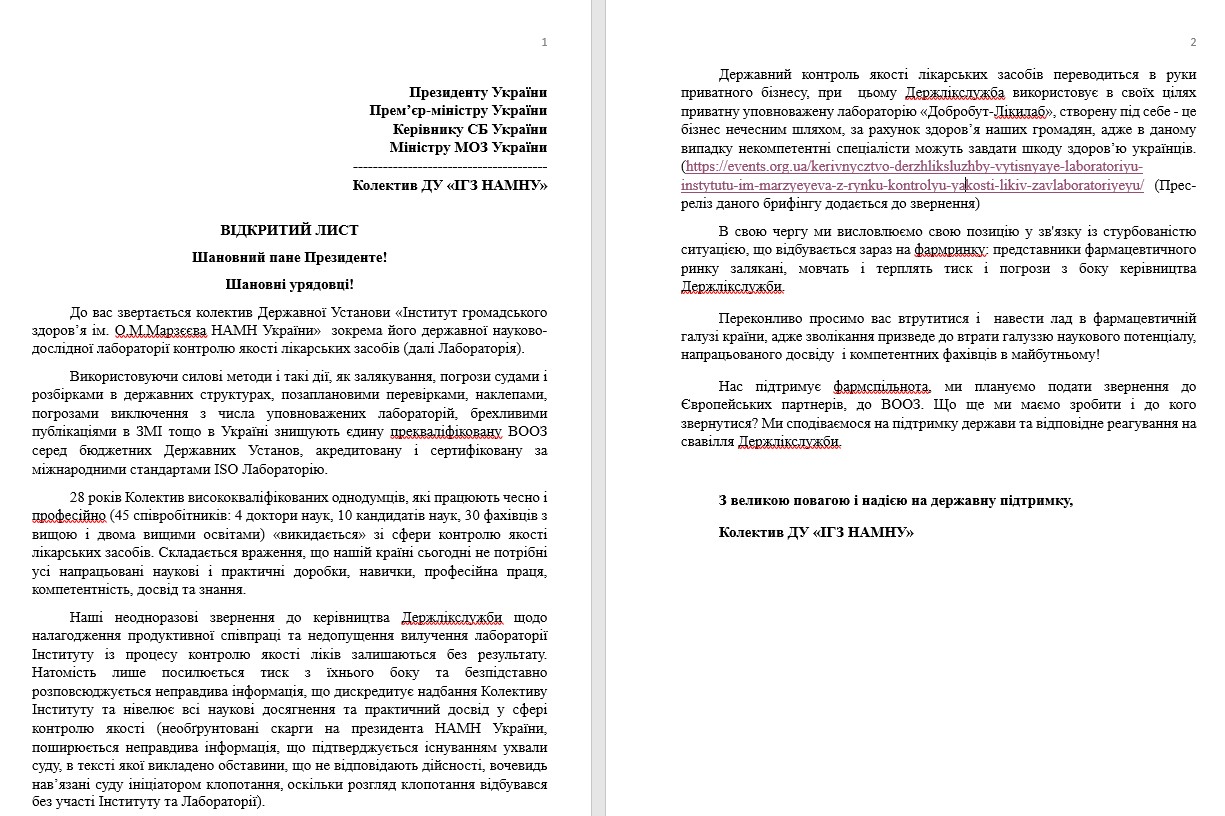
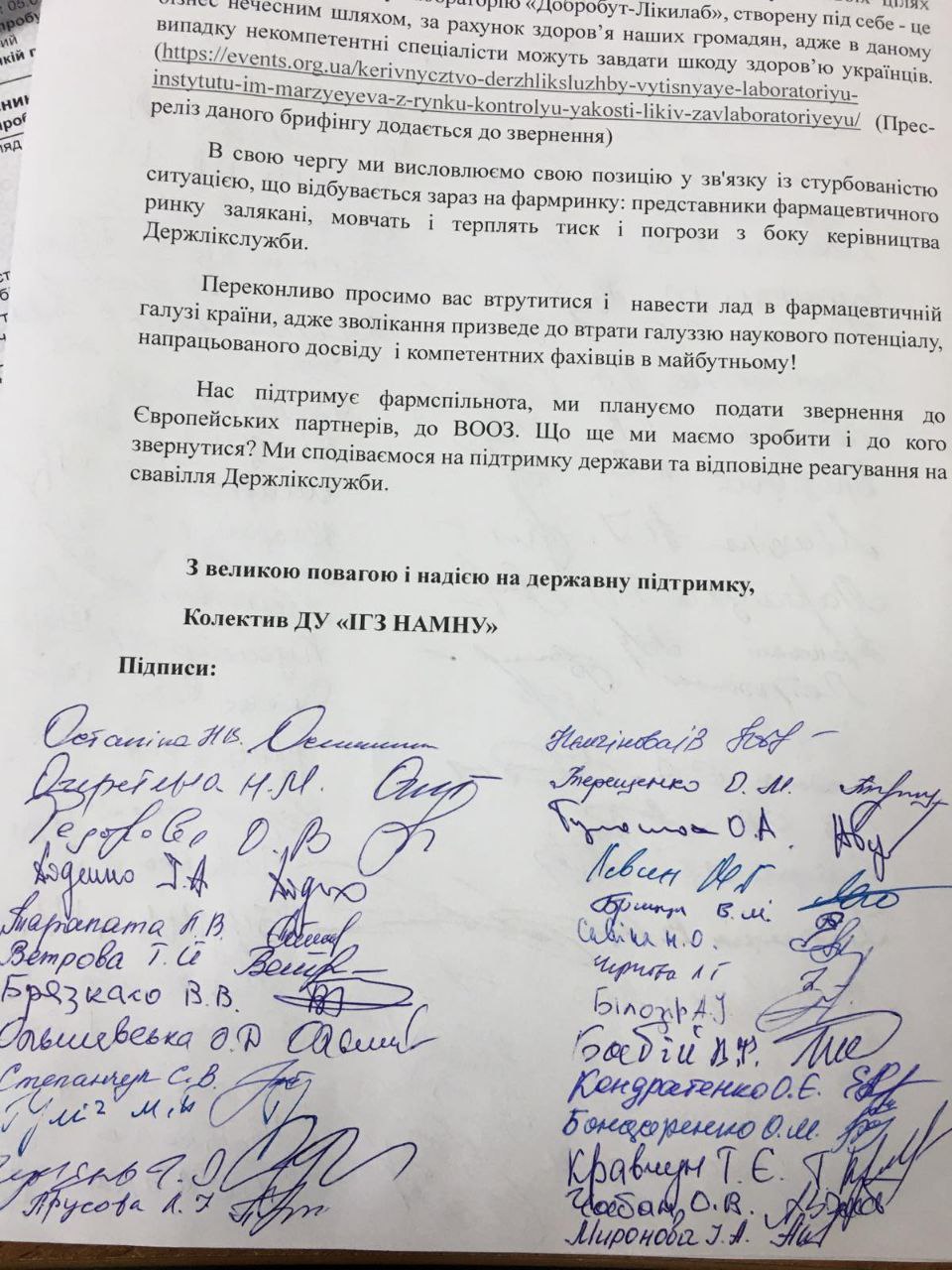
As reported earlier, the laboratory of the Marzeyev Institute of Public Health appealed to Ukrainian President Volodymyr Zelenskyy and Prime Minister, the leadership of the Security Service of Ukraine (SBU) and the Health Ministry with a request to prevent the transfer of the market of laboratory control of medicines into private hands. The laboratory stressed that “state control of the quality of medicines is being transferred into the hands of private business, with the State Service for Medicinal Products using for its own purposes the private authorized laboratory Dobrobut-Likilab LLC, created for itself”.
As previously reported, the laboratory of the Institute of Public Health named after Marzeyev asked Ukrainian President Volodymyr Marzeyev. Marzeyev asks the President of Ukraine Volodymyr Zelensky, the Prime Minister, the leadership of the Security Service of Ukraine (SBU) and the Ministry of Health to prevent the transfer of the market of laboratory control of medicines into private hands.
Natalia Ostanina, head of the laboratory of the Marzeyev Institute, believes that the management of the State Research Laboratory of Public Health is forcing the laboratory out of the market of quality control of medicines by transferring the directions for quality control from the State Research Laboratory of Public Health to the private laboratory Dobrobut Likilab LLC.
The State Research Laboratory for Quality Control of Medicines of the Marzeyev Institute of Drugs of the National Academy of Medical Sciences of Ukraine was established in 1996, it employs four doctors of sciences, 10 candidates of sciences and 30 researchers. It is accredited by the National Accreditation Agency of Ukraine in accordance with the requirements of DSTU EN ISO/IEC 17025:2019 (EN ISO/IEC 17025:2017, IDT; ISO/IEC 17025:2017 IDT), certified by Gosleksluzhba, Quality Management System is certified by the Ukrainian Medical Certification Center for compliance with the requirements of DSTU EN ISO 9001:2018. The laboratory is the only one among scientific state institutions to be prequalified by WHO for the right to conduct quality control of medicines.
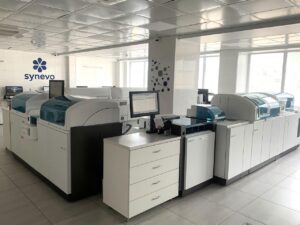
Synevo Medical Laboratory has modernized its laboratory in Dnipro, increasing its capacity by 20%.
According to the press release of Synevo, within the framework of modernization in the laboratory a diagnostic platform Cobas Pure from Roche Diagnostics (Switzerland) was installed, which is capable of performing 230 types of biochemical analyses at a rate of up to 870 tests per hour.
As a result of the upgrade, the total throughput capacity of bio/immunoassay analyzers in Dnipro will be 5,270 tests per hour.
“The capacity of the laboratory allows to qualitatively and quickly meet the demand of customers from the eastern and central regions of the country. Today this is a super-important task, as the work of the Synevo laboratory in Kharkov was suspended for security reasons, which significantly increased the load on the Dnipro laboratory of the company,” the press release emphasizes.
In general, thanks to the expansion of the analyzer base, the laboratory of Synevo in Dnipro can now perform 20% more tests of biochemical group (e.g. liver tests, kidney tests and others), electrolytes, as well as immunochemical group (e.g. thyroid hormones, reproductive panel, prenatal diagnostics, etc.).
“Synevo Ukraine” (Synevo Ukraine) is the largest network in Ukraine with 317 laboratory centers, seven laboratories (in Kiev, Lviv, Chernivtsi, Vinnitsa, Odessa, Kherson and Dnipro) and more than 1800 employees in 13 countries. The capacity of the network is more than 800 types of testing, annually serving about 4 million customers, performing more than 15.8 million tests. It is part of Medicover, a leading international healthcare and diagnostic services company.
Synevo International Laboratory Network (Synevo) is present in 10 European countries, with laboratories in Germany, Poland, Romania, Turkey, Georgia, Moldova, Bulgaria, Serbia, Bosnia and Herzegovina.
In 2017, Synevo Ukraine as part of Medicover was listed on Nasdaq (Stockholm), becoming the first and only medical company in Ukraine to carry out an IPO.



