

Arsenal Insurance has completed the settlement of a major property insurance claim and made two payments totaling over 114 million hryvnias.
The fire occurred on the premises of a large production and warehouse complex in Dnipro. As a result of the fire, the buildings sustained critical damage—only fragments of the structures remained of some of the premises.
Based on the results of technical inspections, the buildings were deemed unsafe: the load-bearing structures completely lost their strength, and some of them collapsed inside the premises. The complex is subject to complete demolition and reconstruction.
The insurance compensation was paid in two installments:
— 51.9 million UAH was paid on May 6, 2026;
— 62.3 million UAH was paid on May 11, 2026.
“Settling such claims is an extremely complex process that requires a large number of technical expert assessments, analysis of the structural condition of the buildings, and a detailed evaluation of the extent of the damage. In this case, it was essentially a matter of the complete destruction of a large complex, so the settlement process was particularly laborious,” commented Arsenal Insurance.
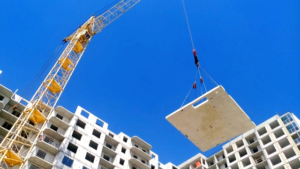
A series of industry events titled “METRONOM” is launching in Ukraine, bringing together developers, architects, and urban planners to discuss the future of Ukrainian cities.
According to the organizers, the theme of the season is “Strategies for Urban Environment Development: Me, You, Society.”
A series of events is planned across various cities in Ukraine as part of the season. The first event will take place on April 23 in Kyiv at the “Osvitoria” venue.
The next event is scheduled for May 20 in Lviv; the venue is currently being finalized. Additionally, the BUDArena Expo—an exhibition and forum—will take place in Lviv on May 21–22.
Subsequent events in the series will be held on June 11 in Dnipro and July 1 in Odesa. Venues for these events will be announced at a later date.
The organizers also announced an expansion of the project’s geographic scope. Specifically, “METRONOM” events are planned for Uzhhorod and Rivne in the near future; dates and venues are currently being finalized.
The “METRONOM” event series is positioned as a professional platform for dialogue between participants in the development market, the architectural community, and urbanists regarding approaches to the development of the urban environment in Ukraine.
“Open4business” is the information partner for the events.
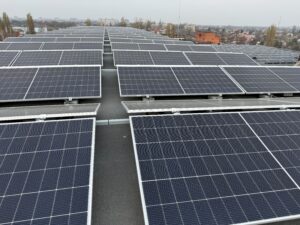
One of the largest steel mills in the Dnipropetrovsk region has completed a comprehensive energy independence project. The plant has commissioned the largest rooftop solar power plant for an enterprise in Ukraine, with a capacity of 4 MW, integrated with an industrial energy storage system (BESS) with a capacity of 4.2 MWh. The project, implemented by Rayton, will allow the plant to save approximately $1.5 million annually.
As of April 1, 2026, the full cost of electricity for industry (voltage class 2) in the region is 9–10 UAH/kWh, and during peak evening hours on the day-ahead market (DAM) it reaches 12–15 UAH/kWh. With the plant’s monthly consumption of 400–500 MWh, electricity bills amounted to 4–5 million UAH. Additionally, sudden power outages threatened to shut down the electric arc furnaces, which meant tens of thousands of hryvnias in direct losses every hour and the risk of damaging expensive equipment.
“For modern industry, especially an energy-intensive sector like metallurgy, on-site power generation and industrial batteries are no longer just an environmental trend but a basic requirement for survival and competitiveness,” commented Olga Lesko, director and co-founder of Rayton. “This complex in Dnipro has become one of the largest hybrid projects for industry in Ukraine and the largest existing rooftop station in Ukraine for self-consumption on a ballast mounting system. “We have created a system that not only generates kilowatts but also intelligently manages the consumption of the entire plant, protecting it from blackouts and price shocks in the electricity market.”
How the plant’s smart energy system works
The solar power plant complex (4,027 kW) and the storage system (4,180 kWh) operate as a single unit, addressing three key tasks:
Economic impact: payback in 3 years
The total investment in the modern energy complex amounted to approximately $3.9 million, of which $3 million was allocated to the construction of a solar power plant (SPP), and another $900,000 to the integration of energy storage systems (ESS).
The projected annual generation of the SPP is 4 million kWh, which, at an average tariff of 8 UAH, will generate approximately 32 million UAH (over $727,000) in annual revenue, returning at least one-third of the invested funds annually. Although storage systems slightly increase the cost of a “solar” kilowatt-hour, their use allows for maximum efficiency and generates $1.5 million annually (total savings from the solar power plant and ESS combined — ed.).
“The economic model of the solar power plant shows a payback period of less than three years, which is an unprecedented figure demonstrating the extremely high profitability of such solutions,” adds Olga Lesko. “Over the projected 30-year operational life, the solar power plant and the industrial system will generate over 1.9 billion UAH in net profit for the plant.”
Company Profile:
Rayton is a company committed to making solar energy accessible to everyone. We offer industrial enterprises turnkey solutions based on solar power plants and industrial energy storage systems.
The company has implemented over 300 projects with a total capacity of more than 100 MW of solar generation and over 40 MWh of energy storage systems (BESS). The project in the Dnipropetrovsk region ranks among the company’s top three largest completed projects.
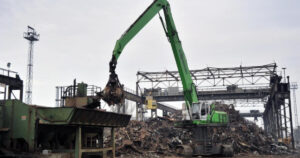
PJSC “Interpipe Dnipropetrovsk Vtormet” (Dnipro), a subsidiary of the Interpipe Pipe and Wheel Company (PWC), ended 2025 with a loss of UAH 2.821 million, whereas in 2024 it reported a net profit of UAH 65.931 million.
According to information submitted by the company to the NSSMC’s disclosure system, the annual general meeting of shareholders is scheduled to be held on April 15 of this year via a survey (remote general meeting).
Eleven items are on the agenda, including determining the company’s main areas of activity for 2026, reviewing the supervisory board’s reports and the 2025 audit report, and approving the annual financial statements and the procedure for covering losses. In addition, it is planned, in particular, to terminate the powers of the current members of the supervisory board and elect new ones,
According to draft resolutions available to the Interfax-Ukraine agency, shareholders are proposed to define the main areas of the company’s activities in 2026 as increasing the volumes of scrap metal procurement and processing; developing scrap collection capacities; reducing production costs; and maximizing profits from business operations.
It is also proposed to approve the reports for 2025. Given that the company’s financial and operational results for 2025 resulted in a loss of UAH 2.821 million, the procedure for covering losses is to be approved: losses are to be covered in accordance with current legislation.
“Interpipe” is a Ukrainian industrial company and a manufacturer of seamless pipes and railway wheels. The company’s structure includes five industrial assets: “Interpipe Nizhnedneprovsky Pipe Rolling Plant (NTZ),” “Interpipe Novomoskovsky Pipe Plant (NMTZ),” “Interpipe Nico-Tube,” “Dnipropetrovsk Vtormet,” and the electric steelmaking complex ‘Dniprostal’ under the “Interpipe Steel” brand.
The ultimate owner of Interpipe Limited is Ukrainian businessman and philanthropist Viktor Pinchuk and members of his family.
“Interpipe Dnipropetrovsk Vtormet” specializes in the procurement and processing of ferrous metal scrap in the Dnipropetrovsk region, followed by the sale of this product, specifically in the preparation of metal feedstock for steelmaking enterprises. The company’s production facilities have the capacity to process 1.35 million tons of scrap per year. The company has an extensive regional network of procurement and production facilities (Dnipro, Nikopol, Pavlohrad, Zhytomyr, Kyiv, Odesa, Poltava, Vinnytsia, Kharkiv, and Cherkasy).
According to the National Securities and Stock Market Commission (NSSMC) data for the fourth quarter of 2025, Interpipe Limited (Cyprus) owns 98.6699% of the shares of Interpipe Dnipropetrovsk Vtormet PJSC.
The company’s authorized capital is UAH 64.876 million.
The European Bank for Reconstruction and Development (EBRD) has approved a grant of EUR4.13 million to support Superhumans centers in Dnipro and Odesa, according to the financial institution’s website.
“The need for grant support is related to the extraordinary circumstances of the war and the shortage of specialized rehabilitation services, which forces patients to travel long distances to Lviv or abroad,” the EBRD said in a statement.
It is reported that in mid-2026, the organization plans to launch a medical center in Odesa, designed for 600 new patients per year and to support up to 1,200 people annually with follow-up services. The launch of the center in Odesa should expand access to multidisciplinary rehabilitation care in southern Ukraine.
Currently, Superhumans military trauma centers operate in Lviv and Dnipro: the first was launched in April 2023, the second was opened in June 2025, and together they can accept up to 2,000 patients per year.
Superhumans is a nationwide military trauma center that has specialized in prosthetics, reconstructive surgery, rehabilitation, and psychological support for adults and children affected by war since 2022.
The organization cooperates with the Ukrainian Ministry of Health to update care protocols and improve the qualifications of medical workers, supports state hospitals through international medical missions and training of specialists, including prosthetists, and interacts with the Ministry of Veterans Affairs and the Ministry of Economy in programs to support and reintegrate veterans.
DNIPRO, EBRD, GRANT, ODESA, Superhumans

PJSC Dnipropetrovsk Food Concentrates Plant (Dnipro, EDRPOU code 00374048) will hold its annual general meeting of shareholders on February 24, 2026, in the form of a remote poll, according to the issuer’s announcement. According to the announcement, the date for compiling the list of shareholders entitled to participate in the meeting is set for February 19, 2026.
The agenda includes, in particular, consideration of the reports of the management board and supervisory board for 2025, approval of the annual report and results of financial and economic activities for 2025 with a decision on the distribution of profits, termination of powers and election of management and control bodies, as well as preliminary consent to significant transactions.
Ballots for voting must be made freely available to shareholders on February 13, 2026, with the period for sending ballots to the depositary institution set from 11:00 a.m. on February 13 to 6:00 p.m. on February 24, 2026.
PJSC Dnipropetrovsk Food Concentrates Plant is registered in Dnipro, with a charter capital of UAH 8.4188 million. According to Opendatabot, the company’s director is Oleksandr Kovrov, and the ultimate beneficiary is Iryna Kovrova; among the shareholders with large stakes are Oleksandr Kovrov (78.5908%) and Iryna Kovrova (19.789%). According to the company, the plant produces, among other things, dry breakfasts, snacks, and coffee products.



