

In Ukraine, starting January 31, 2026, the procedure for admission to economic activity in veterinary practice will change: the possibility of working on a declarative basis will be abolished, and mandatory licensing will be introduced, according to the State Service of Ukraine for Food Safety and Consumer Protection.
“From January 31, 2026, it will no longer be possible to obtain a license to engage in veterinary practice by submitting a declaration. From now on, all entities engaged in veterinary practice must obtain a license,” the agency commented on the annex to Cabinet of Ministers Resolution No. 314.
Business entities that previously started operating under a simplified procedure based on a declaration must undergo the licensing process within three months. The deadline for submitting documents to the State Service of Ukraine for Food Safety and Consumer Protection is April 30, 2026.
There are two main ways for entities that already report or plan to submit documents. According to Cabinet of Ministers Resolution No. 795, documents can be submitted electronically through the “Dія” portal as part of a pilot project to introduce a unified state electronic system for permits. It is also still possible to submit an application in paper form in accordance with the licensing conditions approved by Cabinet of Ministers Resolution No. 896.
The State Service of Ukraine for Food Safety and Consumer Protection has drawn the attention of businesses to the need for strict compliance of the material and technical base and staff qualifications with established standards. The transition to a licensing model involves a thorough check of documents confirming the relevant education of employees and the condition of the premises.
The updated rules are aimed at adapting the veterinary sector to European Union standards and ensuring the stable functioning of the veterinary services market under martial law. Working without a license after the transition period ends on April 30 will be considered illegal.
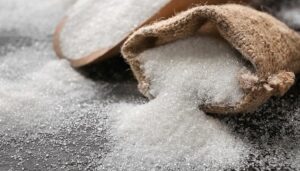
Ukrainian sugar in 2025 turned out to be a very bitter topic and a sore point in negotiations on trade in agricultural products with the European Union. The industry’s plans for 2026 are to increase the share of Ukrainian sugar on the European market, said Yana Kavushevska, head of the National Association of Sugar Producers of Ukraine “Ukrtsukor,” Yana Kavushevska at the conference “Agribusiness in Ukraine” in Kyiv on Thursday.
She noted that during the preparation of the updated trade agreement, the Ukrainian side was not prepared to deal with the powerful sugar lobby and its stakeholders in the EU, along with their strong support at the political level.
Another surprise was the European community’s bias against Ukrainian agricultural products. Among the most absurd myths, Kavushevska named the inexhaustible potential of the Ukrainian agricultural sector, the dominance of agricultural oligarchs, etc. Both Ukrainian agricultural associations and government officials had to refute these myths.
“One of the areas of our communication was to explain to Europeans that the Ukrainian sugar industry is a continuation of the European one. We use all the inputs that we purchase in the European Union in our work. (…) For every hectare of sugar beet, we purchase approximately $1,000 worth of goods in the EU. Accordingly, this year we have 200,000 hectares of sugar beet in Ukraine, for which we have purchased $200 million worth of products from the EU,” said the head of Ukrtsukor, adding that such arguments either surprise or are ignored by her European colleagues.
Speaking about the quotas that Ukraine received for sugar supplies to the EU under the updated trade agreement, Kavushevska noted that they had increased fivefold compared to the previous ones.
“Indeed, the results we have achieved with the quota received in the European Union for sugar show a fivefold increase — from 20,000 tons to 100,000 tons. Is this a lot or a little? Probably no one could be satisfied. But I am sure that if there had been no effective agricultural and social communication, this quota could have been smaller,” said the head of Ukrtsukor.
She stressed that the EU likes predictability, balance, and foreseeability. This is how she explained the need for Ukraine to introduce internal licensing for sugar exports to the European Union. In her opinion, this mechanism will allow Ukrainian sugar producers to eventually become not just technical suppliers of products to the EU, but gradually transform into full-fledged members of the European market.
“Yes, it costs producers who want to export additional expenses for obtaining documents, complications, and delays in possible deliveries. But this (internal quotas – IF-U) is what demonstrates to Europeans that we know how to work and regulate the market,” the expert explained.
Kavushevska named another complication of the updated trade agreement for sugar producers as the European Union’s application of the concept of a “critical quota” to Ukrainian sugar. It provides for the importer to deposit financial guarantees into special accounts, which will be returned to them 3-30 days after customs clearance of goods received from Ukraine. According to the expert, this mechanism is one of the ways to prevent the uncontrolled spread of Ukrainian sugar in the EU. At the same time, it is an unpleasant moment for European buyers, who have to freeze their own working capital for a certain period.
Speaking about the sugar producers’ plans for 2026, the head of the association said that the industry will continue to establish contacts with the European sugar industry and hopes that licensing will continue as an export mechanism. In addition, benchmarks will be developed for key production indicators so that the industry can prepare for integration into the European market.
“For Ukrainian sugar producers, the European market is virtually the only option. We cannot compete for Africa because Brazil will always dominate there logistically. Our task is to gain a foothold in Europe, increase Ukraine’s share as much as possible, and eventually ensure the European Union’s self-sufficiency in sugar,” Kavushevska concluded.
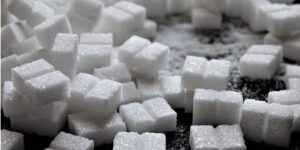
The Cabinet of Ministers of Ukraine included sugar (trade item according to UKTVED 1701) to the list of goods, export of which is subject to licensing for the period from June 5 to September 15, 2023.
According to the representative of the Cabinet of Ministers in the Verkhovna Rada Taras Melnychuk in Telegram, the relevant decision was taken at a government meeting on Tuesday.
“Amended Annexes 1 and 5 to the resolution of the Cabinet of Ministers of 27.12.2022 N 1466 “On approval of the lists of goods, exports and imports of which are subject to licensing and quotas for 2023”. Sugar has been included in Appendix 1 “Quotas for the goods subject to export licensing” of the decree ¹ 1466 with a volume of quota of 0 tons and a licensing period from June 5 to September 15, 2023,” he wrote.
At the same time, sugar is excluded from Annex 5 of the same decree “The list of goods, the export of which is subject to licensing.
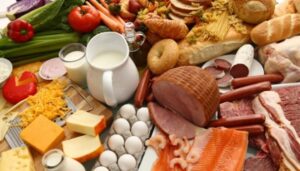
Ukraine has abolished the need to obtain licenses for the export of live cattle, chicken, frozen beef as well as meat and edible meat by-products and flour from them.
Corresponding changes to the list of goods, export and import of which in 2023 are subject to licensing, made by the decision of the Cabinet of Ministers № 472 of May 12, published on its website.
In addition, the liberalization affected the export of eggs, rye, oats and millet.
At the same time, exports of buckwheat, sugar and mineral fertilizers are still subject to licensing.
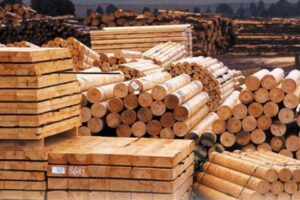
The Association of Woodworking Enterprises of Ukraine public union asks the government not to impose licensing and quotas on the export of fuel wood from Ukraine, as this may upset the balance in the industry and lead to attempts to manually control the work of enterprises.
The negative impact on wood processing of the possible introduction of licensing or export quotas was reported on the association’s website on Friday.
It is clarified that the organization asks the Cabinet of Ministers not to adopt the relevant changes to Decree No. 1424 of December 29, 2021 regarding exported fuel wood in the form of logs, logs, brushwood, branches, knots, wood chips or cod, sawdust, cod, shavings, debris and wood waste and scrap, agglomerated or non-agglomerated, fuel briquettes and pellets.
“While the Ukrainian economy needs to be supported like never before, the Cabinet of Ministers may adopt changes to the legislation that will actually lead to an increase in the number of corruption schemes, pressure on woodworking enterprises and a decrease in the investment attractiveness of Ukraine,” the association emphasizes.
In addition, it is noted that the adoption of this document may lead to the fact that, under the guise of providing the domestic market with fuel lumber, the process of manual control over enterprises engaged in the corresponding production will begin to be set up.
Reportedly, the activities of the industry are already controlled by authorities, including when commissioning the necessary equipment, hiring workers, obtaining environmental permits, etc. The introduction of wood processing licensing will allow these departments to openly demand funds from exporting enterprises.
“We ask the Cabinet of Ministers of Ukraine not to accept this document, to hold additional discussions on this issue with representatives of business and the public in order to make effective decisions for the industry and the country’s economy as a whole,” the association quotes its head Pavel Vasiliev.
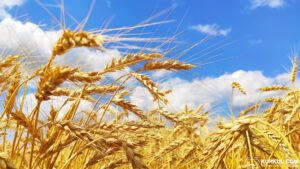
Wheat and its mixture with rye (meslin) are excluded from the list of goods whose export is subject to licensing, the Cabinet of Ministers made the corresponding decision at a meeting on Friday, Taras Melnychuk, a government representative in parliament, said.
“The commodity items “Oats” and “Mineral or chemical, nitrogen fertilizers” have been excluded from the volume of quotas of goods whose export is subject to licensing. These items are included in the List of goods whose export is subject to licensing,” he added in his telegram message.
As reported, on March 7, the Government of Ukraine expanded the list of goods the Ministry of Economy will issue export permits for: wheat, corn, poultry meat, chicken eggs and sunflower oil were included in the list of licensed exports.
Already in March, corn and sunflower oil were excluded from this list, but wheat remained, despite the requests of market participants.
As for oats, on March 5, a ban was introduced on its export in the form of a zero quota.
Nitrogen fertilizers were also banned for export at first, but at the end of March the government allowed their export within the quarterly quota of 210,000 tons, or 70,000 tons per month.
In June this year, Ukraine managed to increase grain exports by 23% by May – up to 1.4 million tons. In terms of crops, corn accounted for 86%, wheat – 10%, barley – 3%.



