
The top three operators in Ukraine by revenue from telecommunications services for January–March 2026 were, by a wide margin, mobile operators: Kyivstar PJSC – 12.08 billion UAH, VF Ukraine PJSC (Vodafone-Ukraine brand) – 6.69 billion UAH, and lifecell LLC (lifecell brand) of the DVL Group – 4.18 billion UAH.
According to data from the National Commission for the Regulation of Electronic Communications and Postal Services (NCREC) published on its website, compared to 2025 figures, Kyivstar’s revenue increased by 15.1%, Vodafone-Ukraine’s by 10%, and lifecell’s by 13.9%.
As previously reported, for 2025 as a whole, these growth rates were 20.3%, 13.1%, and 19.1%, respectively.
The top five operators by revenue in the first quarter of 2026 also included the fixed-line operator PJSC “Ukrtelecom,” which saw its revenue decline by 6.3% compared to the same period in 2025, to 1.10 billion UAH.
Kyivstar’s “sister” company, LLC “Ukraine Tower Company” (UTC), rounded out the top five in terms of revenue in the first quarter of 2026, increasing its revenue by 20.7% to 0.86 billion UAH.
According to the report, in the second group of five by telecommunications revenue, the fixed-line operator PJSC “Datagroup” from the DVL Group leads the way, having increased its revenue by 37.9% compared to the same period last year—to 0.58 billion UAH—thereby moving up from 7th to 6th place.
Next is the fixed-line operator PJSC “Farlep-Invest,” controlled by “VF Ukraine,” which increased its revenue by 52.8%—to 0.27 billion UAH—and moved from 9th place in 2025 to 7th in 2026.
LLC “Ukrainian Network Solutions,” the holding company for “Vodafone Ukraine,” increased its telecommunications revenue 2.5-fold in the first quarter of 2026—to 0.27 billion UAH—ranking 8th.
Rounding out the top five was “Home-Net” Scientific and Industrial Company LLC, which managed to increase its revenue by 24.1%—to 0.21 billion UAH—moving up from 10th to 9th place.
For its part, the Radio Broadcasting, Radio Communications, and Television Concern increased its revenue in the first quarter of 2026 by 7.2% compared to the same period in 2025—to 0.17 billion UAH—ranking 10th.
According to the regulator’s data, the top three mobile operators also led in terms of capital investments in the telecommunications sector during the first quarter of 2026: “Kyivstar” increased its investments by 49.7% compared to 2025—to 3.17 billion UAH, “Vodafone-Ukraine” by 6.3% to 1.33 billion UAH, and lifecell by 23.3% to 1.27 billion UAH.
At the same time, Ukraine Tower Company LLC reduced its capital investments in the first quarter of 2026 by 18.3% compared to the first quarter of 2025, down to 0.29 billion UAH, while Farlep-Invest PJSC increased this figure by 18.3% to 0.28 billion UAH.
“Ukrtelecom” also reduced its investment volume by 28.2% in the first quarter of 2026 compared to the same period last year—to 61.9 million UAH, while “Datagroup” reduced its investment by 17.2%—to 47.9 million UAH, thus securing 7th and 8th places, respectively.
In turn, Ukrainian Network Solutions LLC, which ranked 6th in investment volume in the first quarter, also reduced its investment by 50.9% compared to the same period last year—to 94.9 million UAH.
A unified telecom identification infrastructure has been implemented in Ukraine, covering the entire mobile subscriber base of the country based on myGaru technology. All three mobile operators in Ukraine—Kyivstar, Vodafone Ukraine, and lifecell—as well as the fixed-line operator Ukrtelecom, have joined the project.
“Identification is the foundation of data processing—without it, neither accurate data collection, nor data sharing, nor the subsequent activation of advertising communications is possible. Cross-Telecom ID establishes a unified identification standard for the data market, creating conditions for the development of a sovereign data economy in Ukraine,” myGaru CEO Vitaliy Morozhenko is quoted as saying in the press release.
myGaru explained that the technology combines telecom identification with the digital advertising ecosystem. This enables more precise ad delivery in mobile apps, on websites, in addressable TV, and on digital platforms, including Google, Meta, TikTok, and Telegram.
“The implementation of myGaru technology is a step toward an innovative advertising space that combines business efficiency, user privacy protection, and a responsible approach to data security,” commented Andriy Zheleznyak, Director of Big Data at Kyivstar.
Following the launch of telecom identification, companies will also be able to more accurately link ad impressions to user actions, limit the frequency of impressions to a single user within a single campaign, and measure ad performance in real time.
In addition, it is stated that the technology will allow businesses to analyze their audience and provide a secure mechanism for joint data analysis between companies through a special secure mechanism—the myGaru data clinic—using aggregated, anonymized data.
As for personal data, it will not be transferred between parties but will be processed in a secure environment.
“The myGaru-based solution works exclusively with anonymized and aggregated data within the operator’s secure infrastructure. This provides the market with a modern tool for developing digital services without compromising user privacy,” added Kateryna Shulga, Head of Big Data Projects and Programs at lifecell.
It is noted that currently in Ukraine, the advertising service based on cross-telecom ID is provided by the GlobalDigital agency, analytical functionality is provided by the Nexinsight platform, and Adtech is the official operator of the myGaru platform on the Ukrainian market.
myGaru is a company founded in 2019 that works with telecom operators, retailers, publishers, and advertisers to ensure secure, anonymized, cohort-based data processing. It is built as a deep-tech infrastructure for sovereign data ecosystems.
The third-largest Ukrainian mobile operator, LLC “lifecell” (TM lifecell), increased its daily active subscriber base by 250,000 over the past two months amid blackouts, said CEO of Datagroup-Volia-lifecell (DVL), Mykhailo Shelemba, in an interview with Forbes Ukraine.
According to him, the total number of subscribers, taking into account the three-month active base, is slightly more than 9 million. This trend is observed due to the fact that a significant number of subscribers on the market have two SIM cards.
“With the start of blackouts, they begin to actively use the second one, but they are included in the three-month base in the next reporting period. The situation is volatile,” said the CEO of DVL.
He specified that the number of MNP subscribers who transferred their numbers to lifecell in January and February 2026 was about 120,000, including almost 20,000 on February 14-15.
“Throughout the history of the MNP service, more than 70% … transfer it to lifecell. Today, we have 927,000 subscribers who have transferred to lifecell in almost seven years of service. Of these, about 400,000 came in a year and a half after the deal (when French NJJ Xavier Niel bought lifecell from Turkish Turkcell). The dynamics are positive,” Shelemba noted.
According to him, based on relative estimates, lifecell has seen the best results in terms of number portability in Lviv, Ivano-Frankivsk, Ternopil, Cherkasy, Chernivtsi, Rivne, Poltava, and Volyn.
Commenting on the 18.7% increase in revenue in 2025 to UAH 15.9 billion, the CEO of DVL noted that it is important for lifecell to grow faster than its competitors in terms of both the number of subscribers and revenue.
Shelemba explained the increase in the subscriber base by the fact that the company invested $20 million in the purchase and installation of batteries at base stations, as well as implemented a complex system for calibrating the operation of various technologies: 2G, 3G, 4G, in order to provide mobile Internet services during blackouts longer than its competitors, as traffic increased by 28% year-on-year.
According to him, the company also conducted tests using SES at base stations. At the same time, according to the operator’s estimates, the payback period will be longer than for other investments in the core business, which will not solve the problem of blackouts.
“We decided to spend this money on batteries, generators, and team equipment. We believe that subscribers will appreciate this focus more,” explained the CEO of DVL.
He also said that since the beginning of 2025, the DVL group has invested about $2 million in converting the network to PON, which has allowed 2,700 homes to be connected. According to him, the goal is to achieve critical mass coverage in cities: in Vinnytsia, for example, 80% coverage has already been achieved, but the transition to PON is actively underway in Lviv, Kyiv, Kharkiv, and Dnipro.
“We are not building the network in pieces, we are covering at least microdistricts at once. The larger the city, the more difficult it is to do this quickly. The indicator in Kyiv is about 30%,” Shelemba added.
In an interview, he also advocated holding an auction for frequencies in the 700 MHz band for the deployment of 5G only when the state finds another 10 MHz of the band for the third operator, because now there are only 20 MHz, although 10 MHz can be found in the military.
“This process usually takes about a year. If they do it by the end of the year, it will be a record,” Shelemba said.
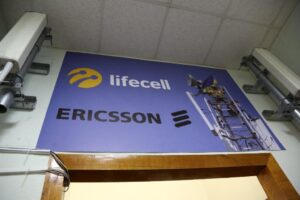
Ukraine’s third-largest mobile operator, Lifecell LLC (TM lifecell), has signed a strategic agreement with Swedish telecommunications equipment manufacturer Ericsson to upgrade its network core to improve 5G readiness, the company said in a statement on Monday.
“The modernization of the core will allow lifecell to increase network performance and stability, optimize resource utilization, and most importantly, significantly reduce the time it takes to bring new services to market,” the operator said.
Lifecell explained that as part of the project, the company is transitioning to a cloud-native network core architecture based on Ericsson solutions, specifically data transmission and Internet access services (Packet Core) and subscriber data management systems (User Data Management).
It is expected that the network core will be upgraded in accordance with 5G principles, which will subsequently create the technical basis for improving service quality.
Lifecell specified that the transition to a cloud-native core will also reduce the risk of communication interruptions and downtime for subscribers.
In addition, the operator is simultaneously modernizing its subscriber data management system based on Ericsson’s Cloud Native Unified Data Management (UDM) solution, which ensures secure management of subscriber data.
As reported, lifecell LLC increased its revenue from telecommunications services by 18.9% to UAH 11.58 billion in the first nine months of 2025. According to data from the National Commission for the Regulation of Electronic Communications and Postal Services (NCCEC), lifecell increased its capital investments by 41.7% to UAH 2.97 billion in the first nine months of 2025.
Possible merger of tower companies Ukraine Tower Company (UTC) and Ukrainian Network Solutions (UNS), which are associated with the largest mobile operators Kyivstar and Vodafone Ukraine, will lead to monopolization and structural imbalance in the telecom market, according to their smaller competitor Lifecell LLC (TM lifecell).
“Given the significant impact on the market and millions of consumers, the agreement should be reviewed openly and transparently, with the involvement of all market participants and the expert community,” the operator said in a press release on Monday, as reported by Interfax-Ukraine.
According to lifecell, such a merger could affect the pace of innovation and weaken the focus on subscriber needs.
The operator also stressed that the potential deal could threaten the security of national communications as a whole and limit investment in Ukraine.
“Excessive concentration of critical infrastructure in one hand may be perceived as a signal of increased risk, deterring investment in the telecommunications sector,” lifecell explained its position.
The company stressed that decisions regarding the possible merger of tower stations must be made with consideration for the long-term consequences for competition, the development of the telecom market, and the country’s security.
At the end of January, it was reported that UTC, the tower business of the telecommunications holding company VEON, which owns Ukraine’s largest mobile operator Kyivstar, is trying to get the Antimonopoly Committee of Ukraine (AMCU) to approve a merger with UNS , the tower asset of the country’s second-largest mobile operator, Vodafone Ukraine.
At that time, Forbes Ukraine explained that the merger of the tower companies VEON and Vodafone Ukraine could be linked to a desire to sell them to a third party on more favorable terms, with a price tag of $300 million.
According to Forbes Ukraine’s calculations, UNS’s revenue for the first nine months of 2025 reached UAH 528.8 million, with annual EBITDA of about $15 million and UTC of UAH 2.1 billion and $50-60 million, respectively.
At the same time, lifecell also has a tower asset: according to YouControl, its revenue for the first nine months of 2025 amounted to UAH 461.0 million, with a net profit of UAH 202.2 million.
According to data from the regulator NCEK, the top three leaders in terms of revenue from telecommunications services for the first nine months of 2025 in Ukraine were mobile operators Kyivstar with UAH 32.35 billion, Vodafone Ukraine (UAH 18.88 billion), and lifecell from the DVL group (UAH 11.58 billion).

Mobile operator lifecell, part of the DVL (Datagroup-Volia-lifecell) group of companies, attracted over 1,400 businesses that transferred their business numbers to it in July, according to a press release.
“As of July 2025, more than 1,400 companies have transferred thousands of business numbers to the lifecell network, choosing the operator’s tariffs and services. In 2025, lifecell recorded a twofold increase in the volume of corporate number transfers compared to the same period in 2024,” the lifecell press service said in a statement on Tuesday.
It is noted that the procedure for transferring business numbers consists of three stages and takes up to three working days.
Earlier it was reported that in January-June 2025, lifecell became the leader among operators in terms of the number of subscribers.



