

The business associations and representatives of the professional community who have signed this statement consistently support the development of a lobbying framework in Ukraine based on the principles of transparency, ethics, and good faith. We advocate for the implementation of best international practices and the establishment of an open dialogue between business and the state.
At the same time, we express concern regarding the initiative to develop a professional standard “Lobbying Professional (Lobbyist),” which provides for the introduction of new mandatory requirements for lobbying entities, in particular the completion of specialized training and additional qualification procedures, thereby creating artificial barriers to engaging in such activities.
The institution of lobbying in Ukraine is only now taking shape following the adoption of the Law of Ukraine “On Lobbying” No. 3606-IX (the Law). The Law has established a comprehensive and adequate regulatory framework that complies with international standards (OECD, EU, GRECO) and was developed and adopted, in particular, as part of Ukraine’s commitments in the process of European integration to ensure transparency in the interaction between representatives of public authorities and stakeholders in the context of lawmaking. This approach, borrowed in particular from European Union practice, does not require the introduction of mandatory professional standards or certification for lobbyists, focusing instead on transparency in the use of lobbying tools.
At the same time, it is important to emphasize that current legislation already contains the necessary safeguards and control mechanisms. In particular, the obligation to register in the Transparency Registry ensures that lobbying entities operate within the legal framework, comply with established rules, reporting requirements, and ethical standards provided for by law.
Thus, the key task at this stage is the effective implementation of existing legislation, rather than the introduction of new regulatory instruments, the necessity of which is not provided for by law and which distort the essence of the approaches established by the current law.
Consequently, the professional community does not support the adoption of a “lobbyist” professional standard, as it is inappropriate in the current context of the development of the lobbying institution, is not provided for by the Law, and contradicts the regulatory concept enshrined therein. Moreover, it creates additional barriers for businesses and public associations, carries risks of restricting competition and potentially monopolizing the market, and effectively introduces new regulatory requirements beyond the scope of the law, which contradicts the principles of deregulation.
Given this, the united business community considers the development of a professional standard and the introduction of additional requirements to be unacceptable and inconsistent with the current stage of development of the lobbying market in Ukraine, as well as undermining its foundations.
We remain open to dialogue and cooperation on the formation of an effective, transparent, and balanced lobbying regulatory system in Ukraine, based on the principles of openness, good faith, and equal access.
This statement is open for signature by other lobbying entities that support equal and independent operating conditions in the lobbying sector.
Signatories:

The NACP’s anti-corruption strategy for 2026-2030 needs more open discussion and transparent coordination with the public, according to Yana Tsymbalenko, anti-corruption commissioner of the National Association of Lobbyists of Ukraine and member of the Board of Trustees.
“The formation of the Anti-Corruption Strategy for 2026-2030 is a process that should be as open as possible, as it concerns the rules that determine the ethical behavior of officials, the prevention of conflicts of interest, and the standards of transparency of the state. However, analysis of the available information shows us that the public discussion of section 1.5 of the Anti-Corruption Strategy took place with numerous violations of the principles of openness and accountability,” she told Interfax-Ukraine.
Cymbalenko noted that despite the publication of the text of the strategy prepared by the NACP, “there is no evidence of full and high-quality consultations, which calls into question the legitimacy of the entire process.”
“In particular, there are no reports on the results of the discussion, no register of proposals from the public has been submitted, and updated versions of the document based on possible comments have not been published. The absence of any records or recordings of the discussion contradicts the general standards of transparency that the state declares,” she said.
The expert recalled that the “Schedule of Public Discussions” is publicly available, according to which the meeting allegedly took place on October 24, 2025. However, according to her, there were no official announcements of this event, the circle of invited stakeholders was not determined, the lists of participants or experts were not published, and it is not known who exactly prepared the materials for discussion.
“It is particularly telling that, despite the name of the division, lobbying issues were not discussed at all. This raises additional doubts about the quality and completeness of the consultations, as well as the compliance of the process with the requirements of the legislation on the formation of state anti-corruption policy,” she said, noting that the presentation of key developments was entrusted exclusively to representatives of the NACP without the involvement of independent experts, representatives of professional communities, or the public.
“The presentation focused mainly on technical aspects, while the key part concerning the regulation of lobbying in the program is completely absent. None of the speakers were presented as experts on lobbying, and the relevant topics were not included in the content of the presentations. This means that one of the most sensitive and controversial topics of the future Anti-Corruption Strategy was not even brought up for public discussion,” she said.
According to Tsymbalenko, “the event (presentation of the strategy – IF-U) looked more like a short internal presentation of the NACP’s position than a full-fledged consultation as required by the principles of transparent rule-making.”
“The NACP’s disregard for proposals from professional associations specializing in lobbying is also unacceptable. In particular, the National Association of Lobbyists of Ukraine (NALU) has repeatedly approached the NACP with a proposal to work together on establishing a lobbying institution in the country. The lack of any response from the NACP not only demonstrates disregard for the interests of the professional community, but also poses a serious reputational risk for an agency that declares openness, accountability, and integrity,” said Tsymbalenko.
“In modern democratic practices, lobbying is seen as a tool for preventing political corruption. It allows influence on government decisions to be brought out of the shadows and ensures its transparency and accountability. Combining this topic with unrelated blocks creates the risk of its simplified interpretation or a formal approach to important issues, which may devalue the potential of lobbying as a mechanism for the state’s anti-corruption capacity,” she said.
The National Association of Lobbyists of Ukraine (NALU) is initiating an official appeal to the European Parliament regarding the rules for registering Ukrainian organizations in the EU Transparency Register.
“The National Association of Lobbyists of Ukraine will soon send an official appeal to the European Parliament requesting clear and unambiguous clarification on which Ukrainian organizations are required to register in the European Union Transparency Register in order to interact with European institutions,” she told the Interfax-Ukraine news agency.
The association will also raise the question of whether Ukrainian entities—public organizations, professional associations, business associations, consulting companies, charitable foundations, and other structures—should undergo additional registration and obtain lobbyist status when working with EU bodies in accordance with the requirements of European legislation.
The association notes that with the entry into force of Ukraine’s Law on Lobbying and the state’s active course towards European integration, the issue of harmonizing Ukrainian lobbying practices with European Union approaches is becoming critically important. The lack of clear instructions and a unified position may create legal uncertainty for Ukrainian organizations seeking to operate within the EU legal framework and represent Ukraine’s interests at the international level.
“We seek to obtain an official explanation so that Ukrainian organizations can act in accordance with European rules, avoid risks, and ensure maximum transparency in their activities. This is also important for protecting Ukraine’s image as a state that is moving towards civilized interaction and open advocacy,” notes the NALU.
The explanations received from the European Parliament are planned to be published and forwarded to Ukrainian institutions, businesses, and public organizations as an official guideline for further work with EU bodies.

The National Association of Lobbyists of Ukraine (NALU) supports the European Parliament’s initiatives to establish a minimum age for access to social networks, video platforms, and digital AI services, as well as to ban the most harmful and addictive digital practices targeting minors.
“NALU fully supports this initiative of the European Parliament and considers it an important step towards creating a safe, ethical, and responsible digital environment,” said a statement from the NALU board, as reported by the Interfax-Ukraine agency.
NALU notes that the European recommendations provide, in particular, for setting the minimum age for access to social networks at 16, allowing children aged 13-16 to access social networks only with parental consent, banning the most harmful elements of digital design, including autoplay, infinite scroll, dark patterns, intrusive recommendation algorithms, a ban on targeted advertising and influencer marketing aimed at minors, as well as increased responsibility of digital platforms for the protection of children, including the personal responsibility of company executives and the implementation of technologies in them.
“In the context of Ukraine’s European integration and the adaptation of national regulations to EU standards, NALU officially supports the European Parliament’s proposals to reform digital safety rules for children. Ukrainian lobbyists in Brussels are already beginning consultations with European institutions to agree on approaches that can be implemented in Ukraine,” the statement said.
It is noted that the association will recommend that the Verkhovna Rada and relevant committees consider the possibility of adapting the proposed European standards to national legislation.
“NALU is ready to provide expert, analytical, and regulatory and methodological support to Ukrainian authorities in developing relevant legislative changes. The association believes that the protection of minors online is a matter of national security, digital health of society, and the state’s responsibility to the younger generation,” the document notes.
The association emphasized that NALU will continue to work on the adoption of transparent and European standards in the field of digital policy and advocacy, contributing to the formation of modern legislation that will protect children and support the development of an ethical digital space in Ukraine.
On November 26, 2025, the European Parliament adopted a report calling for the introduction of a unified minimum age of 16 in the European Union for access to social networks, video platforms, and digital AI services, as well as a ban on the most harmful and addictive digital practices targeting minors.

The first hundred lobbyists have registered in Ukraine’s Transparency Register, an open public platform that collects, processes, and publishes data on lobbying entities and their reports, according to a statement posted on the website of the National Agency for Corruption Prevention (NACP) on Thursday.
“As of November 13, 2025, 101 lobbying entities are registered in the Register, of which 51 are legal entities (on behalf of which 141 representatives can lobby) and 50 are individuals. Two people have terminated their status as lobbyists. So, in total, 191 lobbyists can influence decision-making in the country,” the statement said.
Among the legal entities registered in the Register, there are 27 companies (limited liability and joint-stock), 16 public associations (associations, unions), five law firms (associations, offices), and three others.
“The most popular areas of lobbying are: financial, banking, tax, and customs policy—76 lobbying entities; economic development, regulatory policy, and property—74 entities; legal policy—70 entities; law enforcement—68 entities; innovation and digital transformation – 66 entities; transport, communications, and infrastructure – 65 entities; environmental policy and natural resource use – 64 entities; agricultural and land policy – 63 entities; regional development and urban planning – 62 entities. The smallest number of entities chose the area of “Youth and Sports” – 36 lobbying entities,” the statement said.
The NACP reminds that lobbying entities must submit their first reports on their activities from the date of registration in the Register until December 31, 2025, to the Register between January 1 and January 30, 2026.
As reported, the Lobbyist Transparency Register, provided for by the law on lobbying, officially began operating in Ukraine on September 1. At the same time, the NACP put into commercial operation a key tool for its implementation – the Transparency Register.
Immediately after that, the National Association of Lobbyists (NALU) was created in Ukraine to promote investment and protect business interests. Today, it has offices in London and Zurich.
Source: https://nazk.gov.ua/uk/u-reestri-prozorosti-nazk-zareestruvalysya-pershi-100-lobistiv/
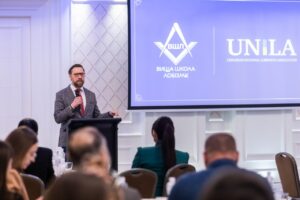
A new educational center, the Higher School of Lobbying, a structural subdivision of the National Association of Lobbyists of Ukraine, has opened in the capital. The project’s mission is to form a professional community of lobbyists in the country in accordance with EU, US, and UK standards. The premiere took place at the Hyatt Regency Kyiv, bringing together over 100 participants, including about 50 members of parliament, diplomats, representatives of international business, and academia.
A special feature of the launch is the participation of practicing lobbyists from the US and the UK, who will conduct classes together with Ukrainian experts. The program is designed as a practical track for working in the EU and US markets.
Project director Oleksiy Shevchuk said: “Lobbying is about transparent rules, competition of ideas, and investment. We are launching a school that provides tools for legal influence and open dialogue with the authorities. Our graduates must be equally confident in defending their clients’ positions in Kyiv, Brussels, and Washington, relying on facts, ethics, and compliance.”

The professional principles of the new school are:
1) Legality and transparency — working only within the public legal field, with a clear mandate and client disclosure
2) Ethics — prevention of conflicts of interest, internal compliance, and codes of conduct
3) Expertise — analytics, data, impact assessment, proposals for regulation
4) Equal access — inclusion of business, NGOs, and regions in dialogue with the state
5) Measurability — goals, KPIs, and reporting on advocacy results
Recruitment for the first cohort has begun. International mentors, workshops on preparing position papers for EU and US institutions, and analysis of real-life cases of interaction with regulators have been announced. The organizers emphasize that the school is results-oriented — graduates should bring new partnerships, investments, and sustainable changes to the rules of the game to the economy.
Historical background: how lobbying developed in the US and Europe
US. The American model is the most institutionalized. In the 19th century, the term “lobbyist” came into use to describe individuals who communicated with congressmen behind the scenes.
The modern system is based on mandatory registration of lobbyists, reporting on clients, budgets, and topics of influence, public registries, and compliance.
Principles: transparency of contacts with officials, disclosure of expenses, restrictions on gifts and travel funding, disciplinary responsibility for covert activities.
Europe. In the EU, lobbying is formalized as the participation of interested parties in policy-making. The European Commission and European Parliament have a Common Transparency Register, which requires disclosure of information about organizations and consultants, their goals and resources, and meetings with high-ranking officials are published online.
National regimes vary, but common standards include public registers, codes of ethics, tracking of influence on regulation, and impact assessments for new legislation.
Source: https://interfax.com.ua/news/projects/1119422.html



