
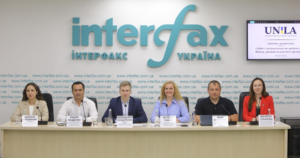
For the full implementation of lobbying legislation at the local level, Ukraine needs unified practical rules for interaction between lobbyists, deputies and officials, as well as a clear distinction between lobbying, advocacy and the representation of private interests, experts believe.
As Vitaliia Hloba, a representative of the National Association of Lobbyists of Ukraine, reported, the association has prepared a roadmap for interaction between lobbyists and local self-government bodies and intends to send recommendations to regional councils.
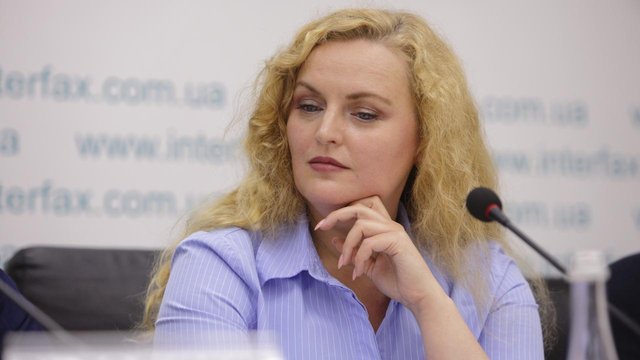
“A lobbyist must openly identify themselves, the client or beneficiary, clearly define the subject of lobbying and act exclusively within the law. At the same time, deputies and officials must understand how to properly record contacts, verify the status of a lobbyist and prevent the risks of unlawful influence. It is precisely such a clear procedure that should become the basis for professional dialogue between business, the community and the authorities,” Hloba emphasized at a press conference at the Interfax-Ukraine agency on Wednesday.
In turn, expert and Kyiv City Council deputy Volodymyr Bondarenko noted that the law on lobbying created a general framework for transparent interaction between business and the authorities, but left a number of gaps that are particularly noticeable at the local level. According to him, one of the key problems concerns the definition of the object of lobbying, since the relevant law refers to the law on law-making activity, which has not yet fully entered into force.
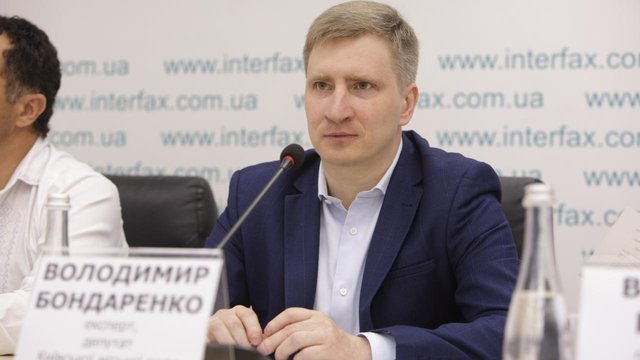
“The law created a framework for regulation, but at the same time did not provide sufficiently clear rules of operation, particularly at the level of local self-government bodies, where today we feel the greatest number of gaps. These issues cannot be resolved solely through clarifications by the NACP, which do not have the force of law and cannot change legislative provisions. The relevant gaps must be eliminated directly at the legislative level,” Bondarenko emphasized.
He also drew attention to the problems of distinguishing between commercial and public interest, lobbying and advocacy, which, in his opinion, should be more clearly regulated by law.
Lawyer, lobbyist, head of the A.Dva.Ka.T Law Association and member of the Lobbying Committee of the Ukrainian National Bar Association Yaroslav Kuts presented a step-by-step algorithm for interaction between a lobbyist and a local council.
According to him, the procedure should consist of seven stages: verification of the lobbyist’s status, their identification, initial contact, submission of analytical justification, preliminary assessment of proposals, completion of council procedures and monitoring of results.
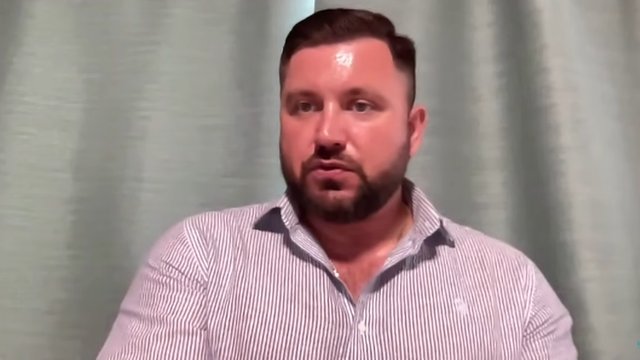
“Any contact must begin with identification. A lobbyist must state that they are a lobbyist, whom they represent, in whose interests they act, which regulatory legal act is the subject of lobbying and in what format the interaction is expected to take place. After that, the official or deputy can verify their status in the Transparency Register and continue communication on that basis,” Kuts explained.
He emphasized that not every appeal by a citizen or business representative to local authorities constitutes lobbying.
“There is no need for a local council employee to report a lobbying meeting after every appeal by a resident requesting the allocation or privatization of a land plot. The subject of lobbying is a regulatory legal act, meaning rules that are applied repeatedly and to an indefinite number of persons. It is precisely this distinction that should be fundamental for the practical application of the law,” Kuts emphasized.
Vice President of the Congress of Local and Regional Authorities of Ukraine Ivan Fursenko noted that the new rules should move relations between lobbyists and local authorities from an informal model to an open procedure in which each side understands its rights, duties and responsibilities.
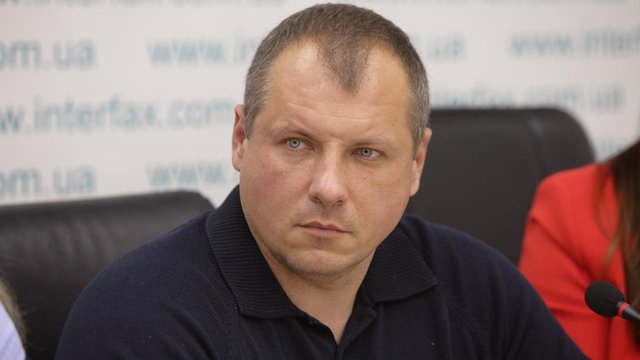
“We are moving from an informal model of communication to a model in which each side knows its rights, its duties and its own responsibility. The law does not restrict a lobbyist’s right to convey the client’s position, but merely makes this process open, transparent and understandable. Likewise, it protects a deputy, who no longer has to guess whose interests exactly their interlocutor represents,” Fursenko noted.
“Many people are concerned that any meeting with the public or business will now become a problem, but that is not the case. The law does not prohibit communication; it only requires transparency. If a deputy follows the established procedure, recording the contact protects the deputy themselves from accusations of hidden influence,” Fursenko emphasized.
Member of the Ethics Council of the National Association of Lobbyists of Ukraine and Sumy Regional Council deputy Vadym Vashchenko stated that transparency of lobbying contacts is particularly important at the local level, since communities make decisions regarding infrastructure, entrepreneurship, jobs, investment projects and reconstruction.
“A local council should be not only a body that makes decisions, but also an open platform for professional dialogue between the community, business, investors and the expert community. When every meeting is recorded and it is clear who represents the interests, what issue is being discussed and what result is expected, a deputy or official can work openly and without the risk of accusations of hidden influence. This is protection both for business and for local self-government bodies,” Vashchenko said.
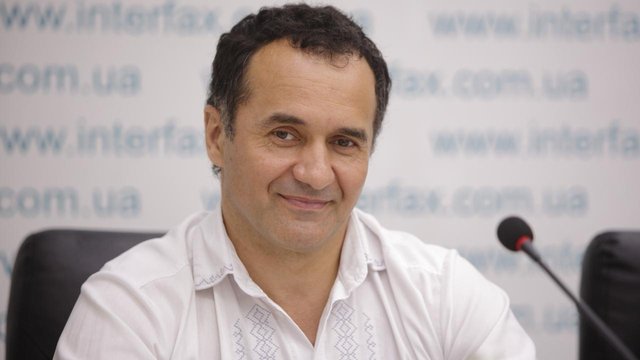
According to him, after the end of the war, communities themselves will become the main centres for attracting investment and donor assistance, and therefore the quality and transparency of procedures will directly affect businesses’ willingness to invest funds.
“Transparency today is a factor of investment attractiveness. Communities that are the first to introduce modern standards of open interaction will gain an advantage in working with investors, donors and international organisations. A strong community is not one where there is no lobbying, but one where lobbying is open, lawful and works in the interests of the community’s development,” Vashchenko emphasized.
Lobbyist and member of the Ethics Council of the National Association of Lobbyists of Ukraine Violetta Sukhanova noted that the roadmap should provide deputies and officials with a simple algorithm of actions in the event of contact with a lobbyist.
“There is no need to be afraid of communicating with a registered lobbyist – the law has legalised such interaction, and the fact of a meeting itself is not a violation. It is important that it take place openly, transparently and within the law. If a deputy has not received answers to the questions of who approached them, whom that person represents and which regulatory legal act is the subject of lobbying, they have the right to suspend such interaction until all the circumstances are clarified,” Sukhanova explained.
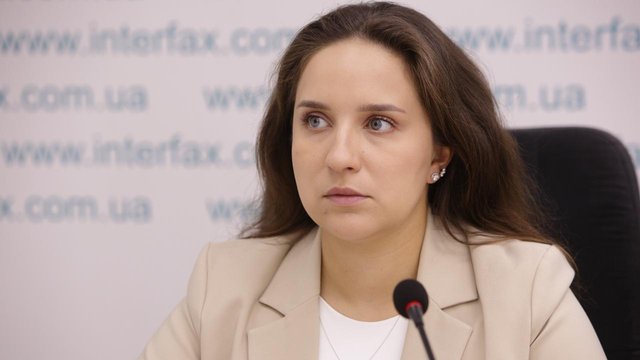
She emphasized that, for interaction to be defined as lobbying, three elements must be present simultaneously: a registered lobbying entity, a specific regulatory legal act as the subject of lobbying, and a commercial interest.
“Public hearings, electronic petitions, citizens’ appeals, the protection of one’s own rights or participation in open consultations are not in themselves lobbying. Likewise, a professional meeting with a registered lobbyist is not in itself subject to separate declaration. The task of the roadmap is to enable a deputy, within a few minutes, to understand who has approached them, whether this interaction is lawful and how to act correctly from that point onward,” Sukhanova noted.
Lobbyist and member of the Council of Entrepreneurs under the Sumy City Council Valeriia Holovanova presented practical recommendations on maintaining a contact log and meeting minutes.
“A contact log is not a bureaucratic formality, but one of the levels of protection for a deputy. It should record the date and format of the meeting, the status of the person, the client or beneficiary, the specific subject of discussion and the list of materials transferred. At the same time, there should be no evaluative judgments whatsoever — only facts confirming that the contact took place,” Holovanova said.
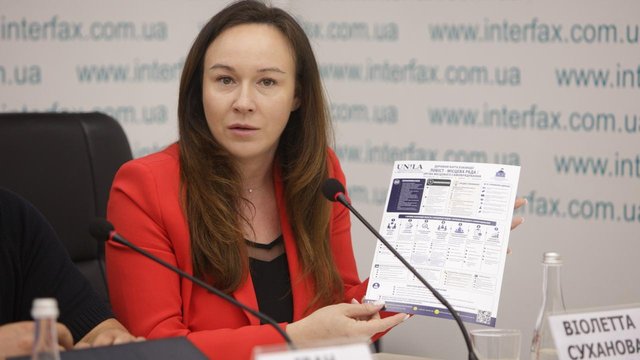
According to her, the meeting minutes should contain the arguments of the lobbying side, the deputy’s position and information about the materials transferred and the agreements reached.
“If materials were transferred or specific commitments were undertaken, this must be recorded. If no specific commitments were made, this should also be stated directly in order to avoid future speculation about who allegedly promised what. A unified practice across all local, district and regional councils will make such interaction clearer both for deputies and for lobbyists,” Holovanova emphasized.
Summing up the discussion, Bondarenko noted that the legalisation of lobbying is an important element of Ukraine’s European integration, but the regulatory framework will continue to develop.
“It is impossible to solve all problems in nine months of practical application of the law. The culture of regulatory oversight of lobbying in Europe was formed over decades, so the Ukrainian legislative framework will also continue to develop. The main thing now is not to be afraid to apply the law, while at the same time clearly taking into account the restrictions it provides for and working to eliminate the gaps,” Bondarenko concluded.
Representatives of the National Association of Lobbyists of Ukraine also reported that the roadmap would be published on the organisation’s website and sent to regional councils for use in their work.
HLOBA, HOLOVANOVA, Kuts, LOBBYING, lobbyists, SUKHANOVA, VASHCHENKO, БОНДАРЕНКО, Фурсенко

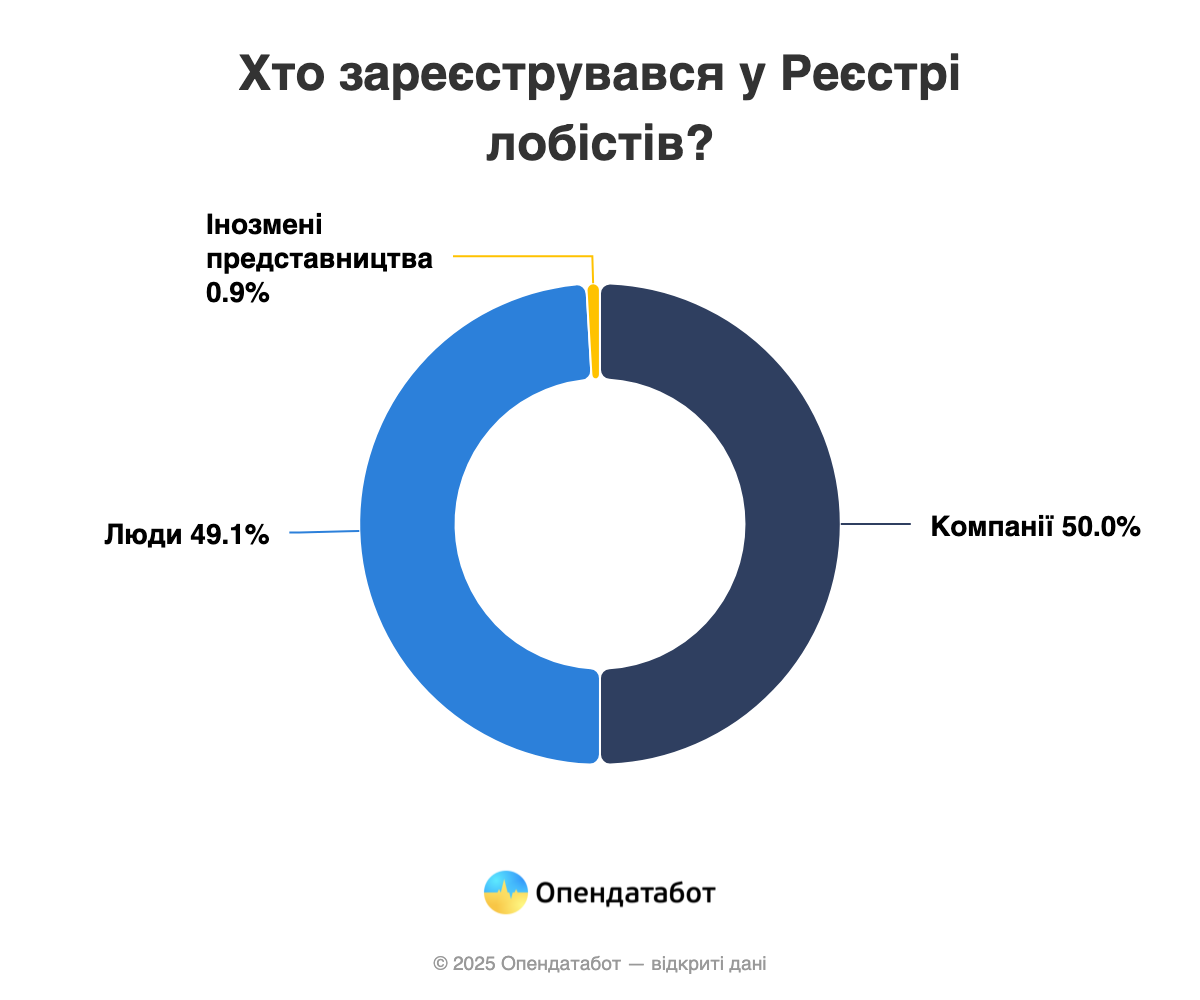
The first state-certified lobbyists have appeared in Ukraine. As of the end of November, 110 participants had been entered into the relevant Register, which is maintained by the National Agency for Corruption Prevention (NAZK), three months after the Law on Lobbying came into force. Among them are 55 companies, 54 individuals, and one foreign representative office. OpenDataBot analysed the purpose of such a Register and how it will affect business and the state.
The newly created NACP Transparency Register, also known as the lobbyist register, has 108 active participants. The list includes businesses, public organisations and ordinary citizens.
We are tracking changes on the Transparency Register (lobbyists) page on OpenDataBot.
You can find out about the first lobbyists in Ukraine on the Open Data Bot Lobbyist Register page. At the same time, if a company is a registered lobbyist, the corresponding marks will be added to the company’s card on its page in Open Data Bot.
In total, 110 participants have been registered since the Register began operating, but two subsequently suspended their participation. These include 55 companies, 54 individuals and one foreign representative office. Among them are businesses such as Philip Morris Ukraine, the Aurora chain of stores, Metro Cash & Carry Ukraine, ArcelorMittal Kryvyi Rih and Oschadbank, which are included in the Open Data Bot Index 2025.
The leader of this year’s Open Data Bot Index in the banking sector, Oschadbank, was one of the first financial institutions to join the Register. The company explains:
“For a bank whose activities are directly dependent on regulatory control, it is important to interact openly and legitimately with the National Bank and other state bodies. Registration in the Transparency Register allows us to operate within the legal framework, distinguishing between legitimate protection of interests and unacceptable forms of influence.”
Inna Boichuk, Director of Corporate Affairs at Aurora, one of the retail leaders in the Open Data Bot Index 2025, notes that the Law on Lobbying and the Register itself are only tools. In order for this mechanism to work and be truly effective in terms of ensuring transparency of influence on decision-making, it is necessary to work systematically to build trust around the newly created lobbying institution.
“This work should involve government stakeholders, business, the media and society as a whole. In particular, business should openly represent its positions, and the authorities should perceive and accept such interaction as a natural part of the democratic decision-making process. Therefore, at this stage, it would be fair to say that the aforementioned law and the Transparency Register are steps towards the formation of a mature culture of influence on the authorities,” comments Inna Boichuk.
Viktoria Kulikova, Head of the Committees Department at the European Business Association, also mentions the technical nuances during the process of establishing the system.
“We expect the Register to become a truly effective tool for transparent communication. At the same time, it is important to improve the legislation: clarify the definitions of concepts, simplify reporting, and provide practical incentives to registered participants. Only then will the system work effectively and promote accountability on all sides. In particular, the current reporting format is quite technically complex for large business associations that have many lobbying issues (regulatory acts to which the Association submits proposals), hundreds of lobbying beneficiaries (member companies) and a great deal of communication with lobbying targets (representatives of state bodies), information about which we will need to enter into the transparency register,” comments Victoria.
A similar opinion is held by the Union of Ukrainian Entrepreneurs, whose team participated in testing the Register before its launch and shared recommendations for improving interaction.
“For the system to work properly, it is important that there is two-way transparency: not only should businesses register and report, but MPs and government officials should also act transparently, honestly and comply with the law. And for the Register to work effectively, improvements to the legislation are needed, in particular clarification of terms, optimisation of reporting requirements and the establishment of additional incentives for registered lobbyists.”
The SUP notes that the main stage of interaction between newly created lobbyists and the state will begin in January 2026, when the first lobbying report will be submitted. It will be then that it will be possible to fully assess the work of the Register — its workload, functionality and ease of use.
OpenDataBot will track updates to the Lobbyist Register. Now, when checking companies or individuals in OpenDataBot services, users will see a mark indicating registration in the Register. This is another step towards transparency in the business environment and accountability of those who influence political decisions.
https://opendatabot.ua/analytics/lobbyists

Lawyers, finance experts and attorneys have united to form the National Association of Lobbyists of Ukraine (NALU) to promote investments and protect business interests, said Oleksiy Shevchuk, a lawyer, chairman of the board of NALU, chairman of the Information Policy Committee of the National Association of Lawyers of Ukraine (NALU).
“Lobbyist is a new profession in Ukraine, now created by NALU. It means that a great profession is now open to everyone, it means that now a lot of businesses have support. A lobbyist performs business and investment support functions. Today it means that large companies that are going to enter the reconstruction of Ukraine have guides, have support and have managers who will develop these companies and accompany investments,” he said at a press conference at the Interfax-Ukraine agency.
Shevchuk said that NALU now includes 20 people, while the transparency register of lobbyists – the only official State register of lobbyists – includes more than 30 people, and the holder of the transparency register is the National Agency for the Prevention of Corruption (NAPC). At the same time, the NALU can unite only individual lobbyists.
“The NAPC checks the representatives of the lobbying profession to ensure that they meet the requirements of decency and good business integrity and that they do not violate lobbying laws. Lobbyists who are members of NALA meet the standards of quality and requirements of the lobbying profession. This means that these representatives can and should be chosen to accompany major investment projects. This means that today we are moving towards the creation of a civilized society,” he said.
Shevchuk also noted that “recently, law enforcement agencies have been abusing a lot when some investment projects were presented by a state body, when people’s deputies received bills that business needs.”
“Today no one will no longer say that this is a violation of law or abuse of influence. Lobbyists are official managers who represent business,” he said.
According to Shevchuk, Ukrainian lobbyists can be registered in the United States as individual members of the profession and will be able to have a corresponding contract with a European or U.S. organization.
“If today there will be an order either from some lobbyist from the US or from some separate organization – for example, it can be an investment bank, a fund, or a small business that needs to be promoted – a lobbying contract must be concluded and this contract must be registered in the appropriate registry in the US. On their own, no lobbyist has the right to act in the U.S., every lobbyist from Ukraine must interact with a U.S. company. It is the same as with lawyers: a lawyer from America cannot work independently in Ukraine, a lawyer from Ukraine cannot work independently in the U.S.,” he explained.
For her part, NALU executive director Vitalia Globa noted that among the key areas of the association’s activities are the development of lobbyism as an important component of a democratic society, the creation of a system of self-regulation and professional standards for lobbyists, as well as the protection of the rights of association members.
“Any lobbyist in our country can become a member of our association of lobbyists by submitting a free-form application with certain documents, which are specified on the official website of our organization,” she said.
In turn, NALU board member, managing partner of the Leshchenko and Partners law firm Oleksandr Leshchenko said that experts are preparing a large report on the status, system and procedure of lobbying in Ukraine. It will be presented in the European Parliament, as well as in the United States, where a round table with international participation with lobbyists from the US is planned.
“Lobbyism is an activity that in the civilized world is legally regulated. Unfortunately, in most cases, including among elites, journalists, there is a negative attitude to the activities of lobbyists. This opinion is erroneous, because, since 1946, in the United States for the first time an act regulating the activities of lobbyists has been in force. Today Ukraine has created such a legislative act at the legislative level and now there is a process of establishing legal regulation of lobbyist activity”, – he said.
As the vice-president of NALU, head of the representation of the Ukrainian Bar in the UK Oleksandr Chernykh noted, what is now happening very often around draft laws in Ukraine cannot be called professional activity not by the level of preparation, not by the level of analysis.
“Absolutely wrong thing in Ukraine, when public activists spend millions on youtubes and social networks, actually putting pressure on state bodies to make decisions, while they do not report. If we look at the tax and public reporting, it is really millions of dollars, which then disappear on some FOPs, for some incomprehensible services. And it is not clear where these millions of dollars come from, who is the customer and what the end result of this actual lobbying activity is. I very sincerely welcome the adoption of this law, because now we can talk about legitimate legal lobbying activities,” he said.
For his part, NALU representative in Brussels, President of European Facilitation Platform Oleksandr Kamenets emphasized the need to research the lobbying field in Ukraine.
“This is a necessary condition for both in Ukraine and abroad, in Europe and in the world to understand who is now on this market, on this field in Ukraine,” he said.
Chernykh, Kamenets, Leshchenko, lobbyists, UKRAINE, Глоба, НАЛУ, ШЕВЧУК



