
Ukrainian local and craft wineries can expand their presence in national retail chains, but to do so, producers must meet retailers’ requirements regarding quality, safety, documentation, and supply stability.
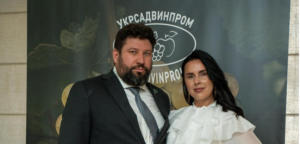
This was discussed during the National Roundtable “Local Grape Varieties: Heritage, Sustainability, and Rural Development,” organized by the Public Association “UKRSADVINPROM” to mark the 10th anniversary of the Association’s activities.
Olena Gordon, a representative of the “Ukraine Food Retail Alliance” (UFRA)—which includes leading Ukrainian food retail chains such as ATB-Market, Silpo, VARUS, NOVUS, and KOLO—noted that local producers can enter retail chains provided they meet standards and are ready to scale up production.
For Ukrainian winemakers, this means that having a high-quality product is no longer the only requirement for increasing sales through retail channels. Retail chains expect suppliers to provide stable shipments, a clear quality control system, production traceability, the necessary certifications, regulatory approvals, and a willingness to work within a long-term partnership framework.
Roundtable participants noted that retailers’ interest in craft wineries and local producers is growing amid rising demand for Ukrainian products. In the context of the war, supporting domestic producers is viewed not only as a consumer choice but also as a key element of the country’s economic resilience.
For the producers themselves, collaboration with retail chains can be a crucial step in scaling their businesses. A presence on the shelves of national retailers boosts brand recognition, expands access to consumers, and helps foster a culture of Ukrainian wine consumption.
At the same time, participants in the discussion emphasized that craft winemaking requires a distinct approach. Small producers cannot always operate according to the logic of mass industrial production; therefore, flexible collaboration models, professional support, assistance with certification, and clear rules for market entry are essential for the segment’s development.
The HoReCa sector and wine tourism could serve as additional channels for promoting Ukrainian wine. Restaurants, tasting events, festivals, and wine tours provide opportunities to introduce consumers to local grape varieties, create an emotional connection with producers, and gradually build demand that can subsequently support retail sales.
The roundtable also noted that the development of local grape varieties could become part of a broader strategy for promoting Ukrainian wine. Volodymyr Pechko, Chairman of the “UKRSADVINPROM” Public Association, emphasized that Ukraine needs to more actively showcase its own varieties and build a wine identity around them. In particular, “Odesa Black” and “Sukholimansky” were cited as flagship varieties of Ukrainian breeding.
For retailers, local varieties could become a distinct competitive niche, as they allow retailers to offer customers not just Ukrainian wine, but a product with provenance, history, and regional identity. This approach could boost interest in Ukrainian wines both in the domestic market and, in the long term, in export markets.
Participants in the event also emphasized the need to create a Vineyard Register and conduct a comprehensive inventory of vineyards in accordance with EU approaches. This is important for the sector’s transparency, the development of geographical indications, Ukraine’s integration into the European system of support for viticulture, and the future use of EU financial instruments.
The “UKRSADVINPROM” General Association is an industry association operating in the fields of horticulture, viticulture, and winemaking. The organization brings together market participants, takes part in industry discussions, promotes the interests of Ukrainian producers, and supports the development of high-value-added products. In 2026, the Association celebrated its 10th anniversary.
craft wine, local producer, RETAIL, UKRSADVINPROM, WINEMAKING, ПЕЧКО



