

International support, the development of vocational education, and the rapid implementation of practice-oriented educational solutions are critically important for maintaining the competitiveness of Ukraine’s agricultural sector, which, despite the war, remains a key source of foreign exchange earnings and one of the drivers of the economy, stated participants at the press conference “International Partnership for the Development of Education in Ukraine’s Agricultural Sector.”
During the discussion, speakers emphasized that the agricultural sector is increasingly facing a shortage of personnel, the need for staff retraining, adaptation to new EU standards, and demand for modern digital knowledge—from post-harvest grain processing to artificial intelligence technologies in agricultural production.
Maksym Urakin, founder of the Experts Club information and analytical center and deputy director of the Interfax-Ukraine agency, emphasized that under current conditions, the development of education in the agricultural sector is directly linked to issues of the country’s economic stability.
“Today, Ukraine’s economy depends to a significant extent on assistance from international partners, and this must be stated plainly. But Ukraine cannot build its future solely on external support, so we need industries that generate foreign exchange revenue, sustain employment, and form the tax base, and the agricultural sector remains precisely such a sector,” he emphasized at a press conference at the Interfax-Ukraine agency on Tuesday.

According to Urakin, one example of such a practical partnership is the launch of the online course “Application of Artificial Intelligence Technologies in Agricultural Production,” implemented by Experts Club in collaboration with AgriAcademy at the initiative of the EBRD as part of food security support programs. He emphasized that solutions allowing Ukrainian farmers not just to talk about innovation but to translate it into concrete business tools are particularly important.
“The goal of this course is to shift the conversation about artificial intelligence from the level of abstractions to the level of concrete business solutions. Today, Ukraine needs a new system for training farmers—one that is more technologically advanced, systematic, and combines international best practices, business expertise, and applied tasks,” noted Urakin.
In turn, Oksana Yurchenko, project coordinator at the FAO Investment Center in Ukraine, emphasized that the labor shortage in the agricultural sector is a chronic problem that has not disappeared either after the pandemic or amid a full-scale war, and therefore, accessible remote learning formats are becoming one of the few realistic ways to quickly improve workers’ qualifications.
“The shortage of skilled workers in the agricultural sector has been, is, and will continue to be one of the key challenges. It is often difficult for farm workers to attend in-person training due to their schedules and the remote locations of their farms, so the industry needs accessible, practical, and flexible training that can be completed without taking time off from work,” she noted.

Yurchenko noted that the AgriAcademy platform was created in response to a request from major agribusinesses and international partners for systematic training for the sector amid the war. According to her, the platform already hosts over 40 courses, which are developed in collaboration with businesses, Ukrainian and international experts, and adapted to the sector’s current needs. Particular emphasis is placed not only on crop production but also on livestock farming, where requirements for biosecurity, animal health, welfare, and compliance with European standards have risen sharply.
“If we look at the number of diplomas and certificates issued by the AgriAcademy platform, we’re already talking about over 3,500 documents. At the same time, the number of registered students who are still taking courses or plan to complete their studies is approximately three times higher, which indicates a steady growth in interest in the platform,” Yurchenko reported.
She also noted that as of January 1, 2026, mandatory animal welfare requirements will apply to all agricultural enterprises that keep animals, and therefore the demand for specialized training will only increase. According to the expert, the courses on the platform are not yet legally mandatory, but they are effectively becoming an important practical tool for the correct interpretation and implementation of new regulations at enterprises.
Rodion Rybchynskyi, Director of the “Flour Millers of Ukraine” Association and a grain sector expert at the UN FAO, noted that the staffing problem affects not only agricultural production but the entire agri-food sector, including processing and the food industry, where automation of many processes cannot yet replace human labor.
“The labor shortage in the food industry is even more acute today than in agricultural production itself. Unmanned combines or tractors can already be used in the fields, but no one has figured out how to produce bread, grains, pasta, or other food products without people, so the issue of staff quality and knowledge is the number one challenge here,” he added.
Rybchynskyi emphasized that in the context of European integration, food industry enterprises must not only seek out employees but also quickly upgrade their qualifications in accordance with new regulations, technological requirements, and quality standards. That is why, he said, educational platforms such as AgriAcademy must develop in parallel with formal education.

The expert also noted that a course on post-harvest processing and grain storage is already available on the platform, and a course on processing grain crops is expected to be released soon. At the same time, as the expert emphasized, the main goal of such programs is to provide specialists with a solid foundation, without which innovation is impossible.
Maksym Hopka, head of the “AgroKebeti PRO: Grains and Oilseeds” project at the UCAB association, stated that retraining, short applied programs, and training with a practical component are currently among the most effective tools for addressing the labor shortage in the agricultural sector.

“Today, the agricultural sector in Ukraine is facing a serious labor shortage, so rapid, practice-oriented educational solutions are becoming crucial. Our approach is not just about training, but about developing a new quality of human capital for the agricultural sector by combining theory, practice, and direct interaction with businesses,” he noted.
According to Hopka, nearly 984 people registered for training under one of the programs, and 552 have already completed it. Some participants also completed the practical component, after which some graduates found employment or continued working in a related field within the industry. He noted that special attention in such programs was given to internally displaced persons, youth, people with disabilities, and war veterans.
Gopka also emphasized that it is important not only to create new educational products but also to ensure their close connection with higher education institutions. He reported that, as part of educational projects, more than seven memorandums have already been signed with leading agricultural universities, and certain programs are being implemented as supplements to master’s degree courses with the involvement of business representatives and foreign educational partners.
Serhiy Shylko, founder of TATFooD and a recruitment media agency, commenting on the situation in the labor market, noted that for employers in the current conditions, the main challenge is not simply finding a specialist, but the ability to retain an employee by offering them stability, clear working conditions, and opportunities for professional development.

“Today, success in the agri-food business is determined not by the search for the perfect specialist, but by the ability to become an integral part of a person’s life, providing them with stability and a sense of purpose. A production technologist must now serve as both a mentor to line staff and a process manager, so training platforms should help adapt specialists to new working conditions,” he said.
Shilko also emphasized the importance of the concept of lifelong learning and noted that the market already needs programs that employees can complete alongside their work, without a prolonged interruption in the production cycle. In his view, public and private initiatives in this area should not duplicate one another but rather address different segments of demand—from blue-collar professions to modern digital competencies, which are currently lacking even in formal retraining programs.
During the discussion, the speakers also focused on the state of academic education. They noted that the traditional system of workforce training in many cases is no longer keeping pace with the pace of change in the industry, particularly due to a weak material base, low teacher salaries, and a lack of sufficient resources for laboratories and modern equipment. At the same time, as the participants noted, it is precisely the alliance of business, universities, and professional associations that can become the model capable of producing tangible results.
Rodion Rybchynskyi cited examples of involving faculty from specialized Ukrainian universities in developing and teaching courses, as well as business collaboration with universities in creating modern laboratories, particularly at specialized higher education institutions. Participants in the press conference agreed that without such a partnership, a full-scale renewal of the workforce for the agricultural sector would be impossible.
A separate topic was the issue of potentially bringing foreign workers to Ukraine amid a labor shortage. Representatives of the processing sector noted that there is already some demand for such workers, but in practice, it often runs into obstacles due to immigration laws and organizational challenges. At the same time, according to Oksana Yurchenko’s assessment, while such a scenario is partially feasible for processing and certain production sectors, it is unlikely to become widespread in the livestock segment.
Overall, the participants of the press conference concluded that, given the war, demographic pressures, and tougher competition in foreign markets, the agricultural sector can no longer rely solely on traditional approaches to workforce training. In their view, international partnerships, digital educational platforms, short practical programs, business involvement in training, and the modernization of academic education should form the basis of a new workforce model for Ukrainian agribusiness.
AGRO, EXPERTS, EXPERTS CLUB, FAO, Flour Mills of Ukraine, GRAIN, MAXIM GOPKA, MAXIM URAKIN, RECRUITING, RODION RYBCHINSKY; AGROKEBETI PRO, SERGEY SHILKO, TATFOOD, ОКСАНА ЮРЧЕНКО

According to the results of a study conducted by Active Group and the Experts Club analytical center in February and presented at the Interfax-Ukraine press center, only 13.1% of respondents reported that they use the state drug reimbursement program, 70.6% do not use it, 16.3% had heard of it but did not use it.
“Low use of the program is often associated not with a lack of need, but with barriers to awareness and access,” said Experts Club founder Maxim Urakin.
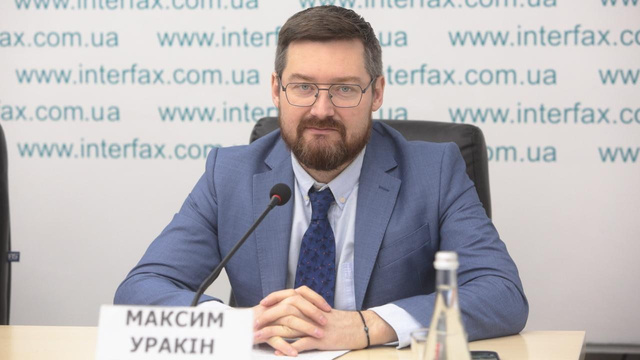
“If people ‘have heard of it but have not used it,’ then the patient’s path to compensation remains difficult,” added Alexander Pozniy.
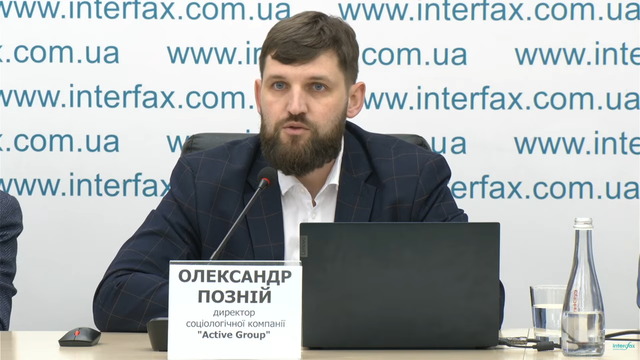
The survey was conducted on the SunFlowerSociology online panel on a representative sample on February 11-12, 2026.
The survey involved 1,000 respondents from a representative sample in all regions of Ukraine, except for the temporarily occupied territories.
ACTIVE GROUP, ALEXANDER POZNIY, EXPERTS CLUB, MAXIM URAKIN, MEDICINES, Reimbursement

Mexico’s economy contracted by 0.3% in the third quarter relative to the previous three months, according to final data from the country’s statistics office. The estimate matched preliminary data. Analysts on average also did not expect a revision, Trading Economics reported.
The downturn in the economy is being recorded for the first time since the fourth quarter of last year. Mexico’s GDP grew 0.6% in the second quarter.
Mexico’s economy contracted at an annualized rate of 0.1% in the third quarter. A contraction of 0.2% was previously reported.
The Experts Club analytical center has previously made a video analysis and forecast on the macroeconomy of Ukraine and major countries of the world.
https://youtu.be/kQsH3lUvMKo?si=1StxlkcIzQlpF0_q
ECONOMY, economy macroeconomy, EXPERTS CLUB, MACROECONOMY, MAXIM URAKIN
Information and analytical center Experts Club analyzed the data of the International Monetary Fund (IMF) on the external debts of states and their ratio to the GDP of states. The video is available on the Experts Club YouTube channel. In 2023, the leader in terms of public debt to GDP was Sudan – its figure reached 252%. This is due to the economic crisis, the consequences of the armed conflict and hyperinflation.
In second place is Japan (206%), which traditionally holds a high debt burden due to large-scale government borrowing and debt financing of the budget.
Third place went to Lebanon (195%), whose economy continues to suffer from the effects of the financial crisis, corruption and political instability.
Further down in the ranking are:
4. Greece – 185%
5. Singapore – 177%
6. Argentina – 155%
7. Italy – 132%
8. Zambia – 127%
9. Bahrain – 123%
10. Maldives – 123%
11. Bhutan – 116%
12. Laos – 116%
13. Cape Verde – 114%
14. Barbados – 113%
15. USA – 112%
16. Cyprus – 112%
17. Portugal – 105%
18. Great Britain – 101%
19. Dominica – 100%
20. Republic of Congo – 99%

Maxim Urakin, founder of the information and analytical center Experts Club, PhD in Economics, said that a high level of public debt in relation to GDP is a serious challenge for the economy of any country.
“In some cases, such as Sudan or Lebanon, this is a consequence of structural crises, armed conflicts, and political instability. At the same time, countries such as Japan and Singapore, despite their high debt ratios, have sustainable economic models that allow them to effectively manage their financial obligations. It is crucial for Ukraine to find a balance between attracting external financing and ensuring economic sustainability to avoid a debt trap and excessive dependence on creditors,” Urakin said.
As of 2023, Ukraine’s external debt totaled $132.4 billion and its ratio to GDP was 87%. Ukraine is not among the top 20 countries with the highest debt-to-GDP ratio, but ranks high among countries with large government liabilities.
In terms of absolute debt, Ukraine is about 30th in the world, but due to the military conflict and the need for external financing, this indicator continues to grow.
If the situation does not stabilize, further growth of the debt burden is predicted, which may lead to difficulties in debt servicing and increased dependence on international creditors.
Video analysis is available at the link – https://www.youtube.com/shorts/oT_5cTOnM8k
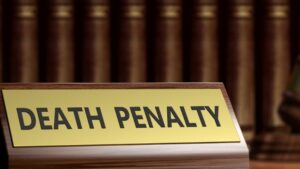
On the first day of his presidency, Trump intends to sign executive orders, including reinstating the death penalty at the federal level in the United States, which was abolished by Biden, and declaring a state of emergency on the southern border, representatives of the new administration told Reuters.
“Even before Trump was set to take office, his aides detailed a series of executive orders he would sign immediately, including 10 on border security and immigration, his top priority,” Reuters reported on Monday.
It is reported that on the first day, Trump will also declare a state of emergency on the southern border, send troops to the region and reinstate the policy that forces asylum seekers to wait in Mexico for a hearing in a US court. Will require that official U.S. documents, including passports, indicate the gender assigned to citizens at birth. Pardon 1,500 people involved in the Capitol storming case.
“On his first day, which also happens to be Martin Luther King Jr. Day, he will also sign an executive order ending diversity, equality and inclusion initiatives in the federal government, officials said,” the agency noted.
In the midst of the ceremony, Trump is expected to begin “signing his first executive orders, many of which are likely to face legal challenges.”
Earlier, the Experts Club think tank, Brian Mefford and Maxim Urakin, released a video analysis of what changes await US domestic and foreign policy under Trump, the video is available on the Experts Club YouTube channel – https://youtu.be/W2elNY1xczM?si=MM-QjSqGce4Tlq6T

In its new video on the YouTube platform, the Kiev-based information and analytical center Experts Club has published a rating of countries with the highest probability of sovereign default. The ranking considered both economic and political factors that could lead states to default.
As Maxim Urakin, the founder of Experts Club, PhD in Economics, noted, the current economic situation in the world is alarming.
“The world economy is facing unprecedented challenges and many countries are on the verge of financial collapse. Under such conditions, it is crucial to understand which states are at the greatest risk of default in order to take appropriate measures,” he emphasized.
State default is a situation when a country cannot fulfill its debt obligations to creditors. According to Maxim Urakin, default can have catastrophic consequences for the country’s economy and its citizens.
“Default is not just a technical event. It is a tragedy for millions of people who may lose their jobs, their savings and even access to basic social benefits. That is why we monitor the economic situation in various countries so closely,” Urakin added.
The Experts Club 2024 ranking of countries with the highest probability of default includes Argentina, Lebanon, Sri Lanka and several other countries already facing serious economic problems. These countries are characterized by high levels of external debt, economic instability and political crises.
Experts Club also identified several countries that are at risk in the medium term. Among them are Argentina and Venezuela, which are already facing economic instability and high levels of debt, as well as Greece and Italy, which are dependent on external creditors.
|
Experts Club Rating |
Country |
Current international rating |
| 1. | Argentina | CCC- |
| 2. | Ghana | in default |
| 3. | Sri Lanka | in default |
| 4. | Lebanon | in default |
| 5. | Zambia | in default |
| 6. | Pakistan | CCC |
| 7. | Mozambique | CCC |
| 8. | Ukraine | CCC |
| 9. | Ethiopia | CCC |
| 10. | Cameroon | CCC+ |
| 11. | Bolivia | CCC+ |
| 12. | Burkina Faso | CCC+ |
| 13. | Suriname | in default |
| 14. | Tunisia | CCC |
| 15. | Egypt | B- |
| 16. | Nigeria | B- |
| 17. | El Salvador | B- |
| 18. | Honduras | B- |
| 19. | Laos | B- |
| 20. | Venezuela | in default |
“We see that countries like Argentina and Venezuela continue to be on the verge of default due to internal economic instability and external pressures. Also of concern is the situation in Greece and Italy, which are highly dependent on international loans. The risk of default remains high in these countries,” commented Urakin.
Special attention this year is paid to Lebanon, which, according to the economist, is “in a state of political and economic crisis, with extremely high debt to GDP.” This makes the country particularly vulnerable to a possible default.
Maxim Urakin also elaborated on the factors that could lead to default. Among them, he emphasized the high level of external debt relative to GDP, economic instability and dependence on external financing.
“Countries with debt-to-GDP ratios above 100% are particularly vulnerable. Lebanon, Cyprus and Greece are examples. Economic instability and political crises in countries such as Argentina, Venezuela and Pakistan also increase the risk of default,” he explained.
Dependence on external financing is another significant factor.
“Countries that depend on external loans to cover budget deficits, such as Spain and Italy, could face difficulties if conditions in international financial markets deteriorate,” Urakin added.
In a commentary on the rating, Maxim Urakin noted that the consequences of a default for a country and its citizens can often be devastating.
“For government agencies, default means restricted access to international financial markets, lower credit rating and the need for painful economic reforms. For citizens, it turns into inflation, devaluation of the national currency, rising unemployment and lower living standards,” the expert explained.
Urakin also emphasized that default may lead to the growth of social discontent and political instability, which may aggravate the situation in the country. He also assured that Experts Club will continue to closely monitor the economic situation in the world and provide timely relevant data to help countries and investors to minimize risks and avoid defaults.
You can learn more about defaults and the presented rating from the video on the YouTube channel of Experts Club:
You can subscribe to the Experts Club channel by clicking here:



